Published on:

 Reading Time: 5 min

 Brazilian Butt Lift
A BBL (Brazilian Butt Lift) uses the patient’s own fat to increase and reshape the buttocks, while butt implants use silicone implants to add volume and projection. A BBL involves liposuction and fat transfer, whereas buttock implant surgery places implants through surgical incisions. The choice depends on available donor fat, desired shape and projection, anatomy, and individual surgical considerations.
 Table of Contents:
-
1
 What is a BBL?
-
2
What are butt implants?
-
3
BBL vs butt implants: key differences
-
4
Who is suitable for a BBL or butt implants?
-
5
BBL vs butt implants: scars and incisions
-
6
BBL vs butt implants: recovery and downtime
-
7
BBL vs butt implants: results, shape and projection
-
8
BBL vs butt implants: risks and complications
-
9
BBL vs butt implants: which procedure is right for you?
In this article, we explain what BBL and butt implants are, compare their key differences, and discuss suitability, scars and incisions, recovery and results. We also cover risks and complications, and how to choose between the two procedures.
What is a BBL?
A Brazilian Butt Lift (BBL) is a buttock augmentation procedure that uses the patient’s own fat to increase volume and improve the shape of the buttocks. The procedure involves removing excess fat through liposuction, processing the harvested fat, and carefully transferring it to selected areas of the buttocks to create the desired contour and projection.
What are butt implants?
Butt implants are silicone implants surgically placed in the buttocks to increase volume and enhance their shape and projection. The implants are available in different sizes and shapes and are selected according to the patient’s anatomy and desired outcome. Butt implant surgery involves creating a surgical pocket within the buttock tissue to accommodate the implant. The position and technique used depend on the patient’s soft-tissue coverage, anatomy and implant selection.
BBL vs butt implants: key differences
The main difference between a BBL and butt implants is the source of the added volume: a BBL uses the patient’s own fat, whereas implants provide volume through a silicone prosthesis.
| Feature | BBL | Butt implants |
|---|---|---|
| Source of volume | Patient's own fat | Silicone implant |
| Liposuction | Required | Not required |
| Body contouring | Yes, through liposuction | Primarily focused on the buttocks |
| Volume | Depends on available fat and fat retention |
Determined by implant size |
| Feel | Uses natural fat tissue | May feel firmer or be palpable in some patients |
| Scarring | Small liposuction and injection entry points |
Surgical incision required |
| Main considerations | Donor fat availability and fat survival |
Implant position, wound healing and implant-related complications |
Both procedures can increase buttock volume, but they achieve augmentation through fundamentally different techniques.
Who is suitable for a BBL or butt implants?
Suitability for a BBL or butt implants depends on the patient’s anatomy, available donor fat, desired result and overall health.
A BBL may be suitable for patients who have sufficient areas of excess fat for harvesting and want to increase buttock volume while improving surrounding body contours. The available fat must be sufficient to achieve the desired result without compromising safety.
Butt implants may be considered for patients with limited donor fat or those seeking a defined, implant-based increase in buttock volume and projection. Adequate soft-tissue coverage is important to provide appropriate implant support and minimise issues such as implant visibility or palpability.
A clinical assessment is necessary to determine which approach is appropriate rather than selecting a procedure based on body size or desired implant volume alone.

BBL vs butt implants: scars and incisions
A BBL usually leaves several small scars from the liposuction and fat-injection sites. These incisions are generally small and placed in discreet locations where possible.
Butt implant surgery requires larger incisions to create access for implant placement. The exact incision location depends on the surgical technique and implant design.
Scar appearance varies between patients and depends on factors such as the incision, surgical technique and individual healing.

BBL vs butt implants: recovery and downtime
After a BBL, patients typically need to avoid prolonged direct pressure on the buttocks during the early healing period to protect the transferred fat. Swelling and bruising are expected, while the timing of returning to work, exercise and normal activities depends on the extent of liposuction and individual recovery.
After butt implant surgery, recovery focuses on allowing the implant pocket and surgical incision to heal properly. Sitting, sleeping positions and strenuous physical activity may be restricted initially, with activity gradually resumed according to the surgeon’s instructions.
BBL vs butt implants: results, shape and projection
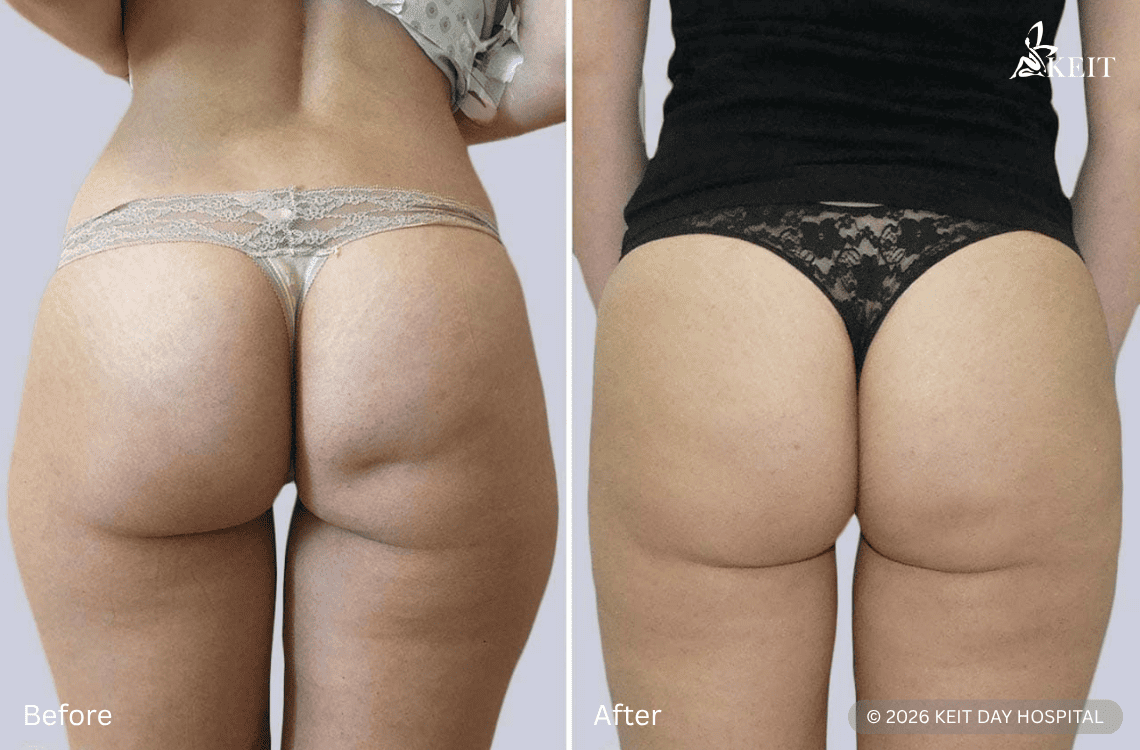
A BBL and butt implants can both increase buttock volume, but they produce different patterns of shape and projection.
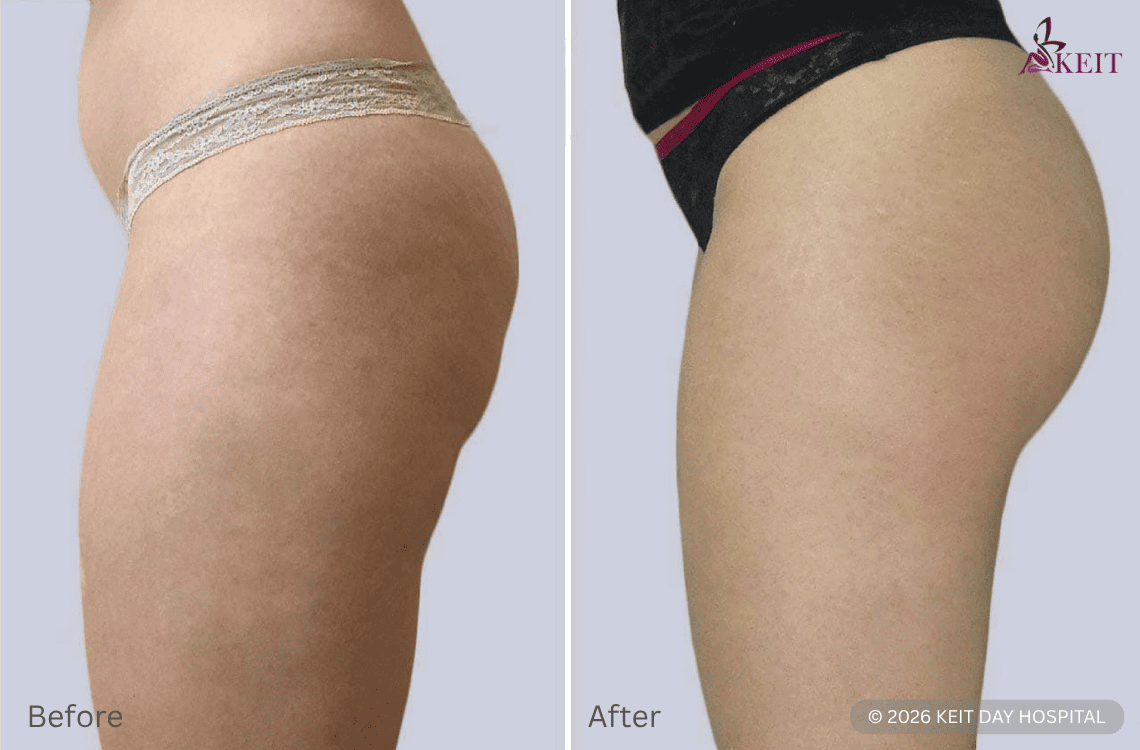
A BBL uses transferred fat to create a softer, more gradual increase in volume and can enhance the transition between the waist, hips and buttocks. The final result depends on the amount of fat retained after healing.
Butt implants provide a defined increase in volume and projection based on the implant’s size, shape and placement. They can create more consistent projection, while the final contour also depends on the patient’s existing anatomy and soft-tissue coverage.
BBL vs butt implants: risks and complications
Both BBL and butt implant surgery carry surgical risks, but their potential complications are different.
A BBL can involve complications such as infection, seroma, contour irregularities, fat necrosis and fat embolism. Fat embolism is a particularly important safety concern with gluteal fat transfer, making appropriate injection technique and placement essential.
Butt implants can be associated with infection, seroma, wound-healing problems, implant malposition, asymmetry, palpability, capsular contracture and the potential need for revision or implant removal. The risk of complications depends on factors including implant placement, surgical technique and individual healing.
BBL vs butt implants: which procedure is right for you?
The appropriate procedure depends on the patient’s anatomy, available donor fat, desired degree of augmentation and preference for fat transfer or an implant-based approach.
A BBL may be considered when sufficient donor fat is available and the patient also wants liposuction and body contouring. Butt implants may be considered when greater or more predictable implant-based projection is desired or when there is insufficient donor fat for a BBL.
In selected patients, implant augmentation and fat grafting can also be combined to provide implant-based projection with additional soft-tissue contouring. A specialist assessment is required to determine which approach is appropriate and whether the desired result can be achieved safely.