Published on:

 Reading Time: 4 min

 Brazilian Butt Lift
A skinny BBL is a Brazilian Butt Lift designed for slim patients with limited fat reserves who want to enhance buttock shape and body proportions. The procedure uses the patient’s own fat to create a fuller, more balanced contour, but suitability depends on having enough donor fat and realistic expectations about the achievable result.
 Table of Contents:
-
1
 What is a skinny BBL?
-
2
Who is a suitable candidate for a skinny BBL?
-
3
Skinny BBL vs traditional BBL: what is the difference?
-
4
How is a skinny BBL performed?
-
5
Skinny BBL recovery and healing timeline
-
6
Skinny BBL before and after: what results can you expect?
-
7
What are the risks and considerations of a skinny BBL?
-
8
How much does a skinny BBL cost in the UK?
In this article, we explain what a skinny BBL is, who may be suitable for the procedure, and how it differs from a traditional Brazilian Butt Lift. We also cover how the procedure is performed, recovery and healing timeline, expected before-and-after results, potential risks, and the factors that influence skinny BBL cost in the UK.
What is a skinny BBL?
A skinny BBL is a Brazilian Butt Lift designed for slim patients with a lower amount of body fat who want to enhance the shape and proportions of their buttocks. It is a cosmetic procedure aimed at creating a fuller, more balanced buttock contour while maintaining a natural appearance that suits the patient’s body frame.
Who is a suitable candidate for a skinny BBL?
Suitability for a skinny BBL depends on several factors:
- Available donor fat: Sufficient fat must be available in donor areas such as the abdomen, flanks, thighs, or back for transfer.
- Body composition and BMI: Patients with a BMI around 18.5–25 may still be suitable if they have adequate donor fat. A very low BMI or minimal fat reserves can limit the achievable enhancement.
- Realistic expectations: Patients should understand that the achievable enhancement depends on their anatomy and available fat volume.
- Overall health: Patients should be medically fit for surgery and able to undergo anaesthesia and recovery safely.
Skinny BBL vs traditional BBL: what is the difference?
The main difference between a skinny BBL and a traditional BBL is the amount of available fat volume and the level of enhancement that can be achieved. The key differences between the two procedures include:
| Feature | Skinny BBL | Traditional BBL |
|---|---|---|
| Patient profile | Slim patients with limited fat reserves |
Patients with more available donor fat |
| Fat availability | Smaller amount of fat for transfer |
Larger amount of fat available for transfer |
| Main goal | Improve shape, contour, and proportions |
Increase volume and reshape the buttocks |
| Surgical planning | Requires precise fat selection and placement |
Allows greater volume enhancement when sufficient fat is available |
How is a skinny BBL performed?
A skinny BBL is performed under general anaesthesia and usually takes around 2–4 hours, depending on the amount of liposuction and fat transfer required. The procedure begins with liposuction to remove available fat from suitable donor areas, such as the abdomen, flanks, thighs, or back. The harvested fat is then purified to isolate healthy fat cells before being carefully injected into specific areas of the buttocks to improve shape, contour, and proportions.

Skinny BBL recovery and healing timeline
Recovery after a skinny BBL is gradual, with most patients resuming daily activities within 1–2 weeks and final results visible after 3–6 months once swelling reduces and the transferred fat settles.
- First 1–2 weeks: Swelling, bruising, and discomfort are expected. Patients should avoid direct pressure on the buttocks and follow the surgeon’s sitting instructions.
- Weeks 2–6: Daily activities can gradually resume, although strenuous exercise and pressure on the treated areas may still be restricted. The initial swelling continues to improve during this period.
- Months 1–3: The transferred fat begins to stabilise, and the buttock contour becomes more defined as the tissues continue to settle.
- Months 3–6: The final shape and volume become clearer as residual swelling resolves and the healing process progresses.
Skinny BBL before and after: what results can you expect?
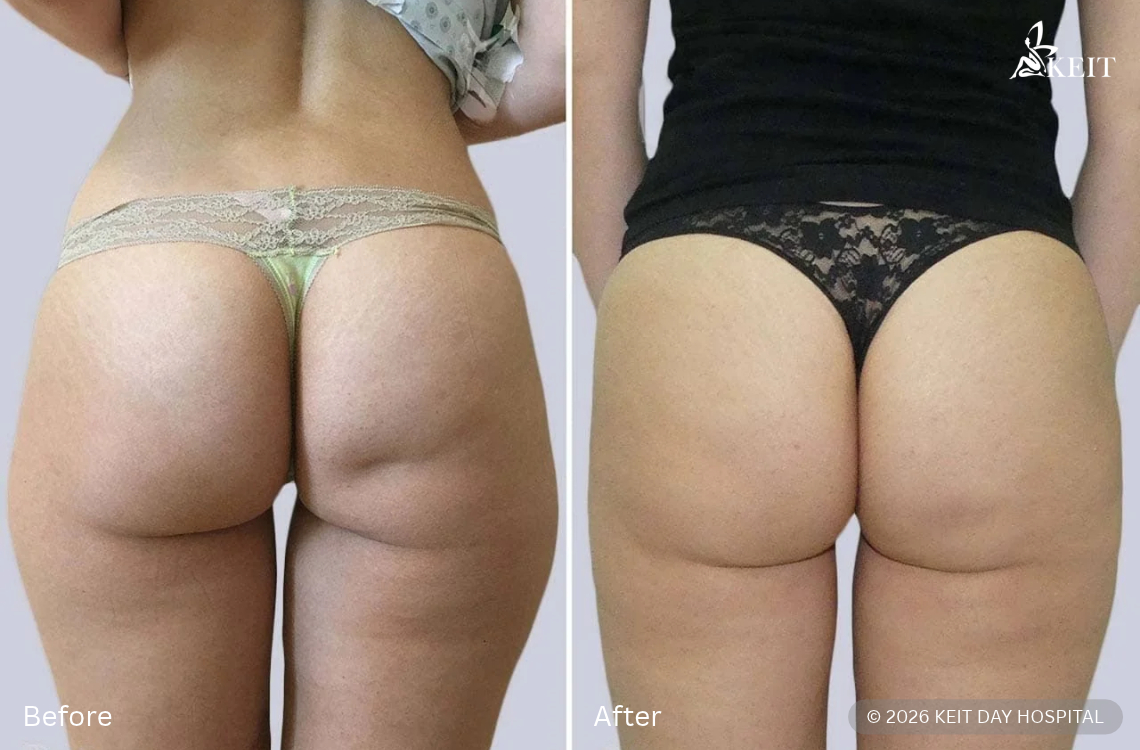
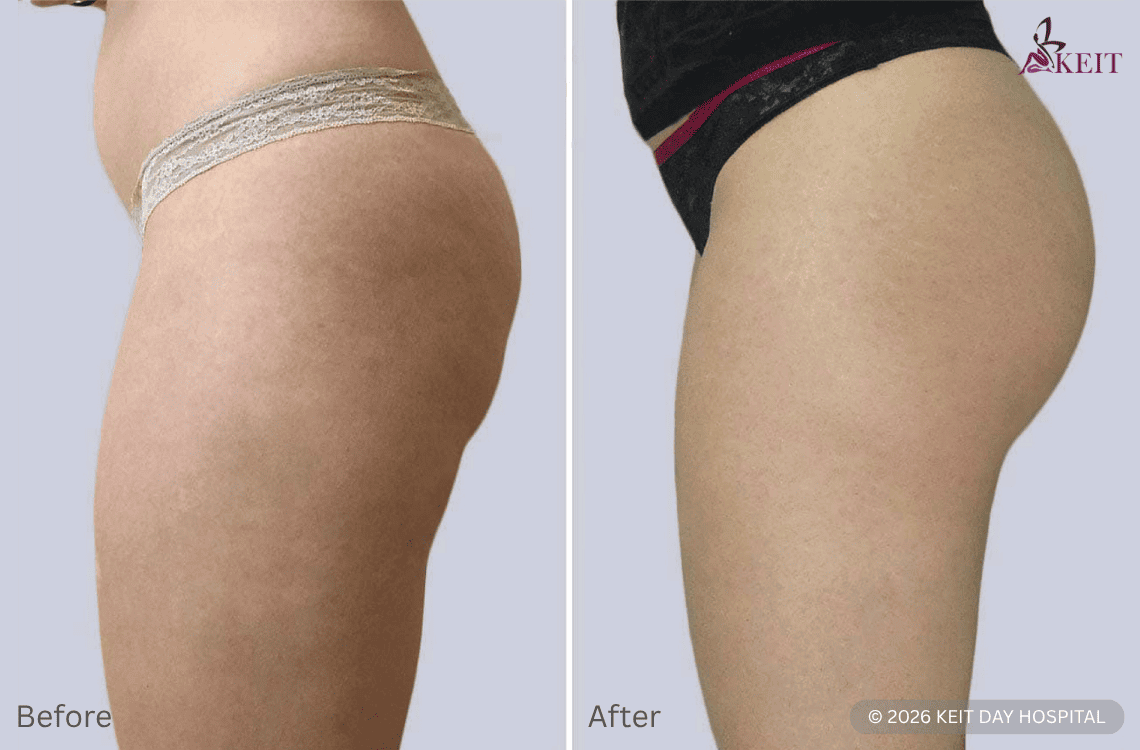
Before and after results from a skinny BBL show improved buttock shape, enhanced curves, and better overall body proportions. The extent of improvement depends on the patient’s starting anatomy, available donor fat, and the amount of volume that can be safely transferred. Slim patients often achieve a more defined silhouette and natural contour, rather than a dramatic increase in buttock size. The final appearance varies between patients, as factors such as fat survival and individual body structure influence the outcome.
What are the risks and considerations of a skinny BBL?
A skinny BBL carries the same surgical risks as other fat transfer procedures and requires careful planning to achieve safe, balanced results. Possible risks include:
- Fat absorption: Some transferred fat may be naturally absorbed by the body, affecting the final volume.
- Asymmetry: Differences in fat survival or healing may affect symmetry.
- Contour irregularities: Uneven fat distribution may affect the smoothness of the buttock contour.
- Infection: Although uncommon, infection can occur after surgery and may affect the healing process.
- Fluid accumulation: Fluid or blood can collect under the skin after surgery, which may require monitoring or drainage.
- Revision surgery: Additional procedures may occasionally be needed to refine the outcome.
For slim patients, consultation is particularly important to assess available donor fat and determine whether the desired result can be safely achieved.
How much does a skinny BBL cost in the UK?
In the UK, a skinny BBL costs around 9,500–14,000 euro, depending on the complexity of the procedure, the amount of liposuction required, and the volume of fat transfer needed. The final cost is influenced by factors such as the surgeon’s expertise, clinic facilities, anaesthesia, and post-operative care. A personalised price is confirmed after consultation, once the surgeon has assessed the patient’s anatomy and treatment goals.