Published on:
 Modified on:

 Reading Time: 5 min

 Brazilian Butt Lift
Hip dips are natural inward curves that appear on the outer sides of the hips, between the hip bone and the upper thigh. They are usually caused by the body’s natural anatomy, including bone structure, muscle shape, and fat distribution. Although they are a normal anatomical feature, some people choose to explore treatment options to achieve a smoother hip contour and a more balanced waist-to-hip silhouette.
 Table of Contents:

In this article, we explain what hip dips are, what causes them, and how they differ from love handles. We also cover whether exercise can reduce their appearance, the available non-surgical and surgical treatment options, how BBL or fat transfer can improve hip contour, and when to seek specialist assessment.
What are hip dips?
Hip dips, also known as violin hips, are natural inward curves along the outer hips, just below the hip bone. They are part of normal body anatomy and vary in visibility depending on pelvic structure, fat distribution, muscle development, and overall body composition.
Hip dips are not a medical condition and do not require treatment for health reasons. When they are treated aesthetically, the goal is to improve the continuity of the hip contour, enhance lower-body proportions, and create a smoother transition between the waist, hips, and upper thighs.
What causes hip dips?
Hip dips are mainly caused by natural body anatomy. If you are wondering “why do I have a hip dip?”, the answer often comes down to the relationship between the hip bones, muscles, and soft tissue. Hip dips are not a sign of weight gain, poor fitness, or anything abnormal, which is why they can appear on slim, athletic, curvy, or overweight body types.
The most common factors that affect hip dips include:
- Bone structure: The shape of the pelvis and upper thigh bone can make the outer hip indentation more visible.
- Fat distribution: Less fat around the outer hips can make hip dips appear deeper.
- Muscle shape: The gluteal and hip muscles can affect how smooth or rounded the hip contour looks.
- Genetics: Body shape, hip width, and fat storage patterns are strongly influenced by genetics.
- Body composition: Changes in weight, muscle tone, or fat volume can make hip dips more or less noticeable.
Hip dips vs Love handles: What is the difference?
Hip dips and love handles can both affect the shape of the waist and hip area, but they are different concerns. Hip dips are inward curves on the outer hips, while love handles are fat deposits around the sides of the waist, flanks, or lower back.
The main difference is that hip dips are mostly related to natural anatomy, while love handles are linked to localized fat. Hip dips can make the outer hip line look less rounded, while love handles can make the waist appear less defined. This is why treatment options differ: hip dips often require volume correction, while love handles are usually treated with fat reduction.
Can exercise get rid of hip dips?
Exercise can help strengthen and tone the muscles around the hips, thighs, and buttocks, but it cannot completely remove hip dips. However, targeted exercise may improve muscle tone and contribute to a firmer, more defined lower-body appearance.
Common exercises for hip dips include:
- Hip thrusts: Help strengthen the glutes and improve buttock projection.
- Glute bridges: Target the glutes and support lower-body firmness.
- Squats: Work the thighs, glutes, and hips together.
- Side lunges: Help strengthen the outer hips and thighs.
- Abductor exercises: Focus on the muscles around the outer hip area.
- Side plank hip dips: Strengthen the core, hips, and oblique muscles.
How to get rid of hip dips: Treatment options
The most suitable treatment for hip dips depends on the severity of the indentation, the quality of the surrounding tissue, and the patient’s overall body proportions. In aesthetic planning, the aim is to improve the hip contour while maintaining a natural and balanced silhouette.
Treatment options are generally divided into two categories:
Non-Surgical options
- Targeted hip dip exercises: Can improve muscle tone and create a firmer lower-body appearance, but results are limited.
- Fillers for hip dips: Can add temporary volume to mild indentations, helping create a smoother hip line.
Surgical options
- Hip dip fat transfer: Uses the patient’s own fat to add volume to the outer hips and soften the indentation.
- BBL surgery: Combines liposuction and fat transfer to improve the buttocks, hips, and overall silhouette.
- Liposuction of surrounding areas: Can reduce fat around the waist, flanks, or lower back to improve body proportions.

Hip dip treatment: Which option is right for you?
The right treatment depends on whether the hip dips are caused mainly by lack of volume, surrounding fat deposits, or overall body proportions, as well as how much correction the patient wants. For mild indentations, targeted exercises or fillers may be enough to create subtle improvement. For deeper hip dips or a more noticeable imbalance between the waist, hips, and buttocks, fat transfer or BBL surgery may be more suitable.
During a consultation, the surgeon assesses the patient’s body shape, fat availability, skin quality, and expectations to recommend the most suitable option.
BBL for hip dips
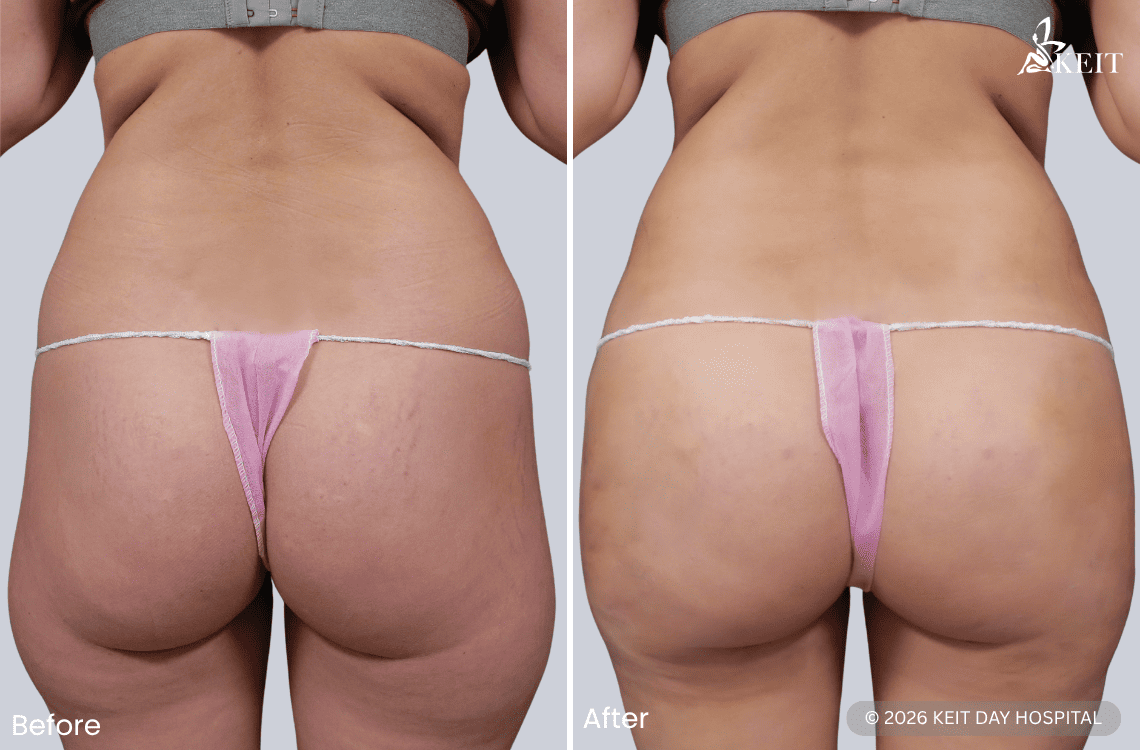
When hip dips are more visible due to limited volume in the outer hip area, BBL can help soften the indentation and create a smoother transition between the waist, hips, and thighs. Rather than focusing only on buttock size, the procedure can enhance both the outer hips and buttocks for a more balanced lower-body silhouette.
The procedure involves two main steps:
- Liposuction: Fat is removed from areas such as the abdomen, waist, flanks, back, or thighs.
- Fat transfer: The collected fat is processed and injected into selected areas of the buttocks and outer hips to improve shape and contour.
The final result depends on the patient’s anatomy, available donor fat, skin quality, and how the transferred fat settles during healing.