Published on:
 Modified on:

 Reading Time: 6 min
 Cervicofacial Lift
A facelift (rhytidectomy) is a surgical procedure designed to lift sagging tissues, restore youthful facial contours and reposition underlying structures for a refreshed yet natural look. Modern facelift relies on advanced surgical approaches that lift and reposition deeper facial layers, not just the skin, ensuring results that remain stable over time. When properly performed, a lift for face provides long-lasting rejuvenation that typically endures 8–12 years, depending on skin quality, ageing patterns and lifestyle.
 Table of Contents:
-
1
 What is a facelift and what causes facial sagging
-
2
Ideal candidate for a lifting facial: Key factors to consider
-
3
Facelift techniques: Mini, full, neck lift, temporal lift and deep plane
-
4
Facelift surgery explained: The journey to your facial rejuvenation
-
5
Facelift before and after: The recovery timeline
-
6
Discover the main benefits of a facelift surgery
-
7
Potential risks: What to consider before facelift surgery
-
8
Non-surgical facelift: Main options for skin tightening
In this article, you will discover everything you need to know about modern facelift surgery, including a detailed look at what causes facial sagging and the criteria for being an ideal candidate. We explore the main facelift techniques, outline the entire surgical journey and provide a clear recovery timeline. Finally, we detail the benefits, discuss the potential risks and review the main non-surgical options for skin tightening.
What is a facelift and what causes facial sagging
A facelift refines facial contours by addressing the underlying causes of aging, such as tissue descent, reduced ligament support and skin laxity. Through precise repositioning of deeper structures and careful removal of excess skin, the procedure restores definition to the cheeks, jawline and neck.
For an official medical overview of facelift techniques and indications, you can also refer to the American Society of Plastic Surgeons.
Main causes of facial sagging
Facial sagging develops over time due to several anatomical and biological changes:
- Loss of collagen and elastin, reducing skin firmness.
- Weakening of the SMAS layer, which supports facial structure.
- Descent of facial fat pads, especially in the mid-face and jawline.
- Skin thinning caused by aging, sun exposure or genetics.
- Muscle laxity in the cheeks, lower face and neck.
Ideal candidate for a lifting facial: Key factors to consider
A facelift (rhytidectomy) is suitable for individuals seeking to correct moderate to advanced signs of ageing that cannot be improved enough with non-surgical treatments. You may be an ideal candidate if you:
- Have sagging or loose skin on the cheeks, lower face or neck.
- Notice deep nasolabial folds, jowls or a heavy jawline.
- Have laxity in the neck or visible platysmal bands.
- Are in good overall health and medically fit for surgery.
A personalised assessment determines the most appropriate technique based on facial anatomy and ageing severity.
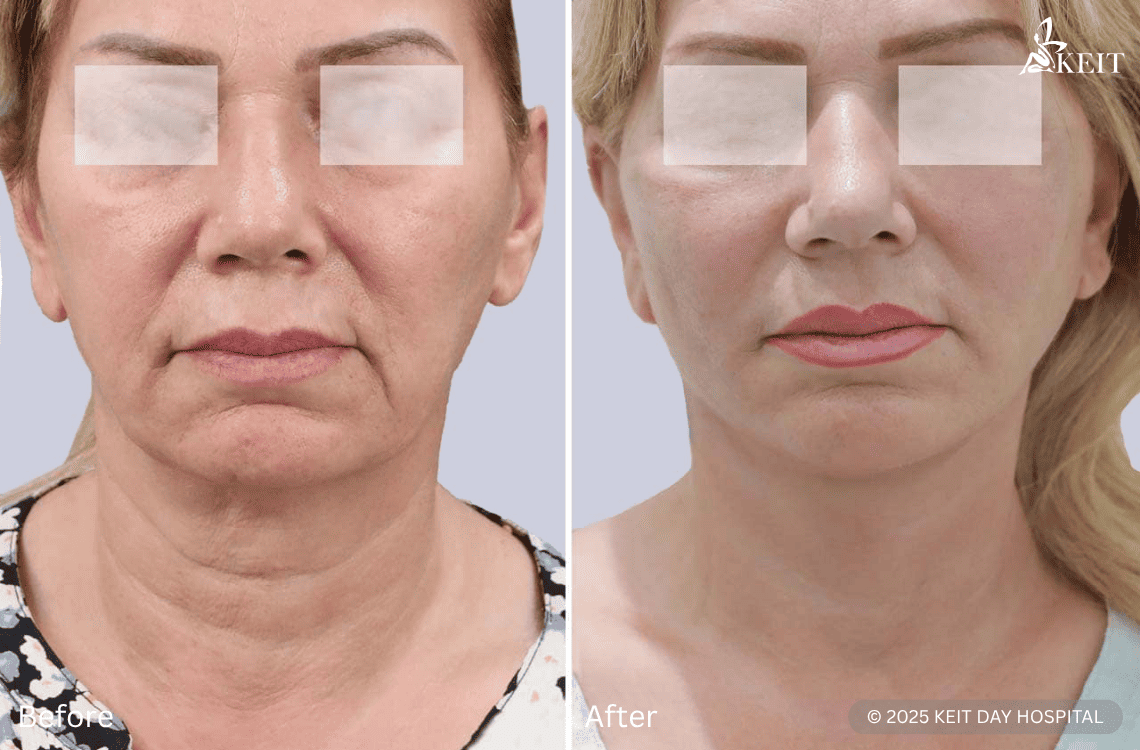
Facelift techniques: Mini, full, neck lift, temporal lift and deep plane
Modern lifting facial includes several techniques tailored to different ageing patterns:
Lower facelift (mini facelift): Refining the jawline and lower face
A lower facelift treats mild to moderate lower-face sagging and early jowling. Short incisions around the ears allow tightening of underlying tissues for a subtle, refreshed jawline. The mini facelift procedure lasts 1.5–2 hours under local anesthesia with sedation and offers a quicker recovery. Ideal for younger patients or those seeking early-stage correction.
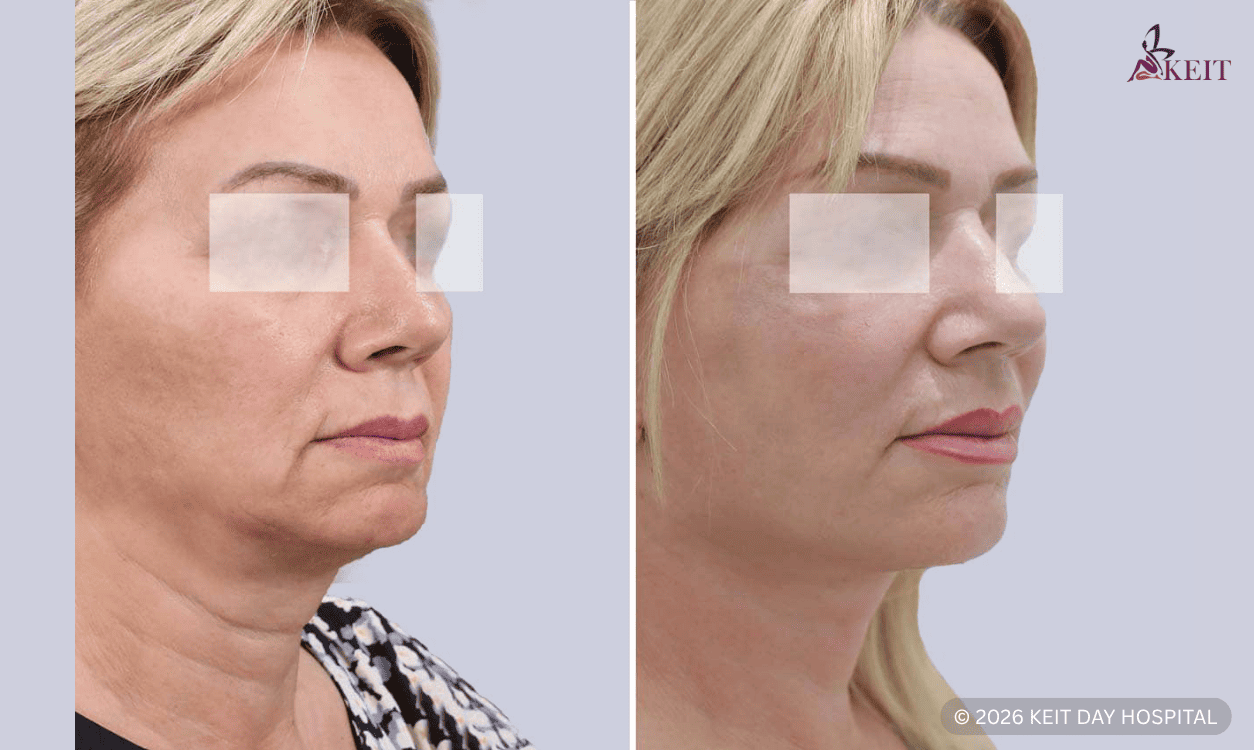
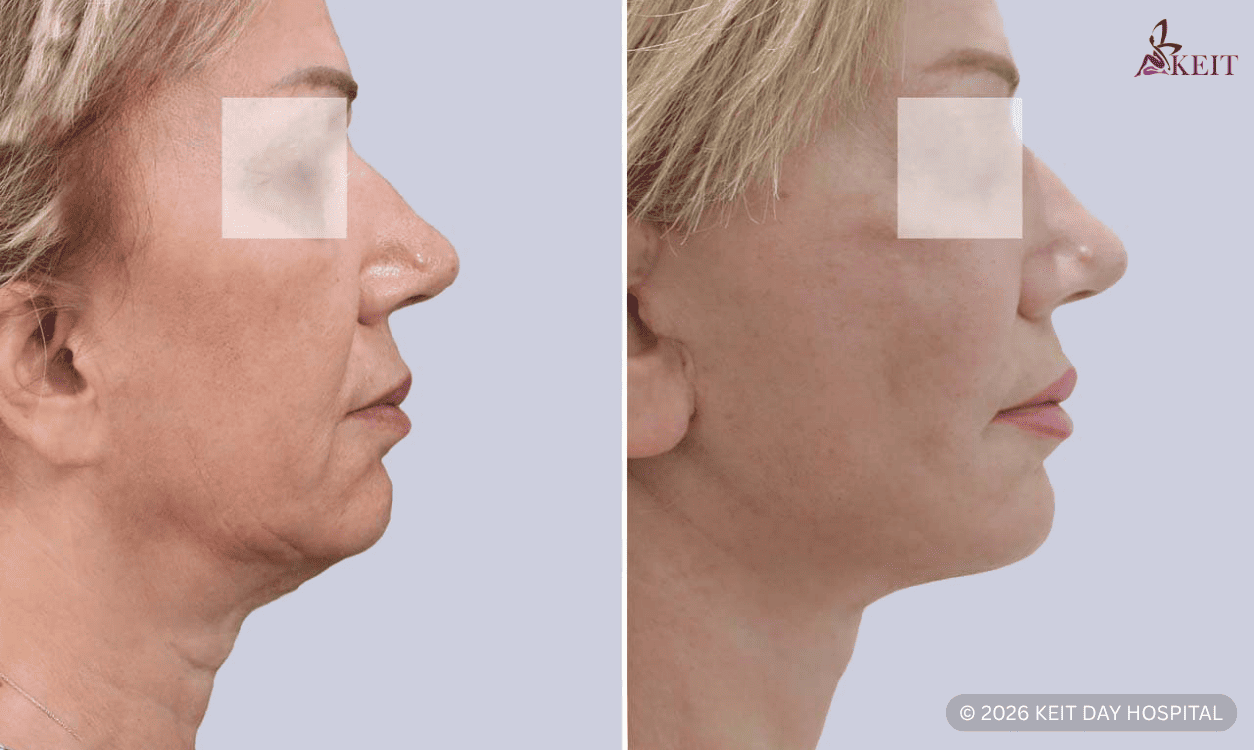
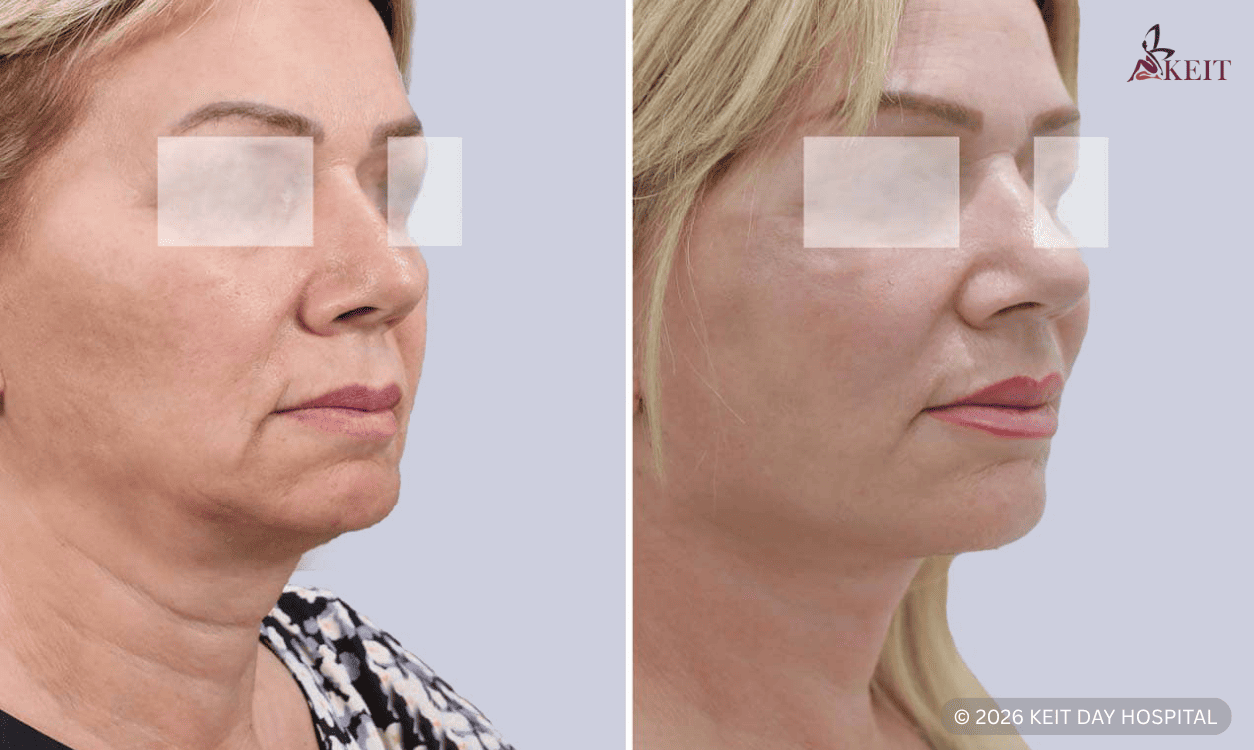
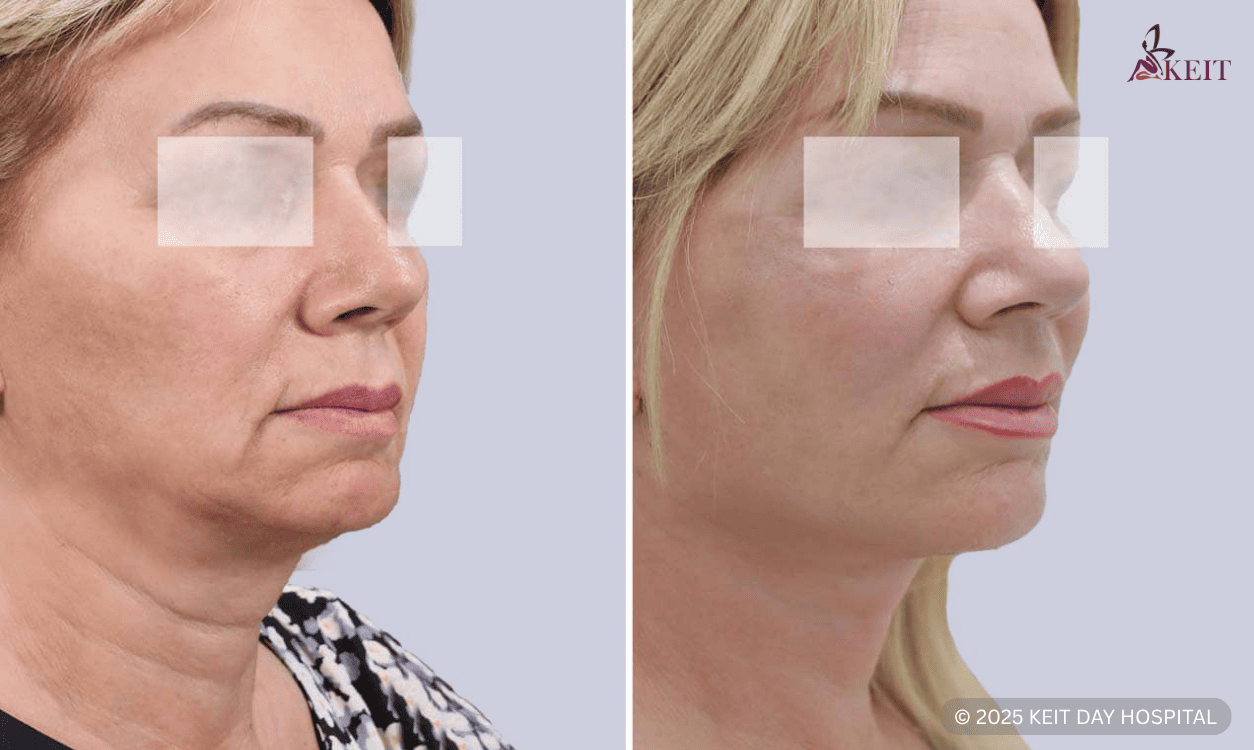
Cervico-facial facelift: The full facelift
A full facelift rejuvenates the mid-face, jawline and neck. Incisions along the hairline and near the ears allow repositioning of the SMAS layer, refining facial contours and tightening the neck. The surgery lasts 2–4 hours under general anesthesia and delivers natural, long-lasting results for moderate to advanced ageing.
Neck lift: Contouring the chin and neck
A neck lift targets loose skin, platysmal bands and diminished definition. Incisions behind the ears and under the chin allow muscle tightening and removal of excess skin. The procedure lasts 1–2 hours under general anesthesia and is frequently combined with a facelift.
Temporal lift: Elevating the outer brow and temples
A temporal lift subtly elevates the outer brow and smooths the temple and eye area. Small incisions hidden in the hairline ensure discreet scarring. The procedure typically lasts around 1 hour, under general anesthesia or local anesthesia with sedation.
Deep plane facelift: Advanced lifting of mid-face and lower face
A deep plane facelift lifts the SMAS, ligaments and deeper facial layers together, correcting mid-face descent, deep folds and lower-face laxity. This method offers very natural, long-lasting results. Surgery lasts 2.5–4 hours under general anesthesia and is ideal for more significant sagging or volume descent.
Facelift surgery explained: The journey to your facial rejuvenation
Facelift surgery follows a structured medical pathway:
- Consultation and facial analysis: Your journey begins with a detailed assessment of facial proportions, skin elasticity, ageing patterns and bone structure. The surgeon evaluates which technique best suits your goals.
- Medical evaluation: Every patient undergoes complete medical clearance, including blood tests, ECG and evaluations with both the anesthetist and the cardiologist to confirm fitness for surgery.
- Pre-operative preparation: Patients receive instructions on fasting, medication restrictions, hygiene protocols and lifestyle recommendations that optimise recovery and safety.
- Procedure day: Facelift surgery, lasting 1.5 to 4 hours and often performed under general anesthesia, involves the surgeon creating discreet incisions near the hairline and ear. Through these access points, underlying tissues (including the SMAS layer) are repositioned and excess skin is removed to restore a youthful appearance. The procedure concludes with the application of light bandaging to aid the immediate healing process.

Facelift before and after: The recovery timeline
Recovery progresses gradually over several phases:
- Days 1–3: Mild swelling, tightness and bruising. Light activities resumed in 48–72 hours.
- Week 1: Bruising fades and stitches may be removed depending on technique.
- Weeks 2–4: Swelling continues improving and most daily activities resume.
- Months 2–3: Facial contours refine and scars soften.
Facelift incisions and scars: What to expect
A key to successful facelift surgery is careful incision management. Facelift scars are strategically placed along the face’s natural lines: starting within the hairline, extending around the curves of the ears and sometimes including a small incision under the chin. Initially pink, they are designed to fade over the first 2 to 3 months. Thanks to advanced surgical techniques, most scars become discreet and genuinely difficult to detect within one year.
Discover the main benefits of a facelift surgery
A well-performed facelift offers multiple rejuvenating benefits:
- Lifts and tightens sagging tissues in the mid-face, jawline and neck.
- Reduces jowls and restores definition to the lower face.
- Smooths deep nasolabial folds and marionette lines.
- Improves neck laxity and eliminates platysmal banding.
- Repositions facial fat pads for natural volume.
- Provides long-lasting improvement compared to non-surgical treatments.
Potential risks: What to consider before facelift surgery
A lifting facial is usually safe when performed by experienced surgeons, but understanding potential effects helps set realistic expectations.
- Common effects: Swelling, numbness, bruising or mild tightness.
- Specific risks: Temporary asymmetry, scar sensitivity, delayed healing or minor contour irregularities.
- Rare risks: Infection, hematoma or prolonged nerve sensitivity.
Following post-operative instructions greatly minimises these risks.
Non-surgical facelift: Main options for skin tightening
Non-surgical treatments can improve early signs of aging or complement surgical results. Key options include:
- Dermal fillers: Provide structural lift by supporting the mid-face, cheeks and jawline to improve overall facial proportions.
- Radiofrequency skin tightening: Uses heat to stimulate collagen production for improved skin firmness over time.
- Microneedling with PRP: Promotes active collagen renewal to improve texture and address mild skin laxity.
- HIFU (Ultrasound): Targets deep structures, including the SMAS layer, for effective non-surgical tightening.
- Laser resurfacing: Focuses on improving texture, fine lines and addressing mild surface laxity.