Published on:

 Reading Time: 5 min
 Cervicofacial Lift
Jowls are a common lower-face concern characterised by sagging of the skin and soft tissues along the jawline, which can affect facial definition. The appropriate treatment depends on the degree of laxity and may range from non-surgical procedures for mild changes to facelift surgery for more advanced cases.
 Table of Contents:
-
1
 What are jowls? Understanding lower face sagging
-
2
What causes jowls to develop on the face?
-
3
Can jowls be prevented or improved naturally?
-
4
What are the main treatment options for jowls?
-
5
When is facelift surgery recommended for jowls?
-
6
How is facelift surgery performed to improve jowls?
-
7
Facelift before and after: recovery timeline
-
8
Risks and complications of facelift surgery
-
9
How much does facelift surgery cost in the UK?
In this article, we explain what jowls are, why they develop, and whether they can be improved naturally. We also discuss the main treatment options, when facelift surgery may be recommended, how the procedure is performed, recovery timeline, potential risks, and the factors that influence facelift cost.
What are jowls? Understanding lower face sagging
Jowls are areas of loose skin and soft tissue that appear along the lower cheeks and jawline, creating a less defined lower-face contour. They are described as sagging skin around the jawline and lower face. The appearance of jowls can range from mild skin laxity along the jawline to more noticeable sagging that affects facial definition. Jowls may involve changes in the skin, underlying fat compartments, and supporting facial tissues of the lower face.
What causes jowls to develop on the face?
Jowls develop when the skin and supporting facial tissues lose firmness, leading to sagging along the lower face and jawline. Factors that contribute to jowl formation include:
- Ageing: Reduced collagen and elastin production over time decreases skin firmness and support.
- Loss of facial volume: Changes in facial fat distribution and volume loss can reduce structural support, allowing tissues to descend.
- Reduced skin elasticity: Less elastic skin is more prone to laxity and sagging around the jawline.
- Genetics: Facial structure and inherited skin characteristics can influence the tendency to develop jowls.
- Weight fluctuations: Significant weight changes can affect skin elasticity and contribute to excess loose skin.
Can jowls be prevented or improved naturally?
Jowls cannot always be prevented, but healthy lifestyle habits can help maintain skin quality and support overall facial ageing. However, natural methods cannot tighten significant skin laxity or reposition sagging facial tissues. Ways to support skin health include:
- Sun protection: Helps reduce UV-related collagen breakdown.
- Healthy lifestyle: A balanced diet, regular exercise, and avoiding smoking support skin quality.
- Stable weight management: Helps minimise changes that may affect skin laxity.
- Skincare: Clinically supported skincare ingredients may improve skin texture and hydration.
Facial exercises may improve muscle tone but cannot remove excess skin or correct deeper tissue descent that causes visible jowls.
What are the main treatment options for jowls?
Treatment for jowls includes non-surgical procedures for mild concerns and surgical options for more advanced sagging, depending on the severity of skin laxity and lower-face ageing changes.
Non-surgical treatments:
- Dermal fillers: Restore volume loss in targeted areas to improve facial support and soften early jowling.
- Radiofrequency or ultrasound skin tightening: Stimulate collagen production to improve mild skin laxity and skin firmness.
- Laser skin resurfacing: Improves skin texture and quality but does not correct significant sagging or excess skin.
Surgical treatments:
- Facelift surgery: The main surgical treatment for significant jowls. It lifts and repositions deeper facial tissues and removes excess skin to restore lower-face definition.
- Neck lift surgery: Addresses loose neck skin and muscle laxity that may contribute to an undefined jawline and is often combined with facelift surgery when required.
When is facelift surgery recommended for jowls?
Facelift surgery is recommended when jowls are caused by significant skin laxity and lower-face tissue descent that cannot be adequately improved with non-surgical treatments. Key indicators include:
- Moderate to severe jowling: Noticeable sagging of the lower face affecting jawline definition.
- Loss of facial support: Descent of deeper facial tissues contributes to a heavier lower-face appearance.
- Excess or loose skin: Skin laxity that cannot be corrected through tightening treatments alone.
- Limited improvement from non-surgical treatments: Non-surgical options may not provide sufficient correction when there is significant tissue descent.

How is facelift surgery performed to improve jowls?
Facelift surgery for jowls is performed under general anaesthesia and usually takes around 2–4 hours, depending on the extent of correction required. During the procedure, the surgeon makes discreet incisions around the ears and hairline to access the deeper facial tissues. The underlying supporting layer (SMAS) is lifted and repositioned to restore support to the lower face, while any excess skin is removed and carefully redraped to achieve a smoother, more natural contour. The incisions are then closed with sutures, and dressings may be applied to support the initial healing process.
Facelift before and after: recovery timeline
Recovery after facelift surgery follows a gradual healing timeline:
- Days 1–3: Swelling, bruising, tightness, and mild discomfort are expected. Dressings may be used, and the head should be elevated to reduce swelling.
- Days 4–14: Bruising and swelling gradually improve. Sutures are usually removed within this period, and patients can begin returning to normal daily activities.
- Weeks 3–6: Most visible swelling continues to reduce, and the face starts to look more natural. Light exercise may usually be resumed based on the surgeon’s advice.
- Months 3–6: The facial contours become more defined as remaining swelling decreases and scars continue to mature.
- Months 6–12: Final results become visible as tissues fully settle and the lower-face contour stabilises.
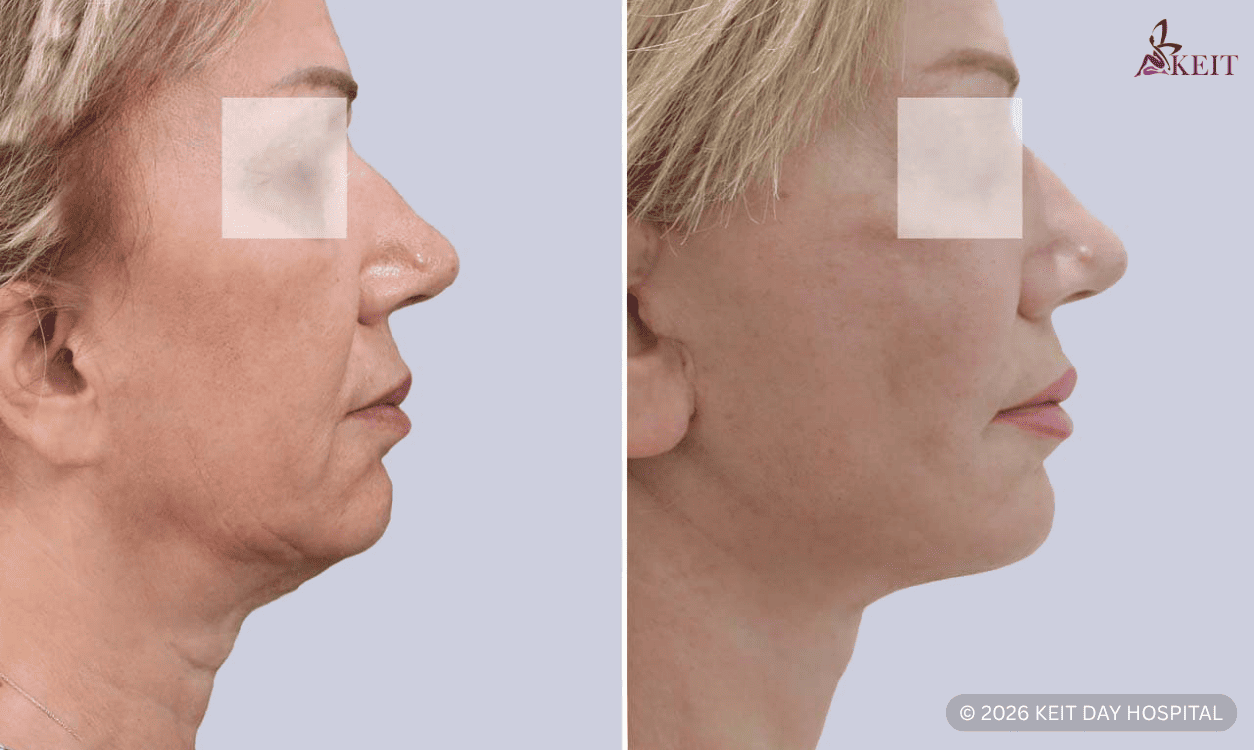
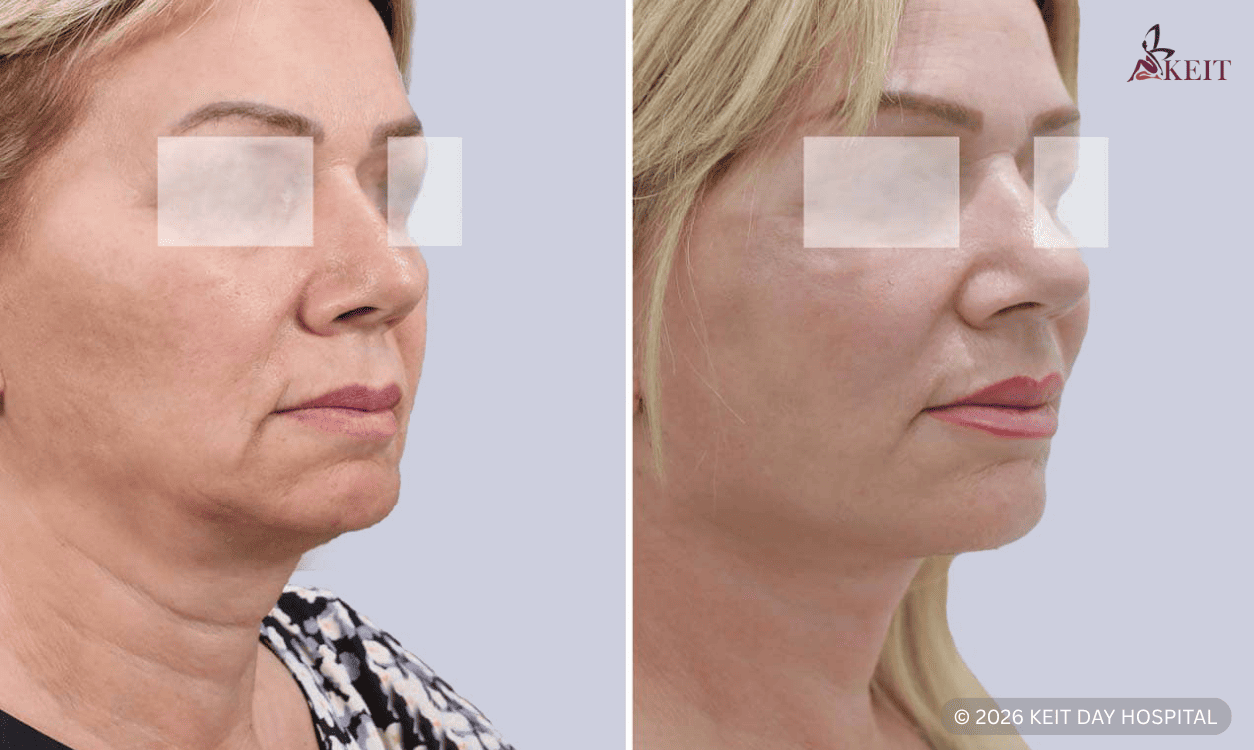
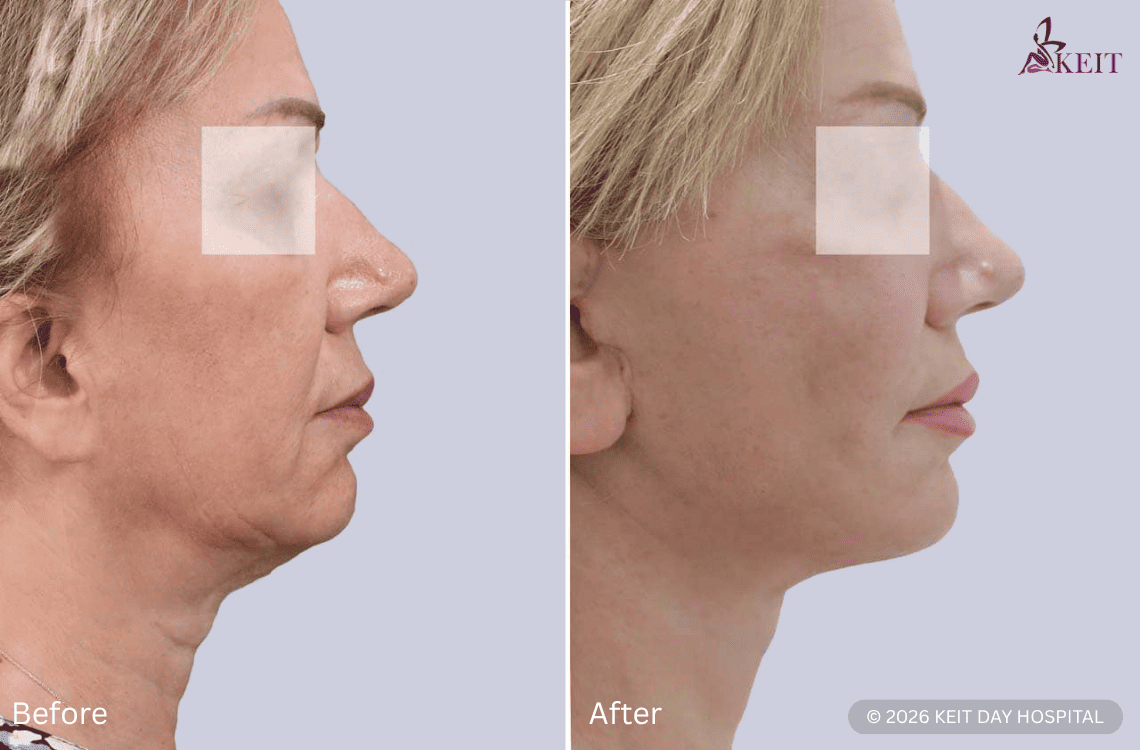
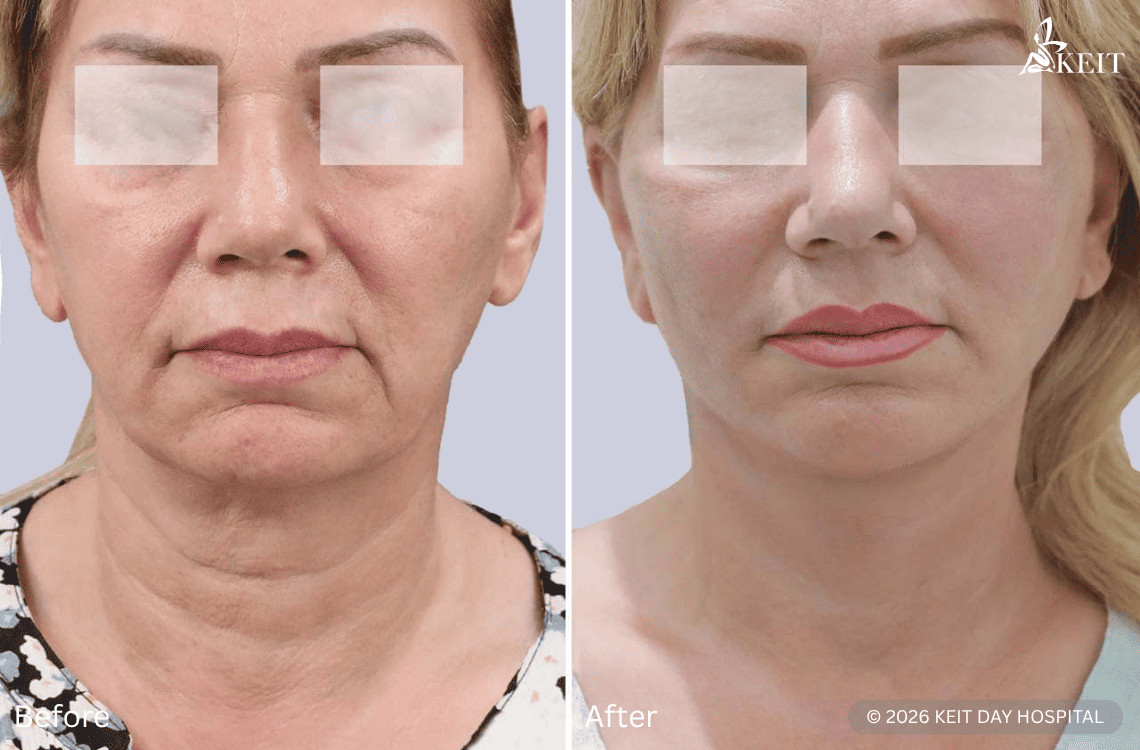
Facelift before and after results show reduced jowling, improved jawline definition, and a smoother lower-face contour. The final outcome depends on factors such as skin quality, facial anatomy, surgical technique, and individual healing.
Risks and complications of facelift surgery
Facelift surgery is generally considered safe when performed by an experienced surgeon, but like any surgical procedure, it carries potential risks and complications, which include:
- Scarring: Incisions leave scars, which usually fade and become less noticeable over time.
- Bleeding or haematoma: Blood collection under the skin may require additional treatment.
- Infection: Infection at the surgical site can affect healing and may require medical management.
- Changes in sensation: Temporary numbness or altered skin sensitivity may occur during recovery.
How much does facelift surgery cost in the UK?
Facelift surgery in the UK typically costs between 9,500 and 18,000 euro, depending on the procedure complexity and the extent of correction required. The final price may vary based on:
- Type of facelift performed: Different techniques involve different levels of tissue correction.
- Additional procedures: A neck lift or other facial procedures may increase the overall cost.
- Clinic and surgical fees: Costs include the surgeon, anaesthesia, facility, and aftercare.
A personalised consultation is required to determine the most suitable approach and provide an accurate cost based on the patient’s facial anatomy and treatment goals.