Published on:

 Reading Time: 5 min

 Cervicofacial Lift
Ozempic face refers to facial changes that can occur after significant weight loss, including reduced facial volume, hollowing, skin laxity, and more visible facial folds. These changes result from the loss of facial fat and soft tissue support during weight reduction and can be improved with non-surgical or surgical treatments based on the individual’s needs.
 Table of Contents:
-
1
 What is Ozempic face?
-
2
What causes Ozempic face?
-
3
What does Ozempic face look like?
-
4
Can Ozempic face be prevented?
-
5
How is Ozempic face treated?
-
6
Ozempic face fillers vs facelift: which treatment is more suitable?
-
7
Facelift surgery for Ozempic face: how the procedure is performed
-
8
Ozempic face before and after: what results can you expect after a facelift?
In this article, we explain what Ozempic face is, why it develops, and the facial changes associated with significant weight loss while using GLP-1 medications. We also cover how to recognise Ozempic face, whether it can be prevented, available treatment options, the differences between fillers and facelift surgery, how facelift surgery is performed, and the expected results after treatment.
What is Ozempic face?
Ozempic face refers to facial changes that occur after significant weight loss, characterised by reduced facial volume, hollowing, and increased skin laxity. The term is commonly used to describe the loss of facial fullness and support that can occur after rapid or substantial weight reduction associated with GLP-1 medications such as Ozempic. It may result in a thinner facial appearance, more visible wrinkles, and deeper facial folds.
What causes Ozempic face?
Ozempic face develops due to facial volume loss after significant weight loss and is not a direct effect of Ozempic or other GLP-1 receptor agonist medications. When body fat decreases rapidly, facial fat compartments that provide volume and support may also reduce, particularly in areas such as the cheeks and temples. This loss of facial volume can make the skin appear looser and make existing ageing changes more noticeable.
What does Ozempic face look like?
Ozempic face is characterised by a thinner, more hollow facial appearance with reduced fullness, visible skin laxity, and more pronounced facial folds. Common changes associated with Ozempic face include:
- Reduced cheek volume, making the cheeks appear flatter or more hollow.
- More noticeable facial folds, including deeper nasolabial folds and marionette lines.
- Looser facial skin, with reduced firmness in areas affected by volume loss.
- Reduced facial definition, affecting the contours of the cheeks, jawline, and lower face.

Can Ozempic face be prevented?
Ozempic face cannot always be prevented, but gradual weight loss and maintaining skin health may help reduce the extent of facial changes. The likelihood of developing noticeable facial changes depends on factors such as the amount of weight lost, skin elasticity, age, and genetics. Helpful measures include:
- Gradual weight loss, allowing the skin and soft tissues more time to adapt.
- Adequate nutrition, including sufficient protein intake to support tissue health.
- Sun protection and appropriate skin care to help maintain skin quality.
- Maintaining a stable weight to reduce further changes in facial volume and skin elasticity.
However, these measures cannot completely prevent facial volume loss after significant weight reduction, especially when changes are influenced by individual anatomy and skin characteristics.
How is Ozempic face treated?
Treatment for Ozempic face depends on the facial changes present and may include non-surgical treatments or surgery to address volume loss, reduced skin quality, and tissue laxity.
Non-surgical treatments
- Laser resurfacing and microneedling: Improve skin texture, fine lines, and firmness by stimulating collagen production. These treatments do not restore lost facial volume or lift sagging tissues.
- Dermal fillers: Restore lost facial volume in areas such as the cheeks and temples, helping to improve facial fullness and support deeper folds. They do not correct significant skin laxity.
- Skin boosters: Improve skin hydration, elasticity, and overall quality but do not replace lost volume or provide a lifting effect.
- Collagen-stimulating injectables: Stimulate gradual collagen production to improve skin firmness and quality over time, but they do not create the immediate volume restoration achieved with fillers.
Surgical treatments
- Facial fat transfer: Restores facial volume using the patient’s own fat and can provide longer-lasting volume correction compared with temporary fillers.
- Facelift surgery: Addresses significant skin laxity and tissue descent by repositioning deeper facial tissues. It improves sagging and lower-face contour but does not replace lost facial volume unless combined with fat transfer or other volume restoration techniques.
The most suitable treatment depends on the degree of volume loss, skin quality, facial laxity, and the patient’s aesthetic goals.
Ozempic face fillers vs facelift: which treatment is more suitable?
Fillers are mainly used to restore lost facial volume, while facelift surgery is used to correct significant skin laxity and tissue descent.
Dermal fillers may be suitable for:
- Volume loss in areas such as the cheeks or temples.
- Mild to moderate facial folds caused by reduced support.
- Patients who do not have significant skin sagging.
Facelift surgery may be suitable for:
- Significant skin laxity and lower-face sagging.
- Jowls or reduced jawline definition.
- Patients requiring repositioning of descended facial tissues.
Facelift surgery for Ozempic face: how the procedure is performed
Facelift surgery for Ozempic Face is performed under general anaesthesia and typically takes around 2–4 hours, depending on the extent of correction required. During the procedure, the surgeon makes carefully planned incisions around the ears and hairline to access and reposition the deeper facial tissues. Excess skin is removed, and the remaining skin is repositioned to create a smoother and more defined lower-face contour.
The technique is tailored to each patient’s facial anatomy, skin quality, and degree of tissue laxity. If significant facial volume loss is present after weight loss, facelift surgery may be combined with fat transfer to restore lost volume.
Ozempic face before and after: what results can you expect after a facelift?
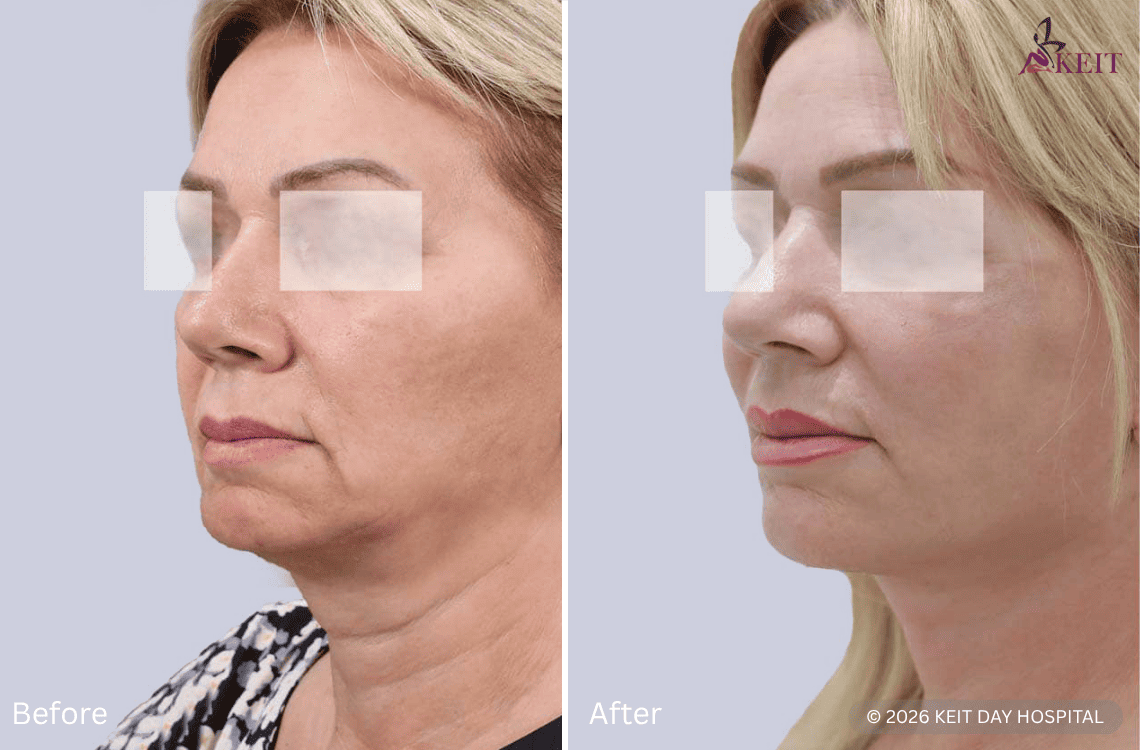
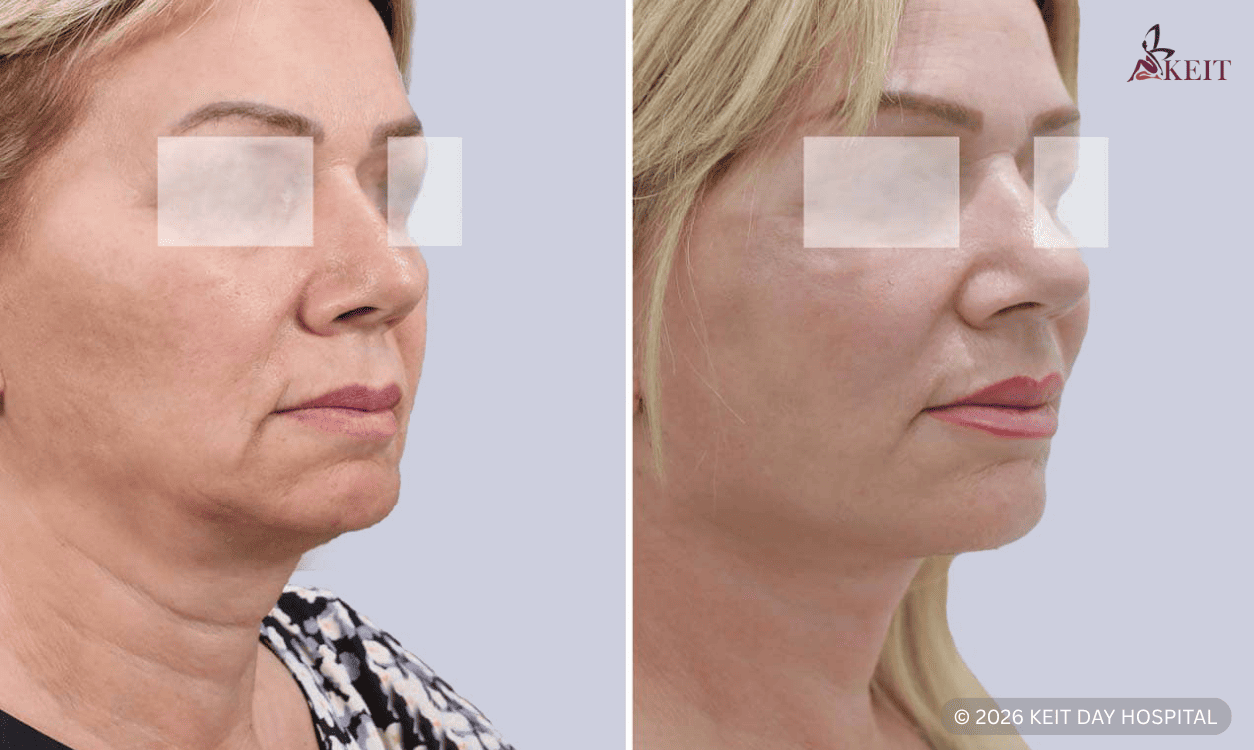
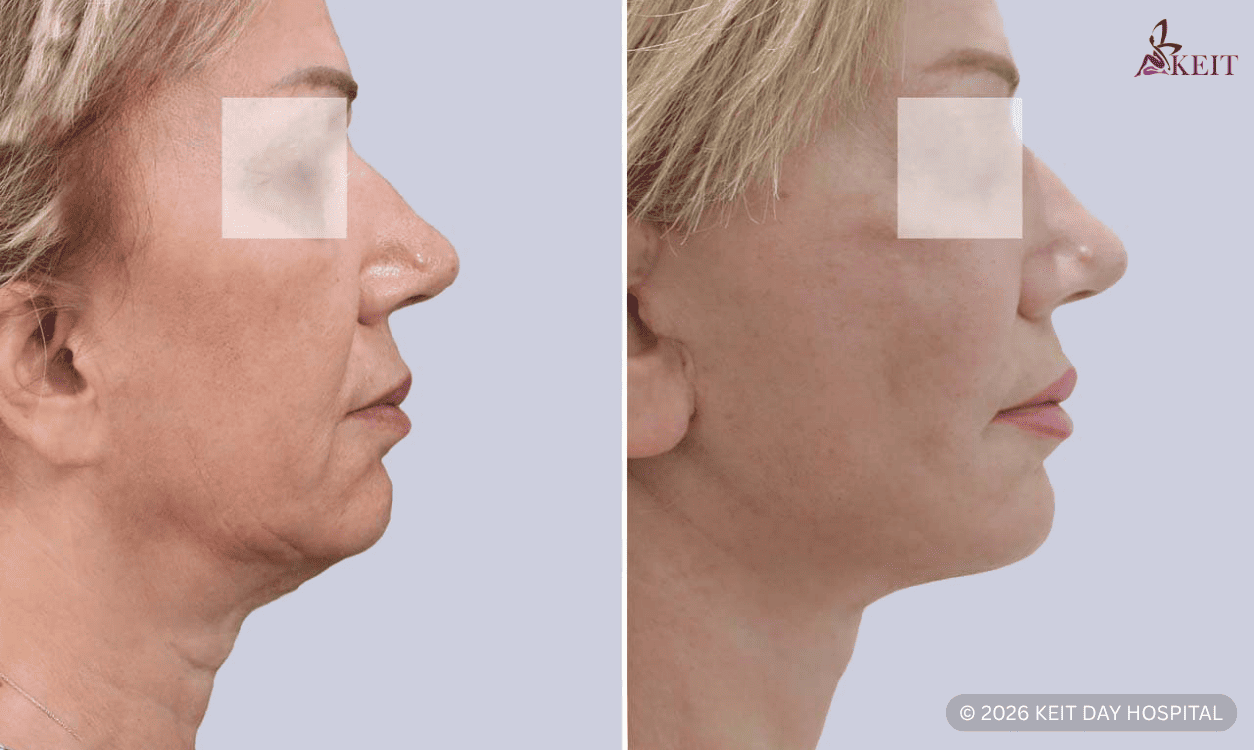
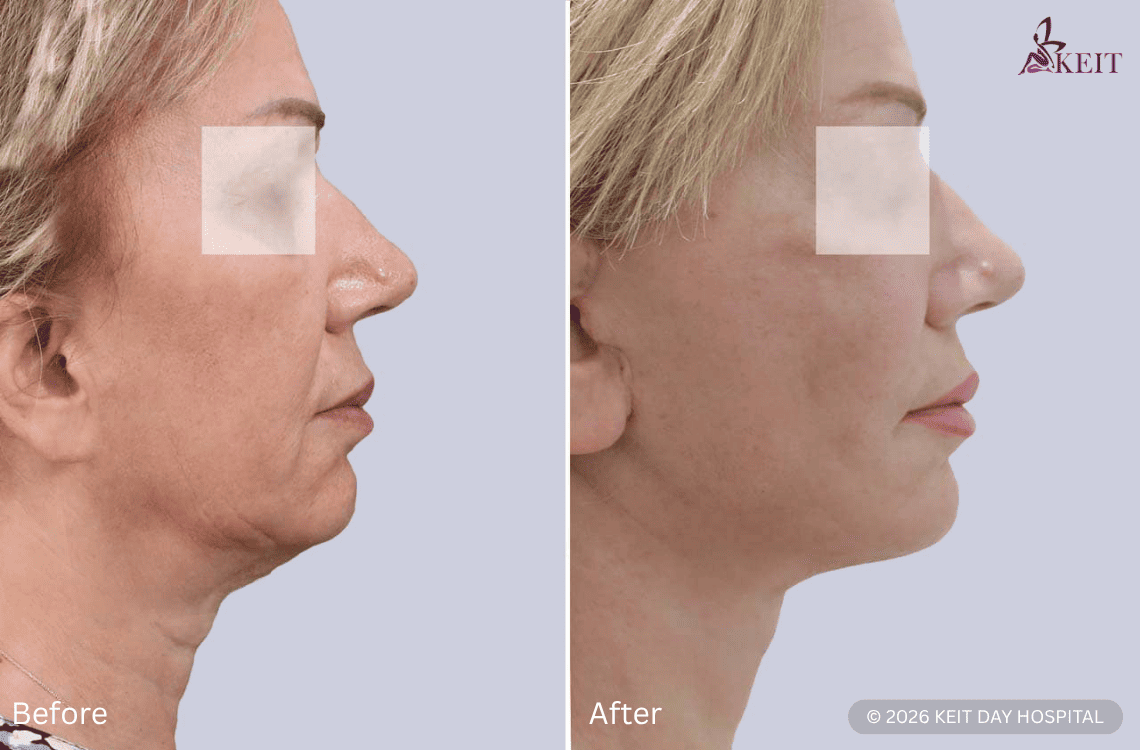
Before and after results from facelift surgery show improved facial contour, reduced skin sagging, and a more defined lower face. The procedure can improve changes associated with significant weight loss, including:
- Improved jawline definition by correcting lower-face sagging and jowls.
- Smoother facial contours by repositioning descended facial tissues.
- Reduced excess skin and improved skin tightness in areas affected by laxity.
- A more balanced facial appearance when combined with volume restoration procedures such as fat transfer, if needed.
The final result depends on individual factors such as skin quality, facial anatomy, the degree of tissue laxity, and the surgical technique used. Results develop gradually as swelling decreases and the tissues settle during recovery.