Published on:
 Modified on:

 Reading Time: 10 min
 Hair transplant
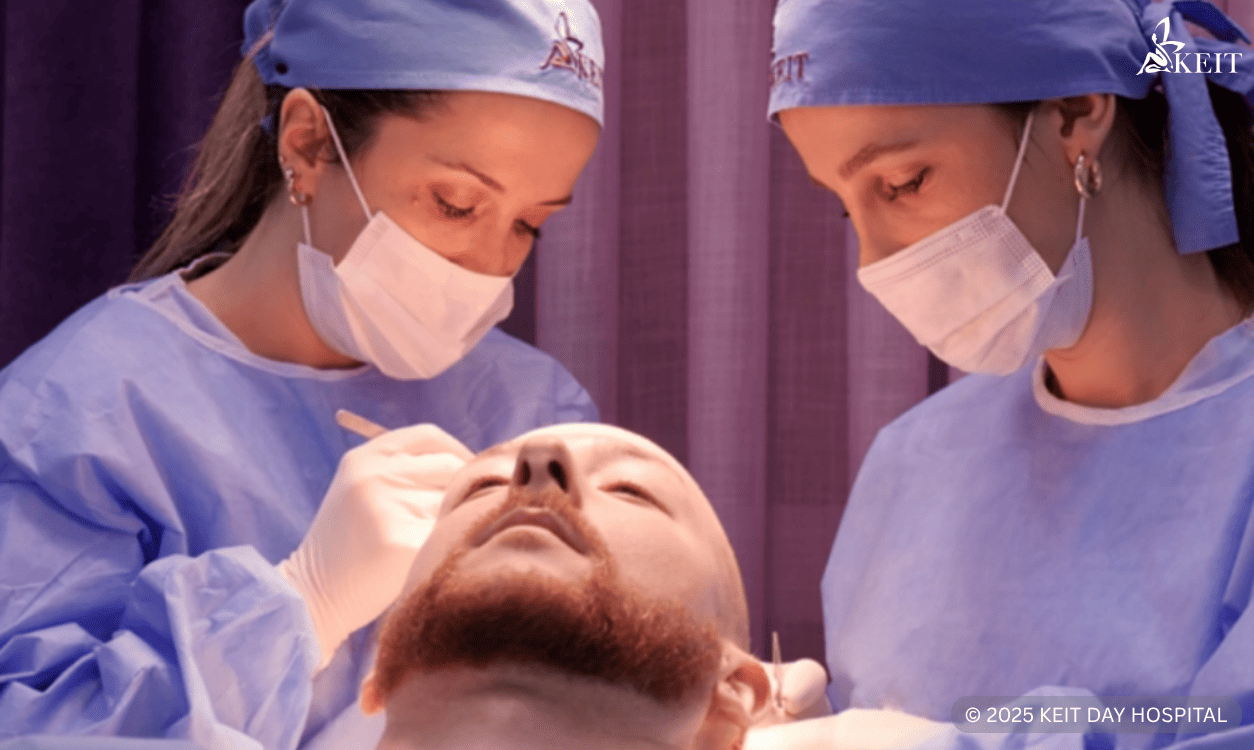
A hair transplant is a surgical procedure that restores hair by relocating healthy follicles from donor sites to thinning or bald areas. This minimally invasive technique is based on autotransplantation, which uses your own resistant follicles to ensure lasting growth. Hair restoration is considered a permanent solution for hair loss, especially male pattern baldness, delivering natural density and a balanced hairline.
 Table of Contents:
-
1
 How does hair transplant work?
-
2
How much is a hair transplant?
-
3
How long does a hair transplant last?
-
4
DHI hair transplant: The modern approach
-
5
FUE hair transplant: The minimally invasive technique
-
6
FUT hair transplant: Exploring follicular unit transplantation
-
7
Male pattern baldness versus female pattern baldness
-
8
Hair transplant results: The journey to definitive outcomes
-
9
Are you a suitable candidate for a hair transplant?
-
10
Hair transplant Turkey: Comparison to Albania
Hair loss, also known as alopecia, can significantly impact confidence and quality of life for many individuals. Fortunately, advancements in medical science offer effective and lasting solutions for hair restoration. Frequently searched for as hair transportation, the correct medical term is hair transplant, standing out as a leading permanent hair loss treatment. This innovative procedure helps countless people regain a fuller head of hair and, with it, a renewed sense of self-esteem.
This article takes you through everything you need to know about hair restoration. We’ll start with how does hair transplant work, then move on to how much is a hair transplant and how long does a hair transplant last. You’ll get clear explanations of the main techniques: FUE, DHI and FUT. We’ll also explore male pattern baldness compared to female pattern baldness, outline hair transplant results and help you determine whether you are a suitable candidate for a hair restoration. Ultimately, we will compare hair transplant Turkey versus Albania, so you can make the best informed decision.
As follows, you will find a video that explains what a hair transplant is:
How does hair transplant work?
A hair transplant is a sophisticated medical solution for hair loss, based on the biological fact that certain hair follicles on your scalp are naturally resistant to balding. Frequently searched for as hair transportation, the correct medical term is hair transplant. This procedure involves carefully moving these robust follicles to thinning or bald areas, where they will continue to grow and thrive. It’s an autologous transplantation, meaning your own hair is used, ensuring perfect compatibility. The main goal is to create a natural-looking hairline and increase overall density.
The scientific principle behind hair restoration is donor dominance: hair follicles from the back and sides of your head are genetically resistant to balding and keep this trait in their new location. The entire procedure is done under local anesthesia, so you’ll be awake but comfortable and pain-free. So, how does hair grafting work? The operation is carried out in two main phases:
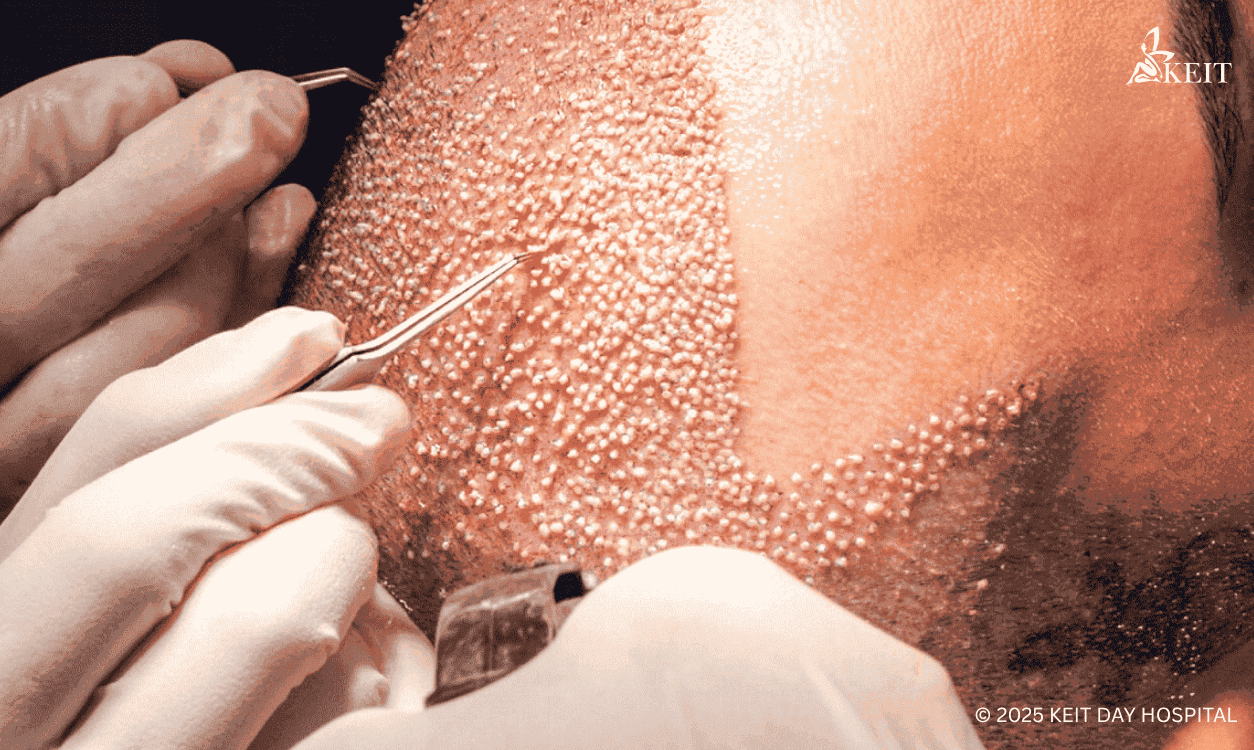
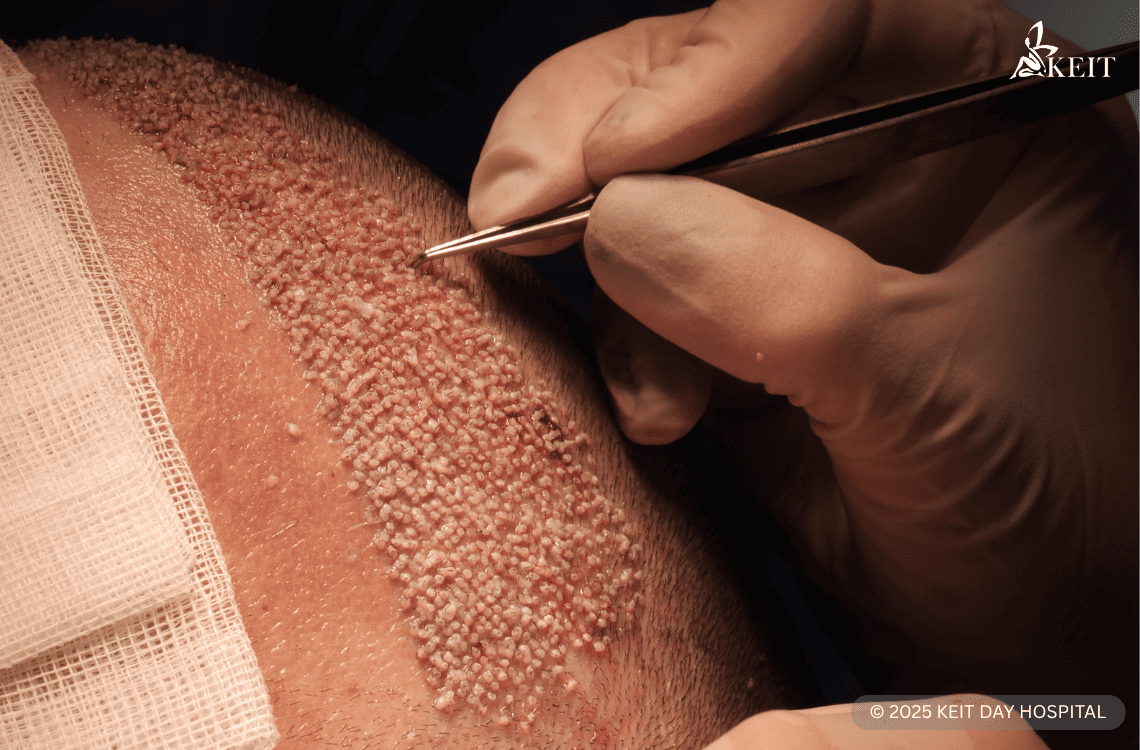
- Follicle extraction: Tiny groups of 1 to 4 hairs, called follicular units, are precisely harvested from your donor area. This micro-surgical step ensures they remain healthy.
- Graft implantation: These delicate units or grafts are then precisely implanted into tiny sites in balding areas. The surgeon’s skill is vital for placing each graft at the perfect angle, direction, and depth to ensure natural, sustained growth.
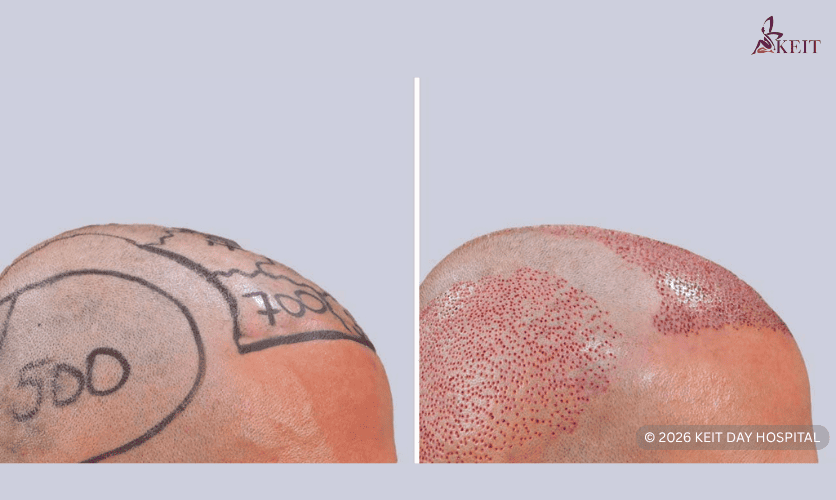
The required number of grafts varies from patient to patient and depends on hairline design, hair loss level and donor area quality.
How much is a hair transplant?
Hair follicle surgery cost typically ranges from 5,000 up to 12,000 euro for a medium-sized area, with variations depending on several clinical and organizational factors. The final hair transplant cost is influenced by the size of the area to be restored, the surgical technique applied (FUE or FUT), the overall duration of the procedure and the possible need for a second session in the future. Surgeon expertise and clinic reputation also play a decisive role, with more experienced professionals and modern facilities reflecting higher fees. As outlined in our article on hair transplant cost, prices can also vary widely between countries and clinic packages. While lower-cost offers may seem tempting, they can compromise both the quality of care and the final outcome.
How long does a hair transplant last?
The timeline of a hair transplant is usually considered from two angles: the procedure itself and the durability of the results. With modern FUE (Follicular Unit Extraction), surgery typically takes 4 – 8 hours, covering every step from extracting follicular units to storing them in a controlled solution and implanting them in the thinning areas.

On the biological side, transplanted hair comes from donor zones that are genetically resistant to androgenetic alopecia. Once these follicles take root, they retain this resistance and continue to grow permanently. After a normal initial shedding phase in the first 3 – 4 weeks, steady regrowth usually begins around the 4th to 6th month, with hair transplant results becoming visible after 12 months. Clinical studies show that over 85 – 90% of transplanted follicles successfully establish themselves, ensuring long-lasting and natural hair growth throughout a patient’s life.

DHI hair transplant: The modern approach
The DHI technique is an advanced hair transplant method distinguished by its direct and precise implantation of hair follicles, leading to exceptional density and natural results without prior incisions. It focuses on maximizing graft survival and growth.
DHI hair transplant is performed under local anesthesia for patient comfort. Unlike other methods, the surgeon uses a specialized DHI Implanter pen to directly implant individual hair follicles into the recipient area immediately after extraction. This pen creates the recipient site and implants the graft simultaneously, allowing for extremely precise control over the angle, direction and depth of each hair. This direct, no-touch method reduces the time grafts spend outside the body, optimizing their viability. DHI procedures typically take 6 to 8 hours, requiring significant skill and focus. Its benefits include enhanced graft survival, potentially higher density, minimal handling of grafts and often a no-shave option for the recipient area.
FUE hair transplant: The minimally invasive technique
The FUE technique is a technique known for natural results and minimal hair transplant scarring. It involves precisely extracting individual hair follicles and then carefully implanting them into thinning or bald areas.
The FUE procedure involves meticulously applying local anesthesia for comfort, then using a tiny micro-punch to individually extract 1 – 4 hair follicular units directly from the scalp. These delicate grafts are preserved, after which the surgeon precisely creates recipient sites in balding areas, carefully planning angle, direction and density, before implanting each graft. Taking 4 – 8 hours due to its demand for precision and artistic skill, FUE offers benefits like virtually undetectable dot scars, suitability for short hairstyles and a minimally invasive approach with quicker recovery, though donor area shaving is typically required (unshaven options exist). The International Society of Hair Restoration Surgery (ISHRS), notes that this method has become one of the most trusted techniques worldwide for achieving natural, long-lasting results.
FUT hair transplant: Exploring follicular unit transplantation
The FUT technique, often known as the “Strip Method,” is a well-established hair restoration approach highly efficient for transferring a large number of grafts in a single session, making it ideal for more extensive hair loss.
FUT hair transplant begins with local anesthesia to ensure comfort. The surgeon excises a small strip of skin from the back of the scalp, which is then sutured, leaving a linear scar usually hidden by hair. Skilled technicians meticulously dissect individual follicular units from this strip. Simultaneously, the surgeon creates tiny recipient sites, carefully planning angle, direction and density. Finally, grafts are implanted. FUT procedures typically take 4 to 7 hours. Benefits include transplanting a very large number of grafts in one session for high density and it does not require shaving the entire donor area. The primary consideration is the linear scar, which might be visible with very short hair.
Male pattern baldness versus female pattern baldness
Male pattern baldness, the most common form of androgenetic alopecia, often causes a receding hairline and crown thinning. Female pattern baldness leads to diffuse thinning across the scalp. Male hair surgery focuses on restoring the hairline, while hair grafting for women aims to increase density in thinning areas.
Male and female pattern baldness are both types of alopecia, but they differ in how hair restoration is approached and which transplant techniques are preferred. In men, hair loss typically starts with a receding hairline and crown thinning. Clear bald patches are visible, meaning both FUT (strip method) and FUE are commonly used, with male hair surgery often focusing on recreating a defined hairline. In women, hair loss is more diffuse and the donor area must remain largely intact for cosmetic reasons. For this reason, female hair transplant mainly relies on FUE or DHI, as these methods allow individual graft extraction and placement without shaving the entire scalp. Hair surgery for women aims to add density rather than redesign the hairline, while hair transplant for men often combines FUT or FUE with strategic grafting to restore coverage.
The following table clarifies why the approach to hair restoration is different for men and women.
| Feature | Men | Women |
|---|---|---|
| Hair loss pattern | Receding hairline & crown thinning |
Diffuse thinning across the scalp |
| Primary goal | Restore the hairline | Increase density |
| Common techniques | FUT & FUE | FUE & DHI |
| Surgical focus | Recreating a defined hairline |
Adding density to thinning areas |
| Donor area | Focus on graft quantity | Preserving donor area aesthetics |
| Shaving | Often involves shaving the scalp |
Can be done without a full shave |
Hair transplant results: The journey to definitive outcomes
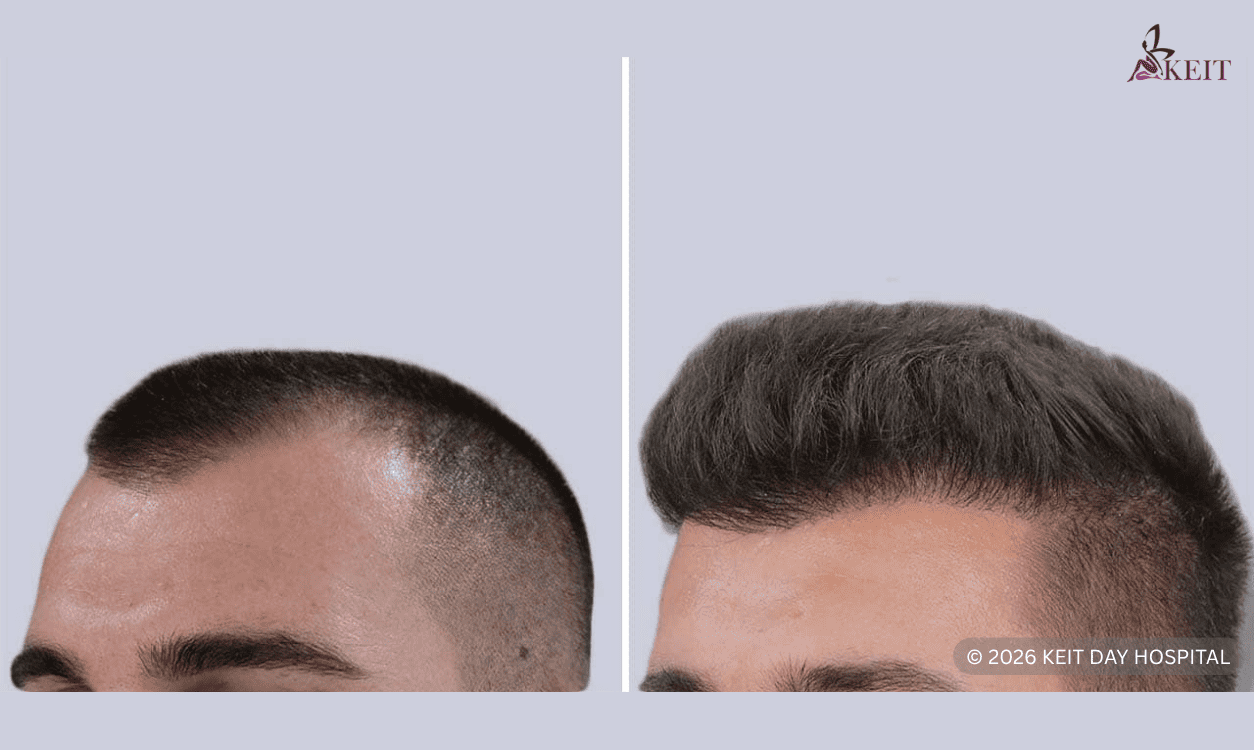
A hair transplant journey typically spans 12 – 18 months, culminating in a fuller, natural head of hair. Understanding this progression helps set realistic expectations.
Days 1 – 14: Initial healing & early recovery
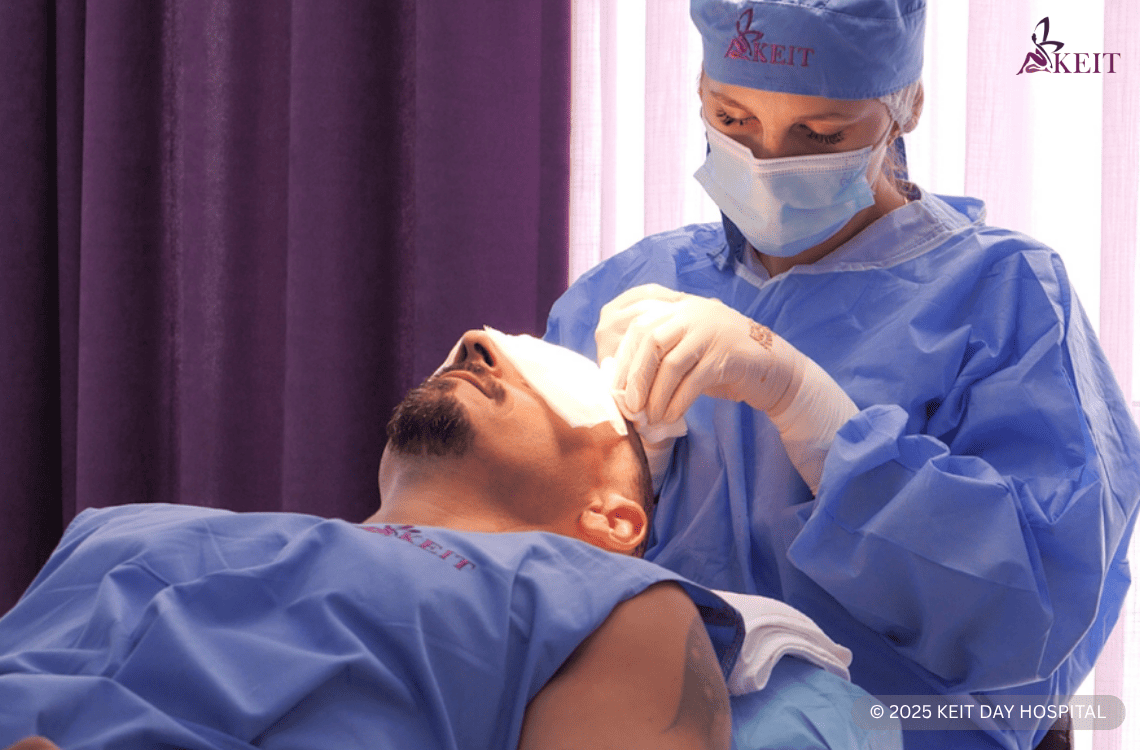
Expect tiny scabs, some redness, and mild swelling. Your scalp begins healing, and grafts start to secure. Gentle washing, as advised, helps clear scabs.
Weeks 3 – 8: “Shock Loss” phase
This is normal: most transplanted hairs will shed. Don’t worry, it means follicles are resting before new growth. Scabs should be gone and redness significantly reduced.
Months 1 – 3: Resting & dormant phase
After shedding, follicles enter a dormant period. You’ll see little visible growth as they prepare for a new cycle. Patience is key here.
Months 3 – 6: Early growth & first signs
Around month 3 or 4, fine “baby” hairs will emerge. They may be wispy at first, but this is temporary.
Months 6 – 9: Significant thickening & maturation
This is where you’ll see big changes. New hairs thicken, gain density, and become more robust. You’ll notice much better coverage and volume, blending naturally.
Months 9 – 12: Near-final results & blending
Most of your final results (60 – 80%) will be visible. Hair will be longer, thicker, and well-integrated. You’ll be able to style your hair more freely.
Months 12-18+: Final maturation & optimal density
Hair continues to mature and thicken to its final appearance. Full, natural results are usually achieved within this timeframe, with some crown transplants seeing improvements up to 18-24 months.
Are you a suitable candidate for a hair transplant?
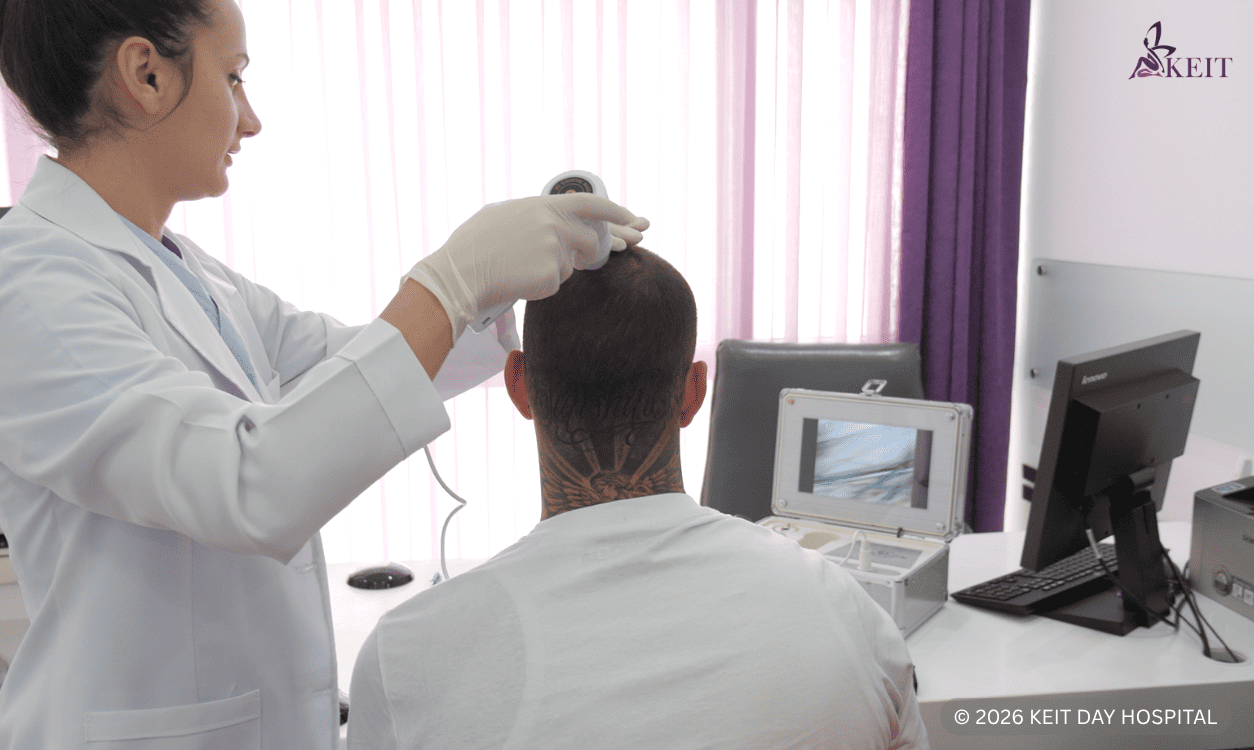
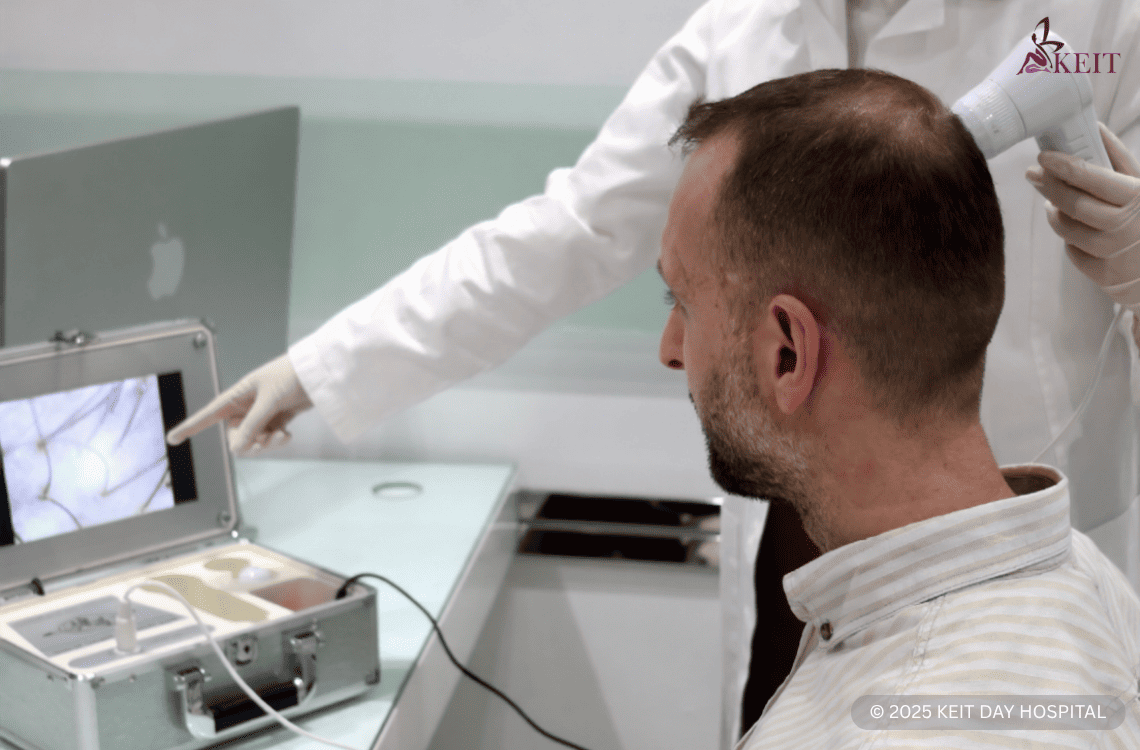
Determining if a hair transplant is right for you involves a thorough assessment by an experienced specialist. Here are the key factors considered:
- Stable hair loss: Ideal candidates have hair loss that has mostly stabilized. If it’s still rapidly progressing, long-term results might be unpredictable.
- Sufficient donor hair: This is crucial. You need enough dense, healthy hair from balding-resistant areas (typically the back and sides) to adequately cover thinning spots without over-harvesting.
- Good overall health: Being in good general health is essential, as certain medical conditions can complicate surgery or healing.
- Cause of hair loss: A clear diagnosis is crucial. Hair transplants primarily treat pattern baldness (androgenetic alopecia); other conditions might need different approaches.
- Realistic expectations: Understand that a transplant redistributes existing hair; it doesn’t create new hair or fully restore original density.
Understanding realistic outcomes and committing to aftercare is key to a satisfying result.
Hair transplant Turkey: Comparison to Albania
For a safe and reliable hair transplant, choosing a specialized clinic is fundamental. Look for a facility with expert surgeons, modern technology and rigorous hygiene protocols. Entrusting your procedure to a clinic with certified experience is the best way to achieve natural-looking results, comprehensive patient care, and a meticulously supported post-operative journey. While Turkey is widely known for hair transplantation, with “Hair transplant Istanbul” being a popular search term, other excellent and competitive destinations are emerging. Albania, for instance, is now one of the leading alternatives to Turkey, offering outstanding quality and value for patients seeking world-class results.
Choosing the KEIT Day Hospital for your hair transplant in Albania means opting for established excellence. With over 23,000 procedures performed, our team of expert hair transplant surgeons deliver natural and long-lasting results, using modern techniques like FUE. We offer an “all-inclusive” package that covers travel, accommodation, and free post-operative follow-up, making the KEIT Day Hospital the ideal choice for those seeking quality and convenience without compromise. This 360-degree patient care, combined with highly competitive costs, makes the KEIT Day Hospital the ideal choice for thousands of European patients who want to solve the problem of baldness with peace of mind and confidence.