Published on:
 Modified on:

 Reading Time: 5 min

 Cervicofacial Lift
A mini facelift is a surgical facial rejuvenation procedure that improves early lower-face sagging, mild jowls, and loss of jawline definition. It uses shorter incisions and less extensive tissue repositioning than a full facelift, making it more suitable for patients with mild to moderate facial sagging and limited neck ageing.
 Table of Contents:
-
1
 What is a mini facelift and how does it differ from a full facelift?
-
2
Who is a suitable candidate for a mini facelift?
-
3
What areas can a mini facelift improve?
-
4
Mini facelift: How the surgery is performed
-
5
Mini facelift: Recovery time, scars and aftercare
-
6
Mini facelift before and after: What results to realistically expect?
-
7
Mini facelift: Potential risks and complications
-
8
Mini facelift cost in the UK: What determines the final price?
-
9
How to choose a qualified mini facelift surgeon
In this guide, we explain what a mini facelift is, who is suitable for the procedure, what areas it improves, and how surgery is performed. We also cover recovery time, scars, risks, expected results, mini facelift cost in the UK, and how to choose a qualified surgeon.
What is a mini facelift and how does it differ from a full facelift?
A mini facelift is a minimally invasive surgical procedure that corrects early lower-face sagging, mainly mild jowls and reduced jawline definition. It uses shorter incisions and limited tissue repositioning, usually focusing on the lower cheeks, jawline, and early jowl formation. A full facelift is designed for more advanced facial ageing. It provides broader correction of the lower face and neck, while a mini facelift is more suitable for mild to moderate laxity with limited neck involvement.
Who is a suitable candidate for a mini facelift?
A suitable candidate for a mini facelift is someone with early to moderate lower-face ageing, where the main concern is mild jowling or loss of jawline definition rather than significant neck laxity. Ideal candidates include patients with:
- Early jowls: Mild sagging along the jawline that can be improved with limited tissue repositioning.
- Lower-face laxity: Softening in the lower cheeks without severe excess skin.
- Good skin quality: Enough elasticity for the skin to redrape naturally after lifting.
- Limited neck ageing: Minimal loose neck skin or banding.
- Good general health: No uncontrolled medical conditions that increase surgical risk.
- Realistic expectations: Aiming for a refined, natural improvement rather than a dramatic full-face change.
What areas can a mini facelift improve?
A mini facelift targets early ageing changes in the lower face, where mild tissue descent begins to affect facial definition. Common treatment areas include:
- Jawline: Refines early loss of definition by tightening lax tissue along the mandibular border.
- Jowls: Improves mild jowl formation caused by soft tissue descent near the corners of the jaw.
- Lower cheeks: Repositions mild sagging in the lower cheek area to create a smoother transition toward the jawline.
- Marionette area: Softens heaviness around the mouth where lower-face laxity contributes to a tired or downward appearance.
Mini facelift: How the surgery is performed
A mini facelift is performed under local anaesthesia with sedation or general anaesthesia, depending on the surgical plan and patient suitability, and usually takes 2 to 3 hours. After surgical marking, the surgeon makes short incisions around the natural ear contours. The deeper facial tissues are lifted and secured to improve early jowls and jawline laxity. A limited amount of excess skin is removed, and the incisions are closed carefully to support natural healing and discreet scarring.
Mini facelift: Recovery time, scars and aftercare
Mini facelift recovery is usually shorter than a full facelift, but healing still progresses gradually over several weeks.
- First 48 hours: Swelling, bruising, tightness, and mild discomfort are expected.
- Days 3–7: Bruising and swelling begin to subside; patients continue resting and limiting activity.
- Weeks 1–2: Most patients return to desk work and light daily routines, depending on healing and surgeon approval.
- Weeks 3–4: Swelling continues to reduce, and the jawline and lower-face contour become clearer.
- After 6 weeks: Most activity restrictions are usually lifted, while subtle tissue settling continues.
Mini facelift scars are discreet, as they are planned around the ear and natural skin folds to support less visible healing over time. Aftercare focuses on wound care, head elevation, avoiding strenuous activity, protecting scars from sun exposure, and attending scheduled follow-up appointments.
Mini facelift before and after: What results to realistically expect?
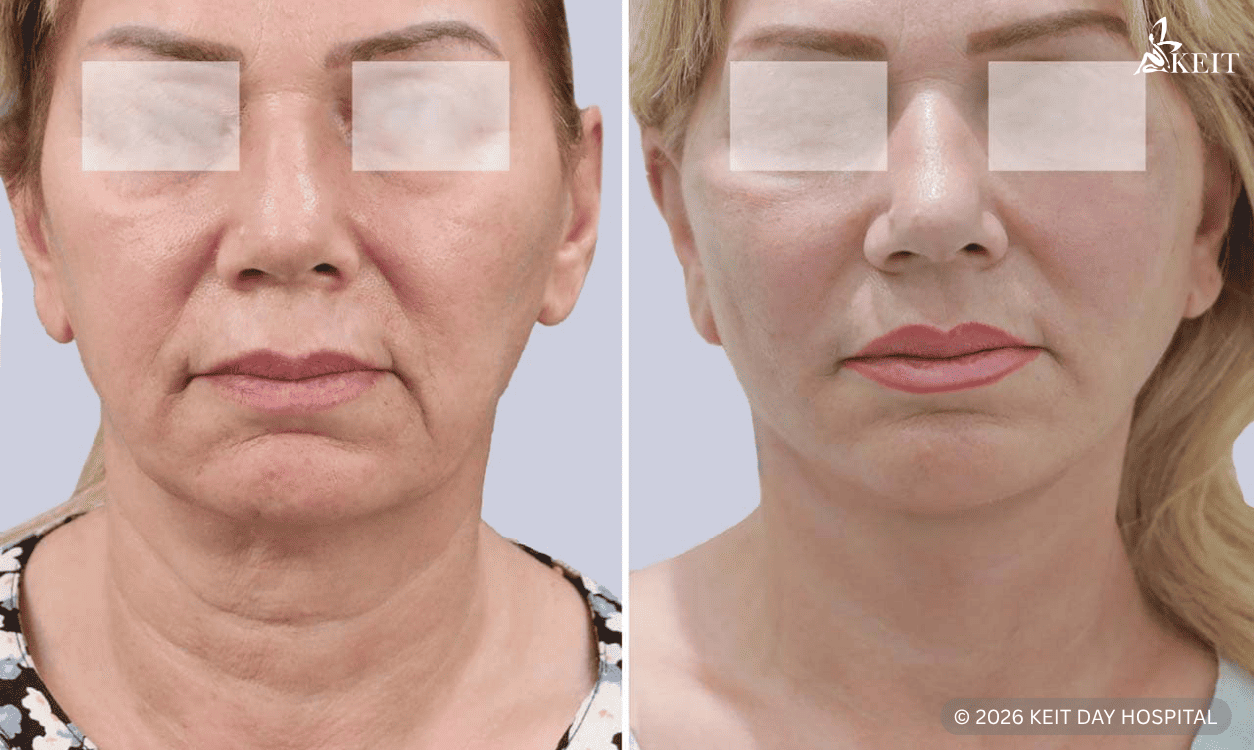
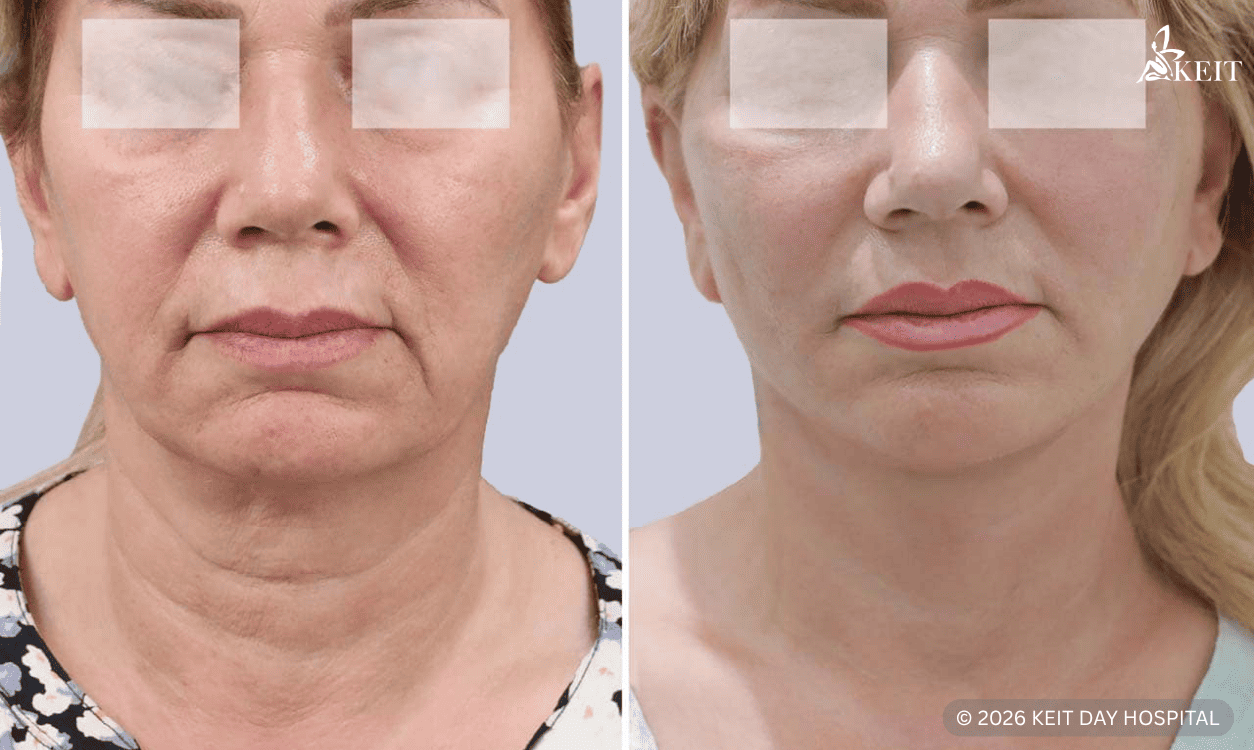
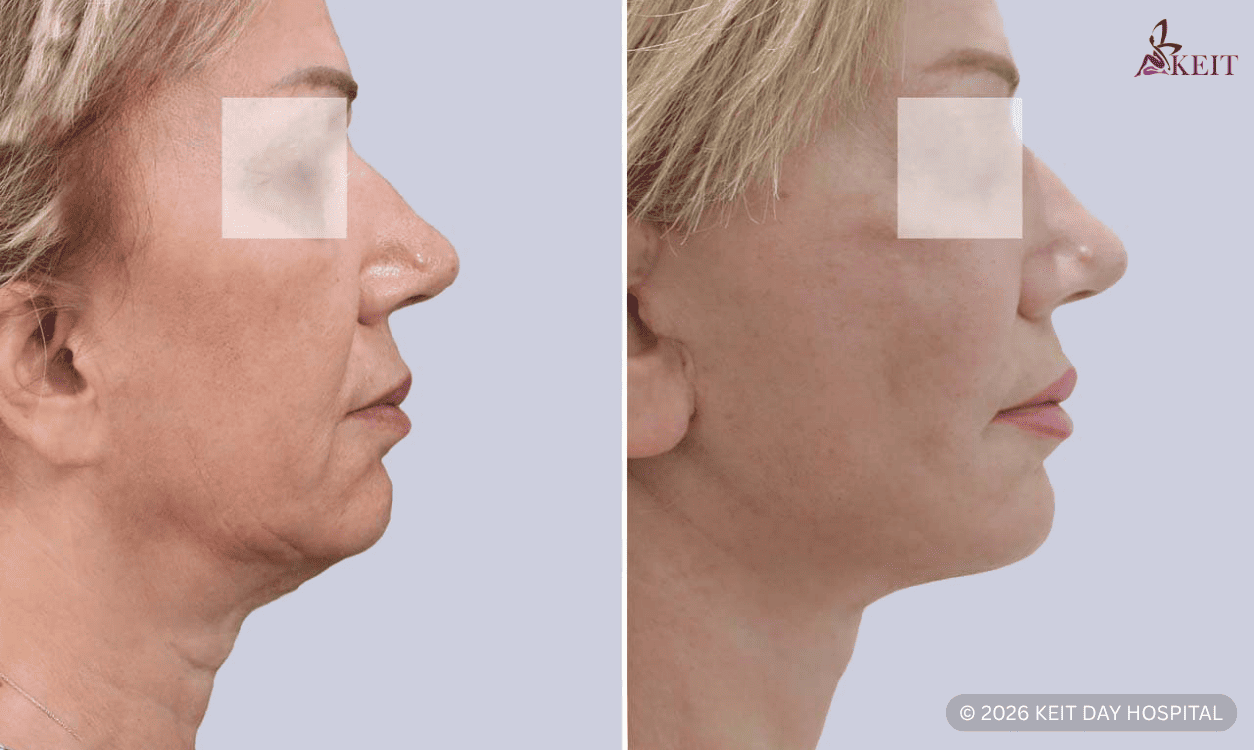
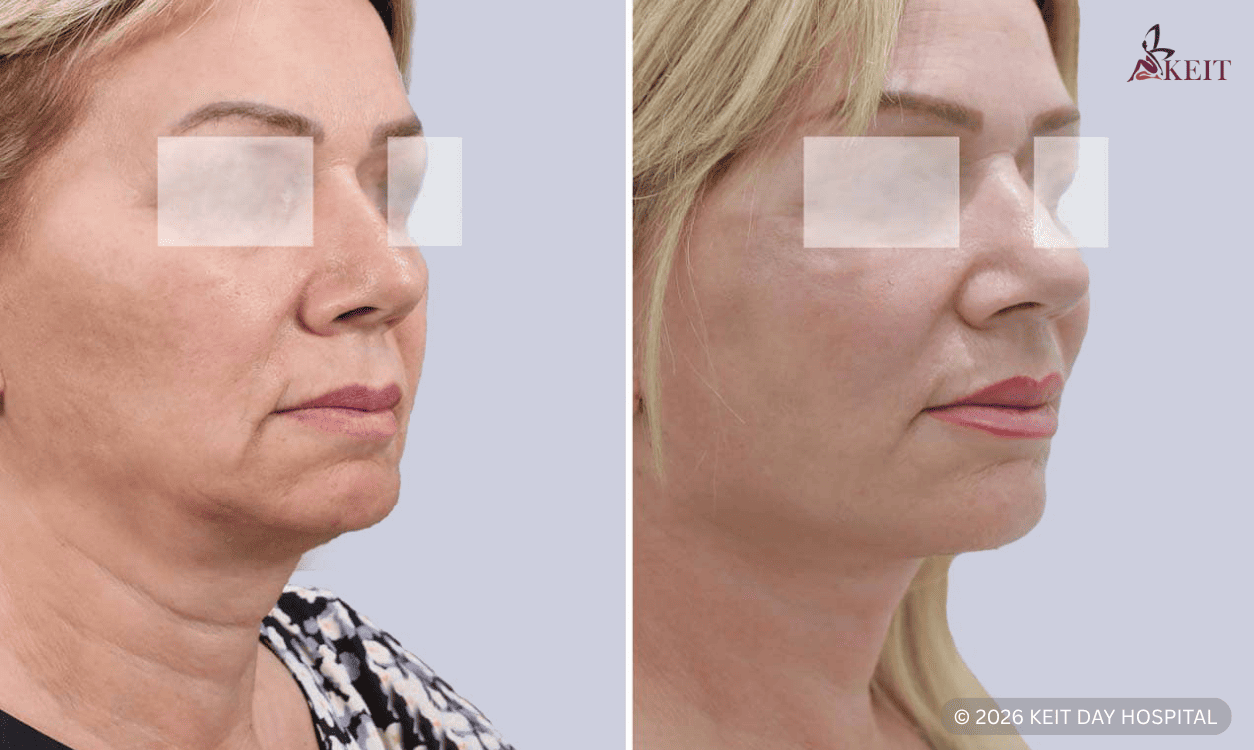
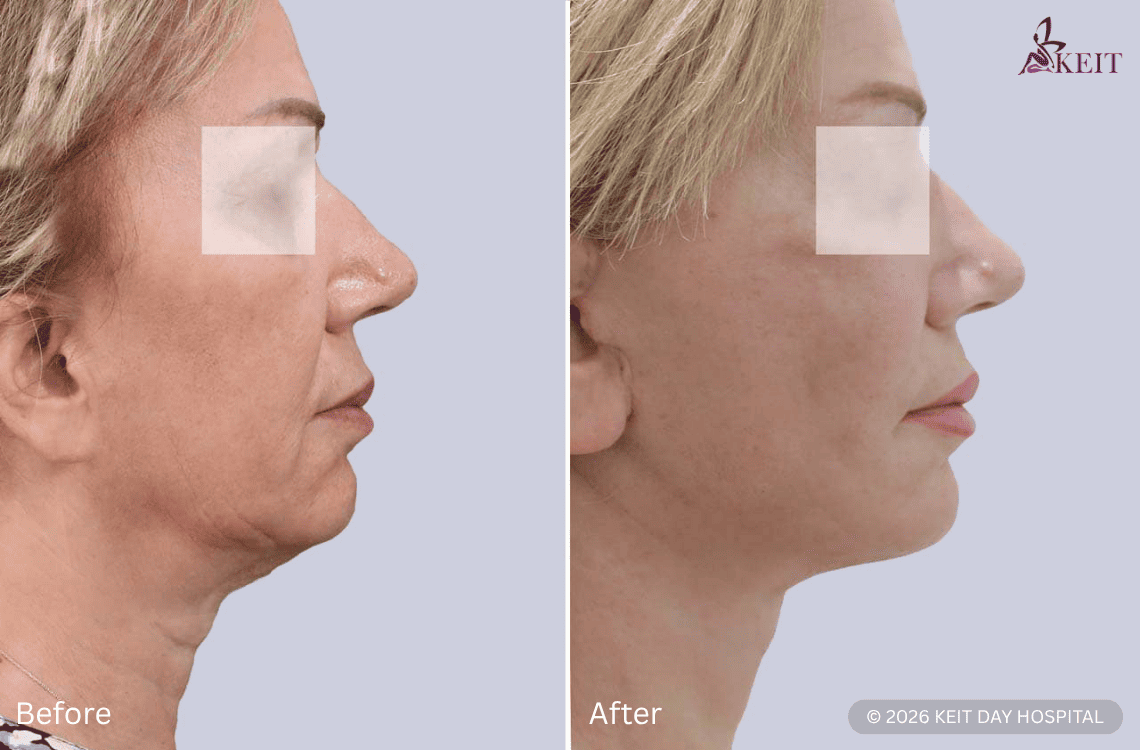
Mini facelift before and after results show a more defined jawline, reduced early jowls, and a firmer lower-face contour. The improvement should appear natural and proportionate, with smoother lower-face definition rather than a tight or over-pulled appearance. Final results become clearer as swelling settles over the following weeks and months.
Mini facelift: Potential risks and complications
A mini facelift is generally safe when performed by a qualified surgeon, but like all facial surgery, it carries potential risks and complications. Possible risks include:
- Bleeding or haematoma: Blood may collect under the skin and occasionally requires drainage.
- Infection: Uncommon, but may require antibiotics or additional treatment.
- Scarring: Scars are usually discreet, although healing quality varies between patients.
- Asymmetry: Minor differences in facial contour or healing may occur.
- Temporary numbness or tightness: Changes in sensation can develop as tissues heal.
- Nerve injury: Rare, but temporary or permanent weakness of facial movement can occur.
- Skin irregularities: Uneven contour or tissue firmness may develop during healing.
- Unsatisfactory aesthetic result: Some patients may feel the final result does not fully meet expectations.
Mini facelift cost in the UK: What determines the final price?
Mini facelift cost in the UK usually ranges from 4,500–11,500 euro, with prices generally higher in London and specialist private clinics. The final price is mainly determined by:
- Surgeon expertise: Surgeons with advanced experience in facial rejuvenation usually command higher fees.
- Clinic location: Private clinics in London and other high-cost areas are typically more expensive.
- Anaesthesia type: Sedation or general anaesthesia can increase theatre and anaesthetist fees.
- Procedure complexity: More visible jowls, tissue laxity, or asymmetry may require more surgical time.
- Combined procedures: Adding a mini neck lift, eyelid surgery, or fat transfer increases the total quote.
- Aftercare included: Follow-up visits, dressings, and post-operative support may affect the final price.
Book your FREE
Online Consultation Now

How to choose a qualified mini facelift surgeon
A qualified mini facelift surgeon should have proven experience in facial rejuvenation, lower-face anatomy, and natural-looking tissue repositioning. Before booking, patients should check:
- Surgeon credentials: Confirm specialist training, registration, and experience in facial surgery.
- Procedure experience: Review expertise in mini facelift, lower facelift, and jowl correction.
- Before and after cases: Look for natural results with consistent lighting, angles, and facial position.
- Clinical setting: Check anaesthesia safety, facility standards, and surgical support.
- Treatment plan: Make sure the recommended procedure matches the degree of ageing.
The best mini facelift surgeon in the UK or abroad is not defined by price alone. A safe decision depends on surgical expertise, accurate assessment, safe facilities, and structured aftercare.