Published on:
 Modified on:

 Reading Time: 5 min
 Total Blepharoplasty
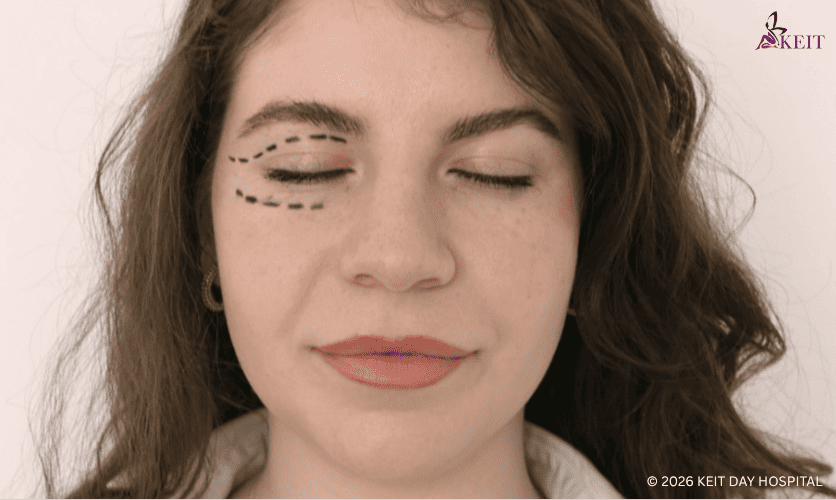
Lower blepharoplasty is a cosmetic eyelid surgery that treats under-eye bags, puffiness, excess skin and wrinkles by removing or repositioning fat and tightening the lower eyelid tissues. The procedure can be performed either through a discreet incision just below the lash line or via a transconjunctival approach inside the eyelid, leaving no visible external scars. By restoring smooth contours between the lower eyelid and the cheek, lower blepharoplasty creates a more rested, youthful appearance and helps the eyes look less tired while preserving natural facial expression.
 Table of Contents:
-
1
 What is lower blepharoplasty and when is it recommended?
-
2
What causes under-eye bags and how they are classified
-
3
Who is the ideal candidate for lower blepharoplasty (eyelid surgery)?
-
4
Lower blepharoplasty techniques explained
-
5
How lower blepharoplasty surgery is performed
-
6
Lower blepharoplasty before and after: Setting real expectations
-
7
Lower blepharoplasty recovery timeline, duration of results and aftercare
-
8
Lower blepharoplasty risks and possible complications to be aware of
-
9
Lower blepharoplasty cost: What influences the price in the UK?
-
10
Alternatives to lower blepharoplasty (eyelid surgery): When surgery is not necessary
In this comprehensive guide, you’ll learn what lower blepharoplasty is, when it is recommended and how to distinguish true under-eye bags from temporary puffiness. We explain why under-eye bags form, who is an ideal candidate and how the procedure is performed. You’ll also discover what to expect from before and after results, recovery, potential risks and realistic costs in the UK, as well as when non-surgical options may help and when surgery is the only definitive solution.
What is lower blepharoplasty and when is it recommended?
Lower blepharoplasty is a surgical procedure that removes or repositions protruding fat and, when necessary, excess skin from the lower eyelids. Its goal is to permanently correct under-eye bags caused by structural changes rather than temporary swelling. Lower blepharoplasty is typically recommended when:
- Under-eye bags are caused by fat herniation.
- Skin laxity contributes to a tired or aged appearance.
- The contour between the eyelid and cheek appears irregular.
- Non-surgical treatments have failed or are unsuitable.
It is not a treatment for temporary puffiness due to allergies, fatigue or fluid retention.
What causes under-eye bags and how they are classified
Under-eye bags develop due to a combination of anatomical and age-related factors rather than surface skin ageing alone. The most common causes include:
- Fat herniation: Weakening of the orbital septum allows fat to protrude forward, creating permanent bags.
- Skin laxity: Loss of collagen and elasticity causes loose skin to fold over the underlying structures.
- Genetic predisposition: Some patients develop under-eye bags at a young age.
- Ageing: Progressive weakening of support tissues.
- Fluid retention: Temporary swelling that fluctuates and is not a surgical indication.
Main types of under-eye bags
- Fat bags: Permanent, structural and best treated surgically.
- Skin laxity–related bags: Often combined with fat herniation.
- Pseudo-bags: Swelling due to fluid retention or inflammation
Correct diagnosis is essential, as only structural bags benefit from lower blepharoplasty.
Who is the ideal candidate for lower blepharoplasty (eyelid surgery)?
Ideal candidates for lower eyelid surgery typically meet the following criteria:
- Have visible under-eye bags at rest.
- Show fat protrusion and/or excess skin.
- Have stable eye health without significant ocular surface disease.
Patients with significant dry eye or uncontrolled medical conditions may require further evaluation before surgery.

Lower blepharoplasty techniques explained
There are two main surgical approaches, selected based on anatomy and skin quality.
Transconjunctival lower blepharoplasty
This technique is performed through an internal incision inside the eyelid, leaving no visible scars. It allows removal or redistribution of fat without cutting the skin and is ideal for patients with good skin elasticity and no excess skin.
Traditional (subciliary) lower blepharoplasty
This approach involves a fine incision just below the eyelashes. It is used when fat herniation is combined with excess skin or significant laxity. The incision is carefully placed to heal discreetly over time.
Below is a comparison table outlining the key differences between the two most common lower blepharoplasty techniques.
| Feature | Transconjunctival Technique | Traditional Technique |
|---|---|---|
| Surgical access | Inside the eyelid (no external incision) | Just below the lower lash line |
| Visible scars | No visible scars | Minimal, fades over time |
| Treats fat herniation | Yes | Yes |
| Removes excess skin | No | Yes |
| Best for | Patients with good skin elasticity and fat bags only |
Patients with fat bags + loose or excess skin |
| Recovery time | Faster | Slightly longer |
How lower blepharoplasty surgery is performed
Lower blepharoplasty is usually performed as a day-surgery procedure under local anaesthesia with sedation or, in selected cases, general anaesthesia. The procedure typically lasts between 60 and 90 minutes. Key surgical steps include:
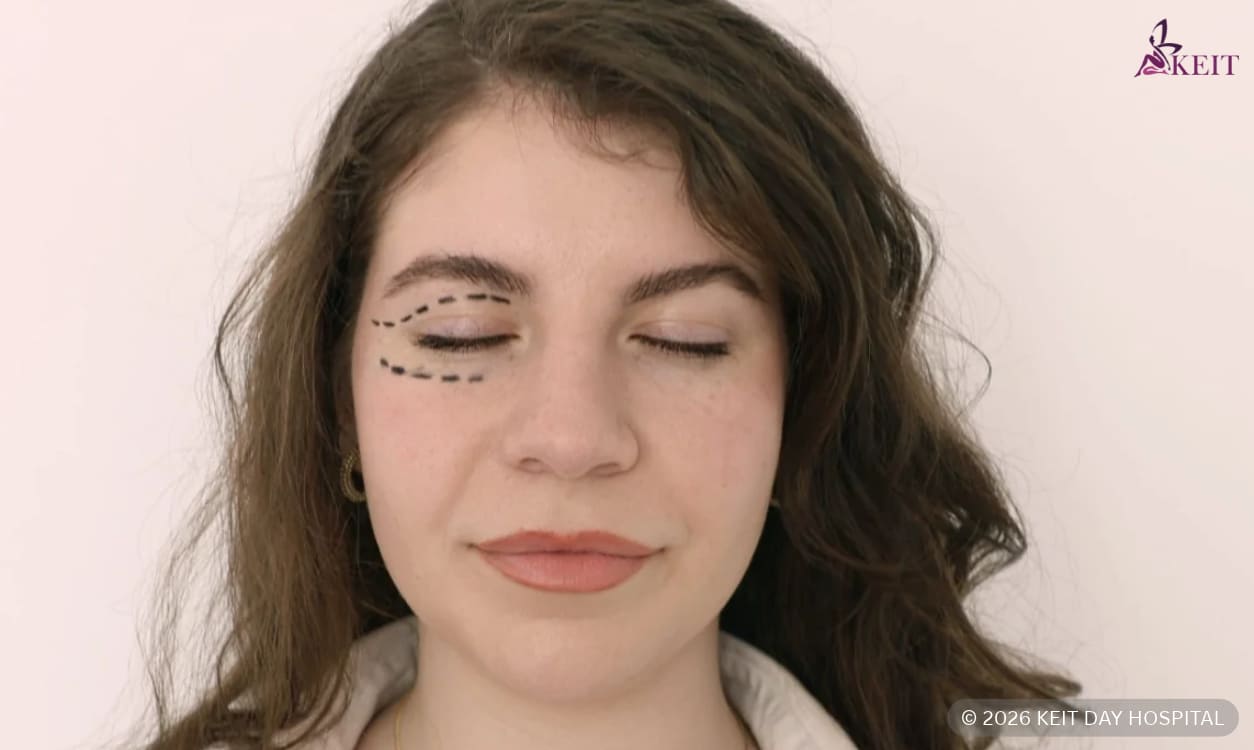
- Careful marking and pre-operative planning.
- Conservative fat removal or repositioning.
- Skin tightening if required.
- Precise closure to minimise scarring.
Modern lower blepharoplasty focuses on preserving volume rather than excessive fat removal, avoiding a hollow or sunken appearance.
Lower blepharoplasty before and after: Setting real expectations
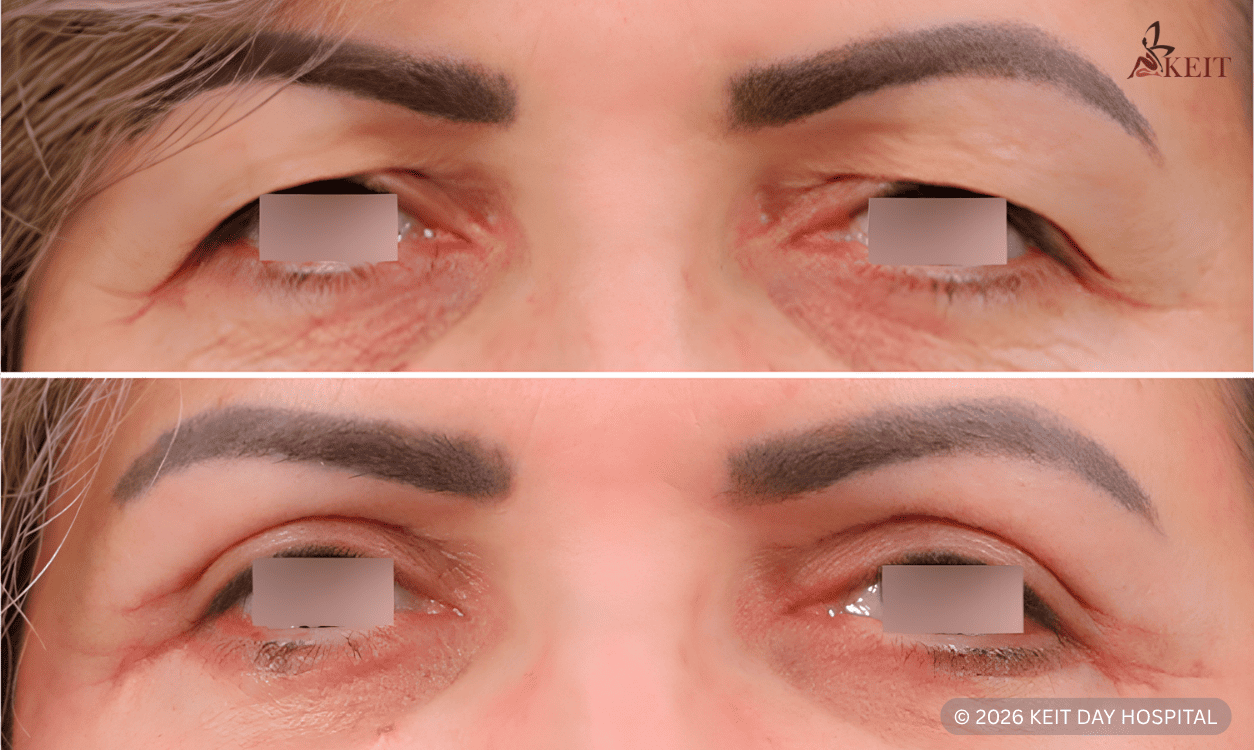
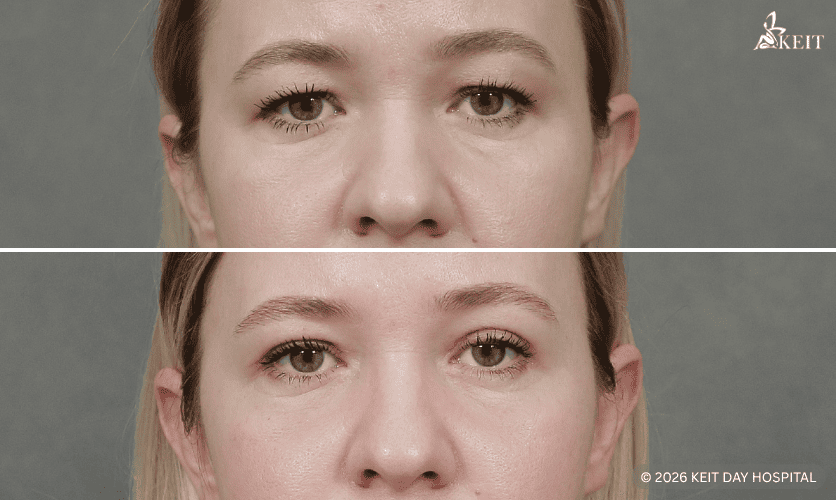
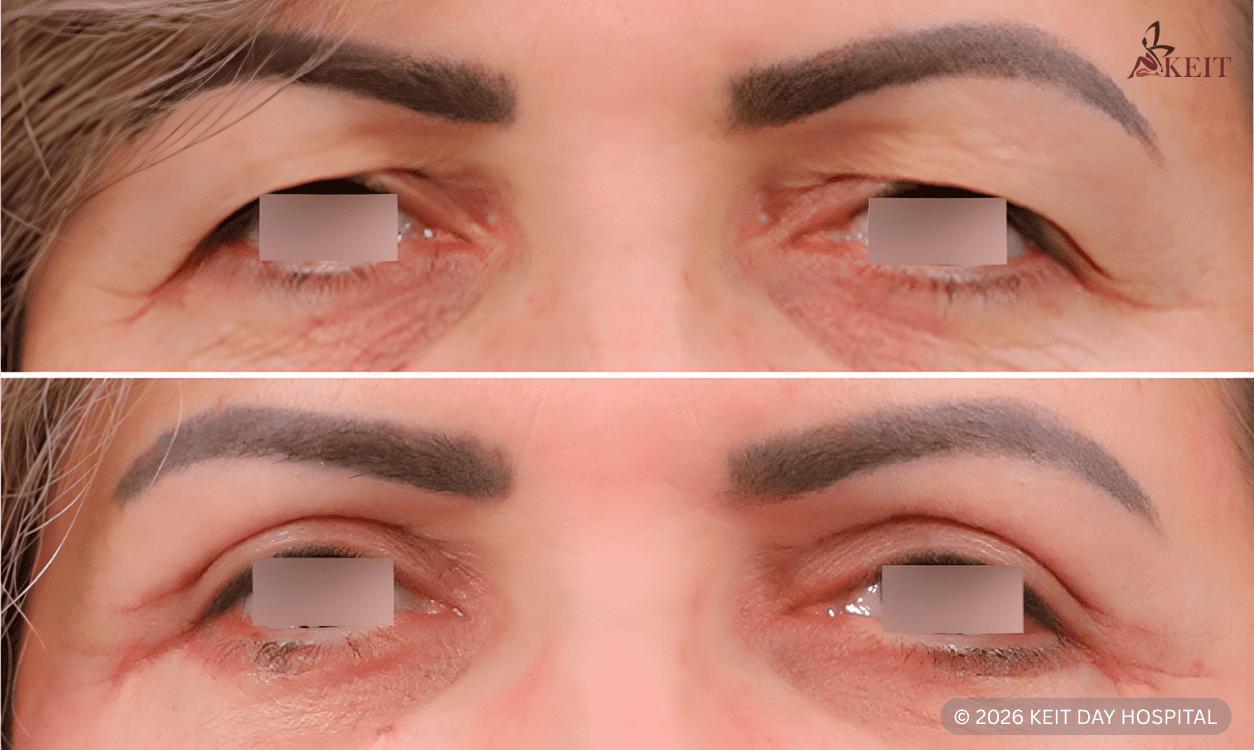
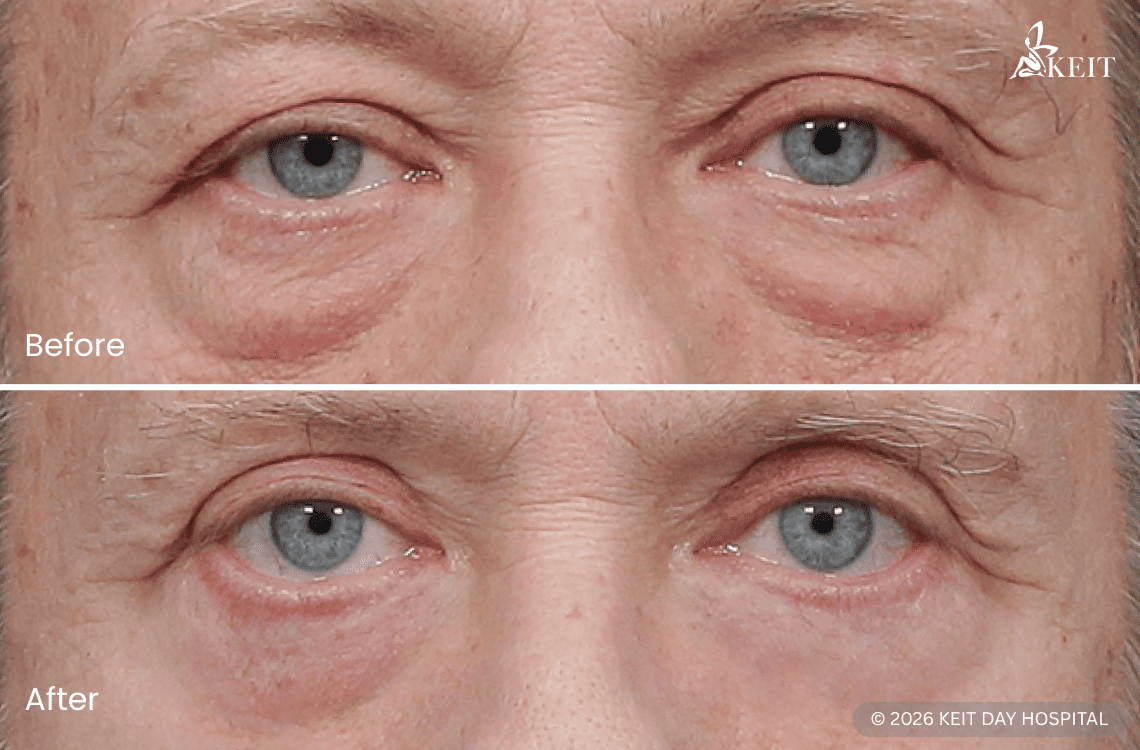
Lower blepharoplasty before and after results show a smoother transition between the lower eyelid and cheek, with reduced under-eye bags and a more rested look. The aim is natural improvement, not over-correction. Some swelling and bruising are normal at first, while final results develop gradually over several weeks. For this reason, outcomes should be evaluated only after complete healing, when the eyes appear refreshed rather than “operated on.”
Lower blepharoplasty recovery timeline, duration of results and aftercare
Recovery after lower blepharoplasty is usually straightforward when the procedure is performed with a conservative, anatomy-preserving approach.
- First 48 hours: Mild to moderate swelling and bruising around the lower eyelids are normal. Discomfort is minimal and easily controlled.
- Days 5–10: Swelling and bruising progressively resolve. Most patients return to daily activities and social life.
- Weeks 3–6: Residual swelling settles and the eyelid–cheek transition becomes smoother.
- After 6 weeks: Final results can be evaluated reliably.
Lower blepharoplasty provides long-lasting results because herniated fat is permanently corrected. Ageing continues naturally, but recurrence of true under-eye bags is uncommon. Aftercare includes head elevation, cold compresses in the early phase, avoiding strenuous activity for 2–3 weeks and protecting the area from sun exposure.
Lower blepharoplasty risks and possible complications to be aware of
Lower blepharoplasty is considered a safe procedure when performed by an experienced surgeon.
- Common temporary effects include: Swelling, bruising, mild asymmetry during healing and sensation of tightness in the lower eyelid.
- Less common complications may include prolonged swelling or temporary eyelid position changes. Serious complications are rare and usually related to excessive fat removal or inadequate surgical technique.
Lower blepharoplasty cost: What influences the price in the UK?
The cost of lower blepharoplasty in the UK depends on surgical complexity and technique. Main factors influencing price include:
- Transconjunctival vs traditional subciliary approach.
- Presence of excess skin.
- Surgeon’s expertise and clinic standards.
Typical price ranges in the UK are 3,500 – 4,500 euro for transconjunctival lower blepharoplasty and 4,000 – 5,500 euro for lower blepharoplasty with skin removal. A personalized consultation is required to define the final cost accurately.
Alternatives to lower blepharoplasty (eyelid surgery): When surgery is not necessary
Non-surgical treatments may be considered only when under-eye concerns are mild and not caused by true fat herniation. Possible alternatives include:
- Dermal fillers to camouflage tear troughs.
- Laser treatments to improve skin quality.
- Radiofrequency for mild skin tightening.
These treatments do not remove under-eye fat. When bags are structural and visible at rest, lower blepharoplasty remains the only definitive solution.