Published on:
 Modified on:

 Reading Time: 5 min

 Cervicofacial Lift
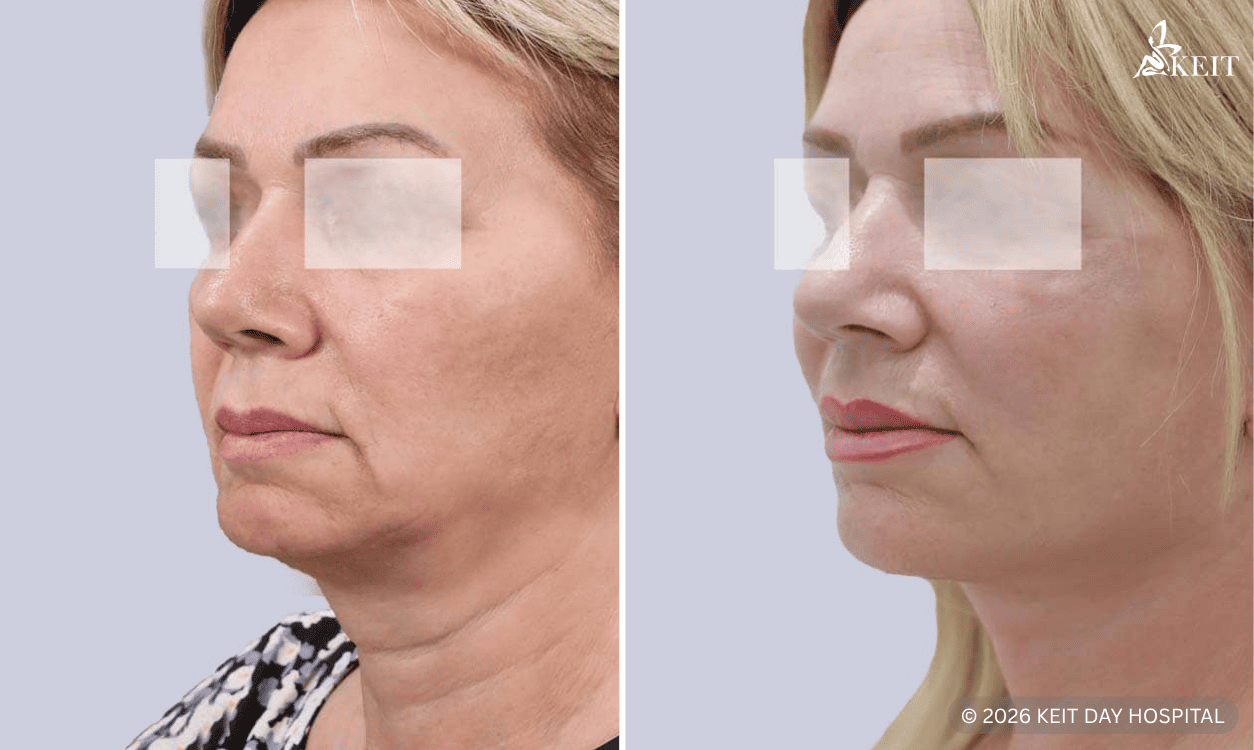
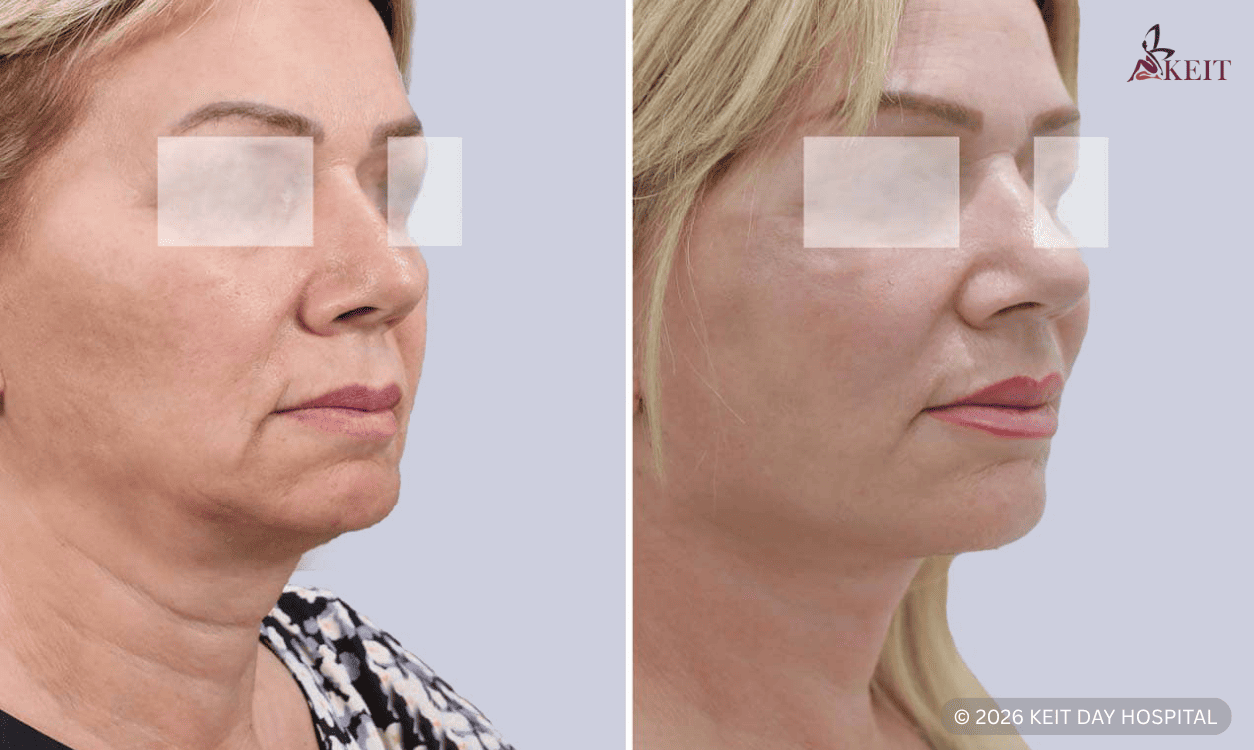
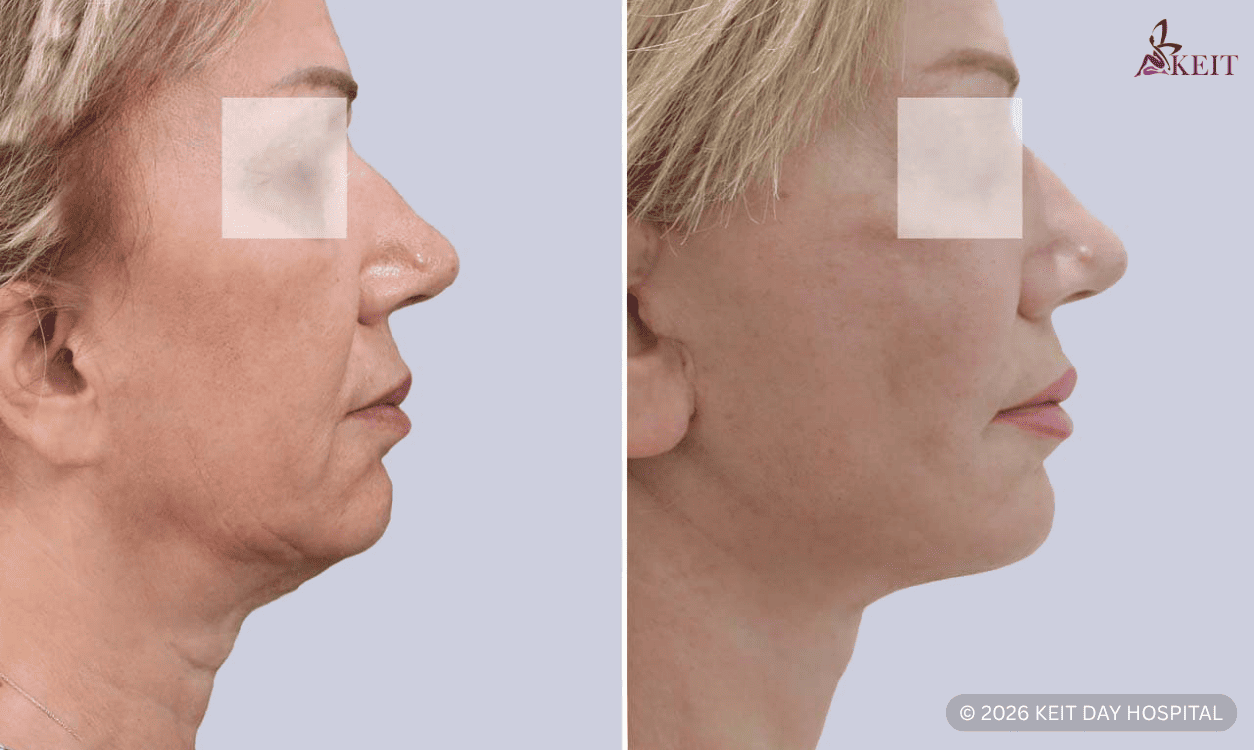
The best age for a facelift is not defined by a number alone. While many patients begin considering facelift surgery in their 40s, 50s or 60s, the right timing is personal and depends on facial ageing, skin laxity, jowls, neck sagging, genetics and individual goals.
 Table of Contents:
-
1
 Best age for a facelift: Is there an ideal age?
-
2
Signs you may be ready for a facelift
-
3
Mini facelift vs traditional facelift: Which is more suitable?
-
4
Facelift options by age
-
5
Can non-surgical treatments delay a facelift?
-
6
Facelift recovery and results
-
7
Facelift cost: Does age affect the price?
-
8
Are you a good candidate for a facelift?
In this guide, we explain when a face lift may be worth considering, the signs that show you may be ready, how facelift options change by age, whether non-surgical treatments can delay surgery and how recovery, results and cost depend on your individual treatment plan.
Best age for a facelift: Is there an ideal age?
There is no single ideal age for a facelift, because every face ages differently. What feels too early for one patient may be the right time for another, depending on skin quality, facial structure and how much sagging is present.
Facelift surgery, also known as rhytidectomy, is most commonly considered between the mid-40s and mid-60s. However, some patients may benefit earlier if they have early jowls or genetic skin laxity, while others may choose surgery later if their ageing changes develop more gradually.
Rather than focusing only on age, a surgeon will assess your facial anatomy, skin elasticity, overall health and goals to determine whether a mini facelift, lower face lift or full face lift is the most suitable option.
Signs you may be ready for a facelift
You may be ready for a facelift when facial ageing becomes more visible and non-surgical treatments no longer give the level of improvement you want. The most common signs include:
- Loose skin: Skin begins to sag along the lower face, jawline or neck.
- Jowls: Soft tissue starts to descend around the jawline, reducing facial definition.
- Deep folds: Nasolabial folds and marionette lines become more pronounced.
- Sagging cheeks: Mid-face volume drops, creating a heavier or tired appearance.
- Loss of jawline definition: The lower face looks less firm and less contoured.
- Neck laxity: Loose skin or vertical bands appear in the neck area.
- Short-lived non-surgical results: Fillers, Botox or skin tightening no longer provide enough improvement.
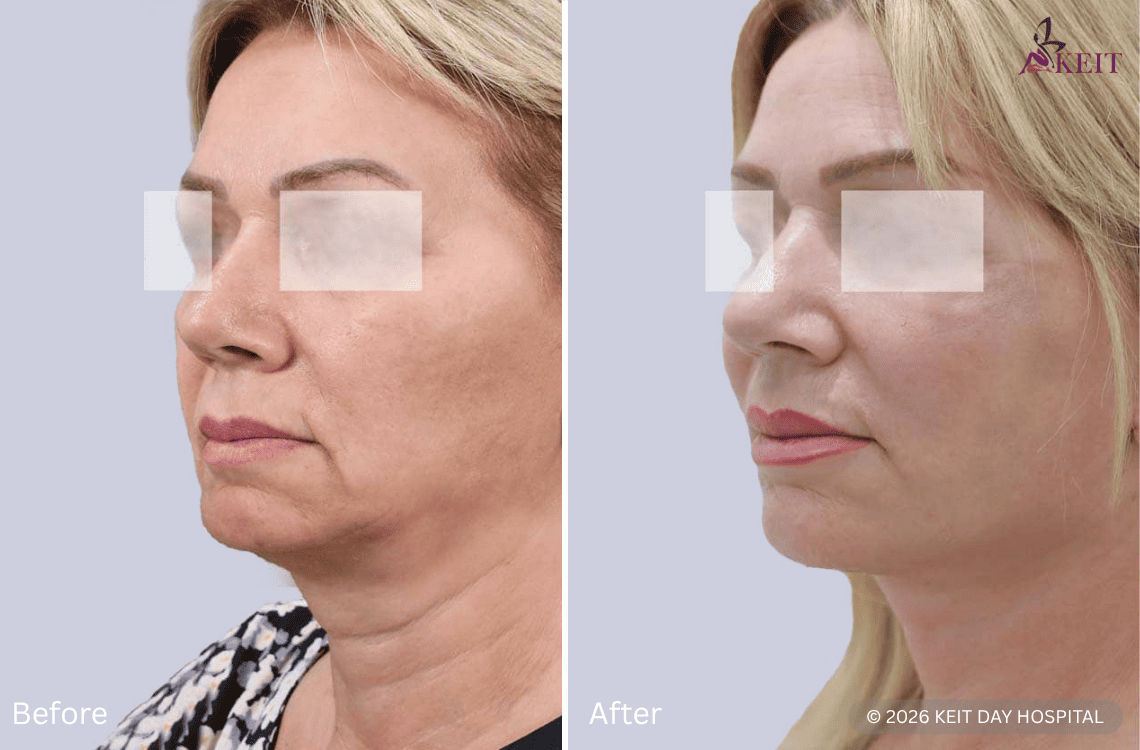
Mini facelift vs traditional facelift: Which is more suitable?
A mini facelift and a traditional facelift both address facial ageing, but they are designed for different degrees of skin laxity and sagging. The most suitable procedure depends on your facial anatomy, aesthetic goals and the extent of ageing, rather than your age alone.
- Mini facelift: Best suited for mild to moderate skin laxity, early jowls and subtle loss of jawline definition. It focuses on the lower face, involves smaller incisions and is generally associated with a shorter recovery.
- Traditional facelift: Recommended for moderate to advanced facial ageing. It addresses more significant sagging of the cheeks, jawline and neck, providing more comprehensive and longer-lasting facial rejuvenation.
Ultimately, the choice between a mini facelift and a traditional facelift should be made during a consultation with an experienced plastic surgeon, who will recommend the most appropriate technique based on your facial structure and desired outcome.
Facelift options by age
Age can give a general idea of which facelift options are commonly considered, but it should never be the only deciding factor. The final recommendation depends on skin quality, facial structure, degree of sagging and the result the patient wants to achieve.
- In your 40s: Patients often have early jowls or mild lower-face laxity, so a mini facelift or lower face lift may be enough.
- In your 50s: Sagging is usually more visible, so the choice may range from a mini facelift to a traditional facelift.
- In your 60s and beyond: More advanced facial and neck laxity may require a full facelift, sometimes combined with a neck lift.

Can non-surgical treatments delay a facelift?
Non-surgical treatments can help improve early signs of facial ageing, but they cannot replace a facelift when loose skin and sagging become more advanced.
- Botox: Helps soften dynamic wrinkles caused by facial movement.
- Dermal fillers: Restore lost volume and can improve mild folds or contour changes.
- Skin tightening treatments: May improve mild laxity and skin texture.
- Laser or resurfacing treatments: Can improve skin quality, pigmentation and fine lines.
These options may help delay surgery for some patients, especially in the earlier stages of ageing. However, when jowls, loose skin or neck laxity become more pronounced, facelift surgery is usually the more effective option for long-lasting correction.
Facelift recovery and results
Facelift recovery varies from patient to patient, but most people see early swelling, bruising and discomfort improve over the first few weeks. Facial definition and final results continue to refine gradually over the following months.
- Initial recovery: Swelling, bruising and mild discomfort are expected in the first weeks.
- Activity restrictions: Light daily activities can often resume within 2–3 weeks, while strenuous exercise is usually avoided for 4–6 weeks.
- Scar healing: Incisions are usually placed around the ears and hairline and become less noticeable as they heal.
- Final results: Results continue to improve as swelling settles, usually over 6–12 months.
- Longevity: Facelift results often last 10 years or longer, depending on skin quality, lifestyle and natural ageing.
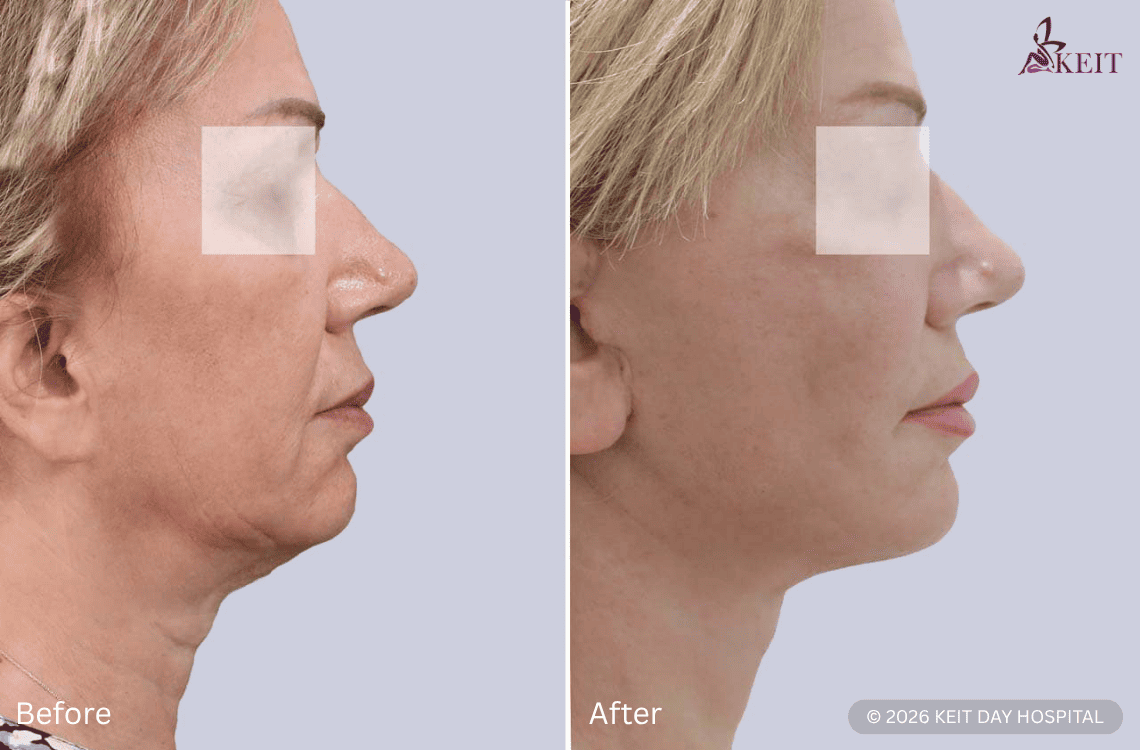
Does age affect facelift recovery?
Age alone does not determine recovery. Healing depends more on overall health, skin quality, smoking status, surgical technique and how closely aftercare instructions are followed.
Facelift cost: Does age affect the price?
Age does not directly determine the cost of a facelift. The final price depends on the surgical technique, procedure complexity, anaesthesia, clinic standards, surgeon’s experience and whether additional procedures, such as a neck lift or eyelid surgery, are performed at the same time.
A mini facelift is usually less complex than a full facelift, while a face and neck lift may involve a longer procedure and higher overall cost. The most accurate price can only be confirmed after a consultation and personalised surgical plan.
Are you a good candidate for a facelift?
The best candidate for a facelift is not determined by age alone, but by overall health, facial ageing and realistic expectations. A consultation with an experienced plastic surgeon is the best way to determine whether the procedure is right for you.
You may be a suitable candidate if you:
- Have visible skin laxity: Loose skin, jowls or loss of jawline definition affect your facial appearance.
- Are in good overall health: You are medically fit for surgery and recovery.
- Have realistic expectations: You understand what a facelift can and cannot achieve.
- Maintain a stable weight: Significant weight changes can affect long-term results.
- Do not smoke, or are willing to stop: Smoking can impair healing and increase the risk of complications.
- Want long-lasting facial rejuvenation: You are looking for a surgical solution rather than temporary improvements.