Published on:
 Modified on:

 Reading Time: 4 min
 Cervicofacial Lift
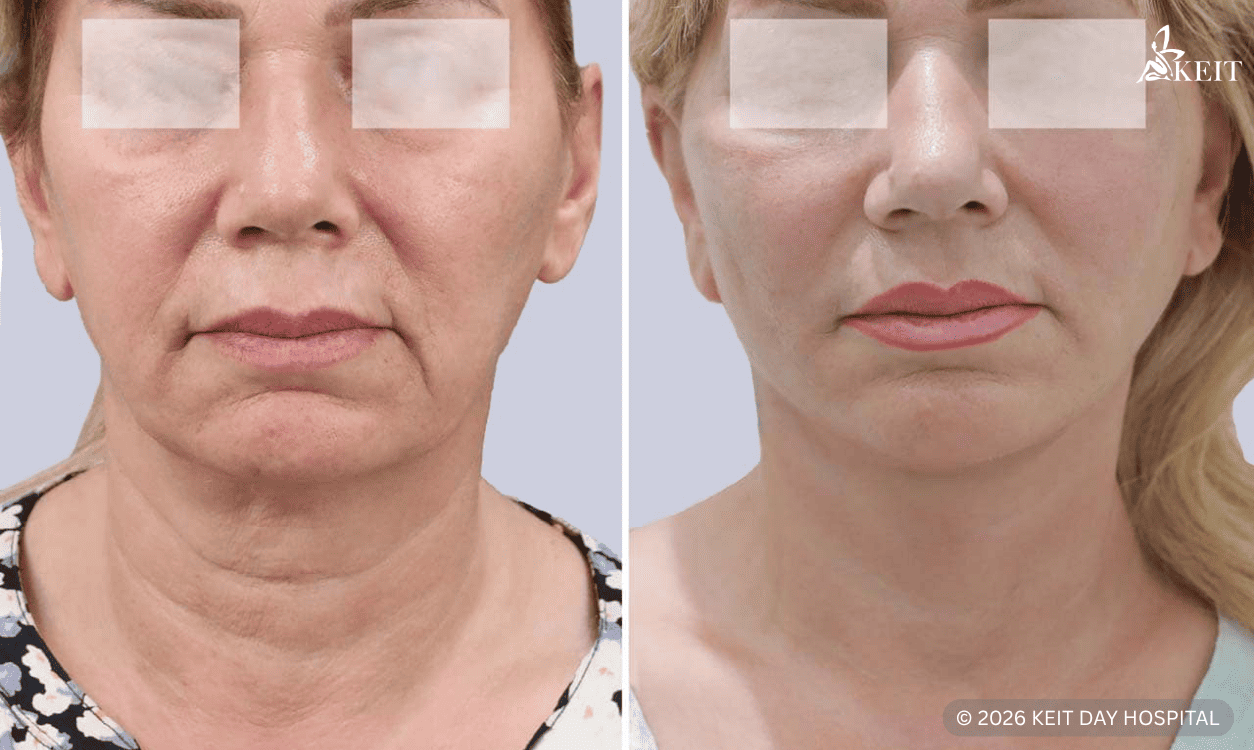
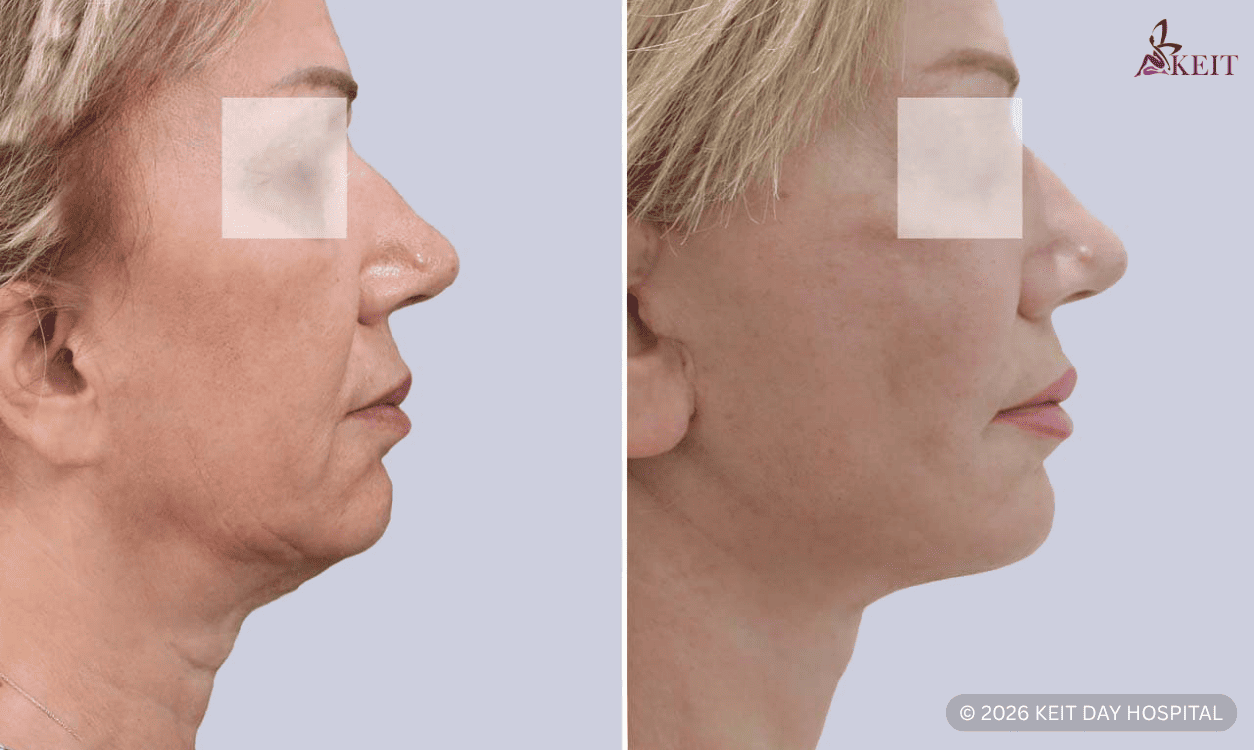
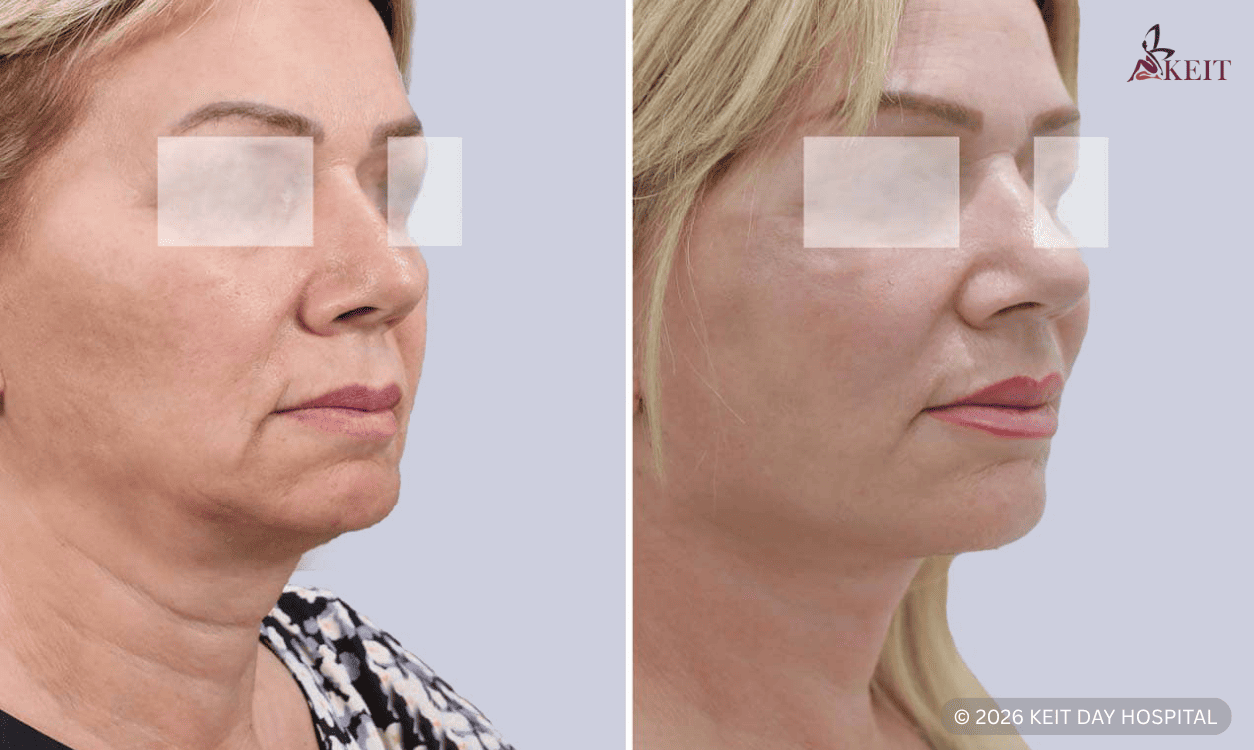
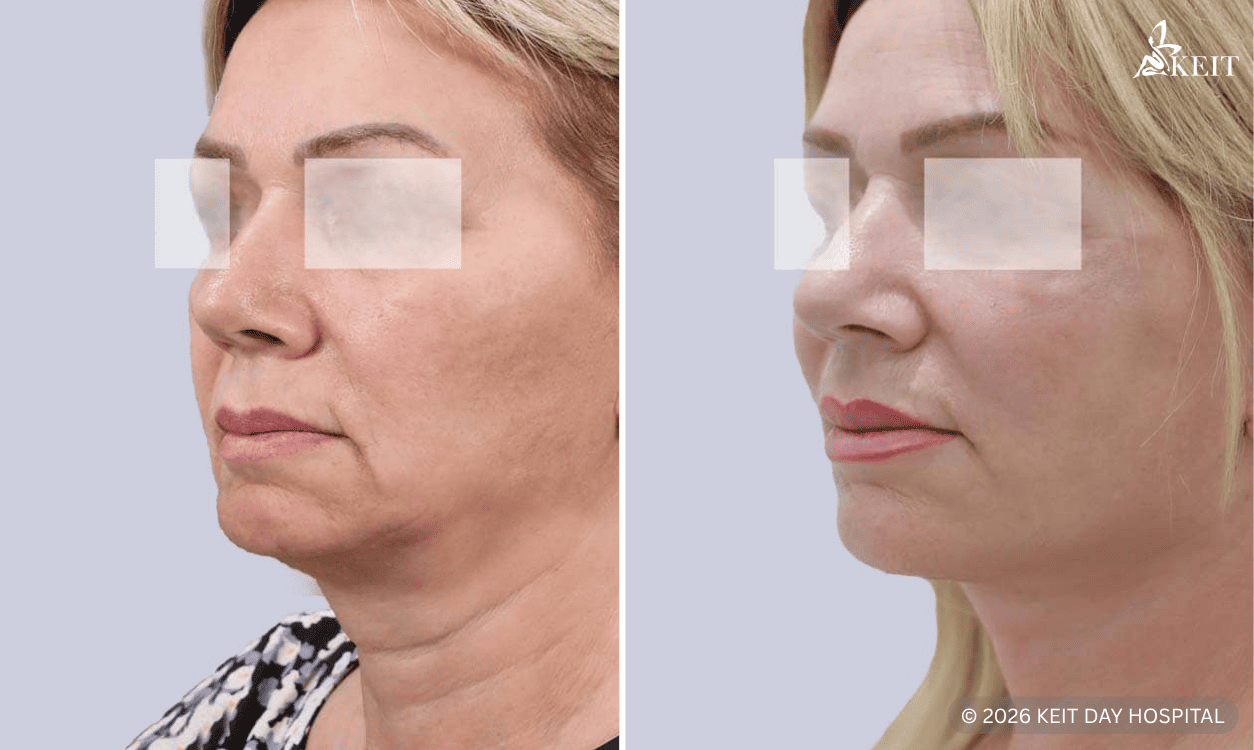
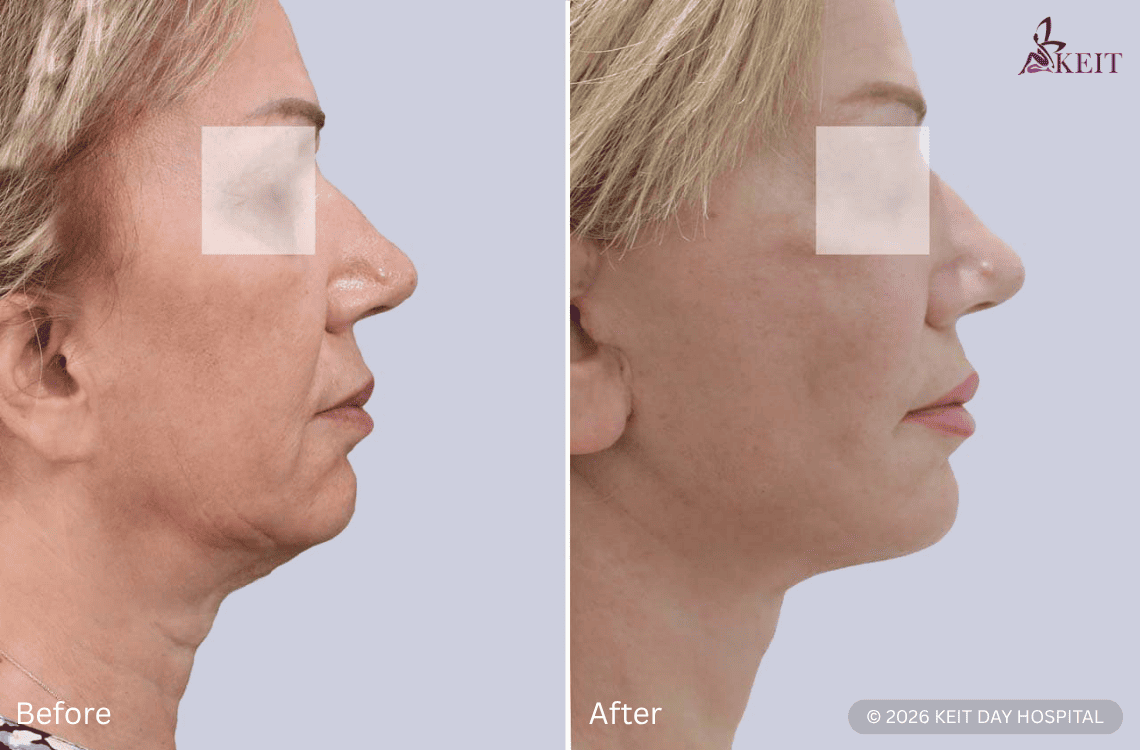
Facelift before and after results show improvement in jowls, jawline definition, lower-face sagging, and neck contour. Results develop gradually as swelling settles, with early changes visible within weeks and final results assessed after 6–9 months.
 Table of Contents:
-
1
 Facelift before and after: what results can you realistically expect?
-
2
Facelift before and after timeline: how results change during healing
-
3
Mini facelift before and after: what results are realistic?
-
4
Deep plane, SMAS and short scar facelift: how the results differ
-
5
Facelift before and after over 60: what changes with age?
-
6
Male facelift before and after: how treatment goals are tailored
-
7
Natural facelift results: what makes a good outcome?
-
8
Facelift before and after photos: how to assess results correctly
-
9
When should you contact your surgeon after a facelift?
In this article, we explain what facelift before and after results can realistically show, how results change during healing, and how different facelift techniques compare. We also cover results over 60, male facelift goals, photo assessment, natural-looking outcomes, and when to contact your surgeon after surgery.
Facelift before and after: what results can you realistically expect?
A facelift can improve several signs of facial ageing by repositioning descended tissues and restoring better facial contour. The main improvements include:
- Jawline definition: creates a sharper and more defined lower facial border.
- Jowls: reduces soft tissue descent along the jawline for a smoother facial profile.
- Lower face: improves heaviness around the mouth, chin, and lower cheeks.
- Neck contour: addresses loose skin and excess tissue, particularly when combined with a neck lift.
- Facial balance: restores a more youthful relationship between the cheeks, jawline, and neck while preserving natural facial features.
Facelift before and after timeline: how results change during healing
Facelift results develop gradually as swelling, bruising, and tissue tightness settle over time. The main healing stages follow this pattern:
- First week: swelling, bruising, and tightness are expected, and the face may look uneven or overly full.
- Weeks 2–4: bruising fades, swelling begins to reduce, and the early jawline and neck contour become more visible.
- Months 1–3: facial definition continues to improve as deeper swelling settles and the tissues begin to soften.
- Months 3–6: the result looks more refined, with better facial balance and more natural movement.
- Months 6–9: the final facelift result can be assessed more accurately, although small changes may continue as healing completes.
Mini facelift before and after: what results are realistic?
Mini facelift before and after results are most noticeable in patients with early lower-face ageing, mild jowls, and limited skin laxity. The main improvements include:
- Jawline softening: improves early loss of definition along the lower face.
- Mild jowls: reduces early tissue descent around the jawline.
- Lower-face laxity: tightens mild looseness in the lower cheeks and jawline area.
- Facial sagging: improves early tissue descent without the extent of a full facelift.
A mini facelift provides more limited correction than a full facelift and may not be suitable for advanced jowls, heavy neck laxity, or significant excess skin.
Deep plane, SMAS and short scar facelift: how the results differ
Facelift techniques differ because they lift different tissue layers and suit different degrees of facial ageing. The main differences are:
- Deep plane facelift: repositions deeper facial tissues for stronger correction of mid-face descent, jowls, and neck laxity.
- SMAS facelift: lifts or tightens the supportive layer beneath the skin to improve lower-face structure and jawline definition.
- Short scar facelift: uses a shorter incision pattern and is usually suitable for mild to moderate lower-face laxity.
Facelift before and after over 60: what changes with age?
Facelift before and after results over 60 can be very effective, but the treatment plan needs to account for reduced skin elasticity, deeper jowls, and more visible neck laxity. Healing may also take longer because swelling can resolve more slowly with age.
Suitability is not based on age alone. General health, skin quality, medication use, smoking history, and surgical risk are more important when deciding whether a facelift is appropriate.
Male facelift before and after: how treatment goals are tailored
Male facelift before and after results focus on improving jowls, jawline definition, and neck contour while maintaining a naturally masculine facial structure. Planning takes into account beard-bearing skin, sideburn position, hairline pattern, jawline strength, and discreet scar placement around the ear.
The aim is a sharper, more rested appearance without an over-tightened or feminised look. A natural male facelift refines the lower face and neck while preserving strong, balanced facial features.
Natural facelift results: what makes a good outcome?
Natural facelift results are achieved through precise repositioning of the deeper facial tissues, rather than excessive tightening of the skin. A good outcome is defined by:
- Jawline contour: smoother and more defined without looking sharp or artificial.
- Jowls: visibly reduced while keeping the lower face natural.
- Neck definition: improved contour, especially when a neck lift is included.
- Facial movement: natural expression without stiffness or tension.
- Scars: discreet placement around the ear and hairline.
- Overall appearance: fresher and more rested, without a pulled or over-tightened look.
Facelift before and after photos: how to assess results correctly
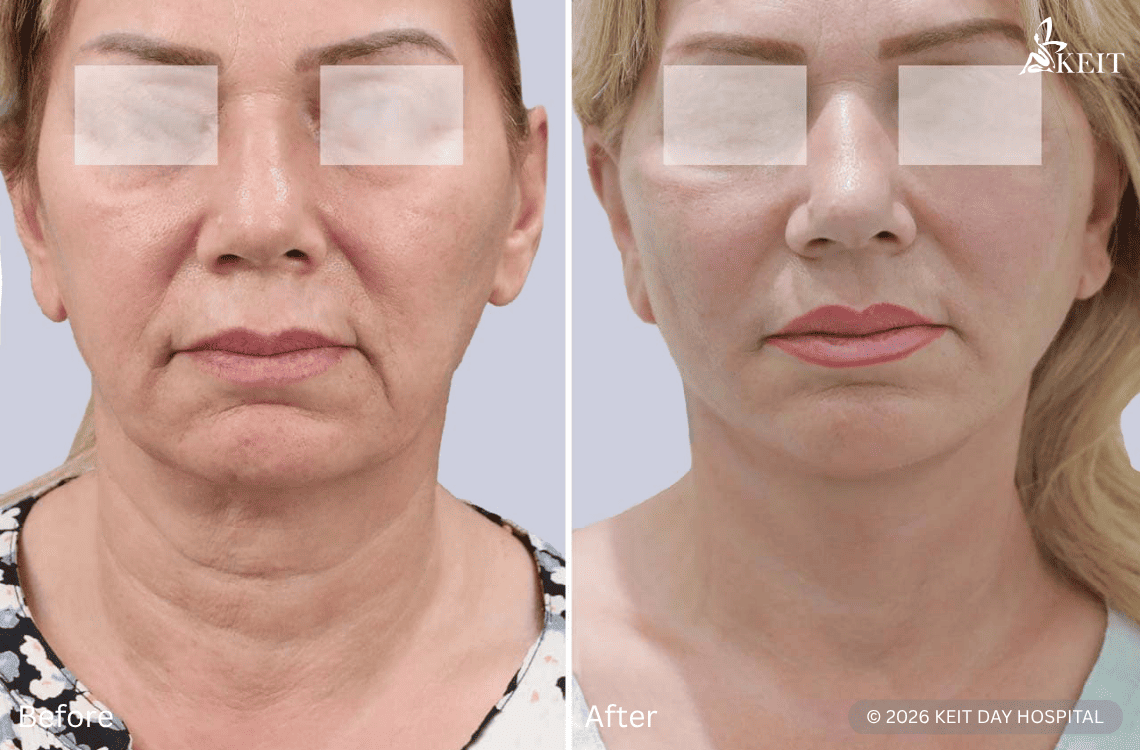
Facelift before and after photos are most useful when they show the result clearly and consistently. When assessing results, look for:
- Consistent angles: the face is shown from the same position before and after surgery.
- Similar lighting: shadows or brightness do not exaggerate the result.
- Multiple views: front, side, and three-quarter photos show the jawline, jowls, and neck more accurately.
- Healed results: photos taken several months after surgery show the outcome more reliably.
- Similar anatomy: patients with similar age, skin quality, and facial structure give a more realistic comparison.
- Natural details: the ears, hairline, scars, and facial expression look balanced and undistorted.
Book your FREE
Online Consultation Now

When should you contact your surgeon after a facelift?
Mild swelling, bruising, tightness, and discomfort are expected after a facelift. Contact your surgeon promptly if you notice severe or increasing pain, sudden one-sided swelling, persistent bleeding, skin discolouration, fever, wound opening, discharge from the incision, new facial weakness, visual symptoms, or breathing difficulty. These symptoms may indicate a complication that requires medical assessment.