Published on:
 Modified on:

 Reading Time: 4 min
 Total Blepharoplasty
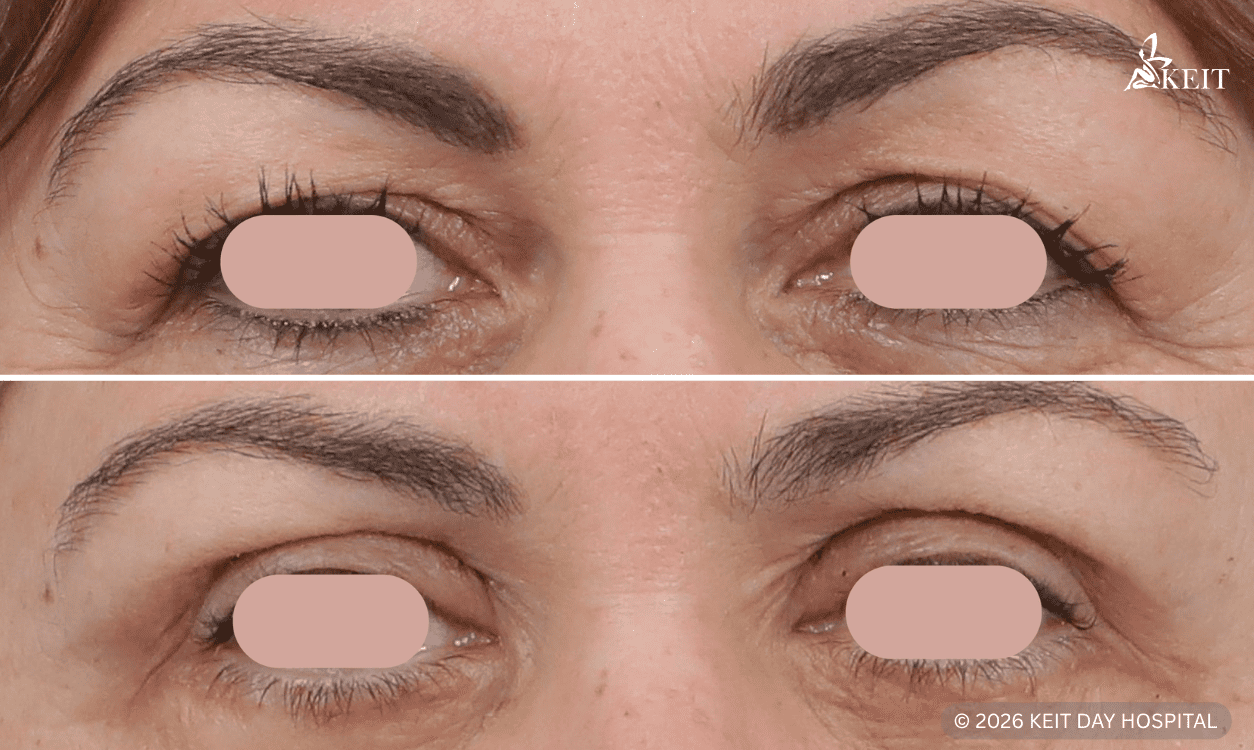
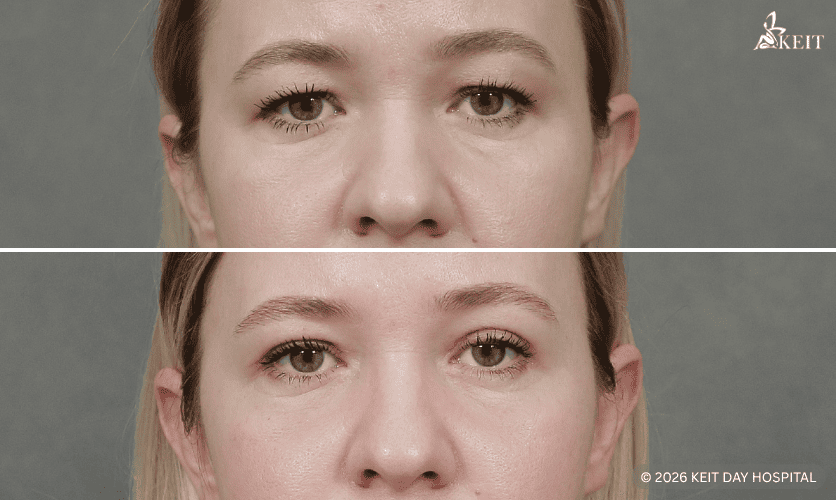
Blepharoplasty recovery follows a staged healing process, with swelling and bruising most noticeable early on and gradual improvement over the following weeks. Recovery varies between upper and lower blepharoplasty, but proper aftercare, activity restrictions, and timely review of concerning symptoms all play an important role in achieving a smooth post-operative course.
 Table of Contents:
-
1
 Blepharoplasty recovery: What to expect immediately after surgery
-
2
Blepharoplasty recovery timeline: What happens in the first hours, days and weeks
-
3
Bruising and swelling during blepharoplasty recovery
-
4
Blepharoplasty scarring: Scar placement, healing and visibility
-
5
Upper and lower eye surgery recovery: Key differences in recovery
-
6
Blepharoplasty recovery: What to do to support proper healing
-
7
What to avoid during blepharoplasty recovery
-
8
When can you return to normal activities after blepharoplasty?
-
9
When to contact your surgeon during blepharoplasty recovery
In this guide, we explain what to expect immediately after surgery, how blepharoplasty recovery progresses, and how swelling, bruising, and scarring change during healing. We also cover how to support recovery, when normal activities can be resumed, and when to contact your surgeon.
Blepharoplasty recovery: What to expect immediately after surgery
Immediately after blepharoplasty, the following changes are commonly expected in the first 24–48 hours as healing begins:
- Swelling and bruising of the eyelids, sometimes extending slightly below the eyes.
- Temporary blurred vision related to ointment use or early swelling.
- Mild discomfort, irritation, or a sensation of dryness around the eyes.
- Increased tearing and sensitivity to light.
Blepharoplasty recovery timeline: What happens in the first hours, days and weeks
Blepharoplasty recovery timeline follows a structured healing process, with gradual improvement in swelling, bruising, and overall appearance.
- Days 1–3: Swelling and bruising are usually most pronounced during this period, and the eyelids may feel tight or sensitive.
- Days 4–7: Early swelling begins to settle, bruising becomes less intense, and the eye area starts to look less inflamed.
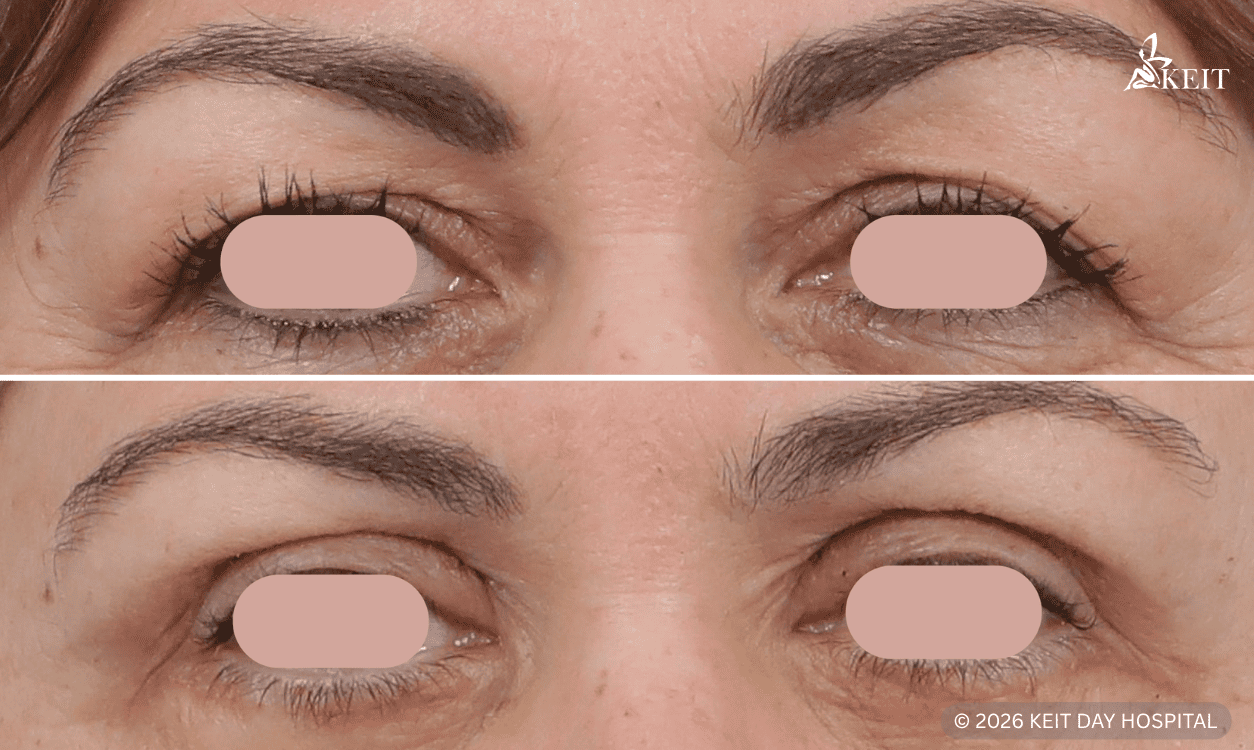
- Week 2: Most visible bruising has usually resolved, and the eyelids appear more natural, although mild residual swelling can remain.
- Weeks 3–4: The tissues continue to soften, swelling reduces further, and the early surgical result becomes more apparent.
- Months 1–3: Healing continues at a deeper level, with refinement of the eyelid contour and further improvement in the overall result.
Bruising and swelling during blepharoplasty recovery
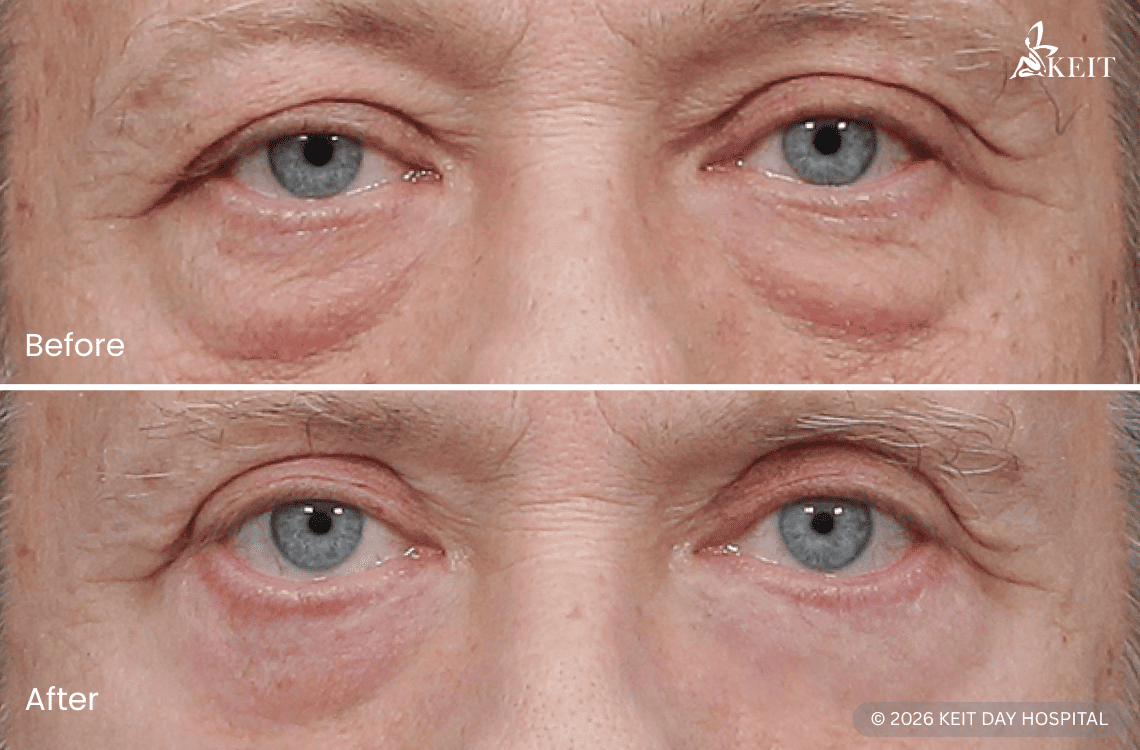
Swelling and bruising after blepharoplasty are normal. Swelling is usually most pronounced between 48 and 72 hours after surgery and may persist, especially in the morning, for several weeks before fully settling.
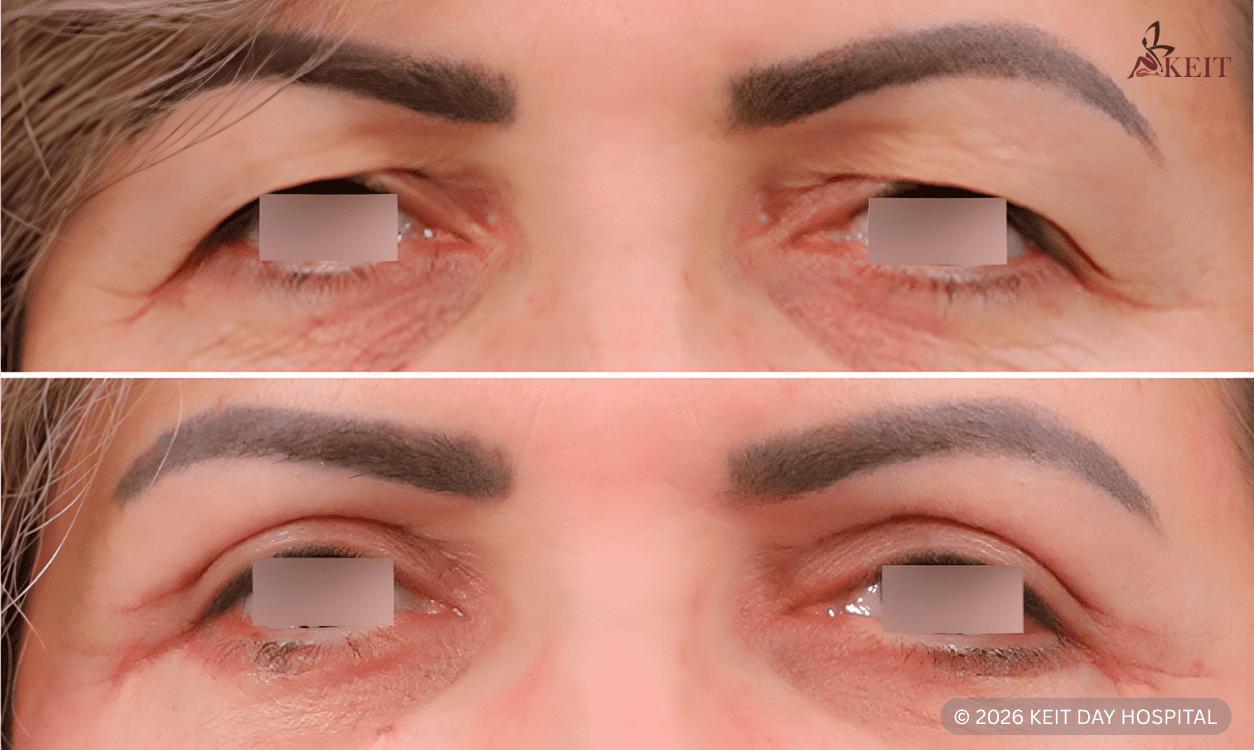
Bruising tends to become visible early, may extend from the eyelids toward the lower lid or upper cheek due to gravity, and is often more noticeable after lower blepharoplasty because of the thinner skin in that area. Mild asymmetry between the two sides is also common during healing.
Blepharoplasty scarring: Scar placement, healing and visibility
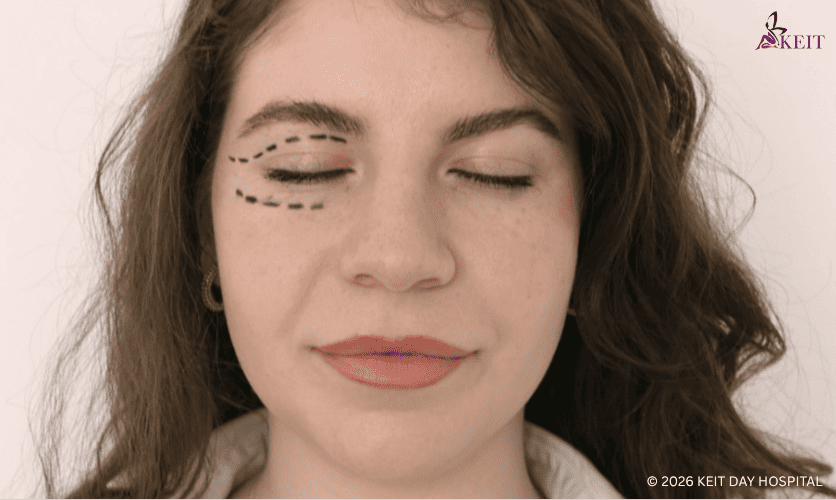
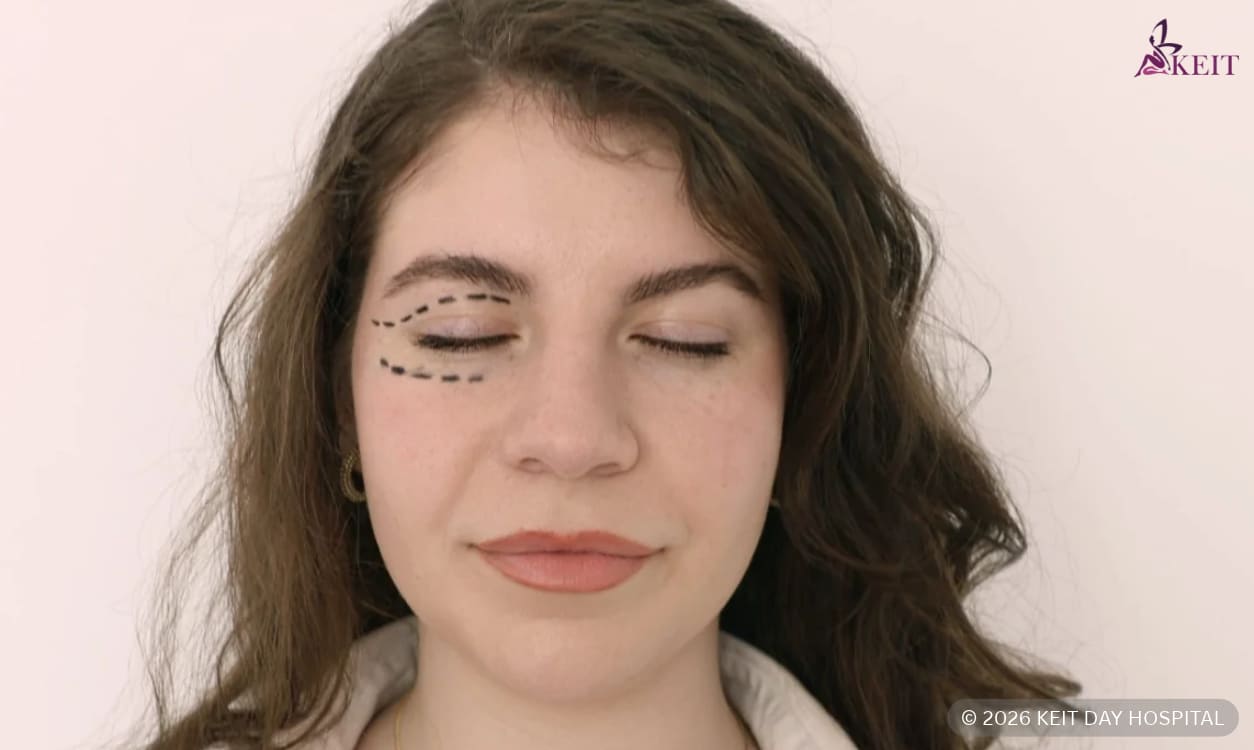
Blepharoplasty scarring is minimal because incisions are placed in naturally concealed areas of the eyelid. Upper blepharoplasty scars lie within the eyelid crease, while lower blepharoplasty scars are placed just below the lash line or, in transconjunctival surgery, inside the eyelid with no visible external scar.
In the early phase, scars can appear pink, slightly firm, or more noticeable with swelling, but they generally soften and fade as healing progresses. Final scar maturation continues over several months.
Book your FREE
Online Consultation Now

Upper and lower eye surgery recovery: Key differences in recovery
Recovery from upper and lower blepharoplasty differs slightly due to anatomical factors.
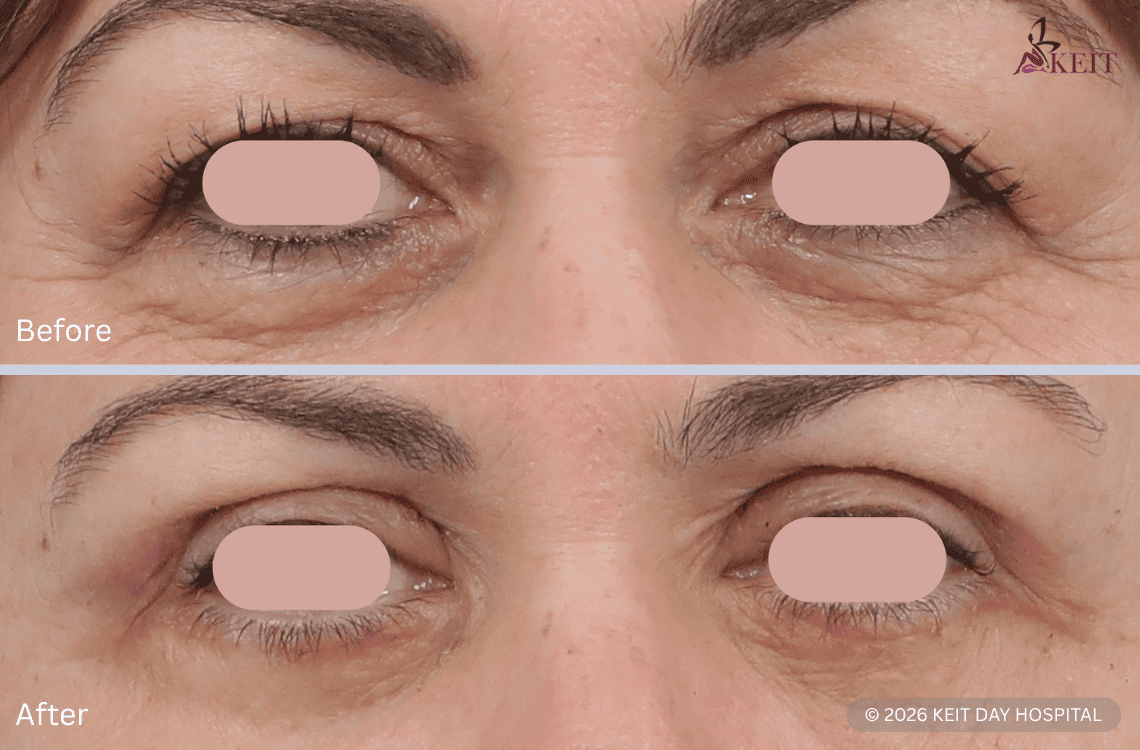
Upper blepharoplasty recovery follows a faster course, with less swelling, earlier improvement in appearance, and healing that remains more localized to the upper eyelid.
Lower blepharoplasty recovery tends to involve more bruising and longer-lasting swelling, as the lower eyelid area retains fluid more easily and healing often extends into the upper cheek.
Blepharoplasty recovery: What to do to support proper healing
Proper aftercare plays a key role in recovery, and the following measures help support healing:
- Keeping the head elevated, including during sleep, to help limit fluid retention around the eyes.
- Using cold compresses as directed during the early phase to control swelling and bruising.
- Applying prescribed eye drops or ointments to support ocular comfort and protect the healing tissues.
- Attending follow-up appointments so healing, stitch removal, and early recovery can be assessed properly.
What to avoid during blepharoplasty recovery
Certain activities can interfere with healing and should be avoided during the recovery period.
- Rubbing or touching the eyes, as this can irritate the tissues and place tension on the incisions.
- Strenuous exercise and heavy lifting, which can increase swelling and the risk of bleeding.
- Smoking and alcohol, as both can impair circulation and delay healing.
- Eye makeup, until the incision sites have healed sufficiently.
- Direct sun exposure, as this can affect scar healing and increase pigmentation risk.
When can you return to normal activities after blepharoplasty?
Return to normal activities after blepharoplasty depends on the stage of healing and the type of activity involved.
- Work: Most patients can return to non-strenuous work within 7–10 days, once swelling and bruising are less noticeable.
- Light daily activity: Walking and routine movement can usually be resumed early, provided they do not increase pressure around the eyes.
- Exercise: More strenuous activity is generally delayed for 2–3 weeks to reduce the risk of swelling and bleeding.
- Makeup: Eye makeup should only be resumed once the incision lines have healed adequately.
When to contact your surgeon during blepharoplasty recovery
Most symptoms during blepharoplasty recovery are temporary, but certain signs should not be ignored and require medical assessment.
- Increasing pain or swelling rather than gradual improvement.
- Redness, discharge, or other signs of infection around the incision area.
- Persistent or heavier bleeding.
- Sudden changes in vision.
Early assessment helps identify complications promptly and supports safer recovery.