Published on:
 Modified on:

 Reading Time: 4 min

 Breast augmentation
Capsular contracture is a condition where the scar tissue surrounding a breast implant tightens excessively, causing the breast to feel firm, distorted or painful. It is one of the most discussed breast augmentation complications and can appear months or even years after surgery. Recognising early symptoms, understanding what causes it and knowing the treatment options is essential for maintaining breast health and achieving long-lasting results after breast implants.
 Table of Contents:
-
1
 What is capsular contracture?
-
2
What causes capsular contracture?
-
3
Symptoms and early signs of capsular contracture
-
4
Baker grades of capsular contracture of breast implant
-
5
Is capsular contracture dangerous?
-
6
How to prevent capsular contracture?
-
7
Capsular contracture: How it’s treated and when implants must be removed or replaced
In this article, we explain what capsular contracture is, why it develops and the early symptoms worth recognising. You’ll learn the main causes, how the condition is graded, whether it poses any risks and the steps that can reduce its likelihood. We also outline the full treatment pathway and when implant removal or replacement becomes necessary to help you make an informed decision.
What is capsular contracture?
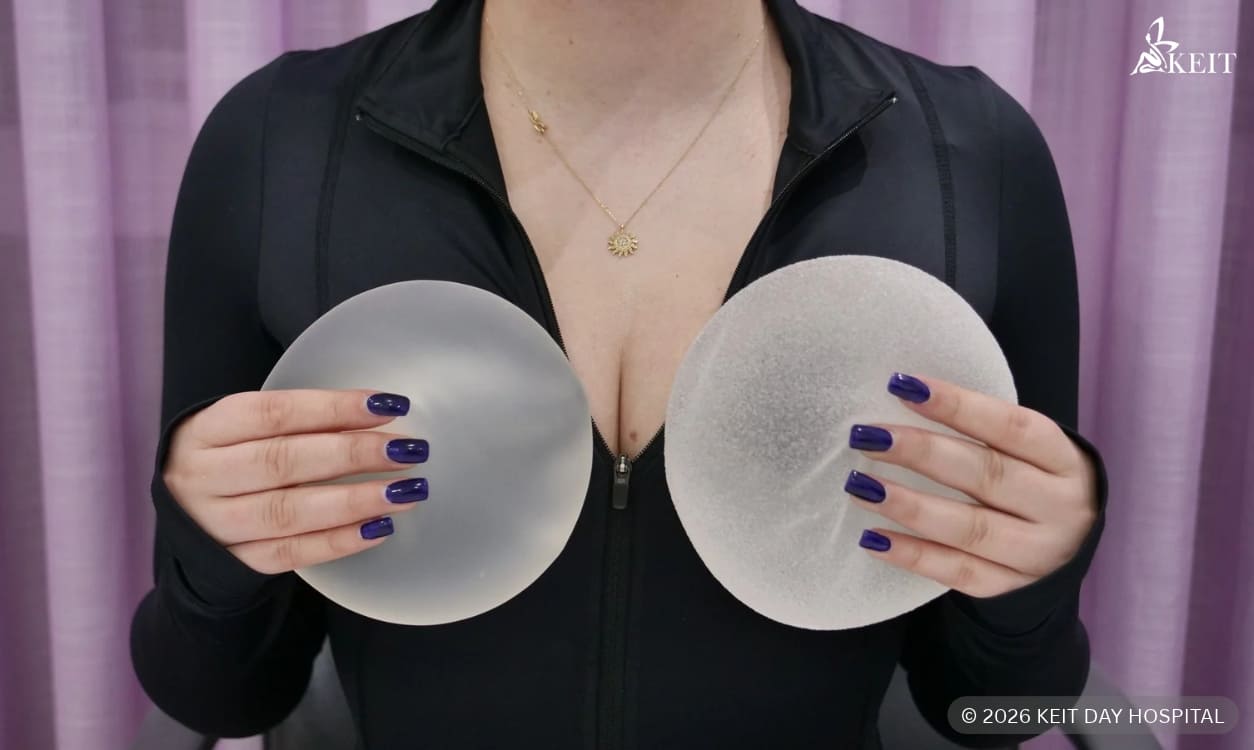
Capsular contracture refers to the abnormal tightening of the capsule, the natural layer of scar tissue the body forms around every breast implant. In most patients, this capsule stays soft and flexible. In some cases it thickens, compresses the implant and leads to firmness, breast distortion or discomfort. It can occur with both silicone and saline implants and is one of the most common reasons for revision breast surgery. Breast augmentation capsular contracture can appear shortly after breast enlargement or many years later.
For an additional medical overview, the American Society of Plastic Surgeons also explains how capsular contracture develops and how it can be treated.
What causes capsular contracture?
Although capsular contracture can happen without an obvious trigger, several biological and surgical factors are known to increase the risk:
- Bacterial biofilm: Tiny, undetected bacteria on the implant can trigger chronic inflammation and capsule tightening.
- Haematoma or seroma: Blood or fluid around the implant promotes inflammation and thicker scar formation.
- Implant rupture or silicone leakage: Escaped silicone irritates surrounding tissue and increases contracture risk.
- Immune or genetic tendency: Some patients naturally form thicker, tighter scar tissue.
- Implant type and placement: Certain textures have shown higher risk, while submuscular placement generally reduces it.
Symptoms and early signs of capsular contracture
Capsular contracture symptoms typically develop gradually. Recognising early signs of capsular contracture is important because timely assessment may prevent progression.
- Increasing firmness: The breast becomes tighter, harder and less compressible.
- Shape changes: The implant may sit higher, look rounder or appear “ball-like.”
- Discomfort or pain: Tightness can progress into constant pain as the capsule stiffens.
- Asymmetry: One breast may look higher, smaller or noticeably distorted.
- Implant displacement: Tightening can push the implant upward or outward, making edges more visible.

Baker grades of capsular contracture of breast implant
Doctors classify capsular contracture using the Baker scale, which grades how firm or distorted the breast becomes.
- Grade I: The breast looks and feels completely natural. The capsule is soft and not detectable.
- Grade II: The breast looks normal but feels slightly firm. No visible distortion.
- Grade III: The breast feels firm and appears visibly distorted or rounder. Implant movement becomes restricted.
- Grade IV: The breast is hard, painful and noticeably misshapen. This level often requires treatment.
Is capsular contracture dangerous?
Capsular contracture is not life-threatening and doesn’t cause systemic illness, but advanced stages can lead to significant discomfort, chronic pain and visible breast distortion. While not “dangerous” in the medical sense, severe contracture may signal underlying problems such as implant rupture, silicone leakage or ongoing inflammation, all situations that require prompt professional evaluation.
How to prevent capsular contracture?
Although capsular contracture can’t be prevented entirely, several evidence-based strategies help lower the risk. Key preventive measures include:
- Submuscular placement: Positioning implants under the muscle usually lowers contracture risk.
- Reducing contamination: No-touch technique, sterile insertion devices and antibiotic irrigation limit bacterial exposure.
- Treating early issues: Fast management of haematoma or seroma prevents prolonged inflammation.
- Monitoring for rupture: Periodic imaging after 7–10 years helps detect silent silicone leaks early.
- Following post-op care: Support garments, no smoking and avoiding intense activity promote proper healing.
Capsular contracture: How it’s treated and when implants must be removed or replaced
Treatment options depend on how severe the contracture capsular is.
Non-surgical options (very early cases)
- Massage or ultrasound: May soften tissue slightly but cannot reverse a true contracture.
- Anti-inflammatory medication: Sometimes helps in early inflammation.
- Compression therapies: Can offer temporary relief but rarely stop progression.
Surgical options (moderate to severe cases)
- Capsulotomy: Releases the tight capsule to improve softness.
- Capsulectomy (partial/total): Removes the capsule when tightening is significant.
- En-bloc removal: Implant and capsule removed together if rupture or contamination is suspected.
- Implant replacement or removal: Replacement restores shape and permanent removal is an option for patients who prefer not to keep implants.
Implant removal or replacement becomes necessary in Baker Grade III–IV cases, when the breast is painful, visibly distorted, or when imaging shows rupture, silicone leakage or ongoing inflammation.