Published on:
 Modified on:

 Reading Time: 5 min
 Aesthetic Treatments
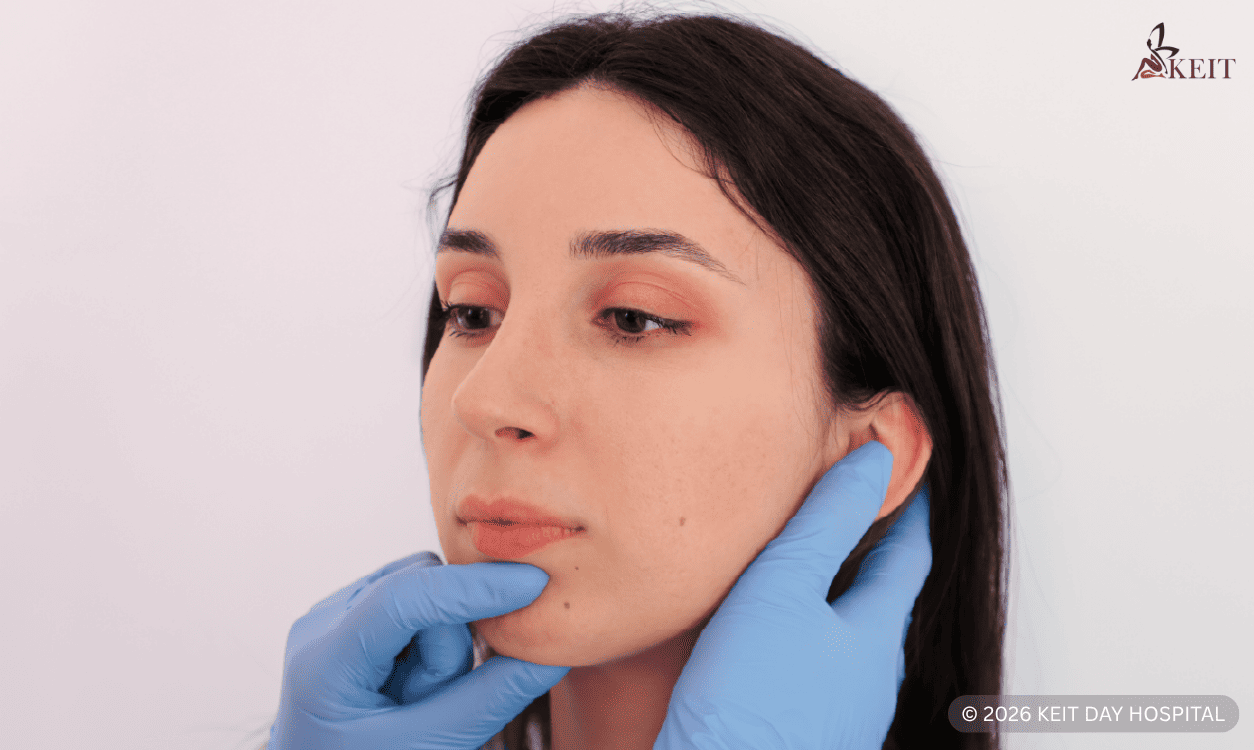
Chin filler is a non-surgical injectable treatment using hyaluronic acid to improve chin projection, contour, and lower-face balance. It is commonly used in patients with a recessed chin, weak chin line or mild lower-face asymmetry. Results are visible immediately, with the final definition becoming clearer after swelling settles.
 Table of Contents:
-
1
 What is chin filler and how do injectable fillers for chin work?
-
2
What does chin filler do?
-
3
Chin filler: Who are the ideal candidates
-
4
Chin filler: Swelling, bruising and settling time
-
5
Chin filler before and after: What results can you expect?
-
6
Chin filler aftercare: What to do after treatment
-
7
How long does chin filler last?
-
8
Chin filler: Risks, migration and possible complications
-
9
Chin filler cost in the UK and what affects the price
In this comprehensive guide, we explain what chin filler is, what it does and who it is suitable for. We also cover swelling and settling time, before and after results, aftercare, how long chin filler lasts, possible risks, and chin filler cost in the UK.
What is chin filler and how do injectable fillers for chin work?
Chin filler is a non-surgical treatment that uses injectable dermal filler to improve chin projection, shape and lower-face balance. Most chin dermal filler treatments use hyaluronic acid filler, a gel-like substance placed beneath the skin to support projection, contour and facial balance. Injectable fillers for chin are usually placed deeply over the chin bone or within selected soft-tissue planes, depending on the patient’s anatomy and the correction needed.
What does chin filler do?
Chin filler is used to refine the shape, projection and definition of the chin in patients who want non-surgical lower-face enhancement. The main aesthetic improvements include:
- Enhanced projection: Adds volume to a recessed chin so the lower face appears more balanced.
- Chin definition: Refines the shape of the chin and improves the lower-face contour.
- Facial profile: Improves the relationship between the chin, lips and nose from the side view.
- Jawline support: Creates a smoother transition between the chin and jawline.
- Mild asymmetry: Balances small differences in chin shape or position when suitable.
- Chin crease: Reduces the appearance of a deep crease below the lower lip in selected patients.
Chin filler: Who are the ideal candidates
Chin line filler is suitable for patients who want mild to moderate chin enhancement without surgery. Ideal candidates are patients who have:
- Recessed chin: Mild under-projection that affects lower-face balance.
- Weak chin line: Limited definition between the chin and jawline.
- Lower-face imbalance: Mild disproportion between the chin, lips, nose and jaw.
- Good skin quality: Skin that can adapt well to added filler volume.
- Realistic expectations: Interest in temporary, non-surgical correction.
Book your FREE
Online Consultation Now

Chin filler: Swelling, bruising and settling time
Swelling after chin filler is expected because the tissue reacts to both the injection and the added filler volume. It is most noticeable during the first 24–72 hours and gradually reduces as the filler integrates into the surrounding tissue.
Bruising can occur where the needle or cannula enters the skin and usually settles within several days. Chin filler typically takes 1–2 weeks to settle. At this stage, swelling has reduced, firmness improves, and the final chin shape becomes clearer.
Chin filler before and after: What results can you expect?
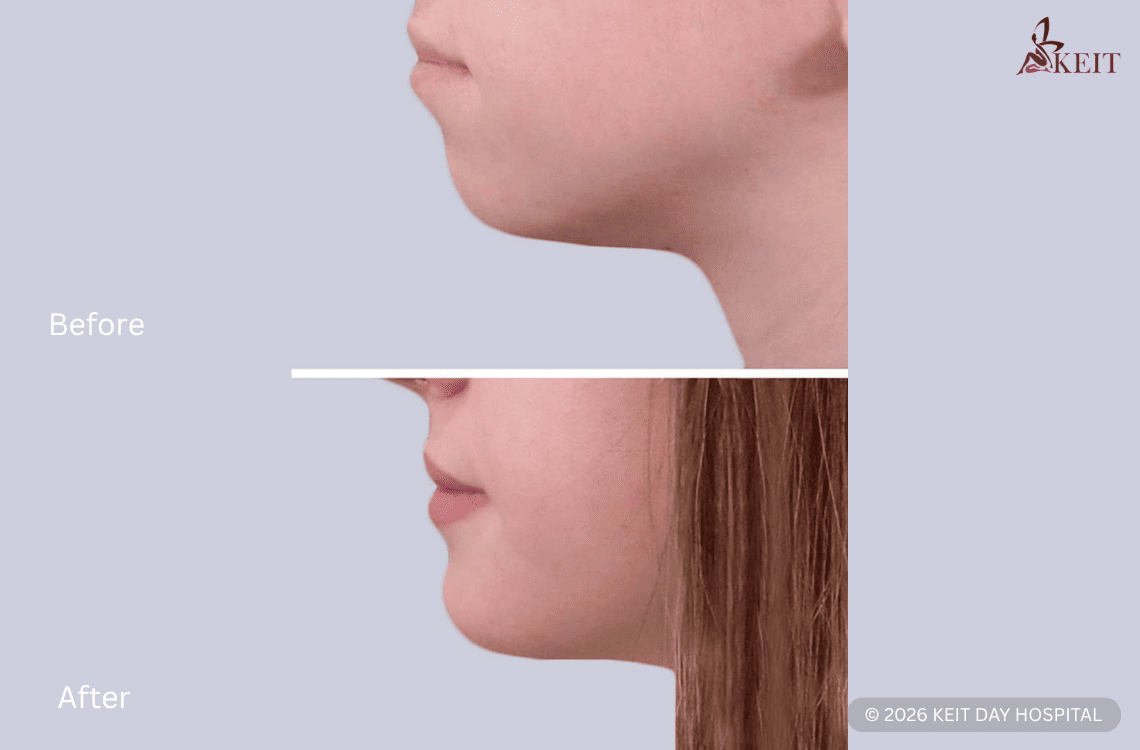
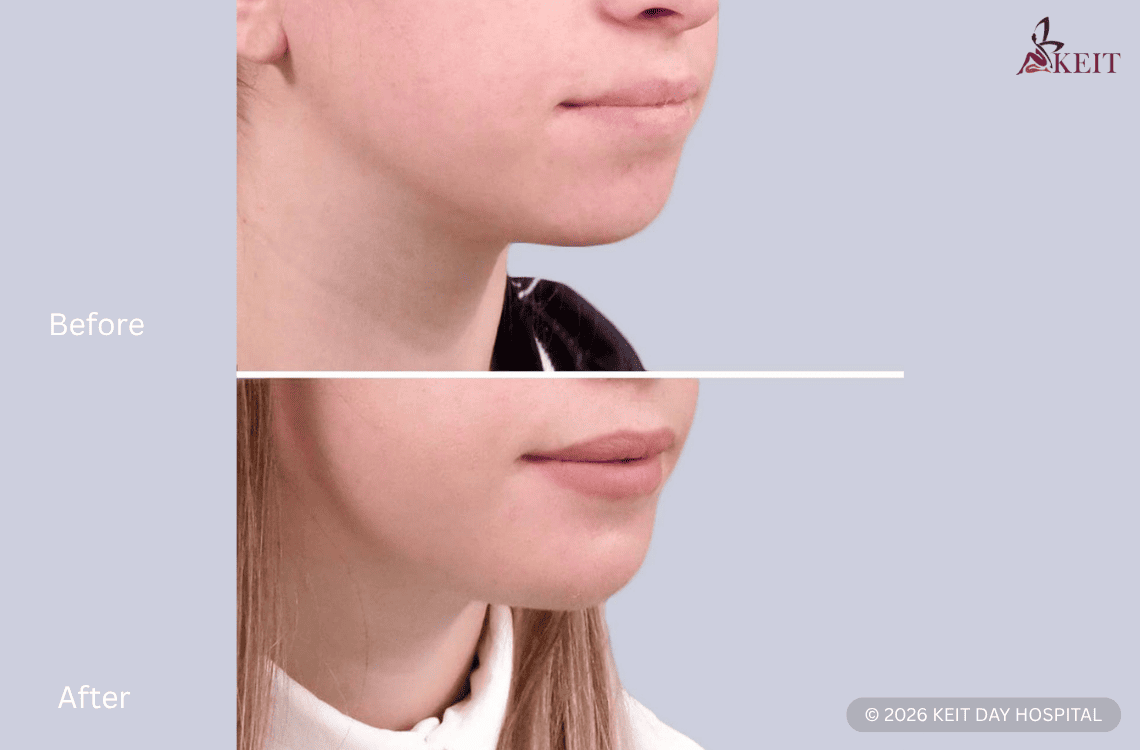
Chin filler before and after results typically show better chin projection, clearer chin line definition and improved lower-face balance. Results are visible immediately after the procedure, but early swelling can affect the appearance. The final outcome should look proportional and depends on anatomy, filler amount and placement, product choice and injector technique.
Chin filler aftercare: What to do after treatment
Chin filler aftercare helps the treated area settle properly and reduces the risk of swelling, bruising, irritation and filler displacement. The following steps are recommended after treatment:
- Sleep on your back: Keeping the head slightly elevated during the first night can help reduce swelling and pressure on the chin.
- Keep the area clean: Gentle cleansing is recommended during the first day to reduce irritation around the injection sites.
- Stay hydrated: Good hydration supports normal tissue recovery after filler treatment.
- Avoid pressure on the chin: Pressing, massaging or resting the chin on the hands can affect filler positioning during the early settling period.
- Limit strenuous exercise: Intense physical activity should be paused for 24–48 hours to reduce swelling and bruising.
- Avoid heat exposure: Saunas, steam rooms, sunbeds and intense heat should be limited for the first 24 hours.
- Avoid makeup: Makeup should not be applied over the injection area for the first 12–24 hours.
How long does chin filler last?
Chin filler typically lasts 12–18 months, but duration varies between patients. Longevity depends on the filler type, amount used, injection depth, metabolism, facial movement and lifestyle factors. Hyaluronic acid chin fillers are temporary and gradually break down over time, so maintenance treatments may be needed to preserve the result.
Chin filler: Risks, migration and possible complications
Chin filler is generally safe when performed by a qualified medical injector, but it remains a clinical procedure with potential side effects and complications.
- Swelling and bruising: Mild swelling, tenderness and bruising around the injection points are common after treatment and usually settle within several days.
- Lumps or irregularities: Uneven filler placement, superficial injection or excess product can create palpable lumps or contour irregularities.
- Asymmetry: Minor differences in chin shape or projection may occur if filler distribution is uneven or swelling affects one side differently.
- Filler migration: Chin filler can move from the intended area, particularly with overfilling, incorrect placement or pressure on the chin during the early settling period.
- Infection or delayed inflammation: Although uncommon, bacterial contamination or inflammatory reactions can develop after treatment and may require medical management.
- Vascular complications: Rarely, filler may compress or enter a blood vessel, reducing blood supply to the skin. Severe pain, skin discolouration or blistering require urgent medical assessment.
Chin filler cost in the UK and what affects the price
Chin filler cost in the UK usually ranges from 200–800 euro, depending on the clinic, injector expertise and amount of filler required. A subtle correction with 1 ml chin filler typically costs around 300–450 euro, while 2 ml chin filler for stronger projection or more defined contouring usually ranges from 500–800 euro.
The final chin filler price is affected by:
- Filler amount: Larger corrections or combined chin and jawline filler may require more product.
- Filler type: Premium hyaluronic acid fillers usually cost more.
- Injector expertise: Experienced medical injectors may charge higher fees.
- Clinic location: London and premium clinics often have higher prices.
- Treatment plan: The cost may change if chin filler is combined with jawline contouring.
- Aftercare: Review appointments and follow-up support may be included or charged separately.