Published on:
 Modified on:

 Reading Time: 6 min
 Rhinoplasty
A French nose is a nasal shape characterized by a short length, refined proportions and a subtly upturned tip combined with a straight or slightly concave bridge. Often associated with elegance and facial harmony, this nose type creates a soft, balanced profile that enhances overall facial features rather than dominating them. A French nose can be a natural anatomical trait or the result of carefully planned rhinoplasty aimed at refinement rather than exaggeration.
 Table of Contents:
-
1
 What is a French nose and what are the main features to look for?
-
2
Why is the French nose considered an aesthetic ideal?
-
3
French nose vs Barbie nose: Key distinctions in refinement and tip rotation
-
4
Who does a French nose suit best?
-
5
The French nose in women: Elegance and soft proportions
-
6
The French nose in men: Balanced proportions and definition
-
7
How to achieve a French nose: Surgical and non-surgical options
-
8
French nose before and after: Results and recovery timeline
-
9
Rhinoplasty for a French nose: Possible risks to be aware of
-
10
Achieving a French nose through rhinoplasty at KEIT Day Hospital: Structured surgical care
In this guide, we explain what defines a French nose, the key features that create its balanced look, why it is often considered aesthetically appealing and how it differs from the Barbie nose in terms of refinement and tip rotation. You will learn who a French nose tends to suit best, the key differences in women and men and which surgical and non-surgical options exist. We also explain what recovery typically looks like and which risks should be considered before undergoing rhinoplasty. Finally, you will discover what makes KEIT Day Hospital a reliable choice for French nose refinement.
What is a French nose and what are the main features to look for?
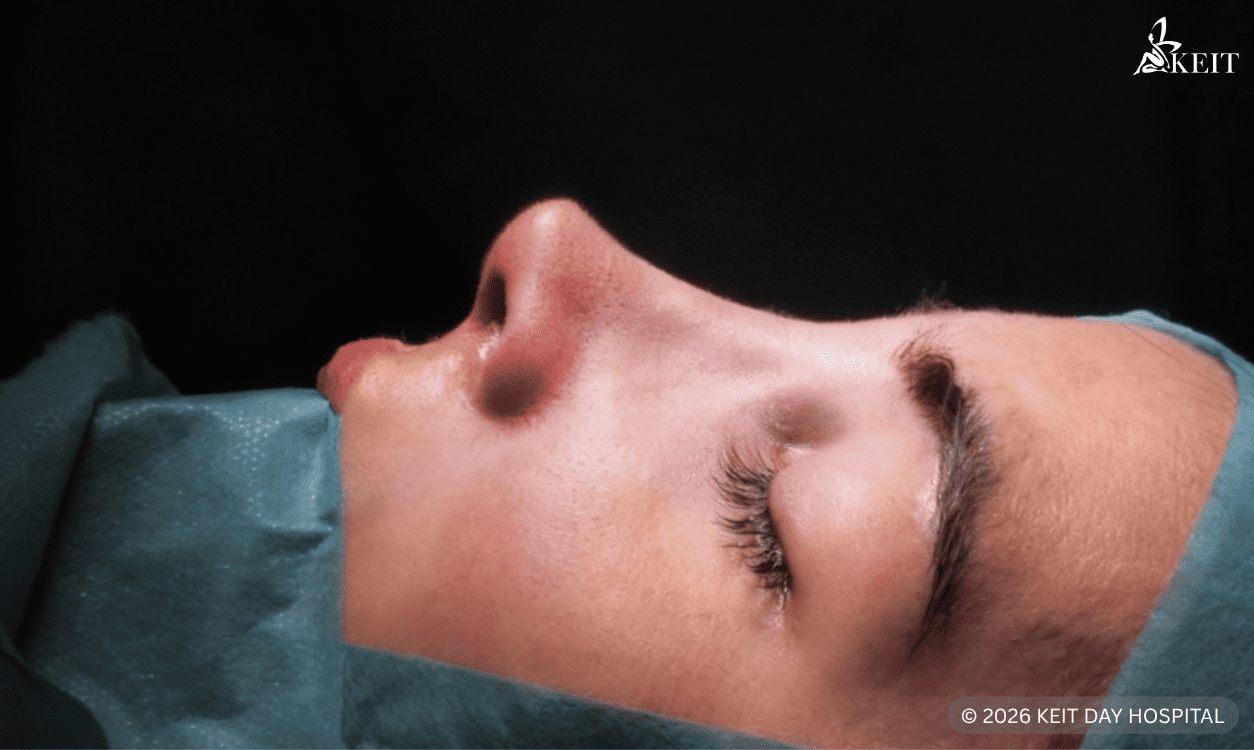
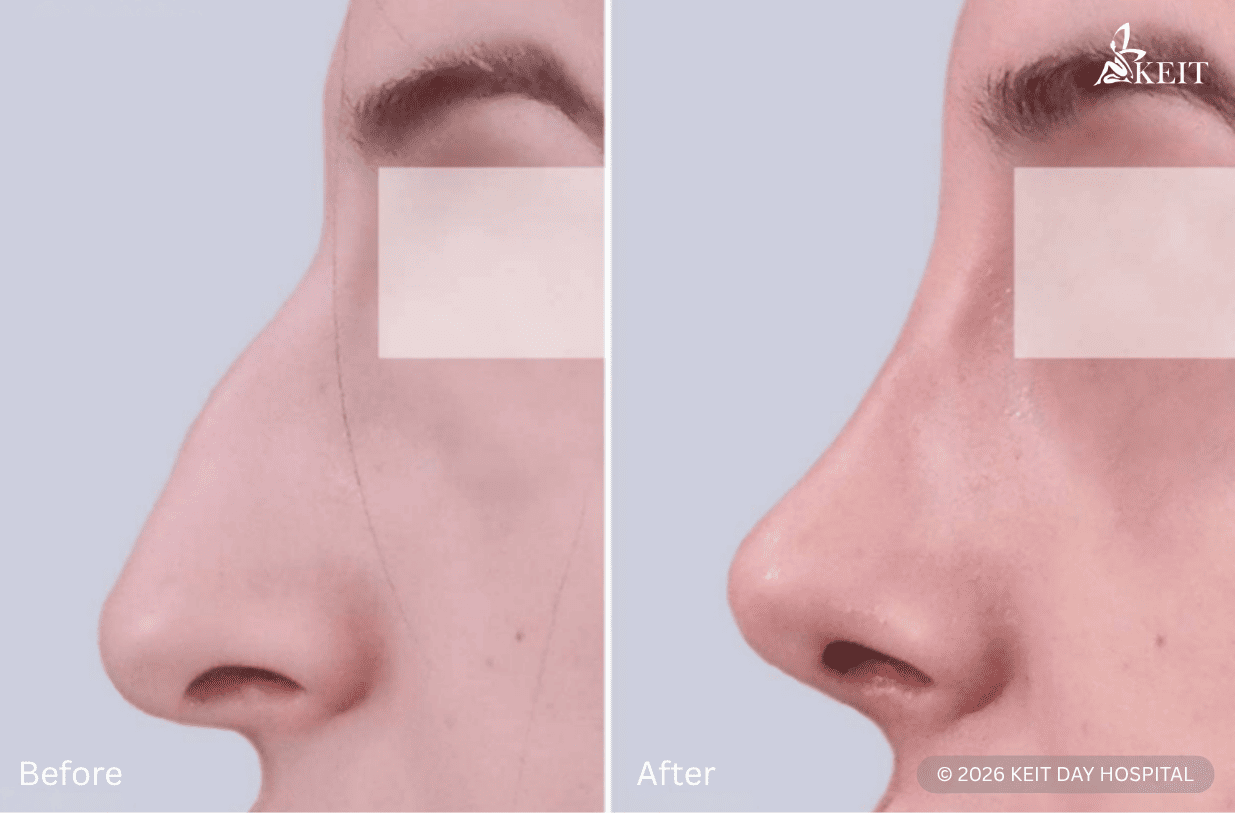
A French nose is defined by a combination of anatomical features that create a delicate, youthful and harmonious appearance:
- Short nasal length: The nose appears compact and proportionate, without excessive projection.
- Straight or slightly concave bridge: The nasal dorsum is smooth, without visible humps or sharp angles.
- Subtly upturned nasal tip: The tip is gently rotated upward, creating lightness without exaggeration.
- Soft nasal angles: Transitions between bridge, tip and columella are smooth and natural.
- Overall facial harmony: The nose integrates seamlessly with the eyes, lips and chin, enhancing balance rather than drawing attention.
Why is the French nose considered an aesthetic ideal?
The French nose is often regarded as an aesthetic ideal because it reflects core principles of facial harmony: proportion, balance and subtlety. Its compact structure and gentle tip rotation tend to create a youthful and approachable appearance. Unlike more prominent nose shapes, it does not overpower other facial features, allowing the eyes and lips to remain central to expression.
In modern aesthetic medicine, the French nose aligns with the preference for natural-looking outcomes. Rather than following rigid or exaggerated standards, it represents refinement that enhances individuality while maintaining facial identity.
French nose vs Barbie nose: Key distinctions in refinement and tip rotation
These two nose styles are often confused, but they differ clearly in intent and structural emphasis:
- Main defining area: French nose: overall proportions and subtle balance. Barbie nose: tip rotation and bridge concavity.
- Bridge (profile): French nose: straight or gently concave, smooth and restrained. Barbie nose: more pronounced concavity, visibly “scooped” profile.
- Tip: French nose: softly lifted with controlled rotation, natural support. Barbie nose: higher rotation, shorter appearance, more stylized lift.
- Front view: French nose: balanced symmetry, tip blends naturally with facial features. Barbie nose: tip often more dominant, with a narrower and more defined look.
Who does a French nose suit best?
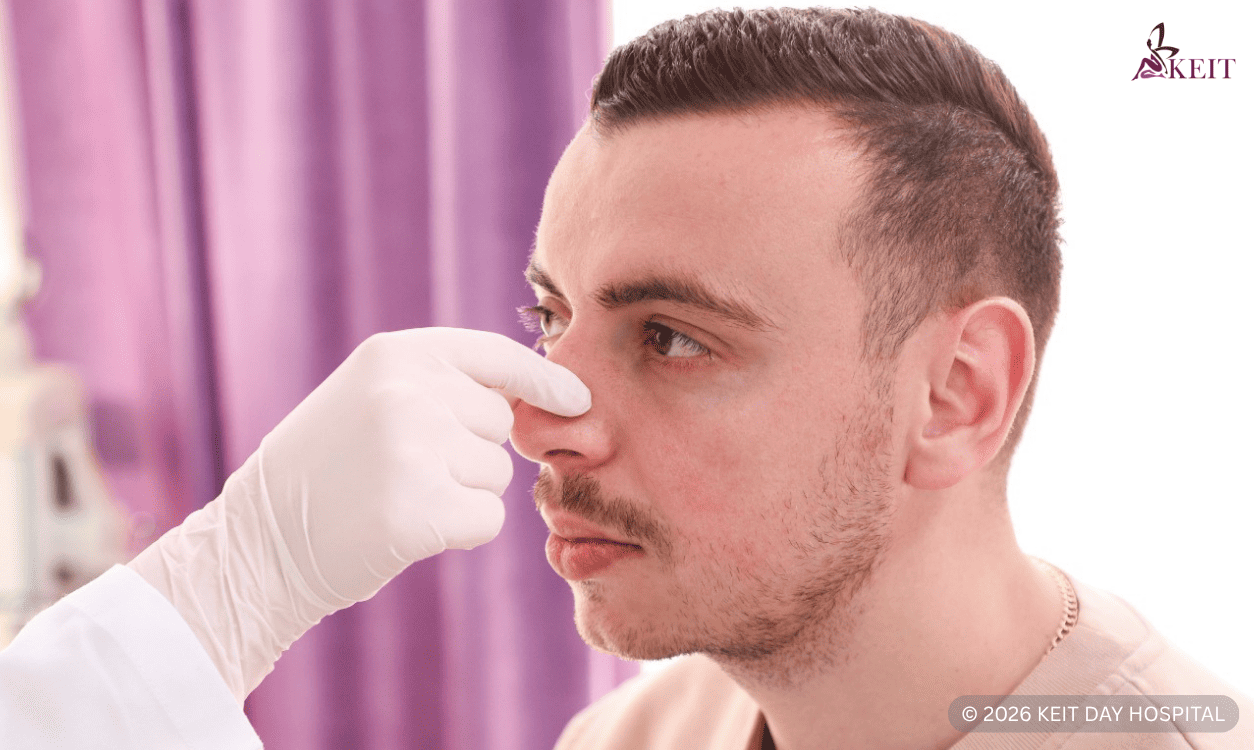
A French nose tends to suit individuals with balanced facial proportions and softer features. It is particularly compatible with faces where a shorter nasal length and mild tip rotation improve symmetry and harmony.
Careful evaluation of chin projection, lip position and overall facial structure is essential, as excessive shortening or rotation may disrupt balance if not properly planned. For this reason, achieving a French nose, especially through surgery requires an individualized approach rather than a standardized aesthetic model.
Book your FREE
Online Consultation Now

The French nose in women: Elegance and soft proportions
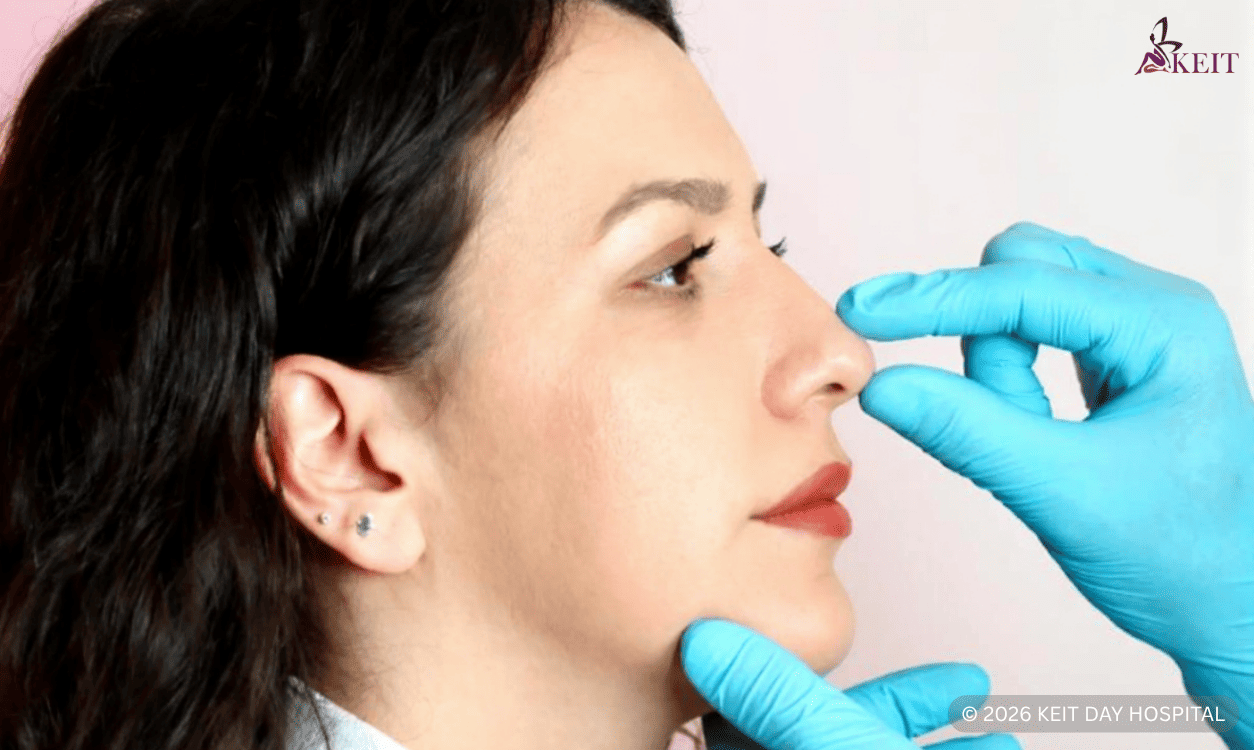
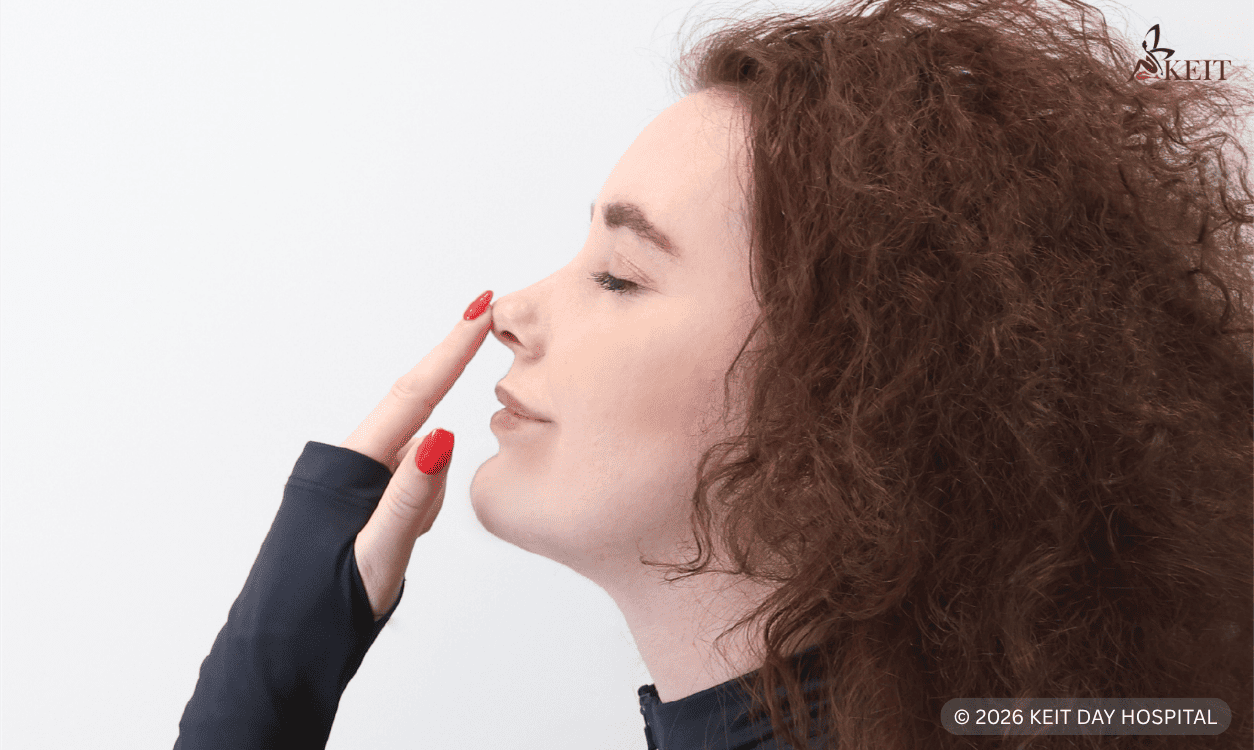
In women, the French nose is associated with grace and delicacy. The nasal bridge remains refined, while the tip is gently lifted to create a soft, feminine profile. The goal is not to reduce the nose excessively, but to preserve natural proportions and facial expression. Modern rhinoplasty in women emphasizes subtle contouring rather than dramatic change. When properly executed, a French nose enhances facial symmetry while maintaining uniqueness and avoiding an overly artificial appearance.
The French nose in men: Balanced proportions and definition
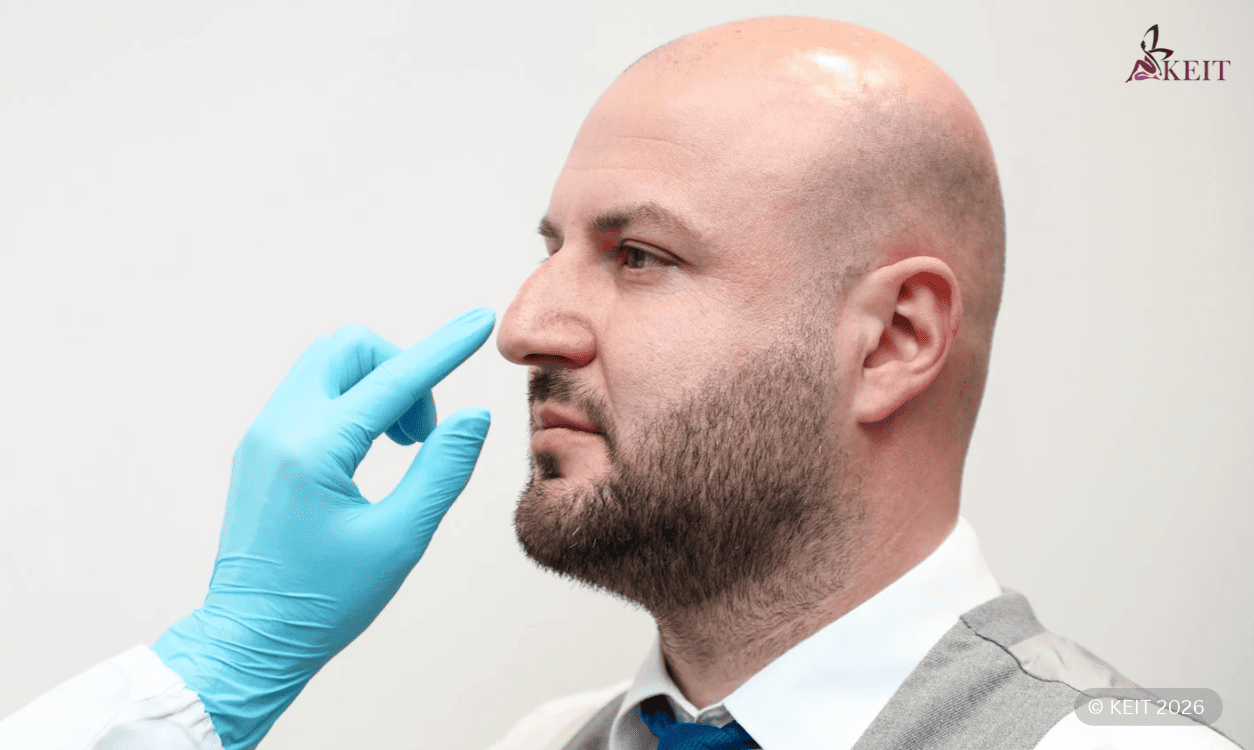
In men, achieving a French nose requires a more conservative approach. While refinement may involve reducing excessive length or smoothing the bridge, the nasal profile usually remains straighter and tip rotation more restrained to preserve masculine structure. The objective is proportional balance rather than softness. A well-planned French-style refinement in men can improve harmony and profile balance without feminizing the face or compromising character.
How to achieve a French nose: Surgical and non-surgical options
There are both non-surgical and surgical approaches to achieving a French nose, depending on the degree of change desired.
- Non-surgical options: Rhinofiller using hyaluronic acid can temporarily smooth minor irregularities, subtly refine the profile or improve visual balance. It cannot shorten the nose or structurally rotate the tip, and results are temporary.
- Surgical options: Aesthetic rhinoplasty is the most effective method for achieving a true French nose. Using modern techniques, such as ultrasonic or preservation rhinoplasty, the surgeon reshapes bone and cartilage with precision, adjusting nasal length, tip rotation and proportions while maintaining natural anatomy.
To fully understand how surgeons achieve a French nose through rhinoplasty, it is helpful to first explore what rhinoplasty is and how it works in our complete guide.
French nose before and after: Results and recovery timeline
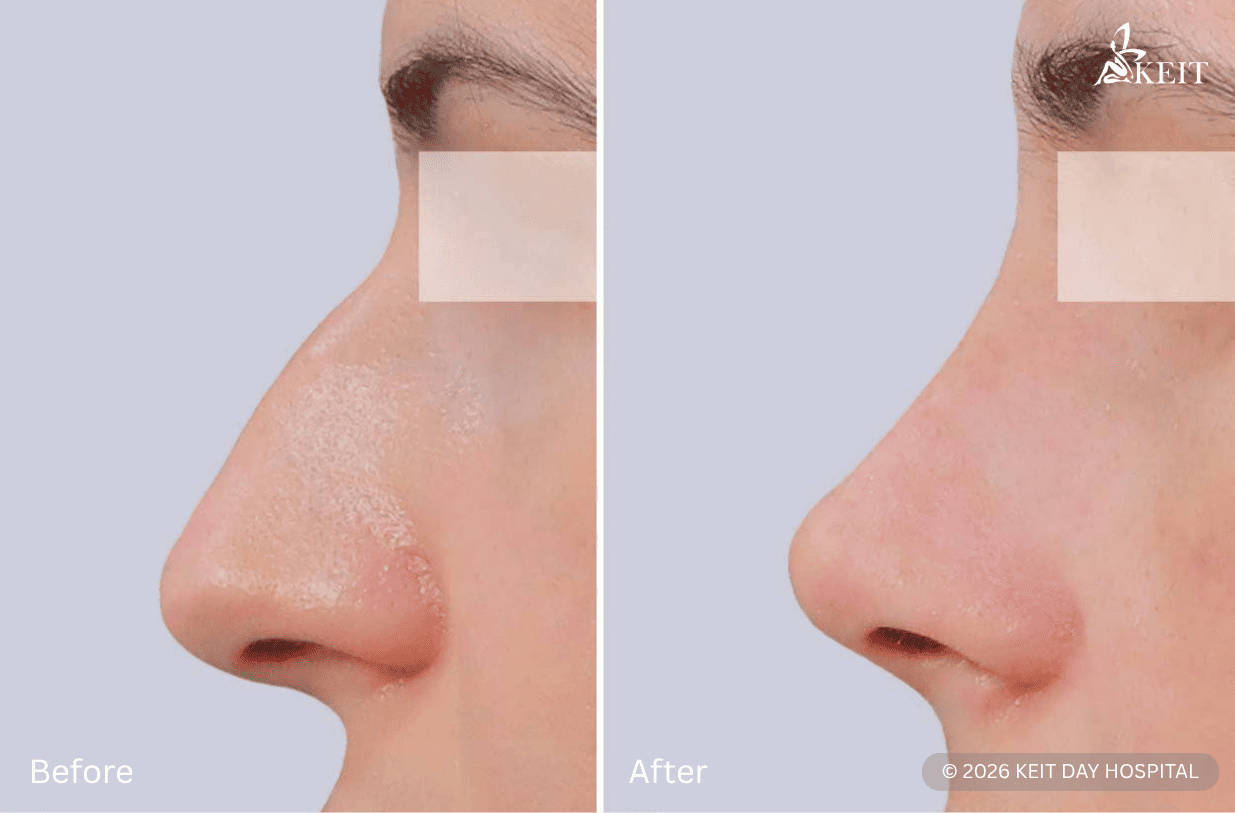
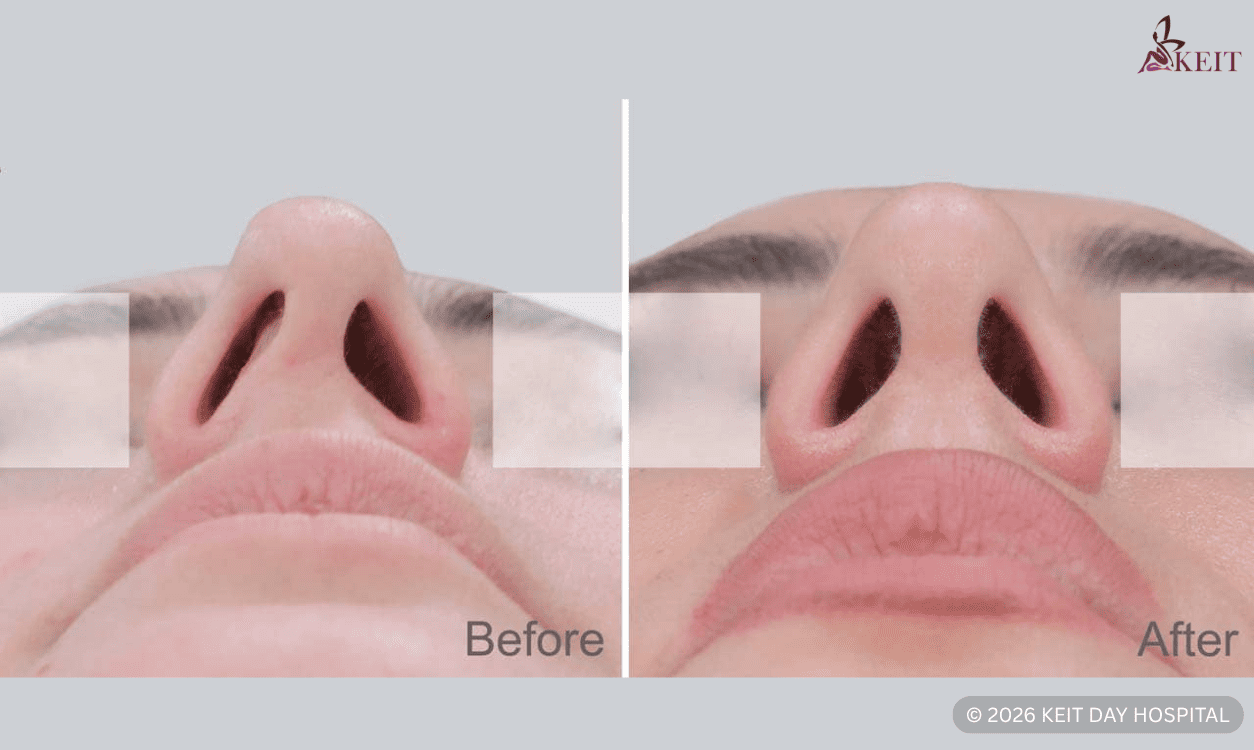
Before and after results typically show a more balanced face, lighter profile and smoother nasal lines.
- Early recovery (Weeks 1–2): Swelling and bruising are most noticeable, with the nose often feeling congested due to internal swelling. Visible bruising usually improves by the end of week 2.
- Settling phase (Weeks 3–6): The bridge starts looking closer to the final result, while the tip can remain firm and slightly swollen. Small day-to-day changes are normal.
- Progressive refinement (Months 2–6): Definition improves gradually, especially at the tip, as residual swelling continues to reduce.
- Final outcome (Months 9–12): The result typically stabilizes, with the tip more natural in shape and the profile fully settled.
Rhinoplasty for a French nose: Possible risks to be aware of
When performed by qualified surgeons, French nose rhinoplasty is usually safe and low-risk.
- Common, temporary effects: Swelling and bruising (usually most noticeable in the first 1–2 weeks), a “stuffy nose” feeling from internal swelling, mild discomfort and temporary numbness/stiffness of the tip that can last weeks to months.
- Shape-related risks: Over-rotated tip, bridge that looks too concave, small contour irregularities as swelling drops, or mild asymmetry.
- Rare complications: Infection, fluid collection, prolonged swelling, internal scarring, bleeding, or changes in nasal breathing (especially if internal support isn’t preserved or reinforced).
Achieving a French nose through rhinoplasty at KEIT Day Hospital: Structured surgical care
For those seeking a nose job surgery abroad, KEIT Day Hospital in Albania offers all-inclusive rhinoplasty packages starting from 1,600 euro. Procedures are performed by Italian surgeons using the closed technique, ensuring no visible scars and lasting 40 – 90 minutes.
KEIT’s team has completed over 23,000 procedures and earned more than 11,000 positive patient reviews. Specializing in ultrasonic and preservation rhinoplasty, KEIT delivers natural, precise results at a highly competitive nose job cost. Patients benefit from nausea-free anesthesia, advanced silicone splints, hotel accommodation, airport transfers, trilingual staff and follow-ups available both online and directly at the hospital, ensuring safety and peace of mind.