Published on:
 Modified on:

 Reading Time: 6 min
 Hair transplant
FUE hair transplant (follicular unit extraction) is a hair restoration technique that transfers individual hair follicles from a donor area to thinning or bald areas of the scalp. It is commonly used to restore the hairline, improve scalp coverage, and treat selected patterns of hair loss in both men and women.
 Table of Contents:
-
1
 What is FUE hair transplant?
-
2
Who is a suitable candidate for FUE hair transplant?
-
3
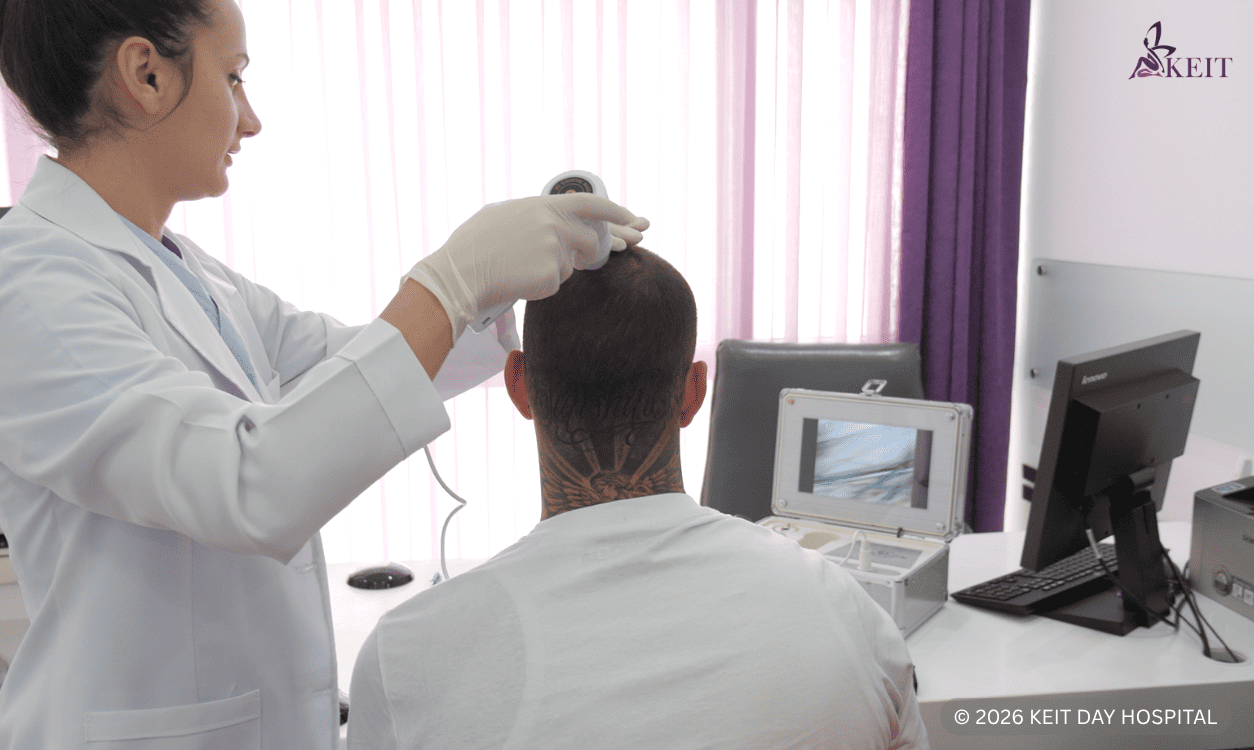
Donor area assessment: why it determines the success of FUE
-
4
How does FUE hair transplant work?
-
5
FUE hair transplant recovery: healing, shedding and regrowth timeline
-
6
FUE hair transplant before and after: what results can you realistically expect?
-
7
Is FUE hair transplant safe? Risks and side effects
-
8
What are the advantages of FUE hair transplant?
-
9
FUE vs FUT hair transplant: key differences in technique and recovery
-
10
How to choose the right FUE hair transplant surgeon
In this guide, we explain what FUE hair transplant is, who is suitable for the procedure, how it is performed, recovery and expected results, potential risks, the advantages of FUE, and what to consider when choosing a hair transplant surgeon.
What is FUE hair transplant?
FUE hair transplant, or follicular unit extraction, is a hair restoration technique where individual hair follicles are removed from the donor area and implanted into thinning or bald areas. In a FUE transplant, the donor hair is usually taken from the back or sides of the scalp, where follicles are more resistant to genetic hair loss.
Unlike FUT, FUE does not remove a strip of scalp. Follicles are extracted individually, leaving small dot-like marks that are usually less visible after healing.
Who is a suitable candidate for FUE hair transplant?
A suitable candidate for FUE hair transplant has sufficient donor hair, a stable pattern of hair loss, and realistic expectations about the achievable result.
FUE may be suitable for patients with:
- Male pattern hair loss: Including hairline recession, temple thinning, or crown hair loss.
- Selected cases of female hair loss: Particularly localised thinning or traction alopecia, provided the donor area is adequate and the cause of hair loss has been assessed.
- Stable hair loss: Progressive hair loss should be evaluated, as ongoing shedding can affect long-term outcomes.
- Adequate donor density: Healthy follicles in the donor area are essential for successful graft extraction and transplantation.
- Good general health: Medical conditions affecting wound healing or uncontrolled scalp disorders should be managed before surgery.
- Realistic expectations: FUE can improve hair density and coverage but cannot restore the original hair volume or prevent future hair loss.
Donor area assessment: why it determines the success of FUE
The donor area is one of the most important factors in FUE because it determines how many grafts can be safely extracted. It is usually located at the back and sides of the scalp, where follicles are more resistant to genetic hair loss and more likely to maintain long-term growth after transplantation.
A proper donor assessment evaluates:
- Donor density: The number of follicular units available for safe extraction.
- Hair calibre: Thicker hair can create better visual coverage with fewer grafts.
- Scalp quality: Healthy skin supports safer extraction, healing, and graft survival.
- Safe extraction limits: Removing too many grafts can cause patchiness or visible thinning.
- Future hair loss planning: The donor area must be preserved in case additional procedures are needed later.
Good FUE planning is not only about the number of grafts, but how safely and strategically they are used.
How does FUE hair transplant work?
FUE hair transplant is performed by extracting individual follicular units from the donor area and implanting them into thinning or bald areas.
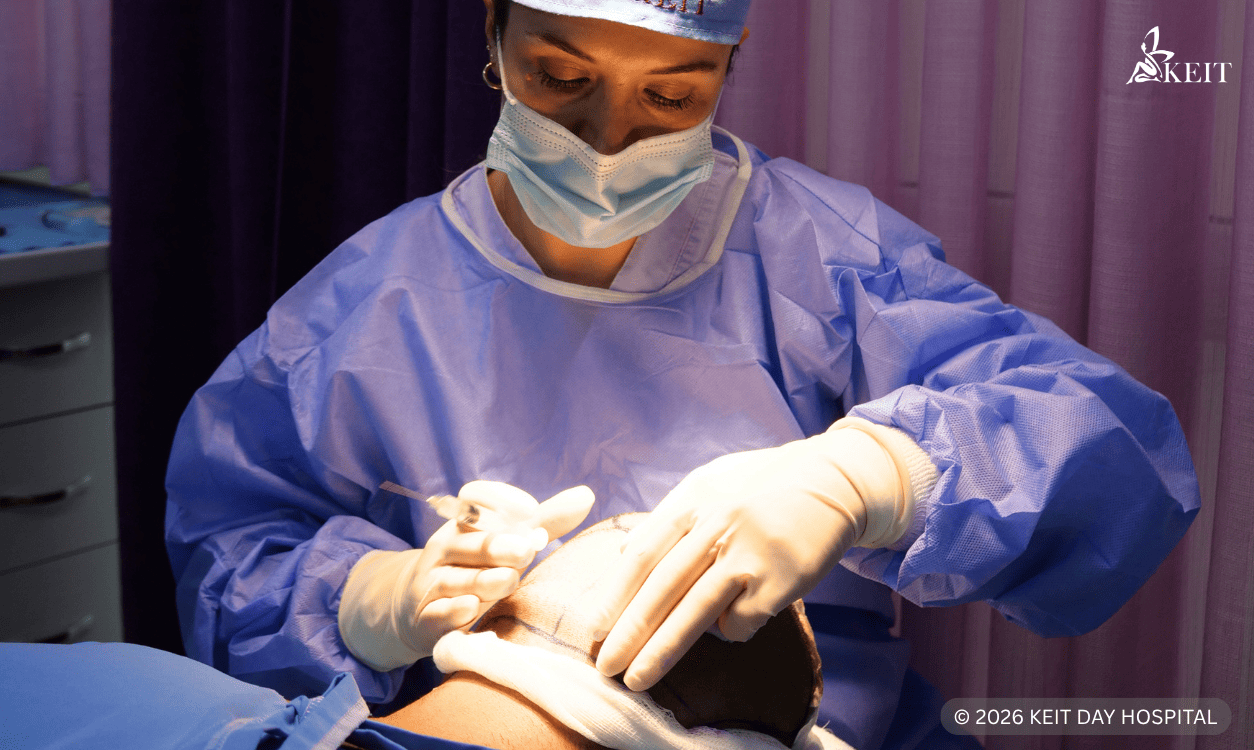
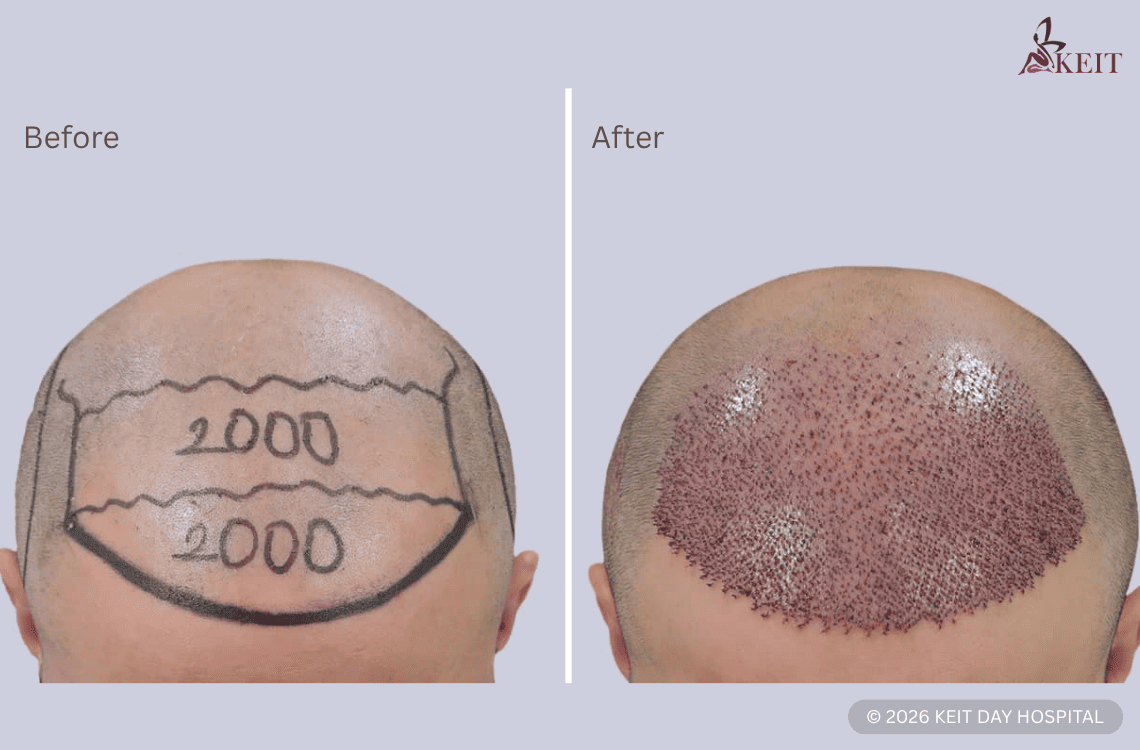
After the hairline or treatment area is planned, the donor and recipient areas are numbed with local anaesthesia. The surgeon then removes individual grafts from the back or sides of the scalp using a small punch device. These grafts are prepared and implanted into tiny recipient sites created at the correct angle, direction, and density to match natural hair growth.
The procedure usually takes 4–8 hours, depending on the number of grafts and the size of the treatment area.
FUE hair transplant recovery: healing, shedding and regrowth timeline
FUE hair transplant recovery progresses in stages, from early healing to shedding, regrowth, and final hair maturation.
- Days 1–7: Mild redness, swelling, scabbing, and tenderness are expected as the donor and recipient areas begin to heal.
- Weeks 2–4: Most scabs clear, and transplanted hairs may begin to shed. This is normal and does not mean the grafts have failed.
- Months 1–3: The scalp may look similar to before surgery while follicles remain active beneath the skin.
- Months 3–4: Early regrowth may begin as fine, soft hairs.
- Months 6–9: Density becomes more visible as transplanted hairs thicken.
- Months 12–18: Final results become clearer, especially in the crown, where growth can mature more slowly.
FUE hair transplant before and after: what results can you realistically expect?
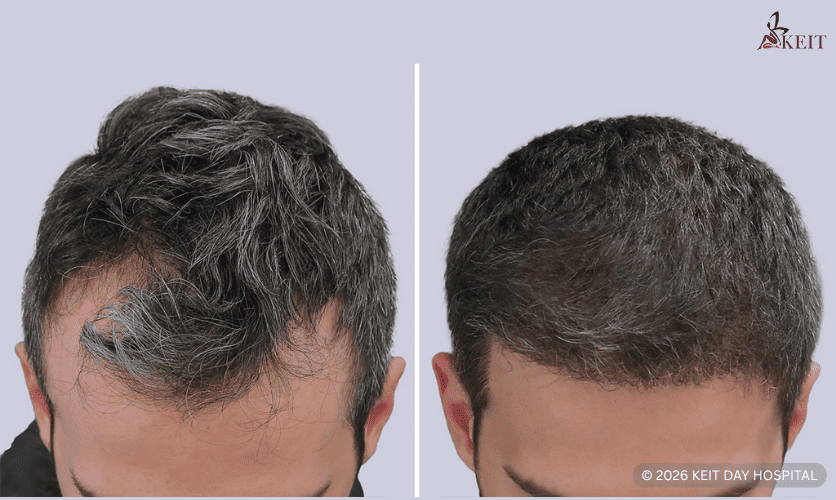
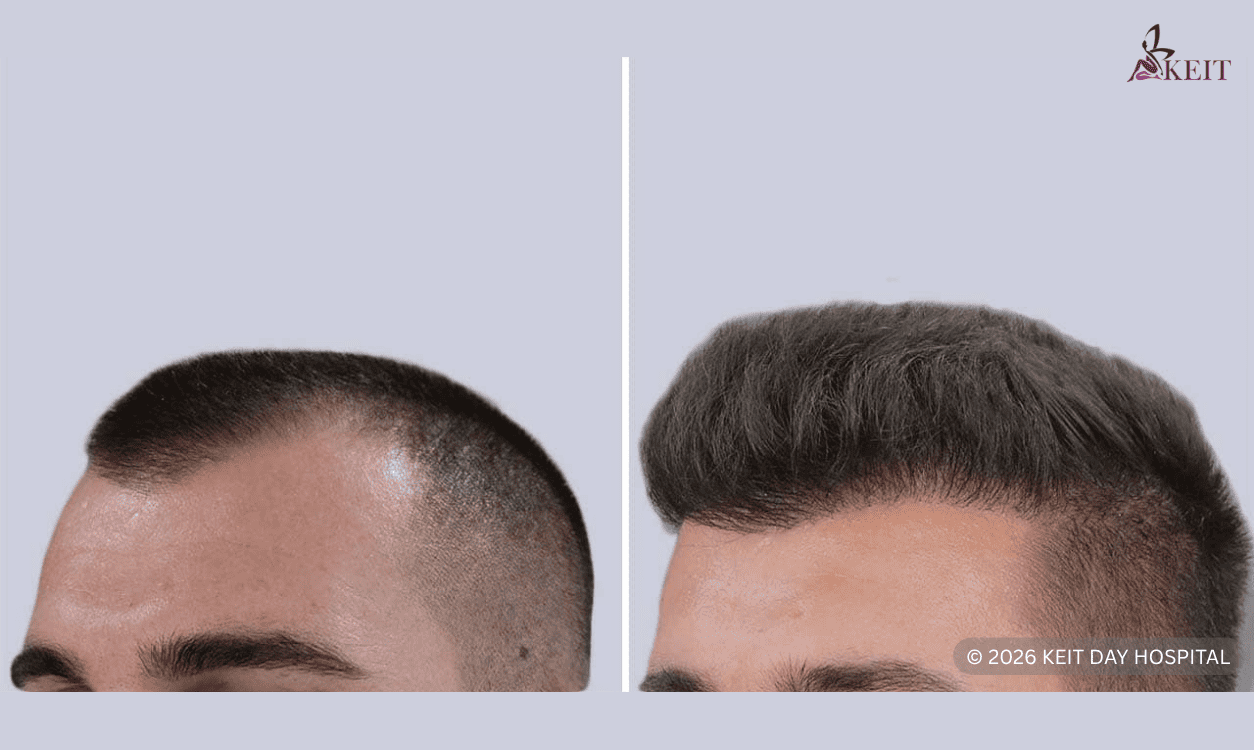
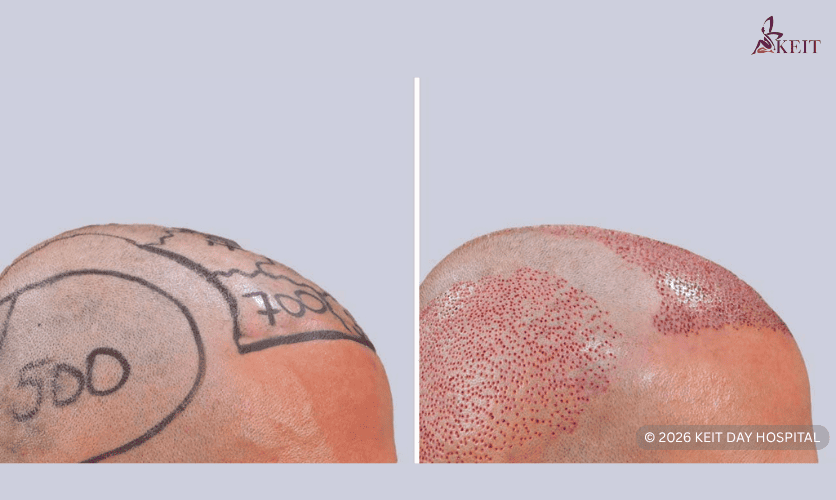
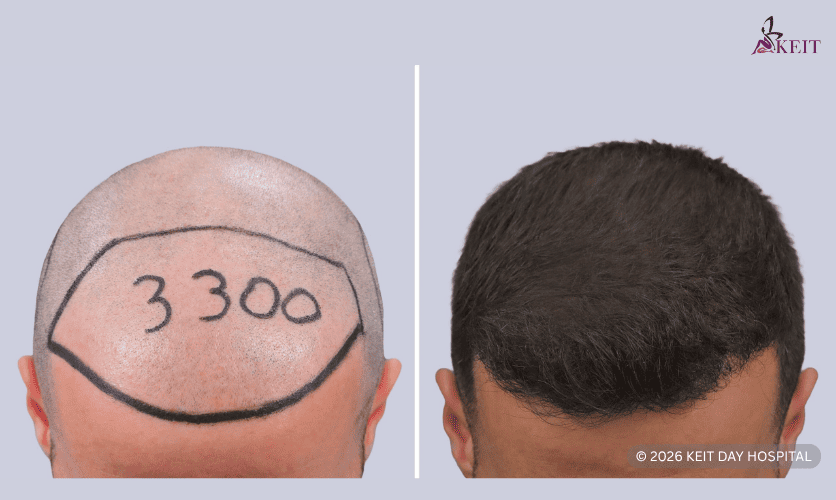
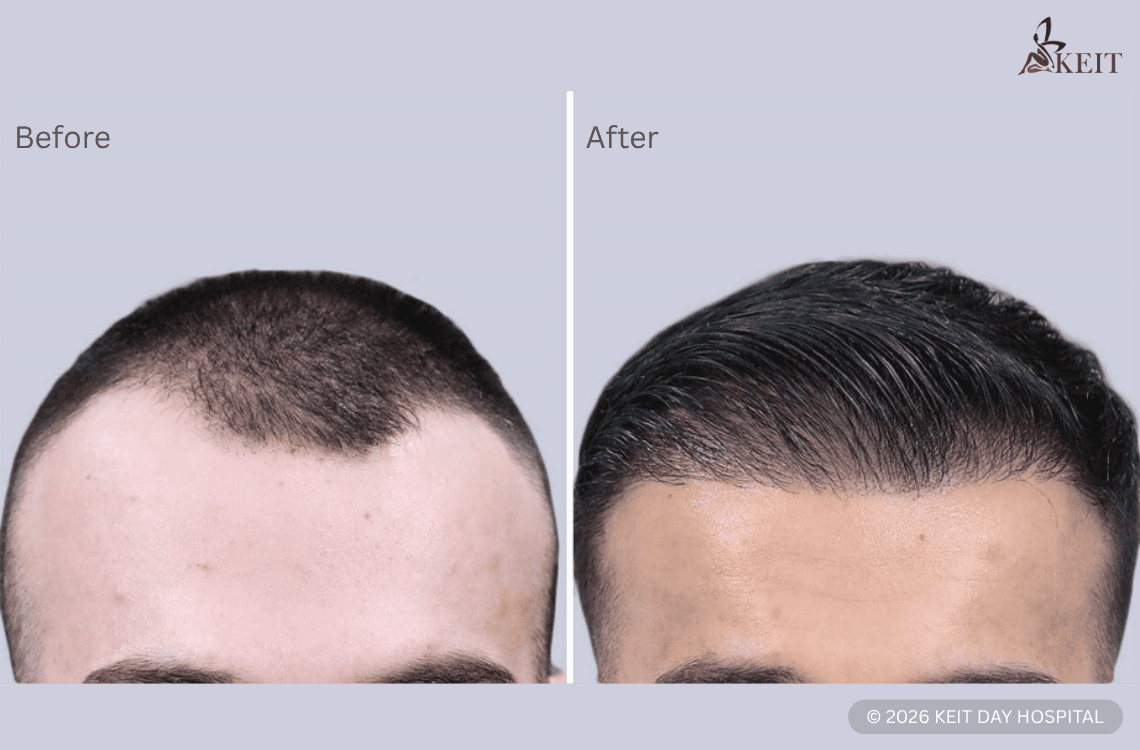
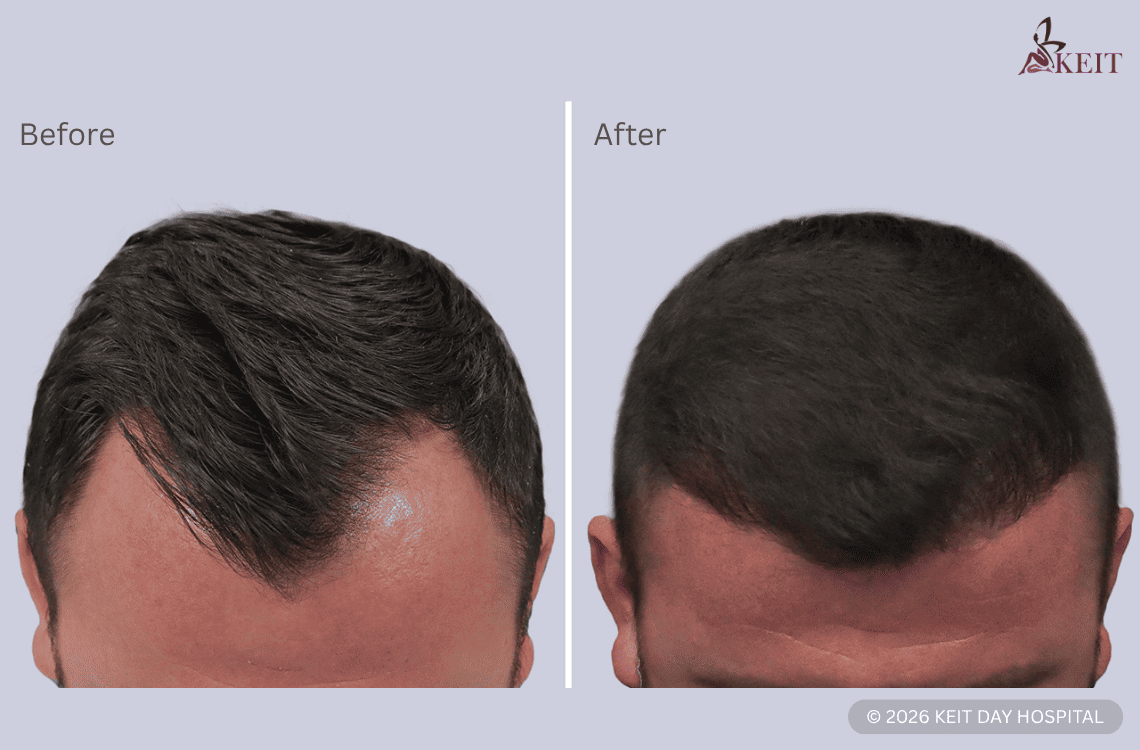
FUE hair transplant before and after results show gradual improvement in hairline definition, scalp coverage, and hair density over 12–18 months. A good result should look natural, with grafts placed in the correct angle, direction, and density to blend with existing hair.
Before and after photos should be reviewed carefully. Lighting, hair length, styling, camera angle, and time after surgery can all affect how the final result appears.
Is FUE hair transplant safe? Risks and side effects
FUE hair transplant is generally safe when performed by an experienced surgical team, but it still carries potential risks and side effects. Temporary effects include redness, swelling, scabbing, mild tenderness, itching, and temporary shedding.
Possible risks include:
- Folliculitis: Small inflamed bumps that develop around the follicles during healing.
- Infection: Uncommon, but possible if the scalp does not heal properly.
- Poor graft growth: Some grafts may not survive or produce the expected density.
- Donor area thinning: Overharvesting can create visible thinning or patchiness in the donor zone.
- Scarring: FUE leaves small extraction marks, which may be more noticeable if grafts are removed too densely.
- Unnatural result: Poor hairline design, incorrect graft angle, or uneven density can affect the final appearance.
What are the advantages of FUE hair transplant?
Compared with strip-based hair transplant methods, FUE has specific advantages related to donor-area healing, scarring, graft selection, and treatment flexibility. These include:
- No linear scarring: FUE leaves small dot-like extraction marks instead of a long linear scar, which may be less visible after healing.
- Shorter donor-area healing: Because grafts are removed individually, the donor area usually heals faster than with strip surgery.
- Targeted graft extraction: The technique allows controlled selection of follicular units from the donor area.
- Flexible treatment planning: FUE can be used for the hairline, temples, crown, beard, eyebrows, or scar correction when donor hair is suitable.
- Suitable for short hairstyles: FUE is often preferred by patients who want to keep their hair short, as donor scarring is typically less noticeable.
- Natural-looking results: When grafts are placed at the correct angle, direction, and density, FUE can create a result that blends with existing hair.
FUE vs FUT hair transplant: key differences in technique and recovery
FUE and FUT are established hair transplant techniques, but they differ in graft harvesting, scarring, recovery, and suitability.
- Graft extraction: FUE removes individual follicular units directly from the donor area, whereas FUT involves removing a strip of scalp that is then divided into individual grafts.
- Number of grafts: FUT may allow a higher number of grafts to be obtained in a single procedure, whereas FUE allows individual graft extraction and a more dispersed harvesting pattern.
- Scarring: FUE leaves multiple small dot-like scars dispersed throughout the donor area, while FUT results in a single linear scar.
- Recovery: FUE donor sites usually heal more quickly, whereas FUT recovery includes healing of the linear incision.
Book your FREE
Online Consultation Now

How to choose the right FUE hair transplant surgeon
Choosing the right FUE hair transplant surgeon is essential because the quality of the result depends on surgical planning, graft handling, and donor-area preservation. Before choosing a surgeon, check:
- Qualifications and credentials: The surgeon should be medically qualified, trained in hair restoration surgery, and working in a licensed clinical facility.
- FUE experience: The surgeon should have specific experience in follicular unit extraction, including graft extraction, implantation, and donor-area management.
- Before and after results: Photos should show clear angles, realistic density, natural hairlines, and preserved donor areas.
- Hairline design: The hairline should be planned according to age, facial proportions, hair loss pattern, and natural growth direction.
- Donor-area planning: A proper plan should explain how grafts will be extracted safely without overharvesting or creating visible thinning.