Published on:
 Modified on:

 Reading Time: 5 min
 Hair transplant
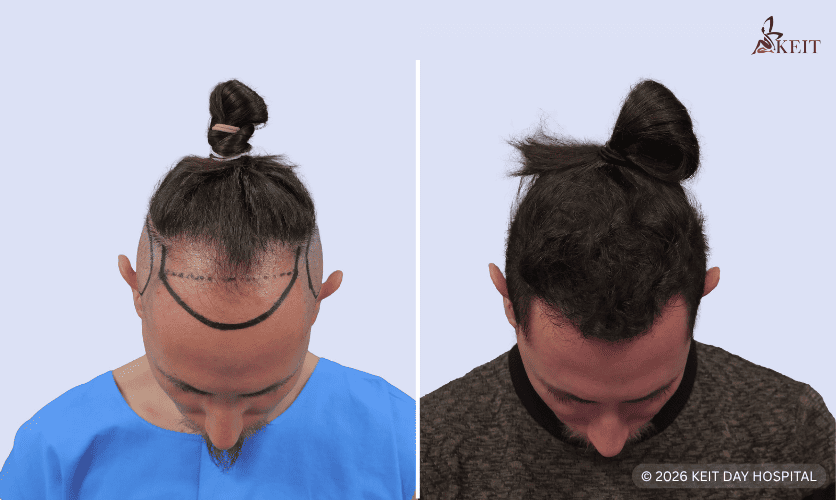
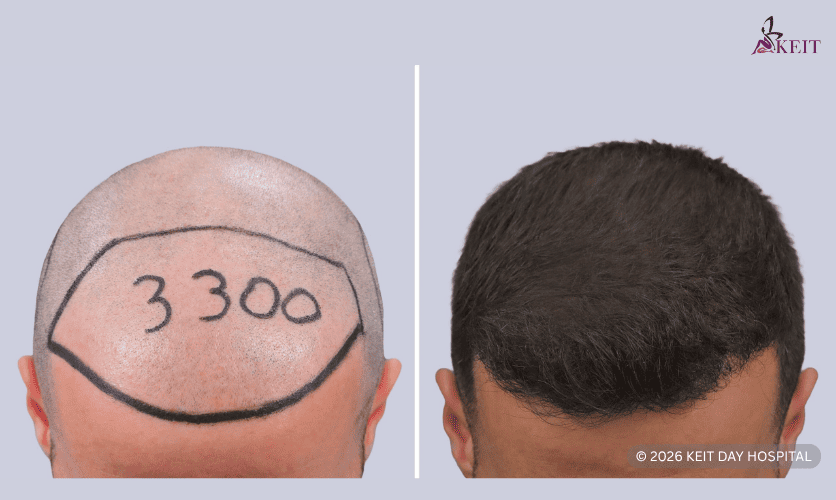
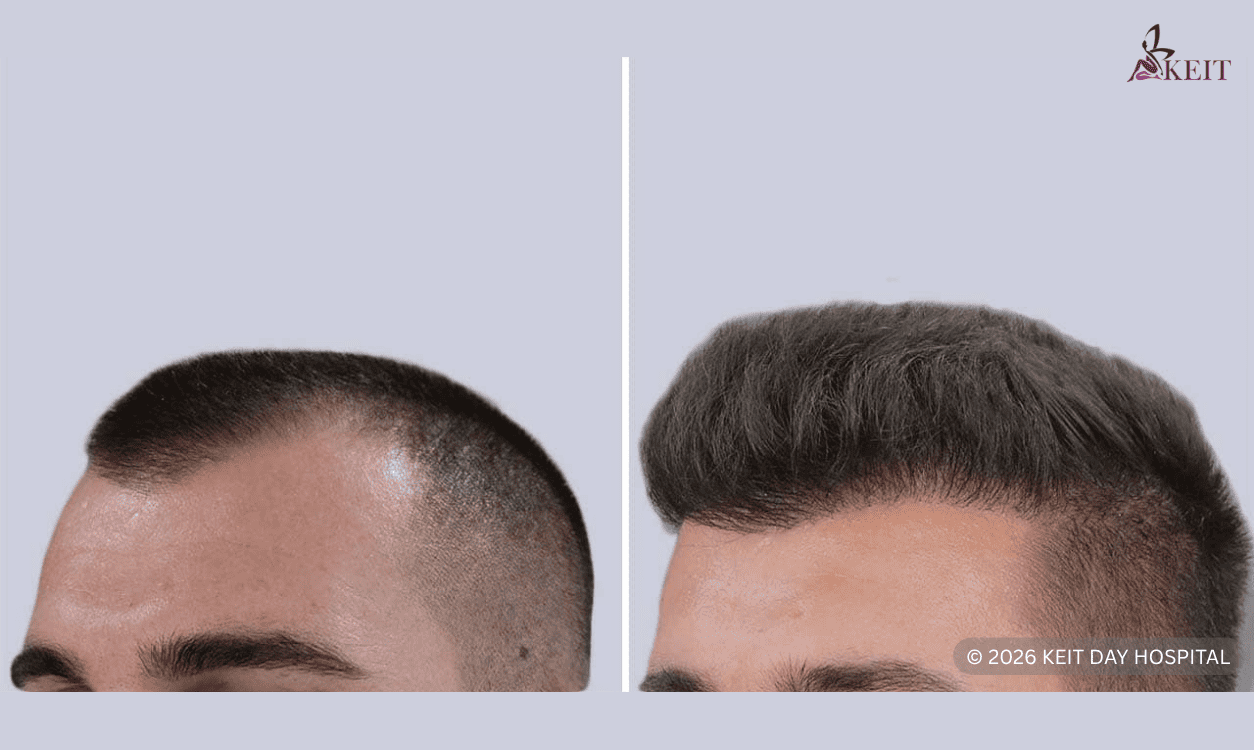
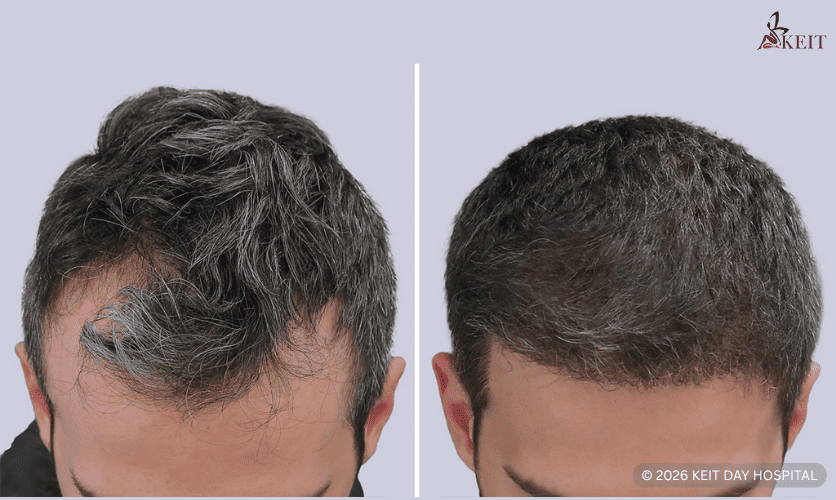
 before and after results show how transplanted hair gradually restores density, improves hairline definition, and increases coverage in areas affected by hair loss. Final results are not immediate and typically develop over 12–18 months as the transplanted follicles grow and mature.
 Table of Contents:
-
1
 Hair transplant before and after: what results can you realistically expect?
-
2
Hair transplant timeline: how results develop month by month
-
3
Hair transplant before and after: why the first weeks do not show the final result
-
4
FUE hair transplant before and after: what to expect from the technique
-
5
Female hair transplant before and after: how results differ from men
-
6
Hair transplant before and after: what determines the final outcome?
-
7
Hair transplant before and after photos: how to interpret results correctly
-
8
Hair transplant: when should you contact your surgeon?
In this guide, we explain realistic hair transplant results, the month-by-month timeline, FUE outcomes, female hair transplant before and after differences, factors that affect the final result, how to assess before and after photos, and signs to report to your surgeon.
Hair transplant before and after: what results can you realistically expect?
Hair transplant before and after results show gradual improvement in hair density, hairline definition, and coverage in thinning or bald areas. The most visible changes include:
- Stronger hairline definition: The frontal hairline can look more defined and balanced when grafts are placed at the correct angle and density.
- Improved coverage: Areas with thinning hair can appear fuller as transplanted follicles grow and mature.
- Better facial framing: A natural hairline can restore proportion around the forehead and face without looking artificial.
- Crown improvement: Transplanted grafts can add density to thinning at the crown, although this area often matures more slowly than the frontal hairline.
- Natural hair direction: Follows the natural angle and direction of existing hair so the transplanted area blends with surrounding hair.
Hair transplant timeline: how results develop month by month
Hair transplant results develop gradually, with visible changes starting after the early shedding phase and final results usually seen within 12–18 months.
- Month 1: Most transplanted hairs shed, and the scalp may look close to how it looked before surgery. Mild redness or sensitivity can still be present.
- Month 2: Visible growth is usually minimal. The follicles are active beneath the skin, but the external change is often limited.
- Month 3: Early regrowth may begin as fine, soft hairs. Density is still low, so the result should not be judged at this stage.
- Months 4–6: Growth becomes more noticeable as more grafts enter the active growth phase. The hairline may start to look more defined.
- Months 6–9: Hair becomes thicker and coverage improves. This is when many patients begin to see a clear before and after difference.
- Months 9–12: Density, texture, and hair calibre continue to improve, making the transplanted area blend more naturally.
- Months 12–18: Final results become clearer, especially in the crown, where growth often matures more slowly.
Hair transplant before and after: why the first weeks do not show the final result
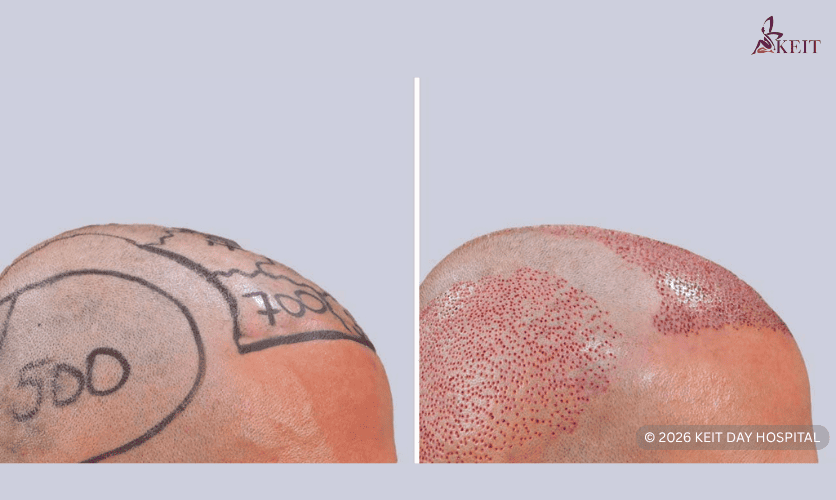
The first weeks after a hair transplant reflect scalp healing, not the final hair growth outcome. During this stage, redness, scabbing, swelling, and temporary unevenness are expected as the grafts stabilise. Many transplanted hairs then shed before entering a new growth cycle, which is normal and does not mean the procedure has failed. A reliable before and after comparison should be made months later, once new growth begins and density gradually improves.
FUE hair transplant before and after: what to expect from the technique
FUE hair transplant before and after results depend on precise graft extraction, correct placement, and the quality of the donor hair. In FUE, individual follicular units are taken from the donor area and implanted into thinning or bald areas. It can improve the hairline, temples, crown, or selected thinning zones when there is enough healthy donor hair.
The technique avoids a long linear scar, although tiny extraction marks may remain in the donor area. The final result depends on graft survival, hair thickness, natural growth direction, scalp contrast, and hairline design.
Female hair transplant before and after: how results differ from men
Female hair transplant results usually focus on improving visible density while preserving the existing hairline pattern. Women may consider hair transplant for frontal thinning, hairline recession, traction alopecia, or localised areas of hair loss. Unlike male pattern baldness, female hair loss is often more diffuse, so diagnosis, donor area quality, and hair-loss stability must be assessed carefully.
The final result depends on the cause of hair loss, hormonal factors, donor density, hair calibre, and whether shedding is controlled before surgery.
Hair transplant before and after: what determines the final outcome?
The final hair transplant outcome depends on donor hair quality, graft survival, surgical planning, and the stability of future hair loss. Main factors include:
- Donor area quality: Strong donor hair from the back or sides of the scalp provides the foundation for lasting coverage.
- Graft number and distribution: Density depends not only on how many grafts are used, but also on how strategically they are placed.
- Surgeon expertise: The surgeon’s experience, technical skill, and aesthetic judgement strongly influence the naturalness, density, and overall quality of the final result.
- Hair characteristics: Hair calibre, curl, colour, and contrast with the scalp can affect how full the result appears.
- Hair loss pattern: Advanced or progressive hair loss may require staged planning to protect the donor area.
- Graft placement: Natural results require correct angle, direction, spacing, and hairline design.
- Aftercare and healing: Proper post-operative care helps protect grafts during the early healing phase.
Hair transplant before and after photos: how to interpret results correctly
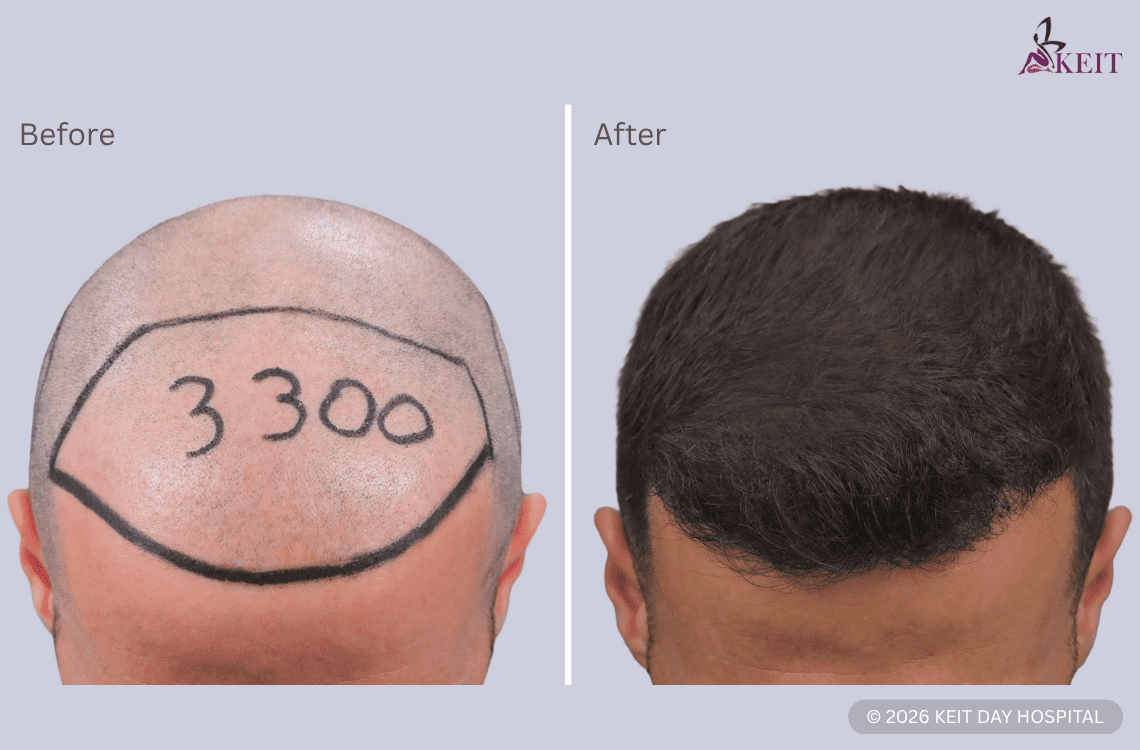
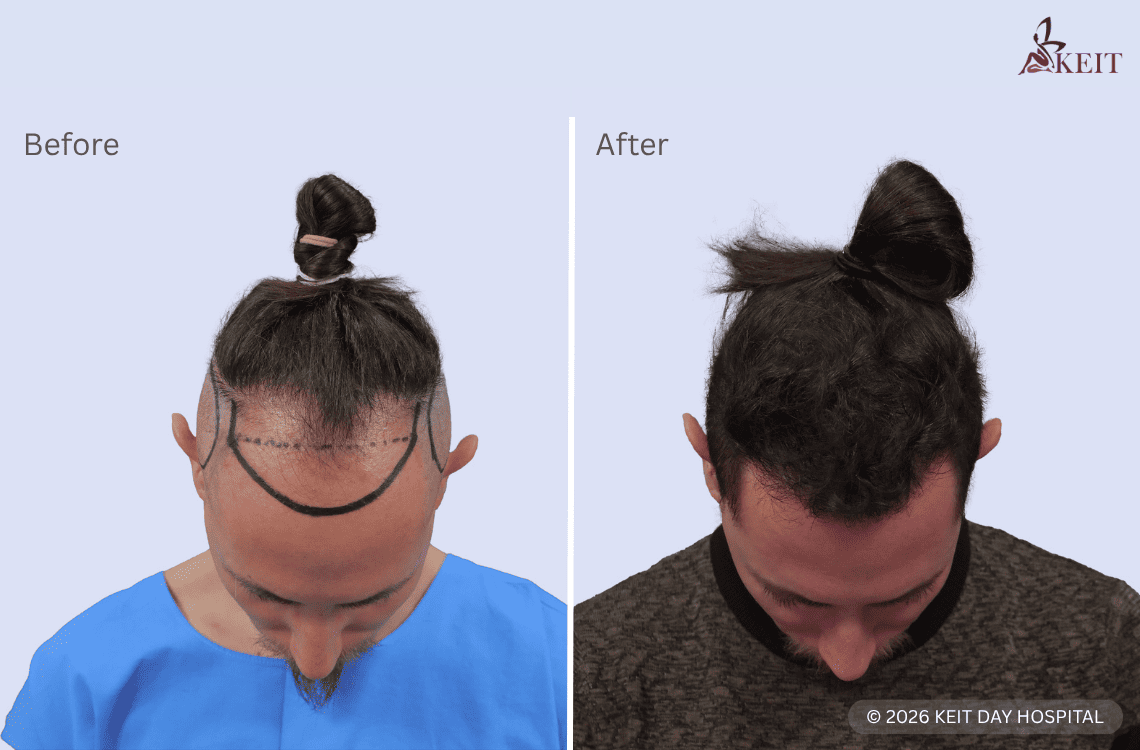
Hair transplant before and after photos should be evaluated carefully, as photographs do not always reflect the true quality of a result. When assessing the pictures, consider:
- Time since surgery: Results should ideally be evaluated at 12 months or later, as earlier photographs may not show the final density or maturation of the transplanted hair.
- Hairline design: A natural result should have an age-appropriate hairline with irregularity and soft transitions rather than a straight or overly dense appearance.
- Density and coverage: Assess how well the transplanted hair covers the scalp while remaining proportionate to the available donor supply.
- Consistency of photography: Lighting, camera angle, hair length, and hair styling should be similar in both photographs to allow a fair comparison.
- Donor area preservation: Good results should improve the recipient area without obvious thinning, overharvesting, or visible scarring in the donor area.
- Natural integration: The transplanted hair should blend naturally with the surrounding native hair in terms of direction, distribution, and overall appearance.
Book your FREE
Online Consultation Now

Hair transplant: when should you contact your surgeon?
Most patients heal without significant problems, but certain changes during recovery or hair growth may require review by the treating surgeon. Patients should seek assessment if they notice:
- Delayed healing of the donor or recipient area.
- Persistent redness or swelling that does not improve over time.
- Unusual scarring in the donor area.
- Areas of poor or uneven hair growth compared with the planned treatment area.
- Progressive hair loss around the transplanted area.
- Concerns about graft survival or unexpected changes in appearance.
- Any symptoms that differ significantly from the recovery plan discussed during consultation.