Published on:
 Modified on:

 Reading Time: 6 min
 Hair transplant
A crown hair transplant is a hair restoration procedure used to treat thinning or baldness in the crown, or circular area at the back and top of the scalp. Because the crown has a natural spiral growth pattern, this type of transplant requires careful planning of graft direction, density and donor hair use.
 Table of Contents:
-
1
 What is a crown hair transplant?
-
2
Who is a good candidate for crown hair restoration?
-
3
How many grafts are needed for a crown hair transplant?
-
4
Why crown hair transplants are more complex than hairline transplants
-
5
FUE or DHI for crown hair transplant: which technique is better?
-
6
Crown hair transplant recovery timeline
-
7
When do crown hair transplant results become visible?
-
8
Crown hair transplant cost: what affects the price?
-
9
Risks, density limits and donor area planning
In this article, we explain who may be suitable for crown hair restoration, how many grafts are usually needed, why the crown can be more complex than the hairline, the difference between FUE and DHI techniques, what recovery looks like, when results become visible, what affects cost and which risks should be considered before treatment.
What is a crown hair transplant?
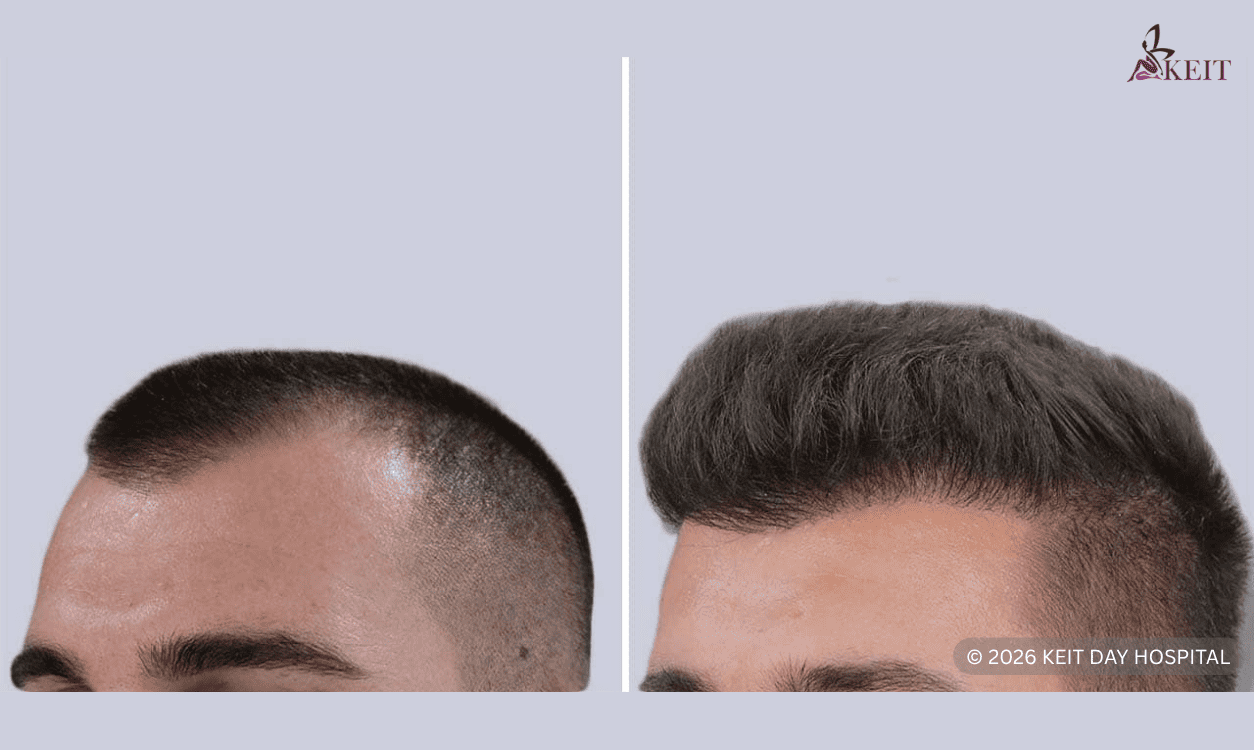
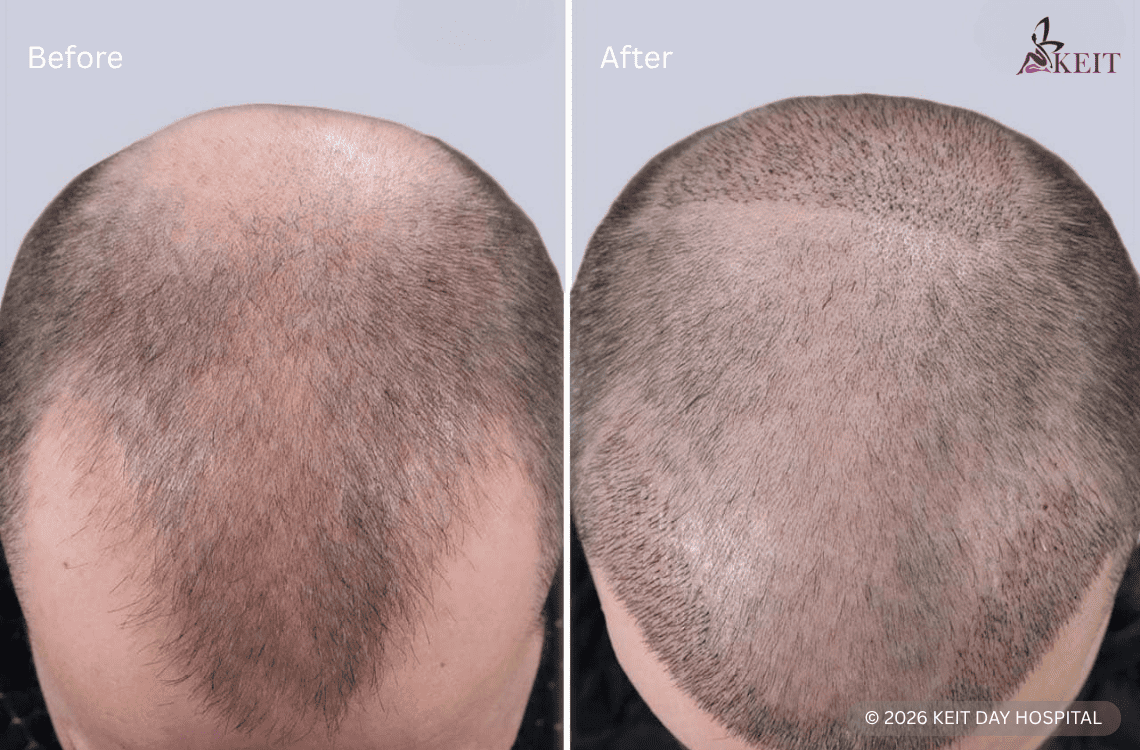
The crown is one of the areas most commonly affected by male pattern hair loss, often presenting as reduced hair density, progressive thinning or a visible bald area at the back of the scalp. A crown hair transplant aims to restore coverage in this region by transferring healthy hair follicles from the donor area, typically located at the back or sides of the head.
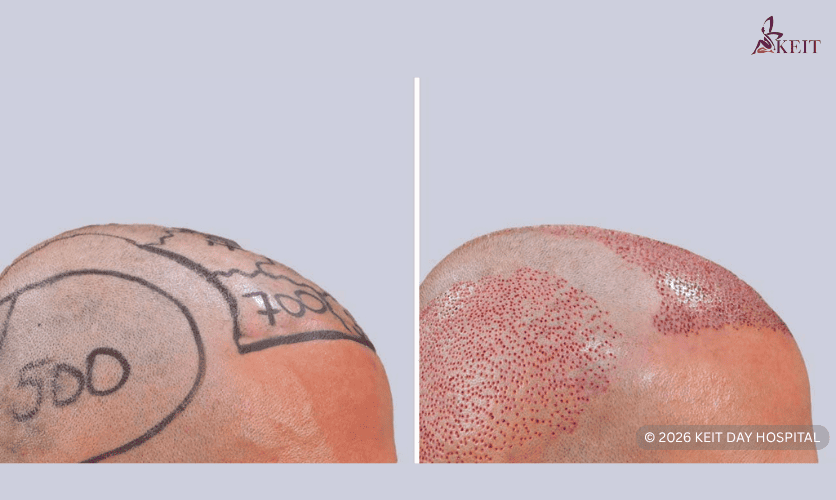
The procedure is planned according to the size of the thinning area, the quality of the donor hair and the level of coverage that can be achieved safely. Each case is assessed individually to determine how many grafts are needed and how they should be distributed across the crown.
The aim is to reduce scalp visibility, improve the appearance of density and create a natural transition between transplanted hairs and the surrounding native hair.
Who is a good candidate for crown hair restoration?
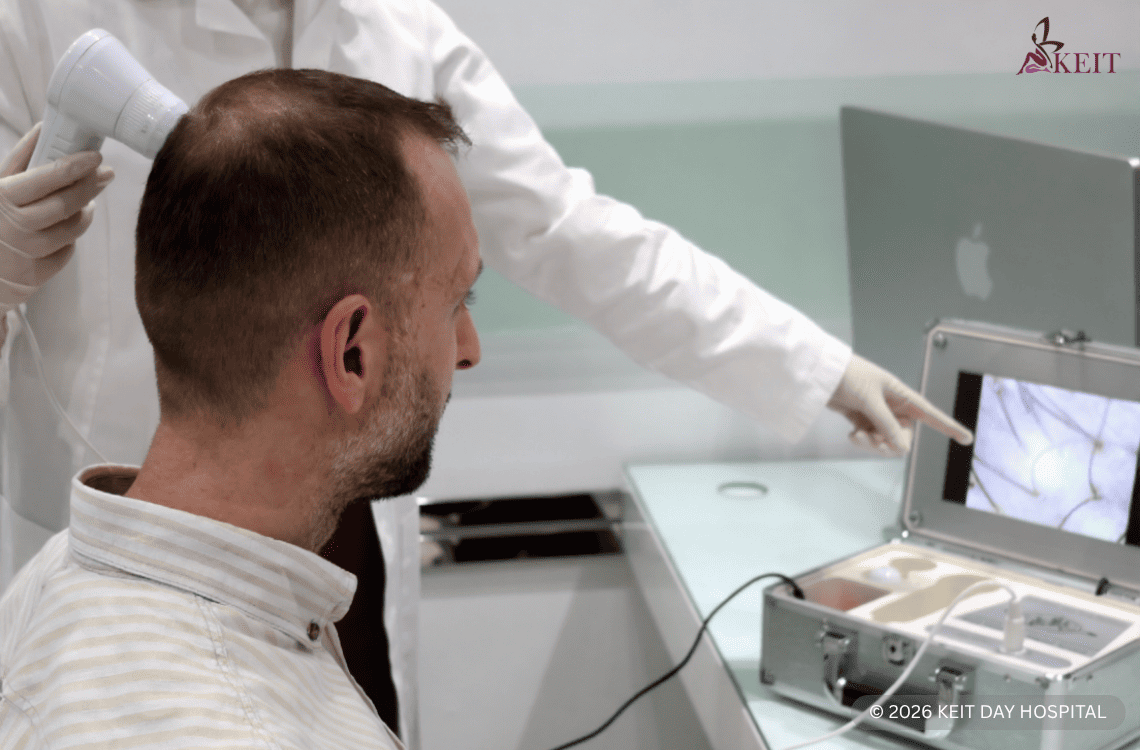
A good candidate for crown hair restoration is assessed based on crown thinning, donor area quality and the long-term pattern of hair loss. Suitability depends on whether the transplant can be planned safely, not only on the presence of a bald spot.
You may be a suitable candidate for a crown hair transplant if you have:
- Visible thinning or a bald spot in the crown area.
- A healthy donor area at the back or sides of the scalp.
- Enough stable hair follicles to provide the required number of grafts.
- A hair loss pattern that is stable or medically managed.
- Realistic expectations about density and final coverage.
- Good scalp health with no untreated inflammation, infection or skin condition.
- No major medical contraindications to surgery.
Crown restoration should be planned carefully if hair loss is still progressing or if the hairline and mid-scalp may need treatment in the future. Because donor hair is limited, the plan should consider both current thinning and future hair loss risk.

How many grafts are needed for a crown hair transplant?
The number of grafts needed for a crown hair transplant depends on the size of the thinning area, donor hair quality and the level of coverage that can be achieved safely.
General graft estimates include:
- Mild crown thinning: 800–1,500 grafts
- Moderate crown bald spot: 1,500–2,500 grafts
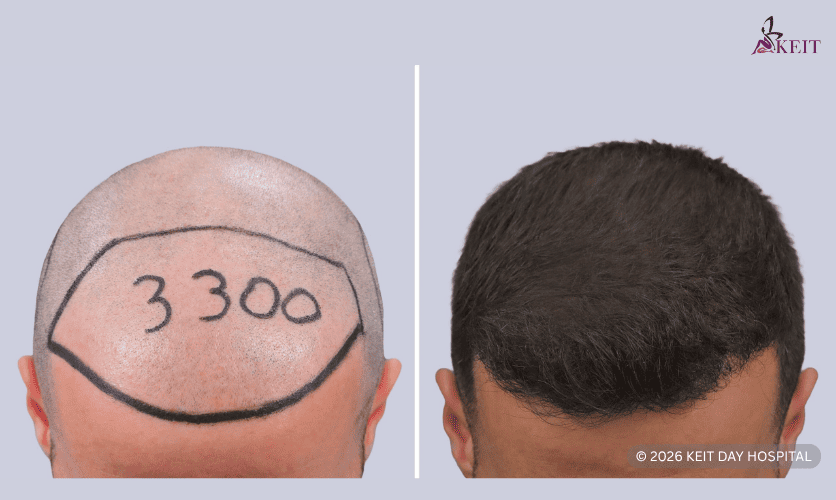
- Advanced crown baldness: 2,500–3,500+ grafts
- Crown and mid-scalp thinning: 3,000+ grafts
These ranges are general estimates. The final graft number should be determined after a medical assessment with a qualified hair transplant specialist, based on crown size, hair thickness, donor density, scalp contrast and future hair loss risk.
Why crown hair transplants are more complex than hairline transplants
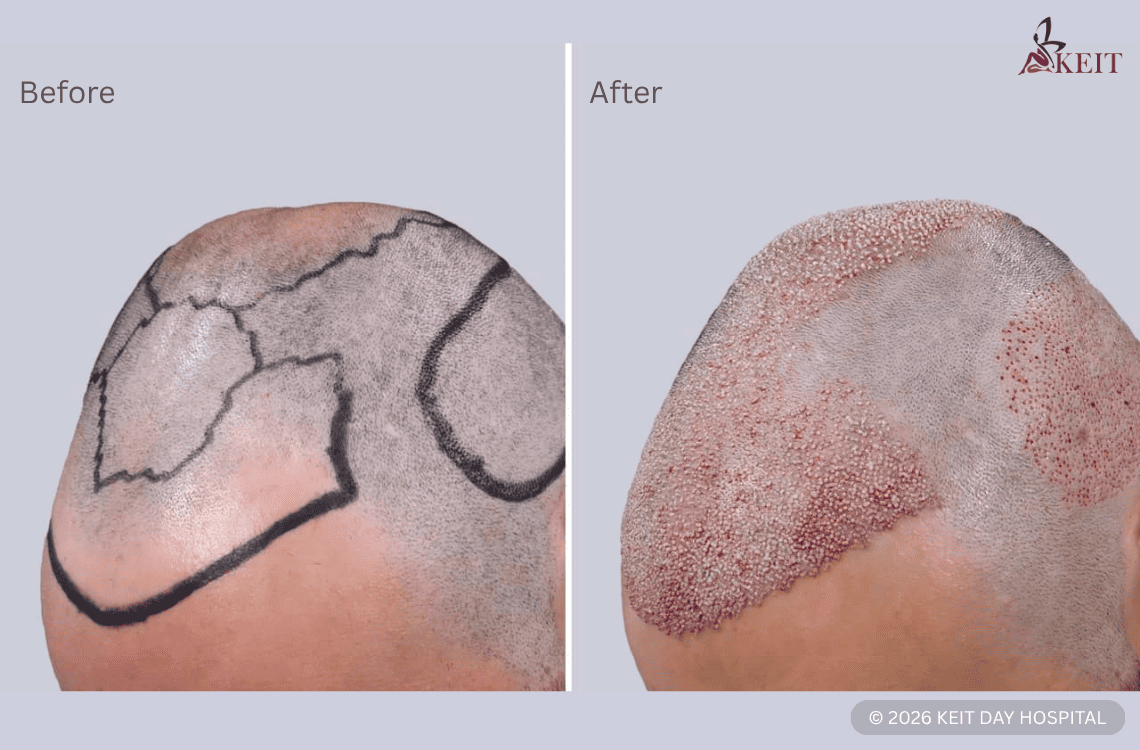
Crown hair transplants can be more complex because of the crown’s position and natural circular growth pattern. Unlike the hairline, which is designed mainly in a forward direction, the crown requires grafts to be placed in changing angles to follow the natural swirl of the hair.
This area is also viewed from above, which makes scalp visibility more noticeable if density is uneven or grafts are placed incorrectly. For this reason, crown restoration must focus on both direction and distribution, not just the number of grafts used.
A careful plan is needed to create natural coverage while preserving enough donor hair for possible future hair loss.
FUE or DHI for crown hair transplant: which technique is better?
Both FUE and DHI can be used for a crown hair transplant. The most suitable technique depends on the number of grafts required, donor area quality, crown size and the level of control needed during implantation.
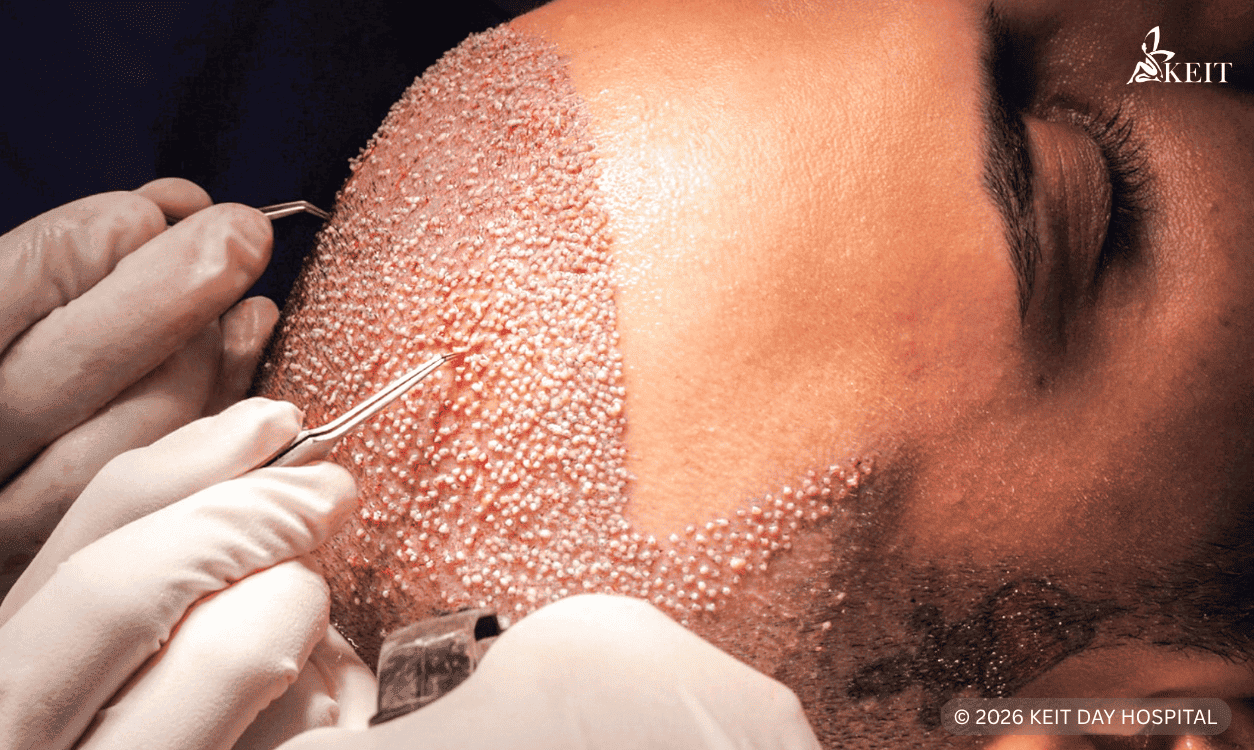
With FUE, individual hair follicles are extracted from the donor area and then implanted into the crown. With DHI, follicles are placed using an implanter pen, which may allow controlled placement in selected cases.
Neither technique is automatically better for every patient. The choice should be based on the clinical assessment, the surgical plan and the characteristics of the crown area being treated.
Crown hair transplant recovery timeline
Recovery after a crown hair transplant usually starts with mild redness, sensitivity and small scabs in the treated area. These changes are expected during the early healing phase and usually improve as the scalp begins to recover.
A general recovery timeline may include:
- First few days: mild redness, swelling or tenderness around the treated area
- Days 4–10: scabs begin to loosen and clear with careful washing
- Weeks 2–6: temporary shedding of transplanted hairs may occur
- Months 3–4: early new growth may begin
- Months 6–9: coverage in the crown becomes more noticeable
- Months 10–18: density continues to mature and the final result becomes clearer
The crown may take longer to appear dense compared with the hairline because it is viewed from above and even small gaps between hairs can make the scalp more visible.
When do crown hair transplant results become visible?
Crown hair transplant results develop gradually. After the initial healing phase, the transplanted hairs often shed before entering a new growth cycle. This is a normal part of the process and does not mean the grafts have failed.
Early growth may begin around the third or fourth month, but visible improvement usually becomes clearer between 6 and 9 months. In the crown, final density can take longer to mature, often reaching its full appearance between 12 and 18 months.
Because the crown is seen from above, results should be evaluated under normal lighting and once the hair has grown enough to show its natural direction and coverage.
Crown hair transplant cost: what affects the price?
In the UK, a crown hair transplant commonly costs around 4,500 to 9,000 pounds, depending on the size of the crown area, the number of grafts required and the technique used. Smaller crown cases may fall at the lower end of this range, while larger areas requiring higher graft numbers can cost more.
The final price of a hair transplant can also be influenced by:
- The extent of crown hair loss
- The number of grafts needed
- The technique used, such as FUE or DHI
- Whether the crown is treated alone or with other areas
- Clinic location and medical team experience
- The level of aftercare included
Cost should not be assessed only by the lowest price per graft. Crown restoration requires careful planning, especially because the donor area is limited and may need to be preserved for future hair loss.
Risks, density limits and donor area planning
Like any surgical procedure, a crown hair transplant carries some possible risks, including temporary redness, swelling, itching, scabbing, infection, shock loss or uneven growth. These risks can be reduced with a proper medical assessment, careful surgical planning and appropriate aftercare.
Density in the crown also has natural limits. In advanced hair loss, full density may not always be possible in one session, especially if the donor area cannot safely provide a high number of grafts. For this reason, donor area planning is essential, as using too many grafts in the crown can reduce the follicles available for future treatment in the hairline, mid-scalp or other thinning areas.
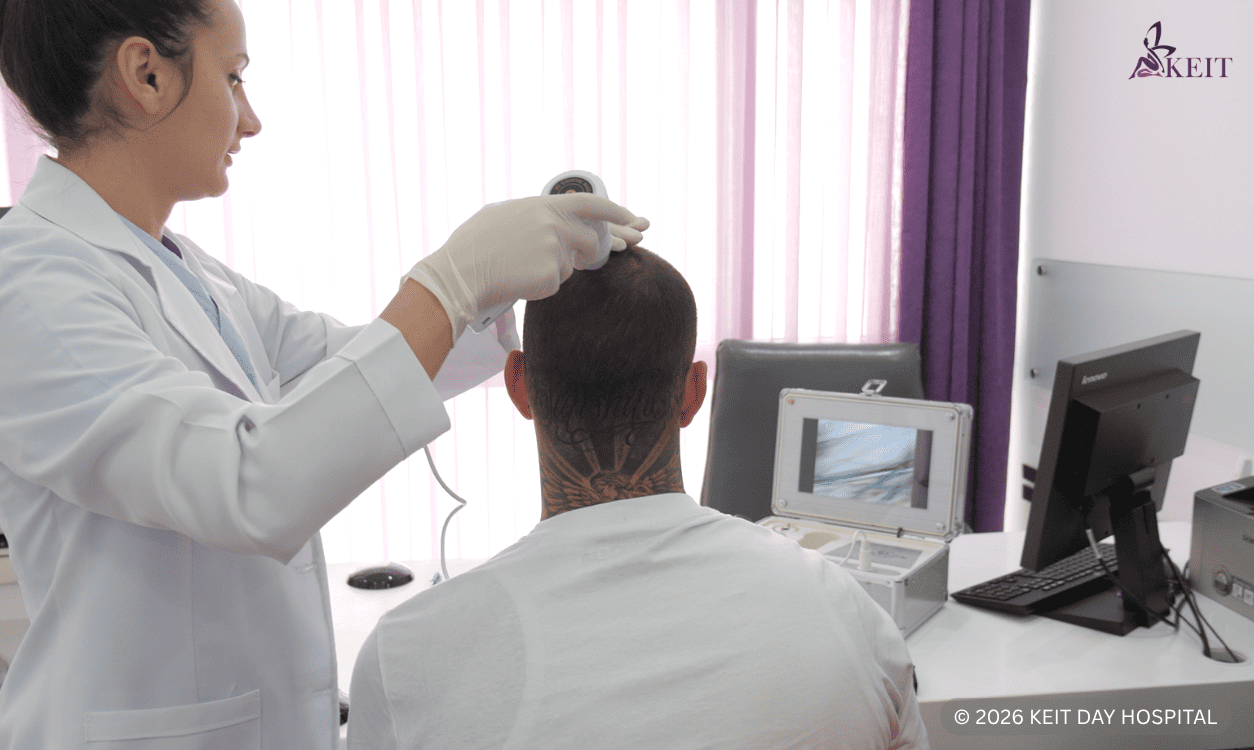
Choosing a qualified clinic is important before undergoing treatment. A consultation should assess the donor area, crown pattern, hair loss progression, medical history and realistic expectations before deciding whether the procedure is appropriate.