Published on:
 Modified on:

 Reading Time: 3 min
 Hair transplant
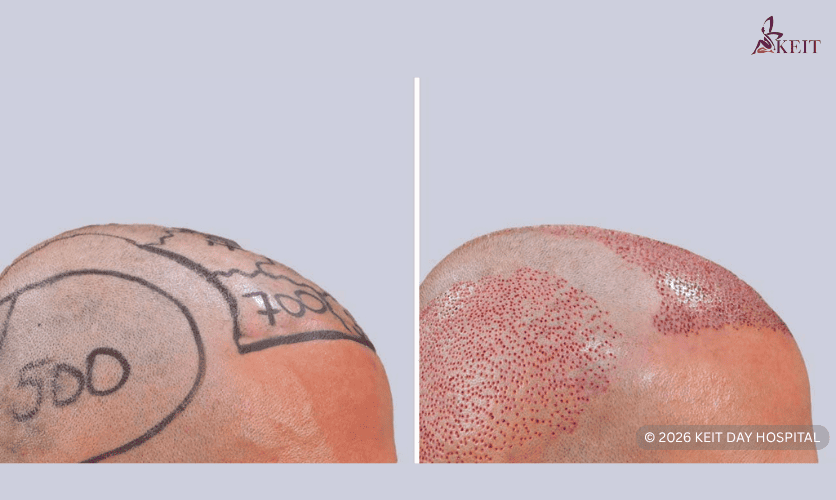
 scars are small marks left at donor or recipient sites after hair restoration surgery. Their visibility depends on the surgical technique, donor area management, and the patient’s individual healing response. Careful planning, skilled surgeons, and proper post-operative care help minimize scarring and achieve natural-looking results.
 Table of Contents:

In this article, we explain whether hair transplants leave scars, what factors contribute to visible scarring, and the differences between FUE and FUT scars. We also discuss shaving considerations, methods to reduce scar visibility, hair growth on scars, and available repair options.
Does a hair transplant leave scars?
Hair transplants do leave scars because follicles are physically removed from the donor area and implanted into the recipient area. The visibility and type of scarring depend on factors such as the surgical technique used, the surgeon’s skill, the patient’s healing response, scalp laxity, and how closely the donor hair is trimmed after the procedure.
What causes hair transplant scarring?
Scarring after a hair transplant can result from several key factors:
- Surgical technique: Poorly executed incisions or graft placement increase scar prominence.
- Overharvesting: Excessive extraction of follicles may lead to donor area thinning or patchiness.
- Scalp tension: High tension during closure in FUT procedures can widen linear scars.
- Healing factors: Genetics, age, and skin type influence scar formation.
- Post-operative care: Neglecting hygiene or exposing the scalp to trauma can increase scar visibility.
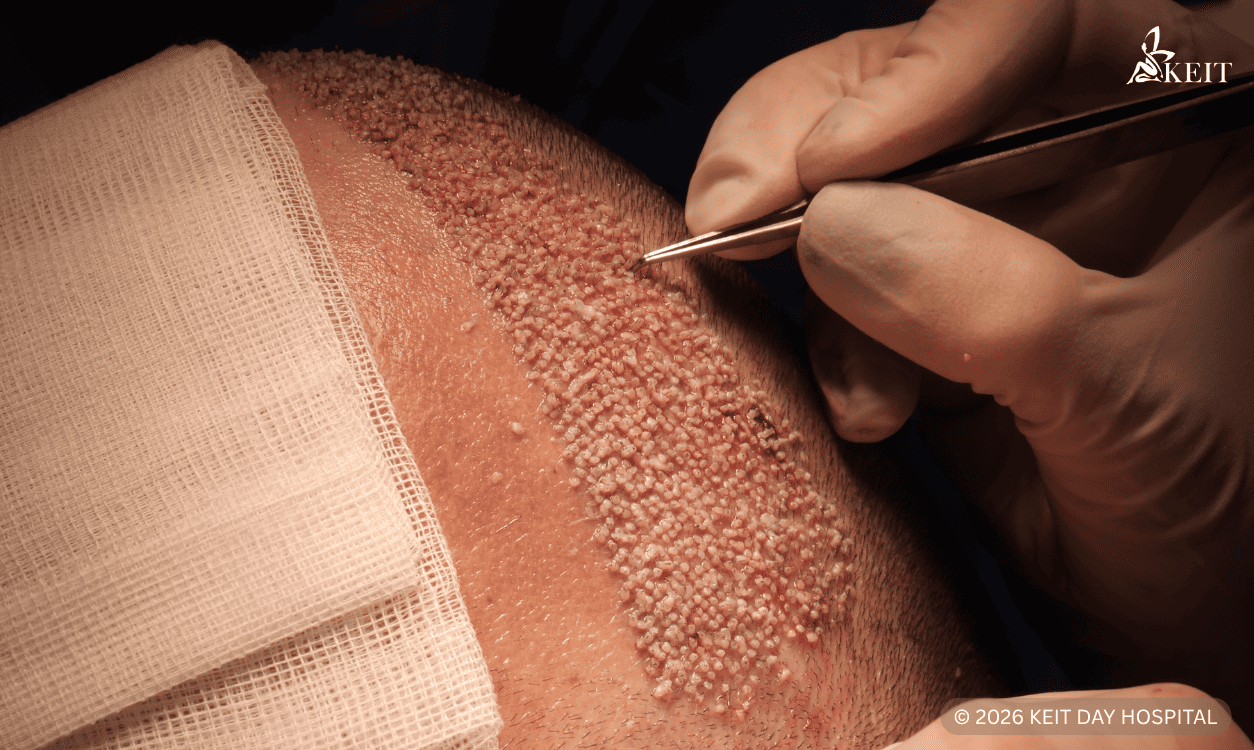
Hair transplant scarring: FUE vs FUT
The main difference between FUE and FUT scars lies in follicle harvesting. The following table summarizes the key differences in scarring between FUE and FUT hair transplant techniques, highlighting factors that affect visibility and healing.
| Feature | FUE | FUT (Strip) |
|---|---|---|
| Scar type | Tiny circular punctures, often invisible | Linear scar, may be noticeable if hair is short |
| Healing | 7–14 days | 10–14 days for sutures; scar maturation longer |
| Donor density impact | Selective follicle harvesting | Larger graft extraction in single strip |
| Flexibility | Multiple sessions without major visible scarring | Limited by strip length and scalp elasticity |
Can you shave your head after a hair transplant?
Patients can shave their head only after the scalp has sufficiently healed and grafts are secure. Most surgeons recommend waiting at least 3–4 weeks before gently trimming or shaving with clippers, as this allows the transplanted follicles to settle and reduces the risk of irritation or graft disruption. Full razor shaving or very close cuts are generally deferred until 2–3 months post‑procedure, depending on individual healing and your surgeon’s guidance.
How to reduce the risk of noticeable hair transplant scars
Minimizing visible scarring relies on surgical precision, planning, and proper care:
- Ensure experienced surgeons handle graft extraction and implantation.
- Preserve donor area integrity by avoiding overharvesting and maintaining uniform spacing.
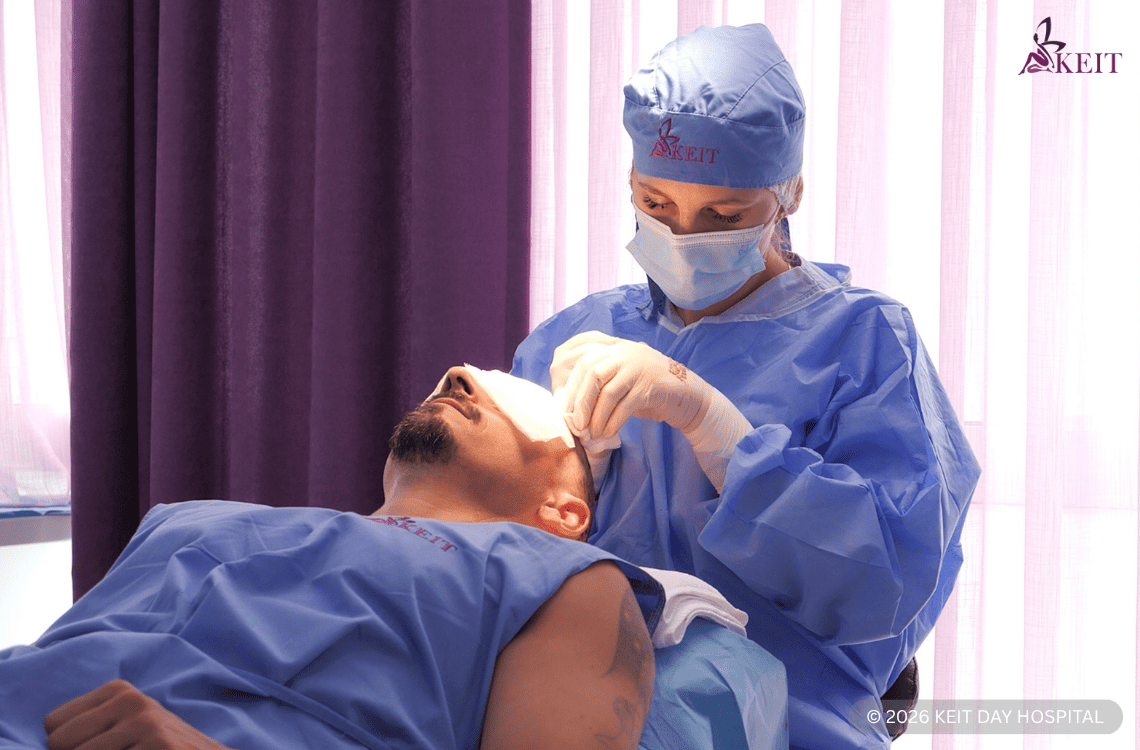
- Follow strict post-operative care to prevent infection, trauma, or delayed healing.
- Consider advanced options like no-shave or unshaven FUE to conceal donor scars.

Can hair grow on scars?
Hair does not naturally regrow in scars left after a hair transplant because scar tissue lacks the hair follicles required for growth, so transplanted or existing hair cannot regenerate in these areas. However, surrounding hair can mask the scar over time, and in some cases, additional treatments can improve its appearance.
Hair transplant scar: repair options
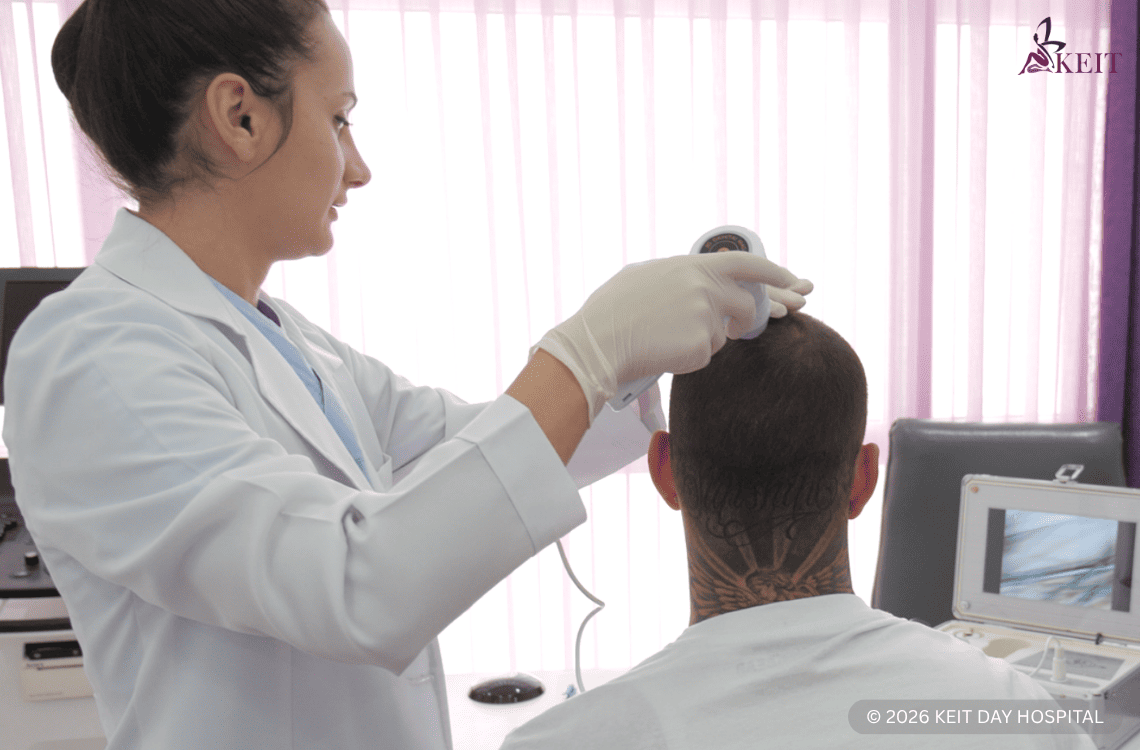
Visible scars after hair transplantation can be improved using several options:
- FUE grafting into scars: Individual follicles are transplanted into scar tissue to restore hair density and continuity.
- Scar revision surgery: Excessively wide or raised scars are surgically excised and sutured to create a smoother, less noticeable line.
- Scalp micropigmentation: Pigment is applied to the scar to camouflage its appearance and blend with surrounding hair.
- Laser therapy: Fractional or vascular lasers improve scar texture, color, and flattening, particularly for linear or hypertrophic scars.