Published on:
 Modified on:

 Reading Time: 3 min
 Hair transplant
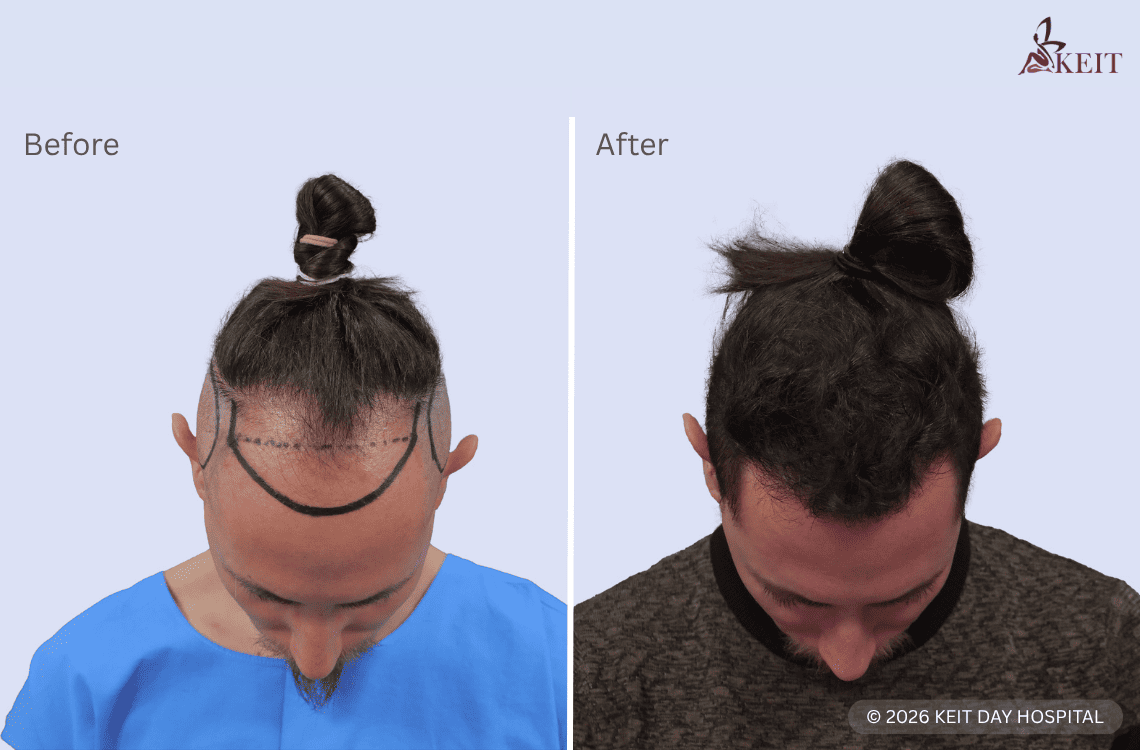
A no-shave hair transplant, also known as unshaven FUE, allows hair restoration without trimming or shaving existing hair. It preserves appearance during treatment, minimizes downtime, and is ideal for patients who prefer discreet procedures while maintaining natural hair coverage.
 Table of Contents:
-
1
 What is a no-shave hair transplant?
-
2
No-shave FUE vs partially shaven FUE: key differences
-
3
Who is a good candidate for no-shave FUE?
-
4
When no-shave FUE is not recommended
-
5
Advantages of unshaven hair transplant
-
6
No-shave hair transplant for women
-
7
Recovery after no-shave hair transplant
-
8
Risks and limitations of no-shave hair transplant
In this article, we explain what a no-shave hair transplant is, how it differs from partially shaven FUE, and who is a suitable candidate. We also cover its advantages, recovery, potential risks, and considerations for women.
What is a no-shave hair transplant?
A no-shave hair transplant is a minimally invasive method where hair follicles are extracted and implanted without shaving the surrounding hair. Fine punches allow precise graft placement while preserving existing hair, maintaining a natural look throughout the procedure. This technique ensures optimal graft survival and discretion during treatment.
No-shave FUE vs partially shaven FUE: key differences
To better understand the practical differences between no-shave FUE and partially shaven FUE, the following table compares key aspects of each approach.
| Feature | No-shave FUE (Unshaven) | Partially Shaven FUE |
|---|---|---|
| Hair visibility | Existing hair remains fully visible | Small areas trimmed for access |
| Immediate post-op appearance | Minimal signs of surgery | Trimmed areas may reveal surgical zones |
| Surgical precision | Requires careful extraction due to limited visibility | Easier handling and graft placement |
| Procedure time | Longer due to careful handling | Shorter overall time |
| Ideal for | Patients prioritizing discretion and natural coverage | Patients prioritizing efficiency and speed |
Who is a good candidate for no-shave FUE?
No-shave FUE is appropriate for patients who meet specific clinical, surgical, and anatomical criteria:
- Prefer to keep their existing hair length during the procedure.
- Have sufficient donor hair to achieve desired coverage without full shaving.
- Show stable or slowly progressing hair loss.
- Possess healthy scalp tissue to ensure proper graft implantation.
- Have hair characteristics that allow safe extraction and implantation without shaving.
When no-shave FUE is not recommended
No-shave FUE may not be suitable in certain cases where surgical precision, graft availability, or scalp conditions limit safe and effective transplantation:
- Limited donor availability: Insufficient follicles may reduce coverage or graft density.
- Extensive bald areas: Large recipient zones often require partial shaving for precise implantation.
- Severe scalp conditions: Active infections, inflammation, or poor skin quality may compromise healing.
- High-density goals: Achieving maximal graft density is more difficult without trimming surrounding hair.
Advantages of unshaven hair transplant
Unshaven FUE allows patients to undergo hair restoration while maintaining their natural hair appearance and minimizing visible signs of surgery:
- Maintains existing hair length, preserving appearance.
- Allows patients to continue daily activities with minimal social disruption.
- Minimizes visible post-operative signs, such as shaved patches or short hair.
- Supports natural-looking hairline design while grafts integrate.

No-shave hair transplant for women
No-shave FUE offers a discreet and effective hair restoration option for women seeking minimal disruption to their appearance:
- Maintains long hair, concealing surgical sites and preventing visible signs of transplantation.
- Enables precise restoration of frontal, temporal, or crown areas while preserving overall hair density.
- Allows treatment in professional and social settings without noticeable changes during recovery.
Recovery after no-shave hair transplant
Recovery following a no-shave FUE hair transplant is gradual, with visible changes and healing occurring in phases:
- Days 1–3: Mild swelling, redness, or tenderness at donor and recipient sites. Light activities can usually be resumed.
- Days 4–7: Tiny scabs form at graft sites and shed naturally, while surrounding hair conceals donor areas.
- Weeks 2–4: Transplanted hair may temporarily shed as follicles enter resting phase.
- Months 3–6: Initial hair regrowth becomes visible, gradually improving density and coverage.
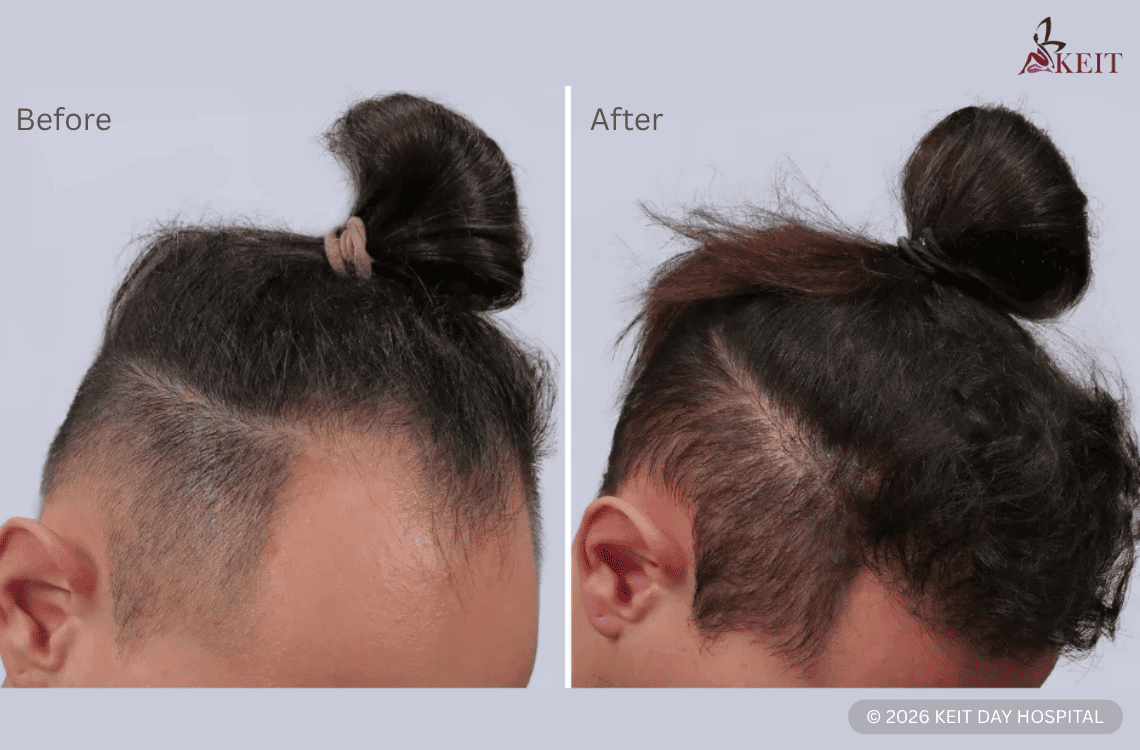
- Months 12–15: Full aesthetic results are achieved, with natural hairline integration and overall hair density.
Risks and limitations of no-shave hair transplant
No-shave FUE is generally safe but has specific technical considerations and risks that must be acknowledged:
- Extended procedure time: Working around unshaven hair increases surgical complexity and may lengthen session duration.
- Limited recipient access: Dense, long, or curly hair can obstruct visibility, making precise site creation and implantation more difficult.
- Graft trauma: Follicles are at higher risk of damage if extraction or implantation is impeded by surrounding hair.
- Limited coverage in extensive areas: Large recipient zones may require multiple sessions for uniform density.
- Donor site strain: Working around unshaven hair may slightly impact healing or cause minor follicle loss.