Published on:
 Modified on:

 Reading Time: 6 min
 Hair transplant
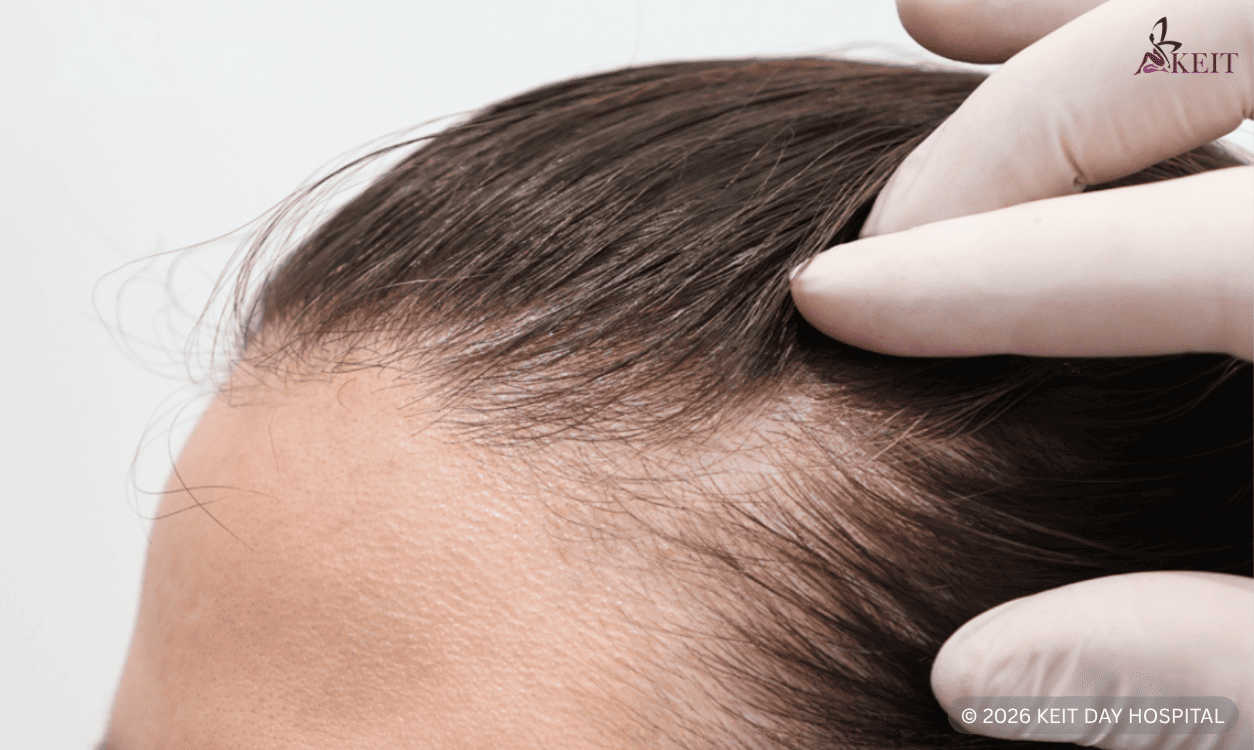
 for women is a surgical procedure that transfers healthy follicular units from a donor area to areas affected by stable, localised thinning or hair loss. It is most effective when donor hair is sufficient and the underlying cause of hair loss has been assessed. The procedure is used to improve hair density, restore hairline definition, and achieve a natural female hair pattern.
 Table of Contents:
-
1
 Hair transplant for women: What it is and when it is indicated
-
2
Can women get hair transplants? Who is a suitable candidate?
-
3
Hair transplant for women: Most common causes of hair loss
-
4
Hair transplant for women: The main areas that can be treated
-
5
Do women need to shave their head for a hair transplant?
-
6
Hair transplant surgery for women: Step-by-step procedure
-
7
Female hairline transplant before and after: Recovery and expected results
-
8
Hair transplant for women: Risks and limitations
-
9
Hair transplant for women: Cost and influencing factors
In this comprehensive guide, we explain what hair transplant for women is and when it is indicated, who is a suitable candidate, the main causes of female hair loss, and the areas that can be treated. We also cover shaving requirements, the step-by-step procedure, recovery and expected results, risks, and cost factors.
Hair transplant for women: What it is and when it is indicated
A hair transplant for women is a surgical procedure that transfers healthy follicular units from a donor area, usually the back or sides of the scalp, to areas affected by stable hair thinning or hair loss.
It is indicated in cases of:
- Female hairline recession: Frontal hairline recession or loss of hairline definition.
- Temple thinning: Reduced density around the temporal areas.
- Traction alopecia: Stable hair loss caused by repeated tension from tight hairstyles.
- High forehead correction: Suitable cases where hairline lowering is appropriate and donor hair is adequate.
- Localised thinning: Reduced density limited to specific areas rather than diffuse thinning across the scalp.
Can women get hair transplants? Who is a suitable candidate?
Women can get hair transplants, but suitability depends on the diagnosis, stability of hair loss, donor hair quality, and pattern of thinning. Suitable candidates often have:
- Stable hair loss: Hair loss that is not rapidly progressing or actively shedding.
- Good donor density: Enough healthy follicles at the back or sides of the scalp for transplantation.
- Localised thinning: Defined areas of thinning rather than diffuse hair loss across the entire scalp.
- Realistic expectations: Understanding that a transplant improves density but does not create unlimited hair volume.
- Good overall health: No uncontrolled medical conditions that could impair healing or affect hair growth.
Hair transplant for women: Most common causes of hair loss
Hair loss in women can have several causes, and identifying the exact pattern is essential before deciding whether hair transplant is appropriate.
Most common causes include:
- Androgenetic alopecia: A hereditary condition that causes gradual thinning, most often along the parting, crown, or frontal hairline.
- Traction alopecia: Hair loss caused by repeated tension on the follicles, commonly affecting the temples and hairline.
- Hormonal changes: Menopause, thyroid imbalance, postpartum shedding, or endocrine disorders can affect the hair growth cycle.
- Scarring alopecia: A group of conditions in which inflammation damages the hair follicles, leading to hair loss in affected areas.
- Medical or nutritional factors: Iron deficiency, certain medications, systemic illness, or rapid weight loss can contribute to thinning.

Hair transplant for women: The main areas that can be treated
Hair transplant for women can improve specific areas of thinning, recession, or reduced density when the donor area is suitable.
Key areas treated in women hair transplant include:
- Frontal hairline: Restores density and creates a softer, more balanced female hairline.
- Parting line: Adds density in selected cases where thinning is visible along the hair part.
- Crown: Improves localised thinning when donor hair is sufficient.
- Temples: Improves thinning or recession at the sides of the forehead.
- Eyebrows: Reconstructs sparse or over-plucked eyebrows using carefully placed grafts to match the natural direction of eyebrow hair.
- Scars: Helps camouflage selected scars from trauma, burns, or previous surgery.
- Traction alopecia spots: Restores thinning around the edges, temples, or frontal scalp after the condition has stabilised.
Do women need to shave their head for a hair transplant?
Women do not always need to shave their head for a hair transplant. In selected patients, partial-shave or no-shave techniques can be used, allowing surrounding hair to cover the donor area during recovery. This is often suitable for smaller procedures, hairline work, or localised thinning.
In cases requiring a larger number of grafts, a full shave may be recommended to maximise surgical precision, graft handling, and visibility. The decision depends on the technique, graft number, donor density, hair length, and treatment area.
Hair transplant surgery for women: Step-by-step procedure
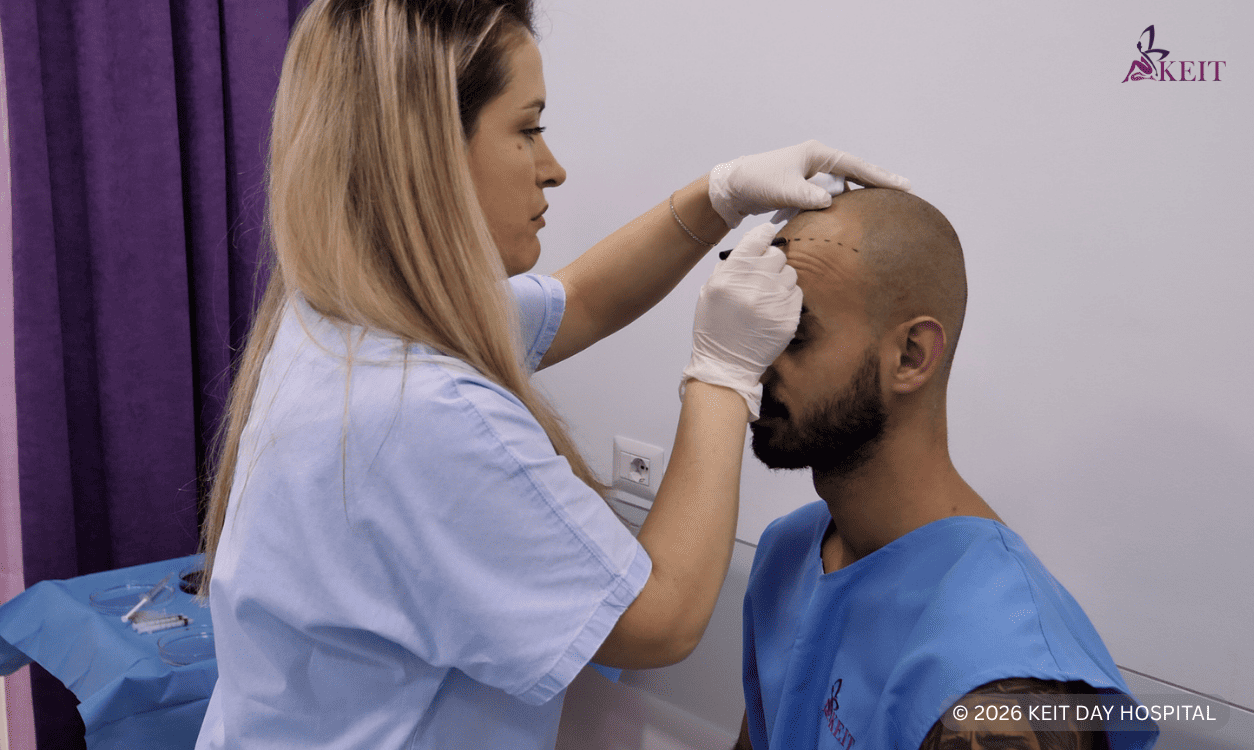
The hair transplant procedure for women is performed under local anaesthesia and follows a structured process to ensure safe graft handling and natural results:
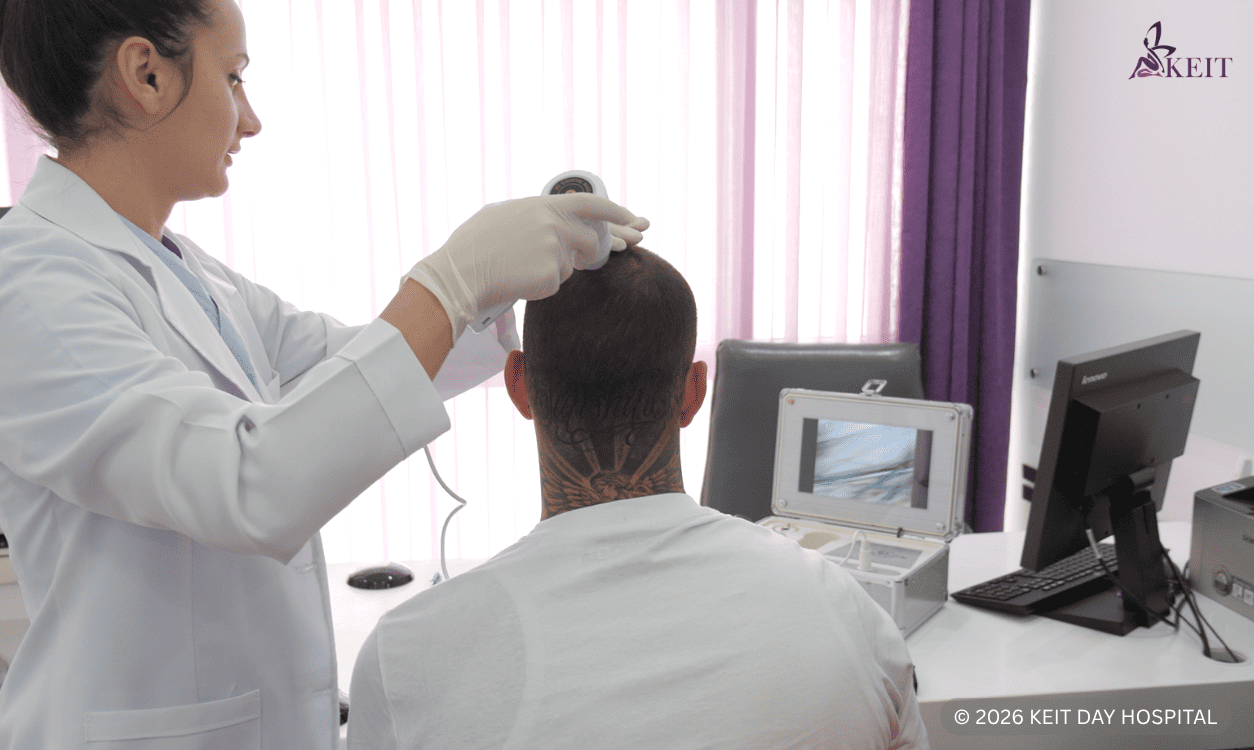
- Consultation and planning: Assessment of hair loss pattern, donor area, and treatment goals, including hairline design and graft estimation.
- Local anaesthesia: The donor and recipient areas are numbed to ensure the procedure is comfortable and pain-free.
- Follicle extraction: Healthy follicular units are carefully removed from the donor area while preserving surrounding hair and donor density.
- Implantation: Grafts are placed into the target areas following the natural direction, angle, and density of hair growth.
The procedure usually takes 4–8 hours, depending on the number of grafts and the complexity of the case.

Female hairline transplant before and after: Recovery and expected results
Recovery after a female hairline transplant follows a predictable timeline, with gradual improvement in hair density and hairline definition.
- First 7–10 days: Mild redness, swelling, and small scabs may appear around the implanted grafts and usually settle as the scalp heals.
- 2–4 weeks: Transplanted hairs shed (shock shedding), which is a normal part of the cycle before new growth begins.
- 3–4 months: Early regrowth starts as new hairs emerge from the implanted follicles, although density is still limited at this stage.
- 6 months: Noticeable improvement in density and hairline shape.
- 9–12 months: The final result becomes clearer, with improved hairline shape, density, and natural growth direction.
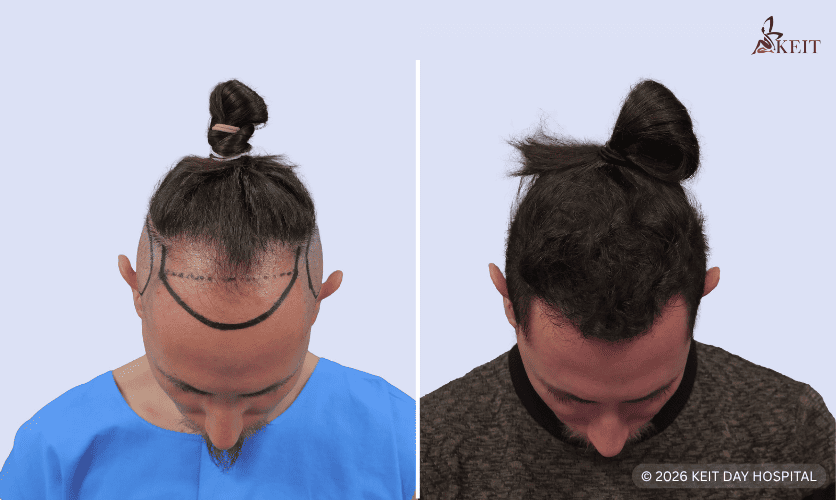
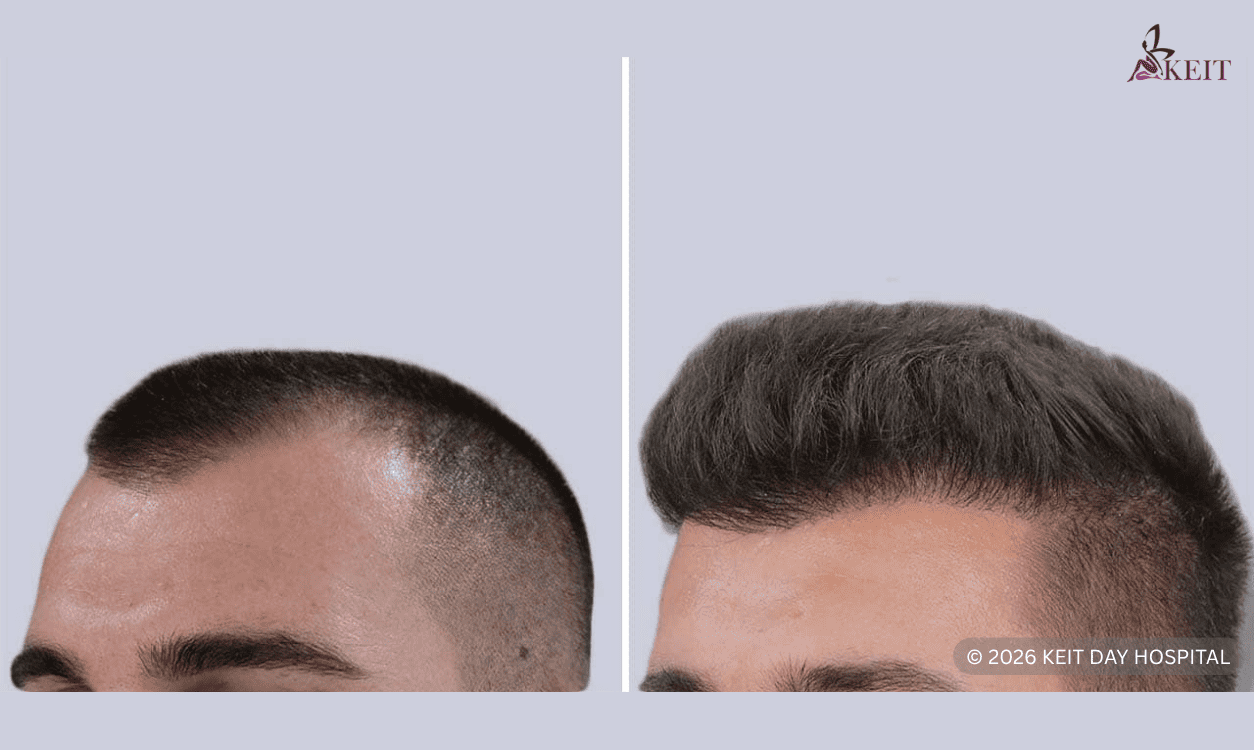
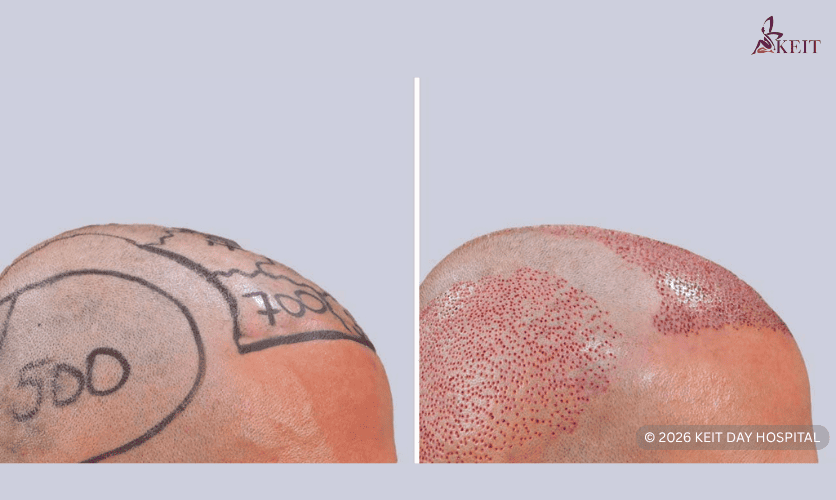
Before and after results after female hairline transplant typically show improved hairline density, contour, and frontal framing while maintaining a natural hairline pattern. Transplanted follicles are generally long-lasting, but existing non-transplanted hair may continue to thin if the underlying hair loss condition is not medically managed.
Hair transplant for women: Risks and limitations
Hair transplant for women is generally safe when performed in suitable candidates, but it remains a surgical procedure and carries certain risks.
- Temporary healing effects: Mild swelling, redness, scabbing, and tenderness are common during early healing and usually resolve gradually.
- Shock loss: Temporary shedding of nearby existing hair may occur due to trauma, especially in areas already affected by thinning.
- Infection or delayed healing: Uncommon, but possible if the scalp does not heal normally or aftercare is not followed.
- Poor graft growth: Some transplanted follicles may not survive or grow as expected, affecting final density.
- Visible scarring: Small scars may occur in the donor area, depending on the technique, healing, and hair characteristics.
- Unnatural hairline result: Poor design or incorrect graft placement can affect hairline shape, direction, and density.
The main limitation is that hair transplant does not treat the underlying cause of female hair loss. It is less suitable for diffuse or unstable thinning, and non-transplanted hair may continue to thin without medical management.
Hair transplant for women: Cost and influencing factors
In the UK, the cost of a hair transplant for women ranges between 4,000 and 14,000 euro, depending on the size of the treatment area and the number of grafts required. The final cost is influenced by several clinical and technical factors, including the number of grafts required, donor hair density and quality, the complexity of the treatment area, the surgeon’s experience, and the clinic’s location and standards.