Published on:
 Modified on:

 Reading Time: 6 min
 Hair transplant
A receding hairline is a progressive form of hair loss that affects the frontal scalp, most often associated with androgenetic alopecia. It typically presents as gradual recession at the temples or thinning along the frontal hairline and may affect both men and women. The condition reflects progressive follicular miniaturisation and can advance over time if not addressed.
 Table of Contents:
-
1
 What is a receding hairline?
-
2
Types of a receding hairline: What are the main patterns?
-
3
What causes a receding hairline?
-
4
Receding hairline symptoms: What are the early signs of a receding hairline?
-
5
Receding hairline in women and men: Clinical differences
-
6
Receding hairline: Progression stages based on the Norwood scale
-
7
Mature hairline vs receding: How to distinguish normal ageing from hair loss
-
8
How is a receding hairline diagnosed?
-
9
Receding hairline treatment: Medical management and supportive therapies
-
10
Hair transplant for receding hairline: Indications, techniques and results
In this comprehensive guide, we explain what a receding hairline is, its main patterns, early signs, and causes, as well as the clinical differences between men and women. We also cover progression stages, diagnosis, treatment options, and when hair transplant may be considered.
What is a receding hairline?
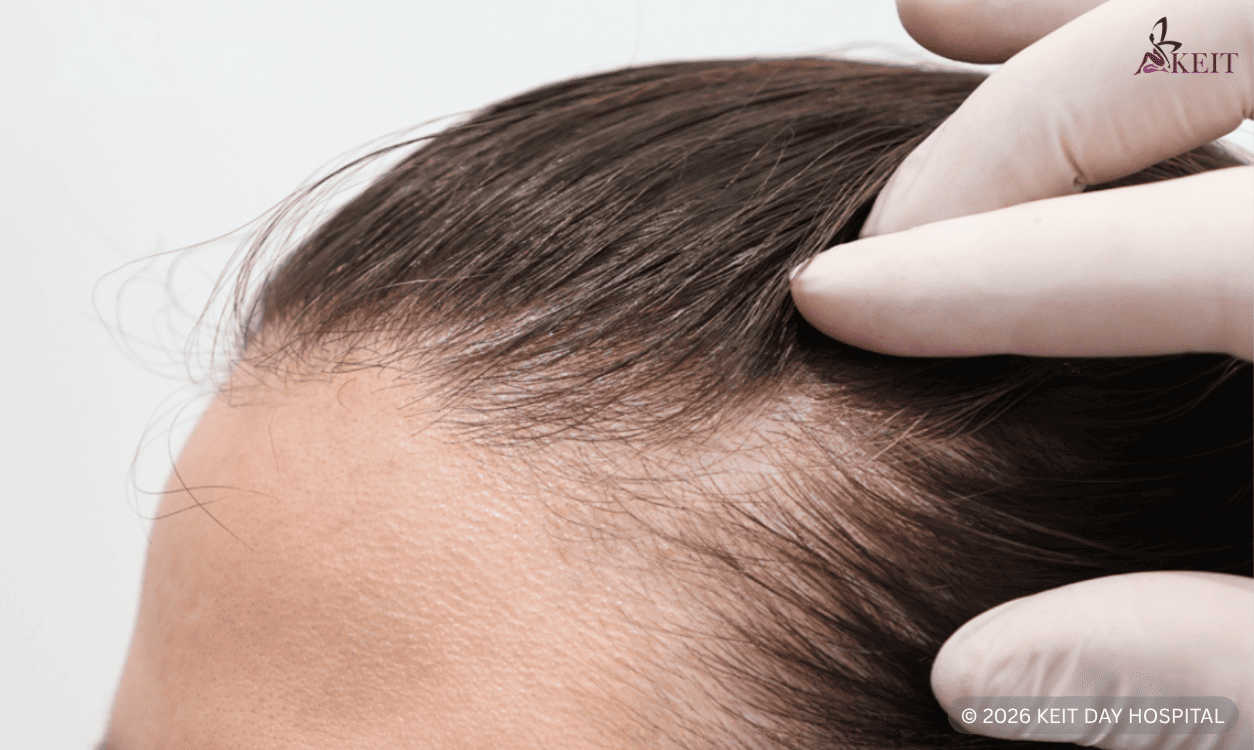
A receding hairline is a specific pattern of hair loss characterised by the gradual backward movement of the frontal hairline, most commonly affecting the temples and frontal scalp. It is a defining feature of androgenetic alopecia and reflects a patterned process rather than diffuse hair thinning. The process involves progressive miniaturisation of hair follicles, resulting in shorter, finer, and less pigmented hair over time. As this process continues, affected follicles may eventually stop producing visible hair.
Types of a receding hairline: What are the main patterns?
Receding hairline patterns vary according to the underlying cause and individual factors, but several clinically recognised patterns are observed:
- M-shaped hairline (temple recession): This is the most common pattern, characterised by recession at both temples with relative preservation of the central hairline, commonly seen in male androgenetic alopecia.
- U-shaped hairline (uniform recession): More uniform backward movement of the frontal hairline, creating a broader recessed pattern.
- Asymmetrical or uneven recession: One side of the hairline recedes more than the other, often seen in early or irregular hair loss patterns.
- Frontal fibrosing alopecia (FFA): A scarring alopecia that causes band-like frontal hairline recession, more often seen in women and sometimes associated with eyebrow thinning.
- Traction alopecia: Hairline recession caused by repeated tension from tight hairstyles, usually affecting the frontal and temporal margins.
What causes a receding hairline?
A receding hairline is most often caused by androgenetic alopecia, a hereditary form of hair loss driven by genetic sensitivity to androgens. The main contributing factors include:
- Genetic predisposition: Family history is one of the strongest risk factors for progressive hairline recession.
- Dihydrotestosterone (DHT): DHT can shrink genetically sensitive hair follicles, causing progressive follicular miniaturisation and finer hair growth.
- Age-related progression: Hairline recession may become more noticeable over time as follicle sensitivity and hair density change.
- Traction alopecia: Repeated tension from tight hairstyles can damage follicles along the frontal and temporal hairline.
- Hormonal factors: Hormonal changes or imbalance may contribute to frontal hair thinning, particularly in women.
- Inflammatory scalp conditions: Certain dermatological conditions can affect follicle health and may cause or worsen hairline loss.
Receding hairline symptoms: What are the early signs of a receding hairline?
A receding hairline usually develops gradually, with early changes appearing around the temples and frontal hairline. The main signs include:
- Temple recession: Hair begins to thin or recede at one or both temples, often creating an early M-shaped pattern.
- Frontal hairline thinning: Hair at the front becomes finer, less dense, or more difficult to style.
- Change in hairline shape: The hairline may appear higher, uneven, or less defined than before.
- Increased visibility of the forehead: Progressive recession can make the forehead appear larger over time.
- Localised shedding at the front: More hair may be noticed during washing, brushing, or styling, especially from the frontal scalp.

Receding hairline in women and men: Clinical differences
A receding hairline can affect both men and women, but the clinical pattern often differs. In men, it usually presents as a bitemporal recession, creating an M-shaped hairline and often progressing with crown thinning.
In women, recession is less commonly M-shaped and more often appears as frontal thinning, reduced density at the temples, or diffuse hairline weakening. Female hairline changes may also require broader assessment for hormonal, thyroid, postpartum, or inflammatory causes, especially when hair loss is sudden or rapidly progressive.
Receding hairline: Progression stages based on the Norwood scale
A receding hairline is classified using the Norwood scale, which outlines the progression from minimal temple recession to advanced frontal and crown hair loss.
- Norwood 1: Minimal or no visible recession of the hairline.
- Norwood 2: Early bitemporal recession, often representing the first clear signs of a receding hairline.
- Norwood 3: More pronounced and deeper recession at the temples, forming a well-defined M-shaped hairline.
- Norwood 4–5: Further frontal recession with extension towards the mid-scalp, often accompanied by crown thinning.
- Norwood 6–7: Advanced hair loss with significant reduction of hair across the frontal and vertex scalp.
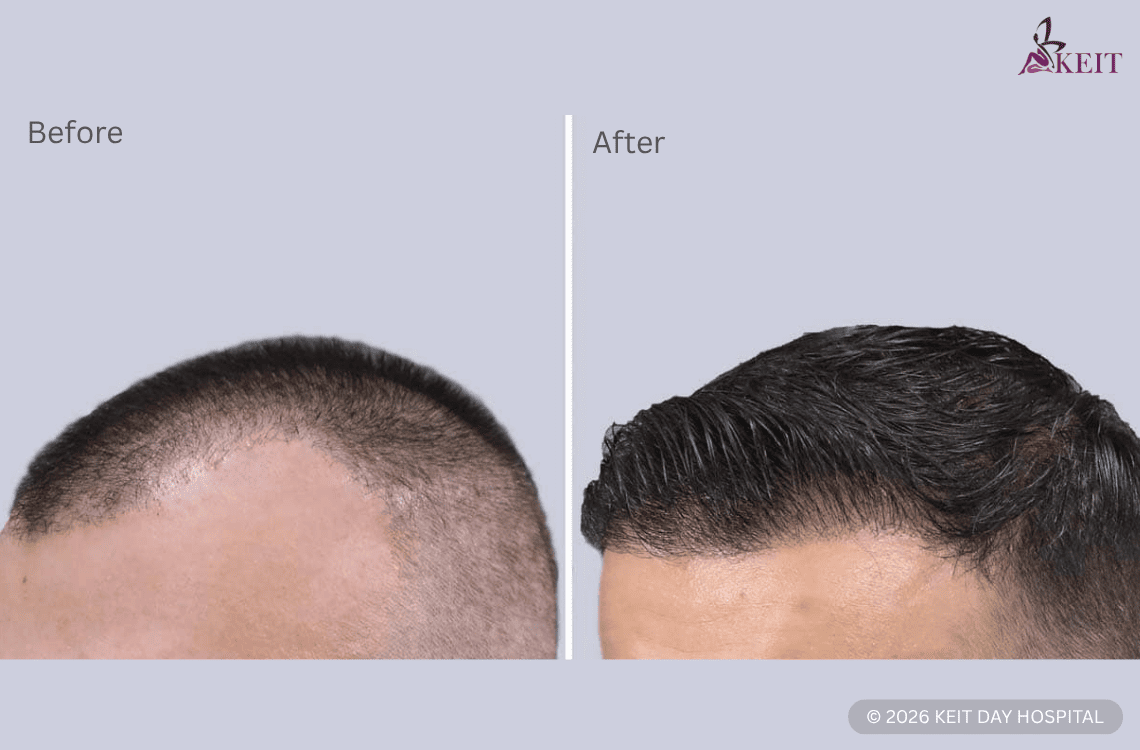
Mature hairline vs receding: How to distinguish normal ageing from hair loss
Changes in the frontal hairline can occur with age, but not all represent pathological hair loss. The main differences are:
- Mature hairline: A mild, symmetrical elevation of the frontal hairline that commonly develops after adolescence. Hair density is usually preserved, the temples do not continue to recede significantly, and the hairline remains relatively stable over time.
- Receding hairline: A progressive recession of the frontal hairline, most often affecting the temples first. It is usually associated with reduced density, finer hair shafts, and ongoing change caused by follicular miniaturisation.
How is a receding hairline diagnosed?
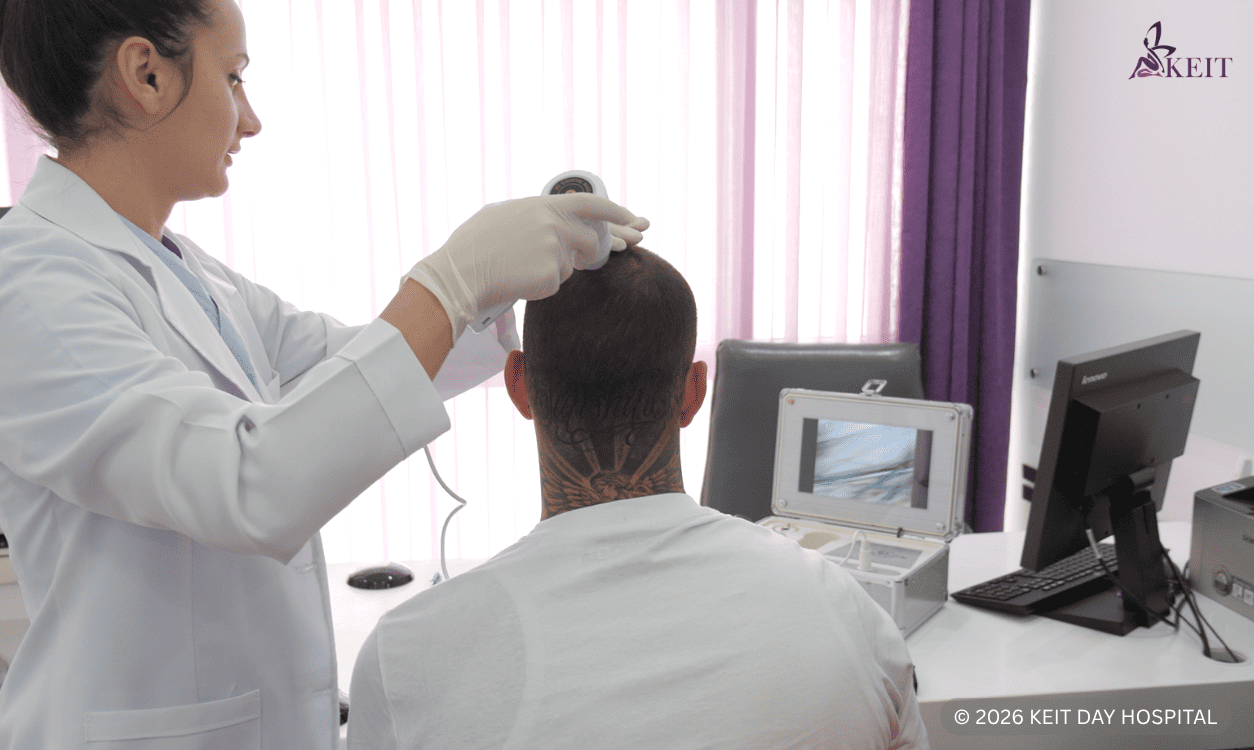
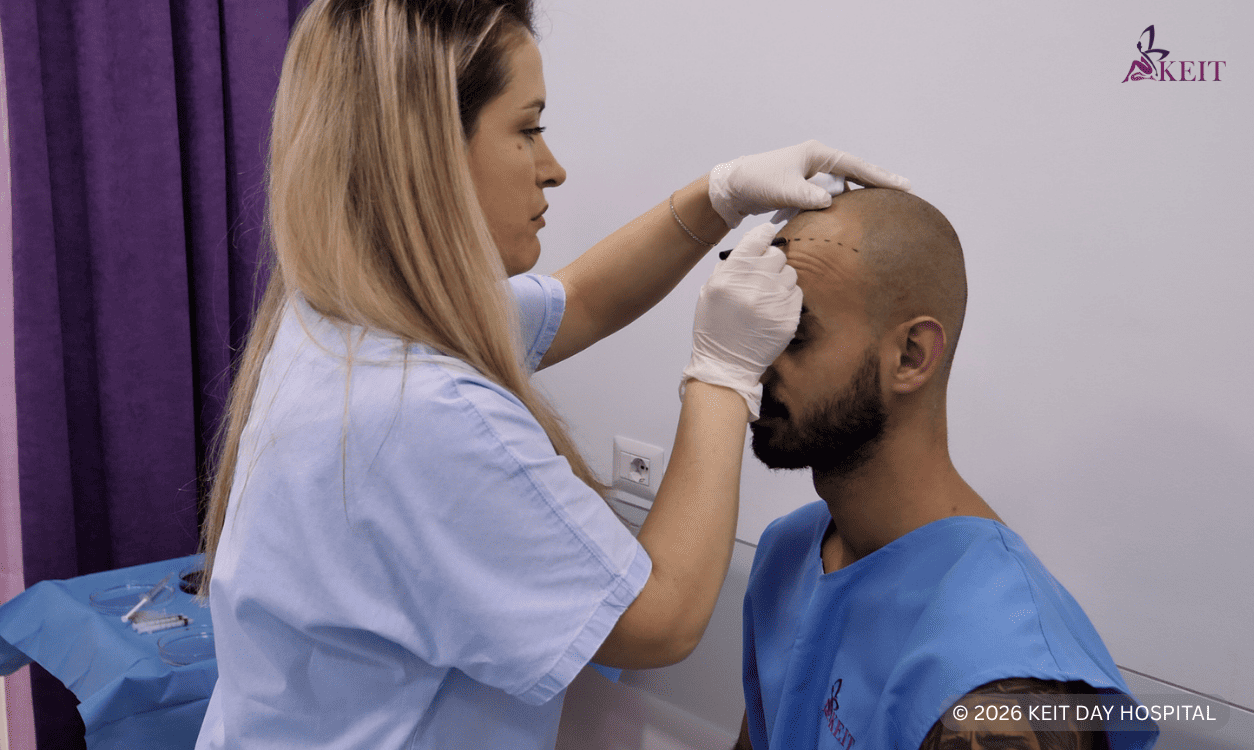
A receding hairline is diagnosed through a clinical consultation, where the hairline pattern, scalp condition, hair density, and history of progression are assessed. Key diagnostic methods and indicators include:
- Hairline pattern assessment: Evaluation of frontal and temporal recession, symmetry, and hairline shape.
- Medical history: Review of onset, rate of progression, family history, medication use, and relevant medical conditions.
- Scalp and hair density examination: Assessment of thinning, hair shaft calibre, follicular miniaturisation, and areas of reduced density.
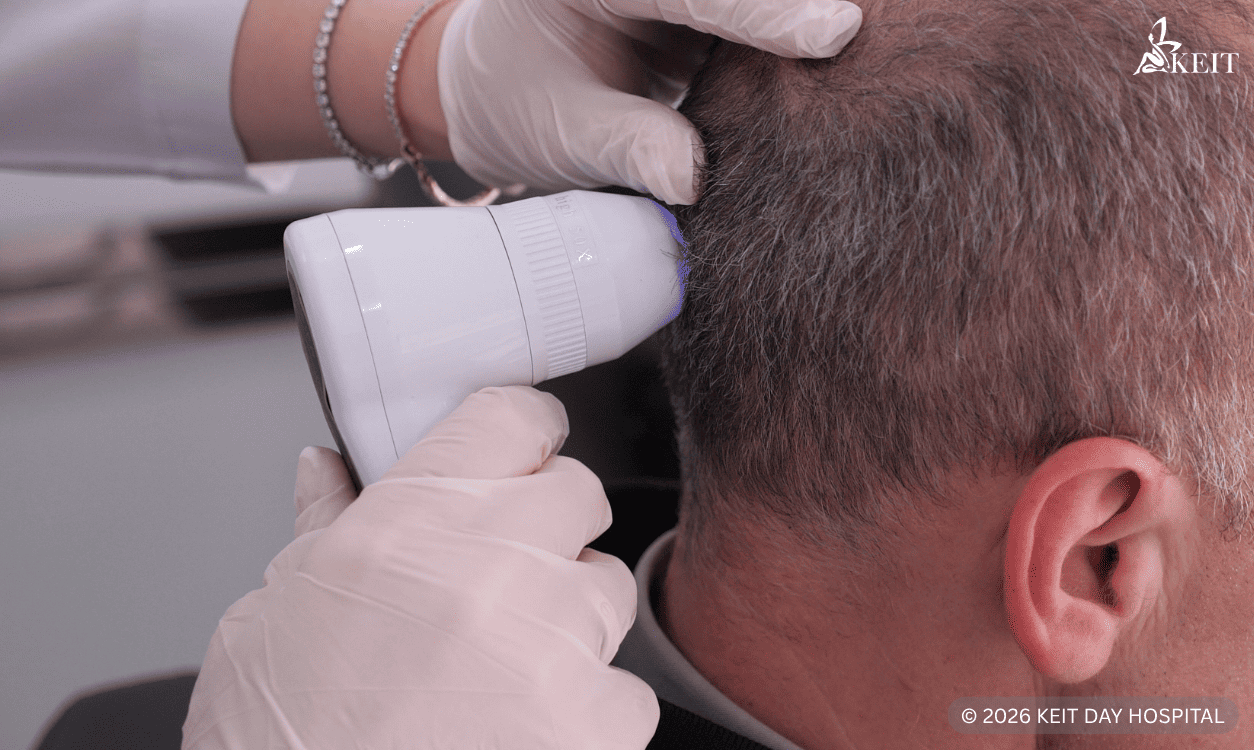
- Dermatoscopy: Magnified scalp examination used to identify follicular miniaturisation and features of androgenetic alopecia.
- Additional tests: Blood tests or further dermatological assessment may be recommended if hormonal imbalance, nutritional deficiency, or inflammatory scalp disease is suspected.
Receding hairline treatment: Medical management and supportive therapies
Receding hairline treatment depends on the underlying cause, stage of hair loss, and degree of follicular miniaturisation. The main non-surgical options include:
- Medical treatments: Minoxidil supports hair growth and density in early hair loss. Finasteride is used in suitable male patients to reduce DHT-related follicle miniaturisation.
- Regenerative therapies: PRP therapy helps improve hair density in selected patients by using concentrated platelets from the patient’s own blood.
- Device-based therapies: Low-level laser therapy supports hair growth when used consistently as part of a treatment plan.
- Correction of contributing factors: Traction, scalp inflammation, nutritional deficiencies, or hormonal imbalance should be identified and managed when present.
- Lifestyle and scalp care: Avoiding tight hairstyles, maintaining scalp health, and correcting deficiencies can support treatment, but they do not replace evidence-based medical therapy.
Hair transplant for receding hairline: Indications, techniques and results
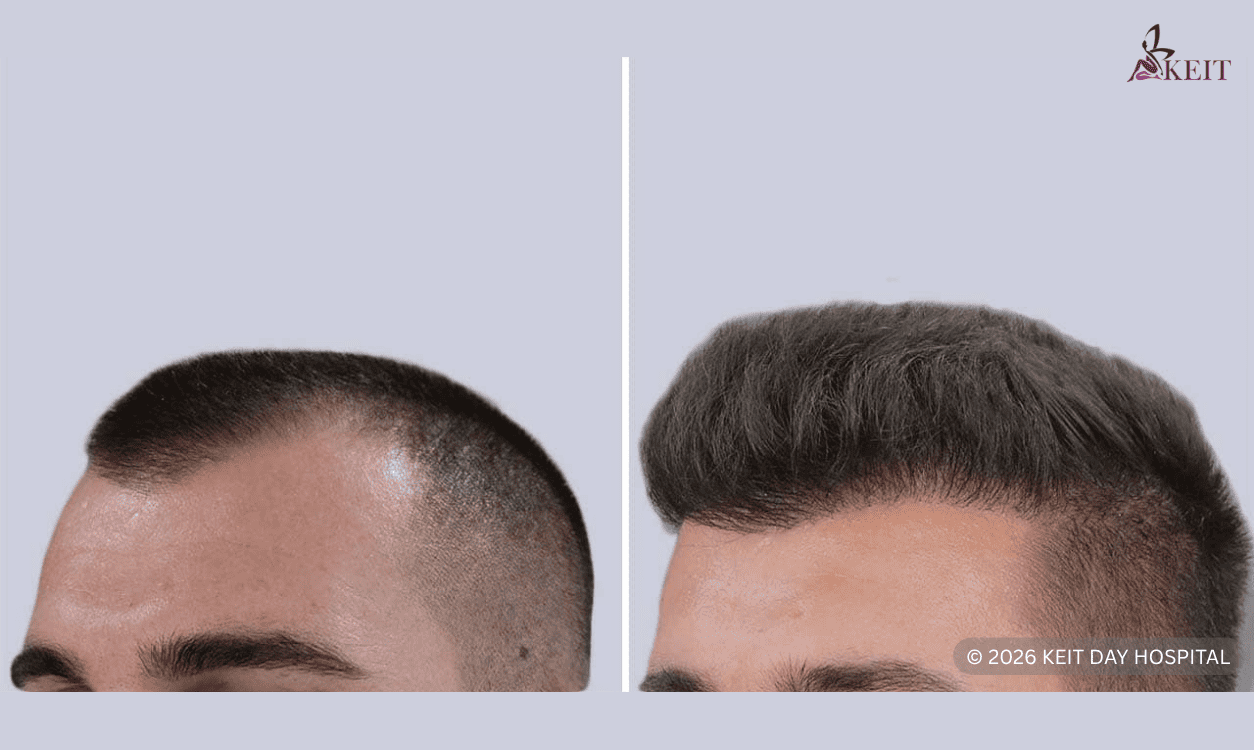
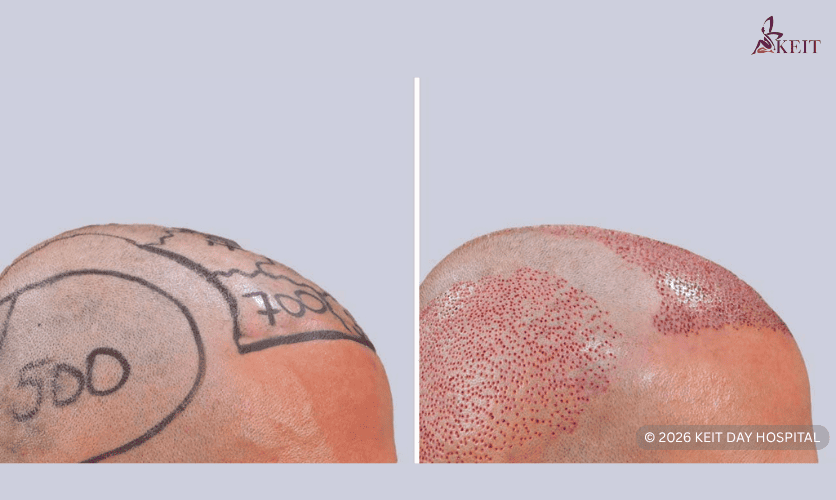
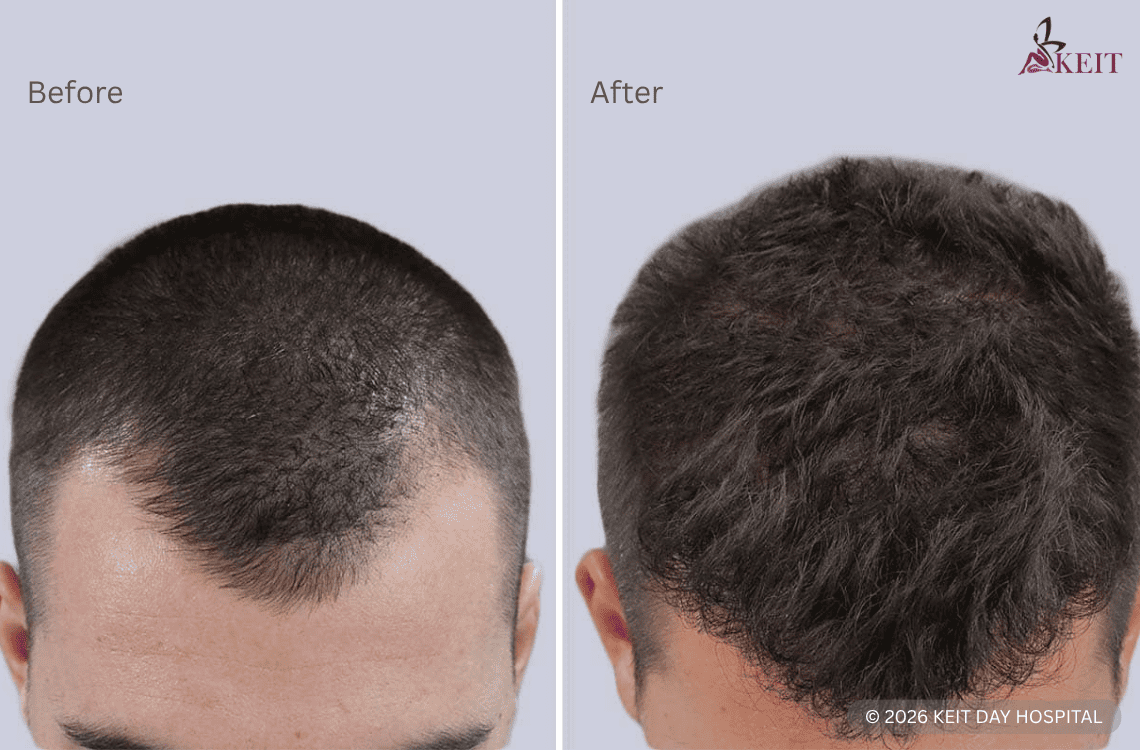
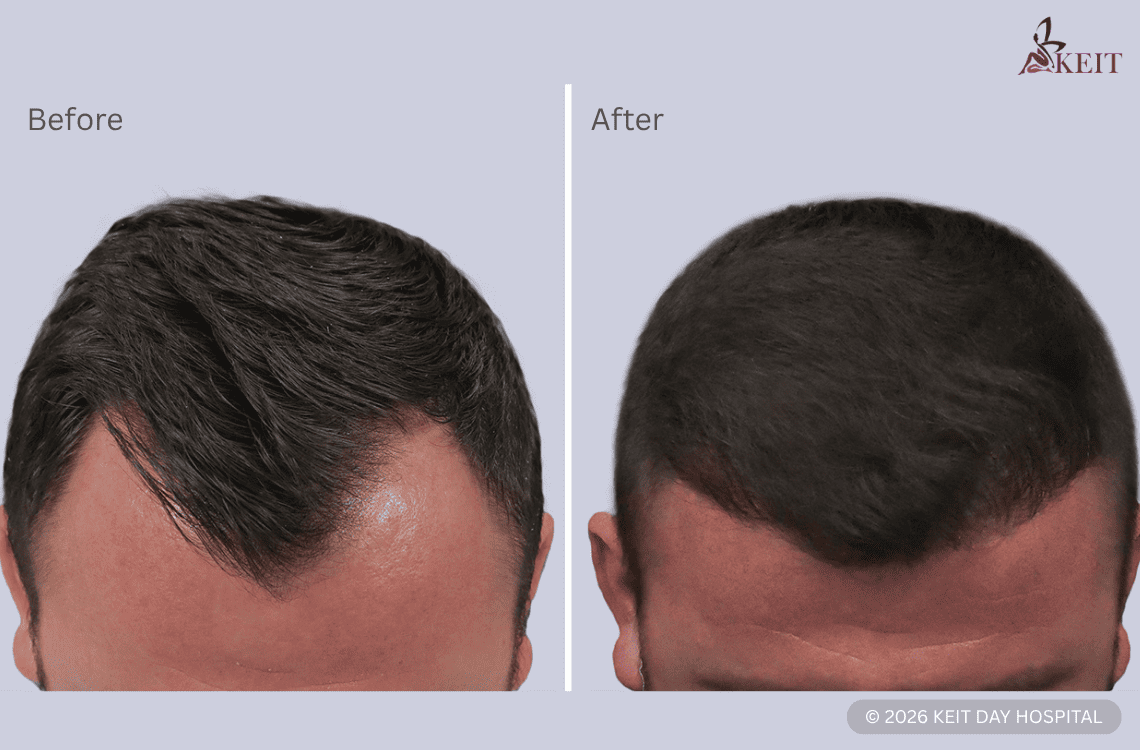
Hair transplant is the surgical option for a receding hairline when hair loss is stable, medical treatment is insufficient, and donor hair is adequate. The procedure involves transferring healthy hair follicles from the donor area, usually the back or sides of the scalp, to the receding frontal hairline to restore density and contour.
It can be performed using Micro FUE, where individual follicular units are extracted and implanted, or DHI, where follicles are placed directly with a specialised implanter device. Results can be natural-looking and long-lasting when appropriately planned, but the procedure does not stop future hair loss in untreated areas, so long-term management remains important.