Published on:
 Modified on:

 Reading Time: 5 min
 Liposuction
Lipedema (or lipoedema) is a chronic condition marked by abnormal fat accumulation, most often in the hips, thighs, legs, and sometimes the arms, causing a disproportion between the lower and upper body. Common symptoms include symmetrical leg enlargement, pain or tenderness, easy bruising, and fat deposits that do not respond to diet or exercise. Treatment may include compression therapy, lifestyle measures, and, in selected cases, liposuction.
 Table of Contents:
-
1
 What is lipedema and how does it differ from normal fat accumulation?
-
2
Lipedema symptoms: How to recognize the condition?
-
3
Lipedema: Where it occurs and typical distribution patterns
-
4
Stages of lipedema: How the condition progresses over time
-
5
Lipedema causes: Which factors contribute to its development?
-
6
How is lipedema diagnosed? Key features doctors look for
-
7
Lipedema treatment: Conservative management options
-
8
Lipedema surgery: Whenisliposuction recommended?
-
9
Lipedema surgery before and after: Recovery from liposuction
This article explains what lipedema is, its symptoms, typical fat distribution patterns, and the stages of lipedema. It also outlines possible causes, how it is diagnosed, available conservative treatments, when liposuction for lipedema may be recommended, and recovery expectations.
What is lipedema and how does it differ from normal fat accumulation?
Lipedema is a chronic condition in which fat accumulates abnormally in specific areas of the body, most commonly the hips, thighs, and legs, and sometimes the arms. This fat distribution creates a noticeable disproportion between the lower and upper body. The condition primarily affects women and often develops during hormonal changes such as puberty, pregnancy, or menopause.
Characteristics that differentiate lipedema from normal fat accumulation include:
- Symmetrical fat distribution, typically affecting both legs or arms equally.
- Fat resistant to diet and exercise, even after significant weight loss.
- Feet usually remain unaffected, creating a visible “cuff” at the ankles.
- Nodular or uneven fat texture that may feel different from normal body fat.
Lipedema symptoms: How to recognize the condition?
Lipedema is typically characterized by distinctive physical changes and tissue sensitivity that distinguish it from simple fat accumulation. Common symptoms and signs of lipedema include:
- Disproportionate enlargement of the legs or thighs compared with the upper body.
- Symmetrical fat accumulation affecting both legs or, in some cases, the arms.
- Tenderness or pain in the affected tissues, particularly when pressure is applied.
- Easy bruising, often occurring after minor trauma.
- Fat deposits that do not respond to diet or exercise.
- Soft, nodular fat texture beneath the skin.
Lipedema: Where it occurs and typical distribution patterns
Lipedema affects specific areas of the body and follows a characteristic pattern of fat accumulation. The condition most commonly develops in the lower body and progresses symmetrically, meaning both sides of the body are usually affected in the same way. Lipedema typically occurs in the following areas:
- Thighs: one of the most common areas, often creating enlarged or disproportionate upper legs.
- Hips and buttocks: contributing to a wider lower body contour.
- Knees: fat deposits frequently accumulate around the inner knees.
- Calves: the lower legs may appear enlarged while the feet remain unaffected.
- Arms: in some patients, lipedema also affects the upper arms.
Stages of lipedema: How the condition progresses over time
Lipedema stages describe how the condition progresses over time and are typically classified based on changes in skin appearance and fat tissue structure.
- Stage 1 lipedema: The skin surface remains smooth, but the fat tissue underneath begins to thicken and may feel soft with small nodules. Mild swelling and tenderness may occur.
- Stage 2 lipedema: The skin becomes uneven as fat nodules enlarge and the tissue becomes more irregular. Fat deposits are more visible, particularly around the thighs and knees.
- Stage 3 lipedema: Fat accumulation becomes more pronounced, forming large folds of tissue. The skin appears thickened and irregular, and mobility may begin to be affected.
- Stage 4 lipedema: Also referred to as lipolymphedema, this stage occurs when lipedema is combined with lymphatic impairment. Significant swelling and fluid retention may develop in the affected areas.

Lipedema causes: Which factors contribute to its development?
Lipedema develops due to several contributing factors that influence abnormal fat accumulation and tissue changes.
- Genetic predisposition: Many patients report a family history of lipedema, suggesting a hereditary component.
- Hormonal changes: Lipedema often develops during periods of hormonal fluctuation such as puberty, pregnancy, or menopause.
- Inflammatory mechanisms: Chronic low-grade inflammation may contribute to abnormal fat accumulation in affected areas.
- Microvascular and lymphatic involvement: Increased fragility of small blood vessels may explain symptoms such as pain, inflammation and easy bruising.
There is no single known cause of lipedema, rather, it is a complex condition influenced by multiple contributing factors that interact in the development of the disease.
How is lipedema diagnosed? Key features doctors look for
Lipedema diagnosis is based on a specialist clinical evaluation that assesses characteristic fat distribution, symptoms, and medical history. Because lipedema can resemble conditions such as obesity, cellulite, or lymphedema, careful assessment is required to identify the typical features of the disease. Key diagnostic features include:
- Symmetrical fat accumulation, usually affecting both legs and sometimes the arms.
- Pain, tenderness, or heaviness in the affected areas.
- Easy bruising and increased tissue sensitivity.
- Fat deposits that do not respond well to diet, exercise, or weight loss.
- Soft or nodular fat texture on examination.
Lipedema treatment: Conservative management options
Although conservative treatments do not remove lipedema fat, they are essential for managing symptoms, improving tissue comfort, supporting circulation, and helping slow progression of the condition. Common conservative lipedema treatment options include:
- Compression therapy: Medical compression garments support tissues and help reduce swelling.
- Manual lymphatic drainage: A specialized massage technique that stimulates lymphatic flow and reduces fluid retention.
- Nutritional management: A balanced, anti-inflammatory diet may help support metabolic health and reduce inflammation.
- Physical activity: Low-impact exercises such as walking, swimming, or cycling help improve circulation and maintain mobility.
Lipedema surgery: Whenisliposuction recommended?
When conservative measures are not sufficient to control symptoms, liposuction for lipedema may be recommended. The procedure is designed to reduce the volume of lipedema fat while preserving surrounding tissues and lymphatic vessels. During surgery, the affected areas are infiltrated with fluid to facilitate fat removal and reduce bleeding, and the fat is then removed through small cannulas placed in discreet entry points.
The goal is to reduce the pathological fat accumulation, improve body proportions, and relieve symptoms such as pain, heaviness, and limited mobility. After surgery, compression garments and structured follow-up are essential to support healing and maintain the results.
Lipedema surgery before and after: Recovery from liposuction
Recovery after liposuction for lipedema is gradual and involves structured post-operative care to support healing and optimize results.
- Week 1: Swelling, bruising, and mild discomfort are common. Compression garments are worn continuously, and light walking is encouraged to support circulation.
- Weeks 2–4: Swelling gradually decreases and daily activities can usually be resumed. Lymphatic drainage sessions may be recommended to support recovery.
- Weeks 4–6: Mobility and comfort improve significantly. Most patients return to normal routines while swelling continues to resolve.
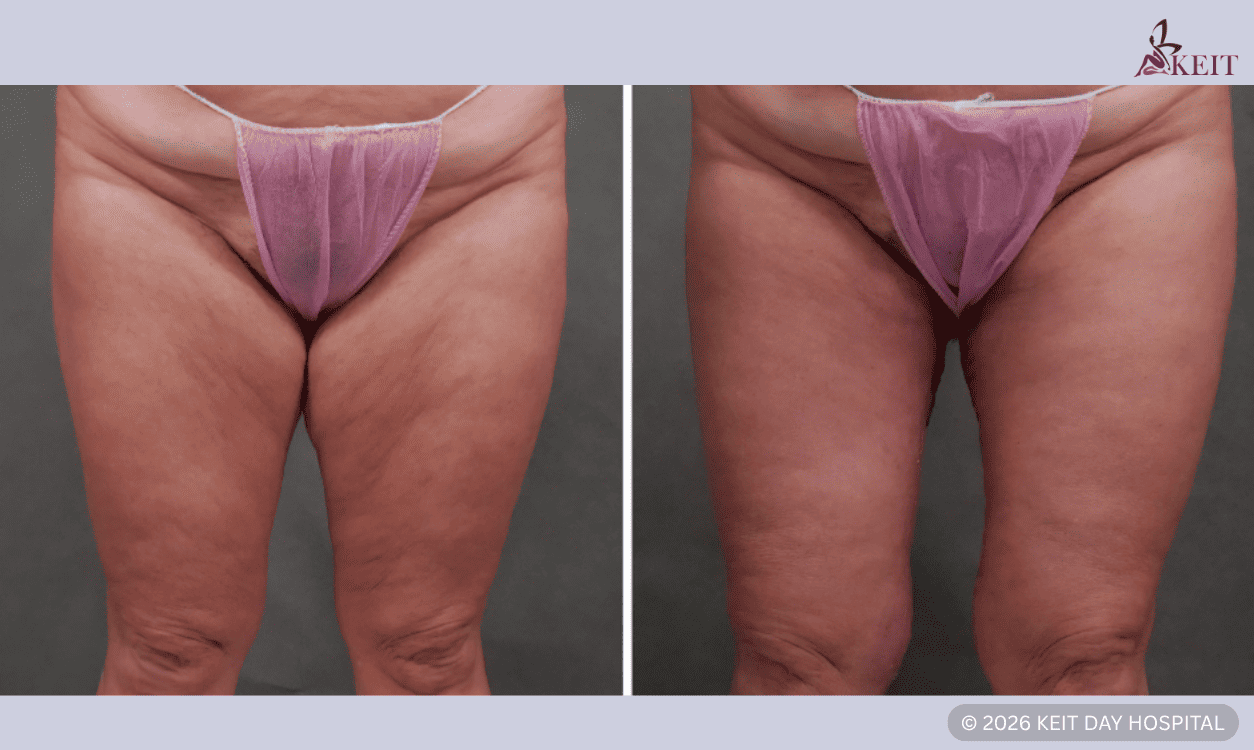
- After 2–3 months: The treated areas become more defined as residual swelling subsides and tissues adapt to the new contours. At this stage, patients usually notice improved body proportions and relief from symptoms such as heaviness and tissue sensitivity.