Published on:
 Modified on:

 Reading Time: 4 min
 Liposuction
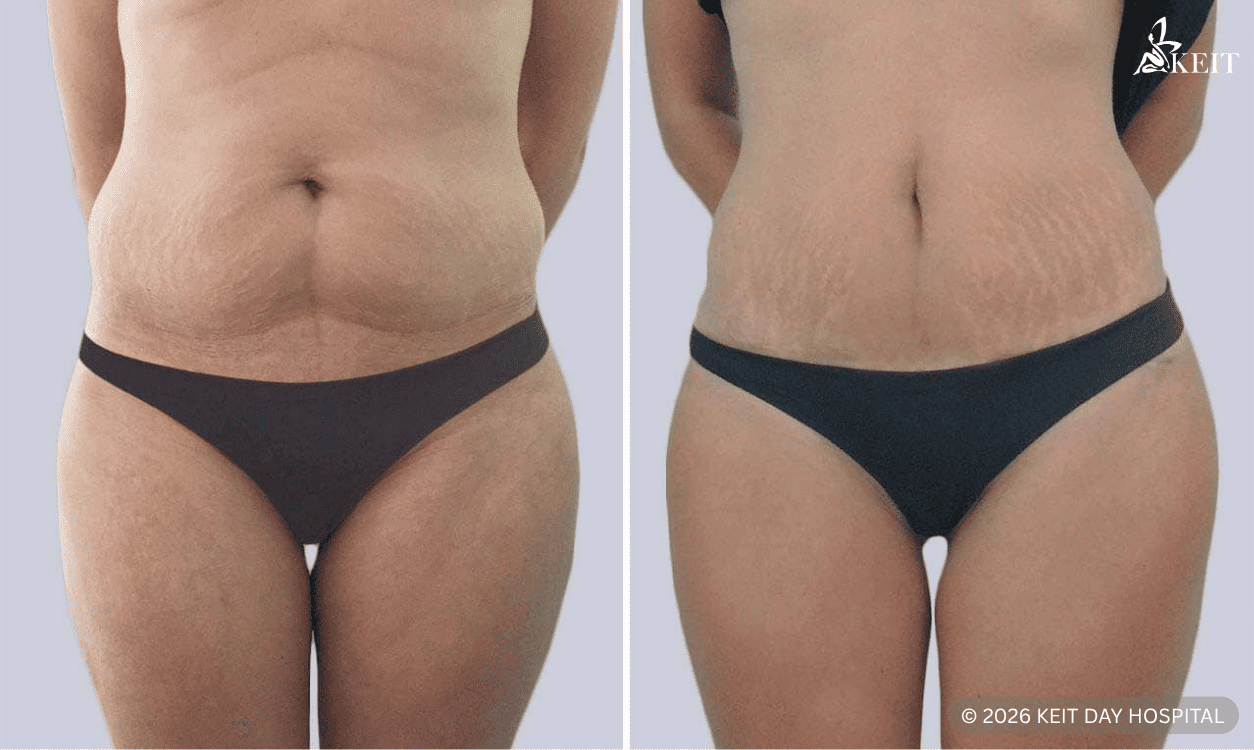
 before and after results show how targeted fat removal can improve the shape of the abdominal area when localized fat remains around the belly, lower abdomen or waistline. The procedure focuses on refining contour and creating a smoother, more balanced profile.
 Table of Contents:
-
1
 Liposuction before and after: Visible changes after belly fat removal
-
2
Abdominal liposuction areas: Upper abdomen, lower belly and waistline
-
3
Liposuction before and after results
-
4
When do stomach liposuction results start to show?
-
5
How much fat can be removed with abdominal liposuction?
-
6
Liposuction aftercare: What to avoid during recovery
-
7
When to contact your surgeon after liposuction
-
8
How long do belly liposuction results last?
In this article, we explain what to expect from belly liposuction before and after, including visible changes, treated abdominal areas, when results start to appear, how much fat can be removed safely, what aftercare involves and how long results can last.
Liposuction before and after: Visible changes after belly fat removal
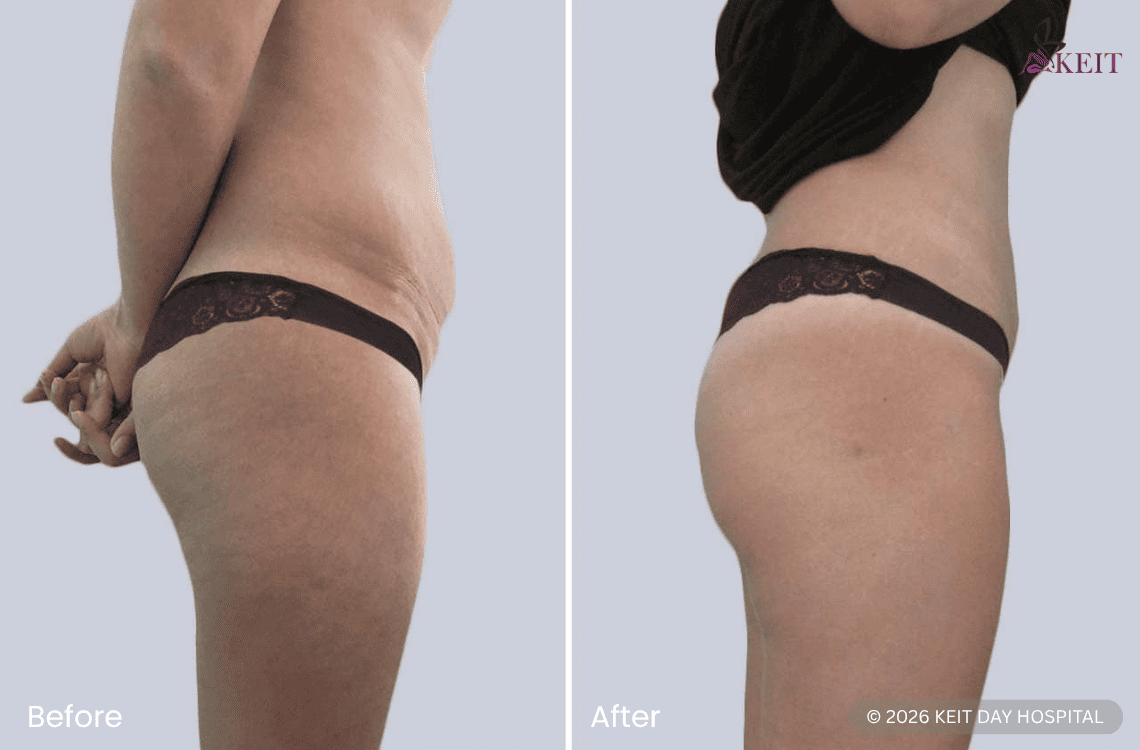
After abdominal liposuction, the most noticeable change is usually a smoother and flatter-looking contour in the treated area. The belly may appear less bulky, with better definition between the abdomen, waistline and surrounding body proportions.
For many patients, improvement is also visible in the way clothing fits, especially around the lower abdomen and waist. However, the final result depends on skin elasticity, fat distribution, swelling and the body’s natural healing process.
Before and after images can help show possible contour changes, but each result remains individual to the patient’s anatomy and treatment plan.
Abdominal liposuction areas: Upper abdomen, lower belly and waistline
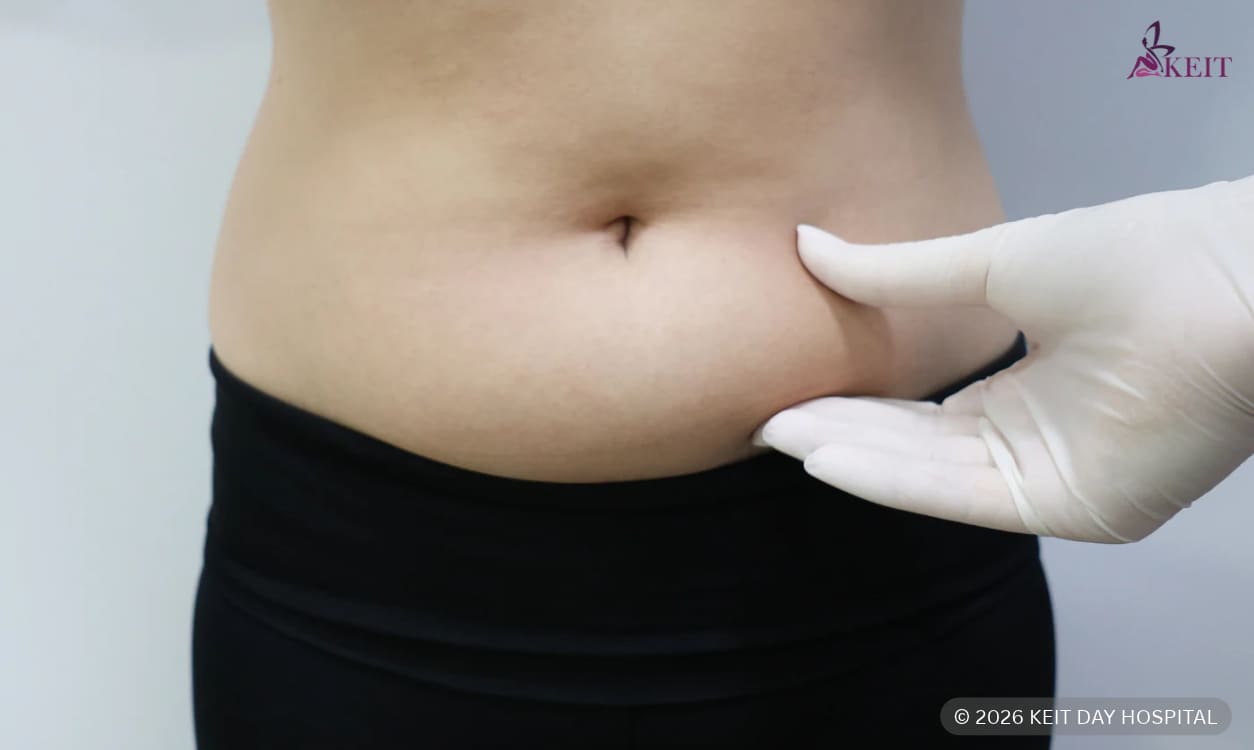
Abdominal liposuction can target different parts of the belly area, depending on where localized fat is most visible. Some patients are concerned mainly with the lower belly, while others may need treatment around the upper abdomen, waistline or flanks.
During consultation, the surgeon evaluates fat distribution, skin quality and body proportions to decide which areas should be treated. The goal is to improve contour while keeping the result natural and balanced.
Common treatment areas may include:
- Upper abdomen: fullness above the navel.
- Lower belly: fat concentrated below the navel.
- Waistline: reduced heaviness around the midsection.
- Flanks: side fat that affects the abdominal contour.

Liposuction before and after results
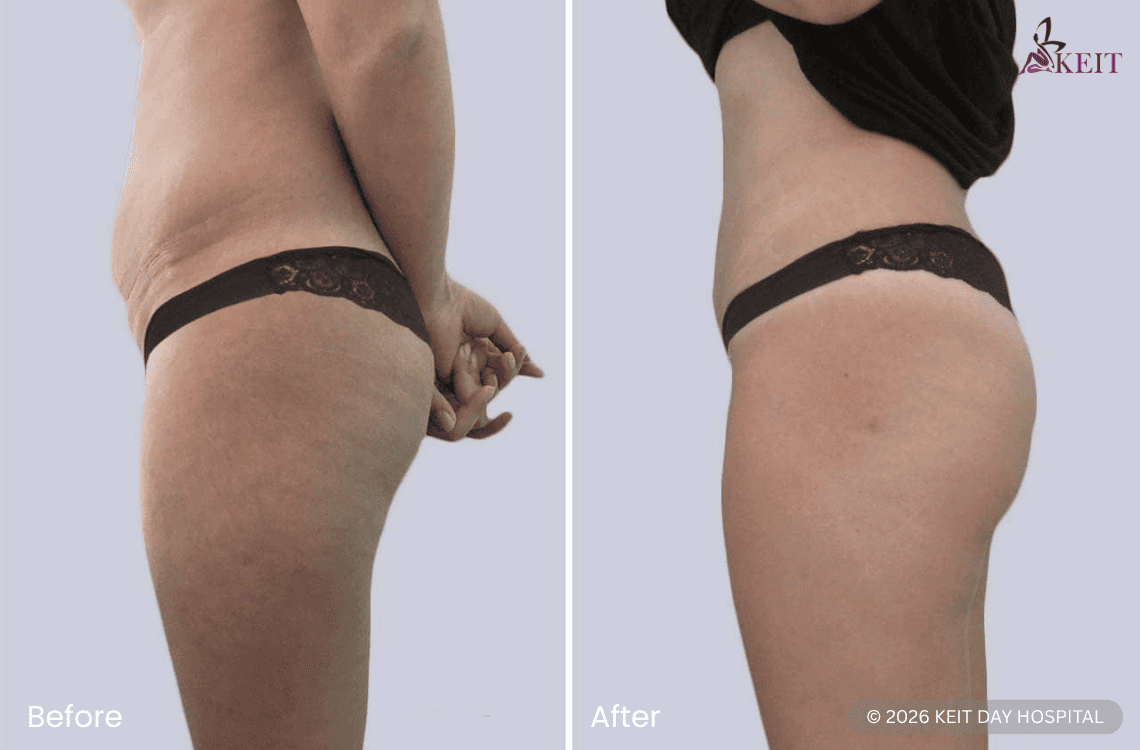
Before and after images provide a clear visual reference for how belly liposuction can improve abdominal contour after targeted fat removal. They are useful for understanding possible changes, but results remain individual to each patient.
The image below shows a real liposuction before and after result, with visible improvement in the abdominal profile and waistline contour.
When do stomach liposuction results start to show?
Liposuction results develop gradually because swelling is part of the normal healing process. Some improvement may be visible early, but the final abdominal contour takes time to settle.
In general, recovery and result development follow this pattern:
- Immediately after surgery: the abdomen may look smaller, but swelling is expected.
- First few weeks: bruising and swelling begin to reduce.
- Around 4–6 weeks: the contour becomes more defined.
- After 2–3 months: results usually look more stable.
- Following months: residual swelling continues to improve and the final contour becomes clearer.
How much fat can be removed with abdominal liposuction?
The amount of fat removed during abdominal liposuction depends on the patient’s anatomy, body proportions, skin quality and safety limits. The goal is not to remove as much fat as possible, but to improve the abdominal contour in a controlled and balanced way.
If there is significant loose skin, liposuction alone may not create the desired result. In these cases, the surgeon may recommend abdominoplasty to remove excess skin and improve the abdominal shape more effectively.
Removing too much fat can increase the risk of unevenness, loose skin or an unnatural contour. For this reason, the upper abdomen, lower belly and waistline are assessed carefully before deciding how much fat can be safely removed.
Liposuction aftercare: What to avoid during recovery
Aftercare plays an important role in how the abdomen heals after liposuction. During the first weeks, patients should follow the surgeon’s instructions closely to help reduce swelling, support tissue healing and protect the final contour.
During recovery, it is usually recommended to avoid:
- Intense exercise: wait until your surgeon confirms it is safe to return to training.
- Abdominal pressure: avoid impact, tight pressure or trauma to the treated area.
- Skipping compression: wear compression garments as prescribed to support healing.
- Smoking and alcohol: avoid them during early recovery if advised by your surgeon.
- Early judgment: do not assess the final result while swelling is still present.
- Missed follow-ups: attend scheduled appointments to monitor healing properly.
- Ignoring symptoms: report unusual pain, redness, swelling or incision changes.
When to contact your surgeon after liposuction
Mild swelling, bruising and tenderness can be normal after abdominal liposuction. However, symptoms that worsen suddenly or feel unusual should be discussed with your surgeon promptly.
Contact your surgeon if you notice:
- Increasing pain: discomfort that becomes stronger instead of improving.
- Sudden swelling: swelling that increases quickly or appears uneven.
- Redness or warmth: especially around the incision areas.
- Discharge: fluid, pus or bleeding from the incision sites.
- Fever: temperature or chills that may suggest infection.
- Breathing issues: shortness of breath, chest pain or sudden weakness require urgent medical attention.
How long do belly liposuction results last?
Belly liposuction results can be long-lasting when the patient maintains a stable weight. Once fat cells are removed from the treated area, they do not return in the same way, but remaining fat cells can still enlarge with weight gain.
Major weight gain, pregnancy, aging, skin quality and lifestyle changes can affect the abdominal contour over time. For this reason, liposuction should be seen as a body contouring procedure, not a replacement for healthy weight management.