Published on:
 Modified on:

 Reading Time: 5 min
 Rhinoplasty
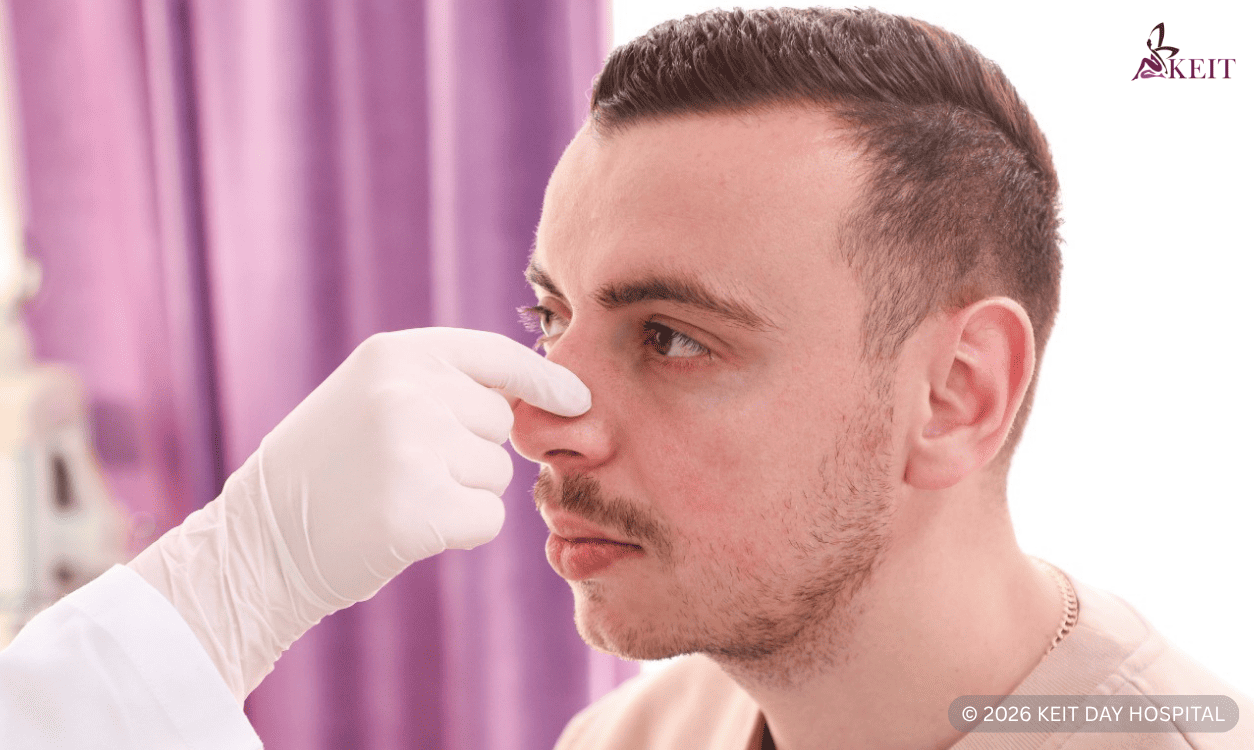
Male rhinoplasty is nose reshaping surgery designed to improve nasal shape, facial balance and breathing function in men. It can correct concerns such as a dorsal hump, wide nasal bridge, drooping tip, crooked nose, previous trauma or a deviated septum when combined with septoplasty. The goal is to refine the nose while preserving masculine proportions and natural facial balance.
 Table of Contents:
-
1
 What is male rhinoplasty?
-
2
Who is a suitable candidate for male nose surgery?
-
3
Male rhinoplasty vs female rhinoplasty: What is different?
-
4
Male rhinoplasty: What can it correct?
-
5
Male rhinoplasty: How is it performed?
-
6
Can male rhinoplasty fix a deviated septum?
-
7
Male rhinoplasty before and after: Key stages of recovery
-
8
Male rhinoplasty: Risks and complications of men’s nose surgery
-
9
Cost of rhinoplasty in the UK: What influences the final price of male rhinoplasty?
In this comprehensive guide, we explain what male rhinoplasty is, who is suitable for male nose surgery, and how it differs from female rhinoplasty. We also cover what it can correct, how it is performed, deviated septum correction, recovery timeline, potential risks, and cost in the UK.
What is male rhinoplasty?
Male rhinoplasty is nose reshaping surgery designed to improve the structure, proportion and function of the male nose. Also known as male nose surgery or rhinoplasty for men, it can address cosmetic concerns, breathing problems, or both. The procedure may refine the nasal bridge, reshape the tip, adjust nostril width, or correct asymmetry while preserving a strong, natural-looking masculine profile.
Who is a suitable candidate for male nose surgery?
Male nose surgery is suitable for men who want to improve nasal shape, breathing function or facial balance while maintaining a natural masculine profile. Suitable candidates usually have:
- Completed facial growth: Patients should generally be at least 18 years old, when nasal and facial growth is usually complete.
- Clear nasal concerns: These may include a dorsal hump, wide nasal bridge, drooping tip, crooked nose, previous trauma or breathing difficulty.
- Good overall health: The patient should be medically fit for surgery, with no uncontrolled conditions that could affect anaesthesia or healing.
- Non-smoking status: Patients should stop smoking for several weeks before and after surgery, as nicotine can reduce blood flow, delay healing and increase complication risk.
- Realistic expectations: The goal should be natural improvement in nasal proportion and function, not an over-refined or feminised nose.
Male rhinoplasty vs female rhinoplasty: What is different?
Male and female rhinoplasty require different surgical approaches due to distinct nasal proportions, facial structure and aesthetic goals. Key differences include:
- Nasal bridge: Male rhinoplasty preserves a straighter, stronger bridge, while female rhinoplasty may involve a softer or slightly more refined bridge.
- Nasal tip: In men, the tip is usually kept more structured and less rotated; in women, a slightly more defined or elevated tip may be appropriate.
- Nose width: Male noses often retain more width to match stronger facial features, while female rhinoplasty may create a narrower contour when suitable.
- Facial balance: Male rhinoplasty is planned around the brow, chin and jawline. Female rhinoplasty is often planned around softer facial proportions.
- Overall result: The goal in men is natural refinement without feminising the nose, while female rhinoplasty may allow more delicate contouring depending on anatomy.

Male rhinoplasty: What can it correct?
Male rhinoplasty can address both aesthetic and functional nasal concerns while maintaining natural masculine proportions. A male nose job can correct:
- Dorsal hump: Reduces a visible bump on the nasal bridge for a straighter profile.
- Wide nasal structure: Refines excess width in the bridge, tip or nostril base when appropriate.
- Tip concerns: Improves a bulbous, drooping, over-projecting or poorly defined nasal tip.
- Crooked nose: Corrects visible nasal deviation caused by natural anatomy, trauma or previous injury.
- Breathing obstruction: Improves airflow when issues such as a deviated septum or nasal valve weakness are present.
- Post-traumatic changes: Addresses deformity, asymmetry or obstruction after nasal injury.
Male rhinoplasty: How is it performed?
Male rhinoplasty is performed under general anaesthesia and takes about 1.5–3 hours. During the nose job procedure, the surgeon reshapes the nasal bone and cartilage to correct the bridge, tip, width or asymmetry. The surgery may be performed using a closed rhinoplasty approach, with incisions inside the nostrils, or an open rhinoplasty approach, with a small incision across the columella when greater access is needed.
Can male rhinoplasty fix a deviated septum?
A deviated septum is corrected with septoplasty, not cosmetic rhinoplasty alone. When both breathing function and nasal shape need correction, septoplasty and male rhinoplasty are combined in a procedure called septorhinoplasty. Septoplasty improves the internal airway, while rhinoplasty refines the external nose shape, alignment and proportion.
Male rhinoplasty before and after: Key stages of recovery
Recovery after male rhinoplasty is gradual and follows a clear healing timeline:
- Days 1–7: A nasal splint is worn to support the new shape. Swelling, bruising, congestion and mild discomfort are common during the early healing phase.
- Weeks 1–2: The splint is usually removed, bruising improves significantly, and most patients return to desk work and daily activities.
- Weeks 3–6: Swelling continues to decrease, nasal definition becomes clearer, and exercise restrictions are gradually reduced.
- Months 3–6: The bridge, profile and overall contour become more refined as deeper swelling settles.
- 12 months: Final male rhinoplasty results are usually seen once the nasal tip and soft tissues have fully healed.
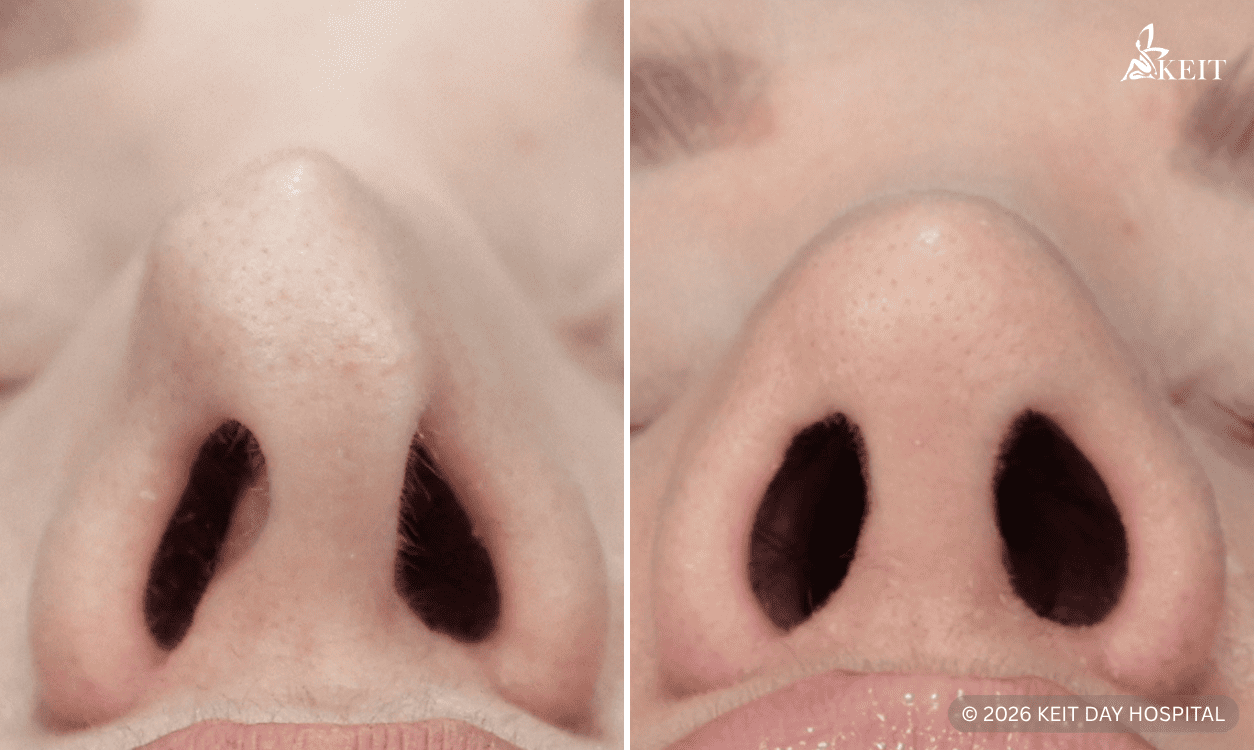
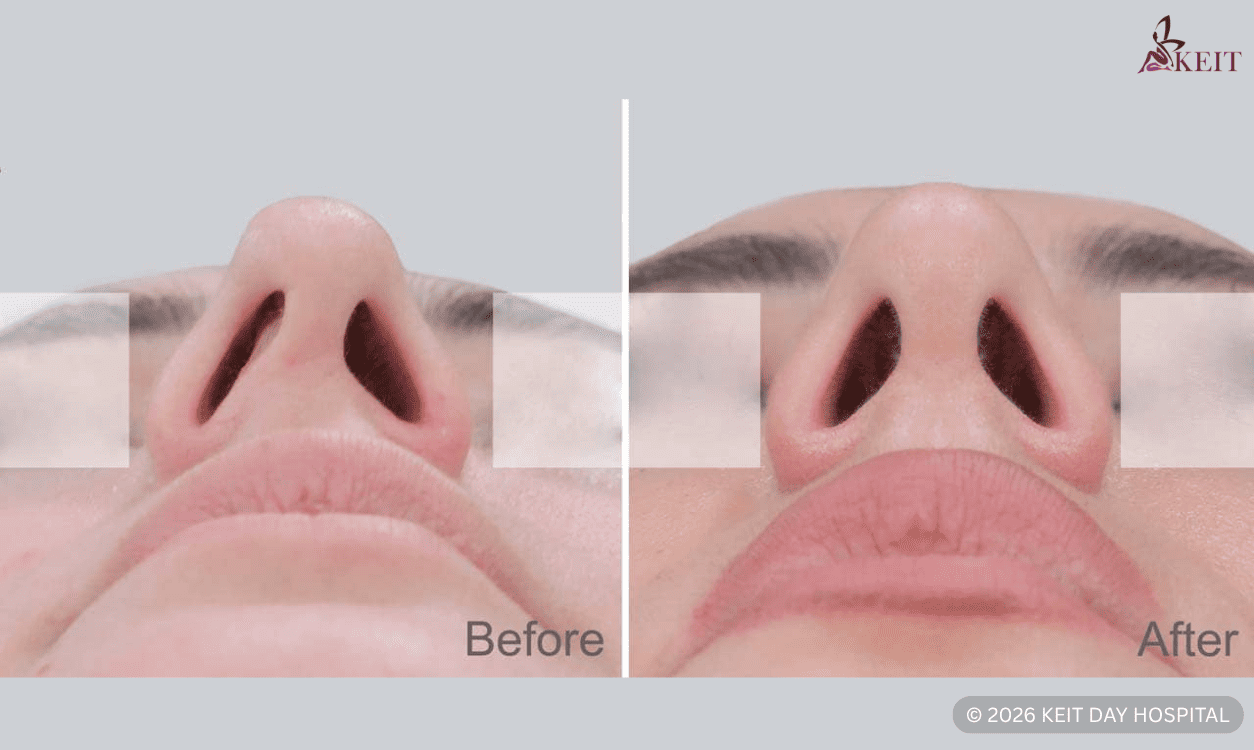
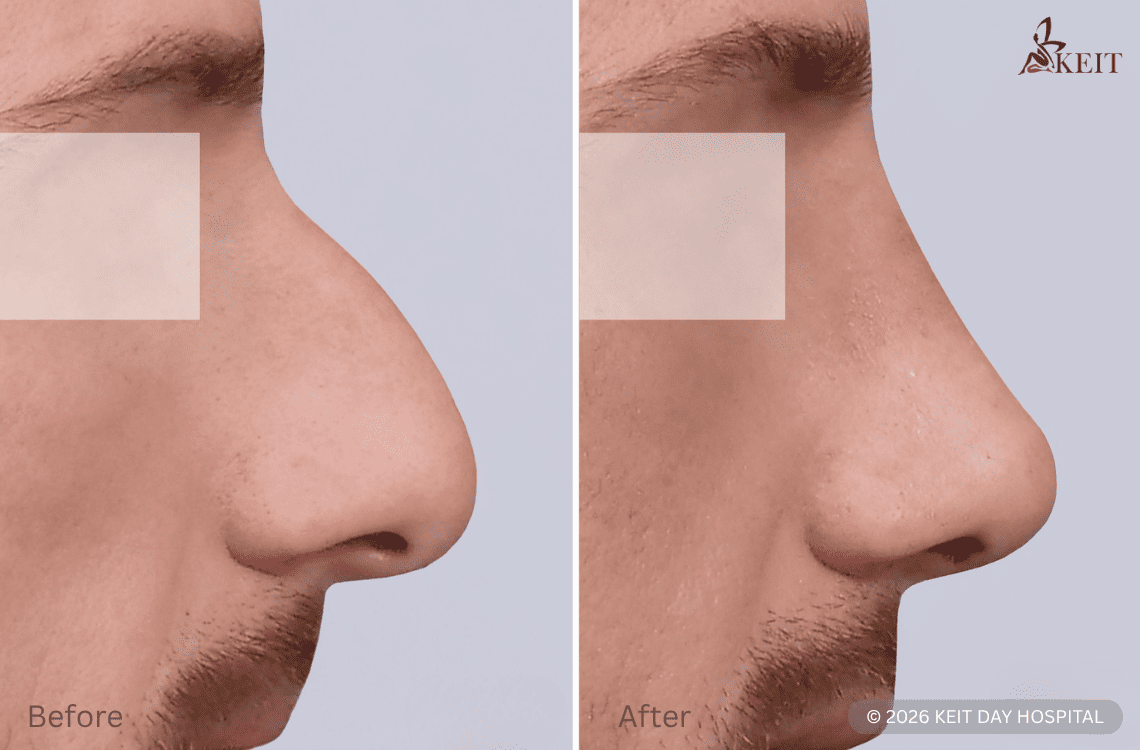
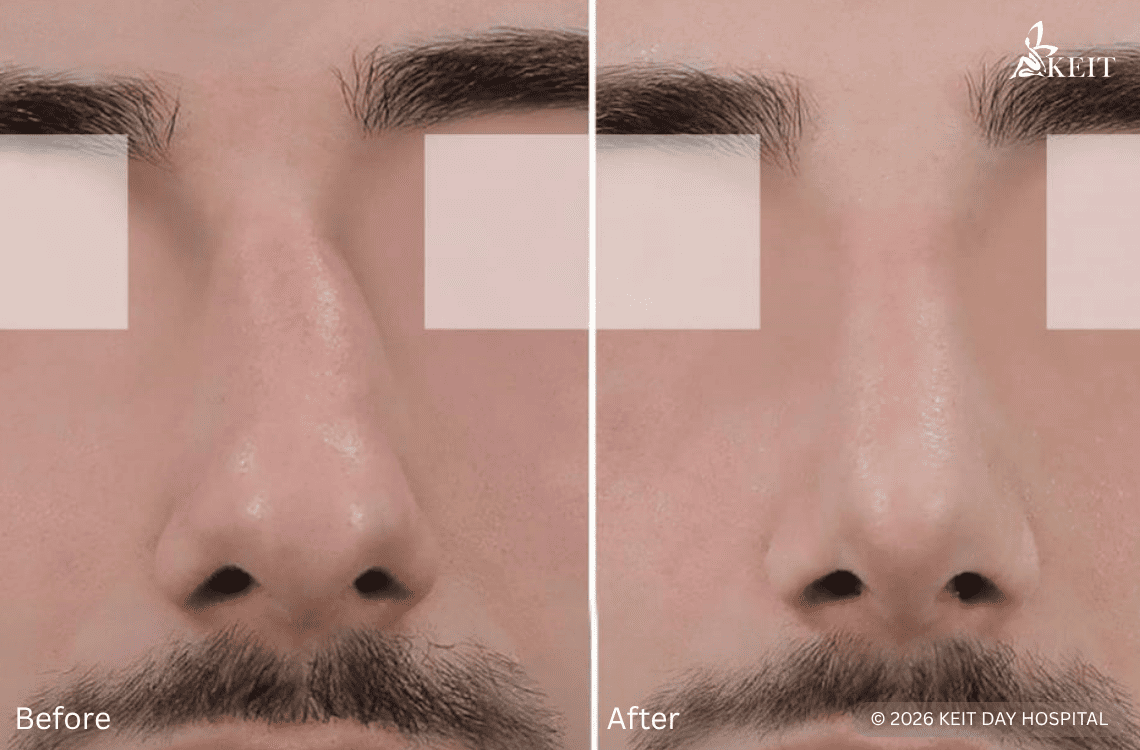
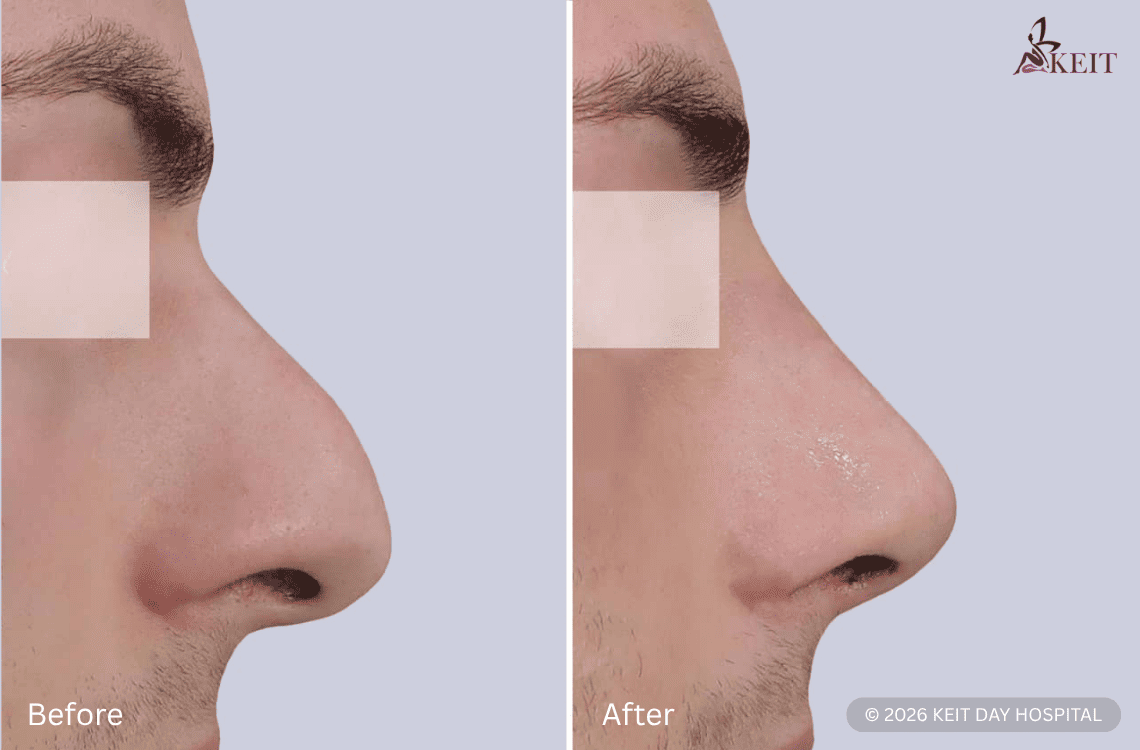
Male rhinoplasty before and after results show refinement of the nasal shape while preserving masculine facial proportions. The result typically maintain a strong nasal bridge, appropriate tip projection and natural balance with the forehead, chin and jawline.
Male rhinoplasty: Risks and complications of men’s nose surgery
Men’s nose surgery is generally safe when performed by a qualified surgeon, but it remains a surgical procedure and carries potential risks. Possible complications include:
- Swelling and bruising: Common after surgery and usually improves gradually during early recovery.
- Bleeding or infection: Uncommon, but may require medical treatment if it occurs.
- Breathing changes: Nasal airflow may be affected if swelling, septal deviation, or internal nasal support is involved.
- Asymmetry or contour irregularities: Small differences in shape may appear as swelling settles.
- Scarring: Closed rhinoplasty has internal scars, while open rhinoplasty may leave a small scar on the skin between the nostrils.
- Revision surgery: Further correction may be needed if healing, scar tissue, or nasal structure affects the final result.
Cost of rhinoplasty in the UK: What influences the final price of male rhinoplasty?
The cost of male rhinoplasty in the UK typically ranges from 5,000 to 9,000 euro, although complex or revision cases may cost more. The final price is influenced by the complexity of the case, whether septoplasty is needed, previous nasal trauma or revision surgery, surgeon expertise, anaesthesia, hospital fees and follow-up care.