Published on:
 Modified on:

 Reading Time: 5 min
 Rhinoplasty
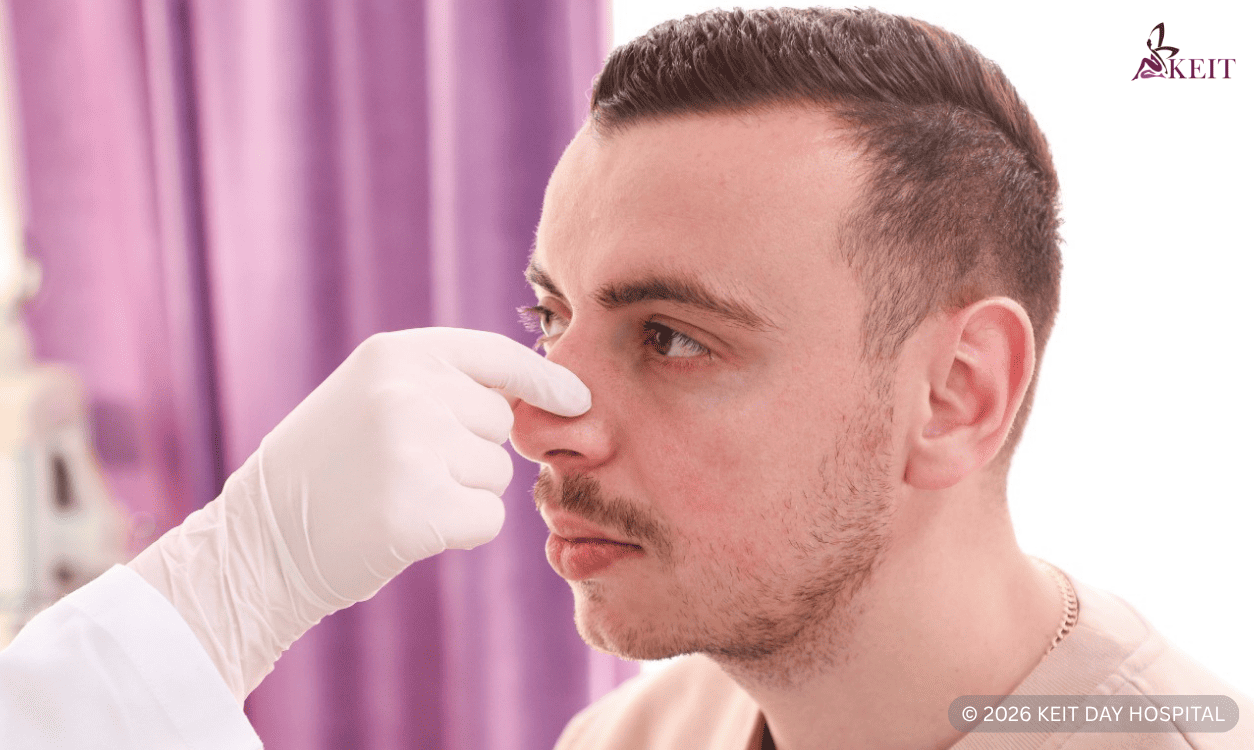
An upturned nose is a facial feature where the nasal tip rotates slightly upward, making the nostrils more visible from the front or side profile. It may also be described as a turned up nose, celestial nose, or retroussé nose. In many cases, it is a natural facial feature, but some patients seek refinement when the nose appears too short, overly rotated, or unbalanced with the rest of the face.
 Table of Contents:
-
1
 What is an upturned nose and how does it affect the side profile?
-
2
Upturned nose vs button nose: Are they the same?
-
3
What causes an upturned nose shape?
-
4
Is an upturned nose considered attractive?
-
5
Can an upturned nose be refined? Surgical and non-surgical options
-
6
Rhinoplasty for an upturned nose: Recovery timeline and results
-
7
Possible risks and complications of rhinoplasty for an upturned nose
-
8
Rhinoplasty in Albania: Why choose KEIT Day Hospital?
In this guide, we explain what an upturned nose is, how it affects the side profile, what causes it, and whether it is considered attractive. We also cover surgical and non-surgical refinement options, rhinoplasty recovery and results, possible risks, and why many patients choose KEIT Day Hospital for rhinoplasty in Albania.
What is an upturned nose and how does it affect the side profile?
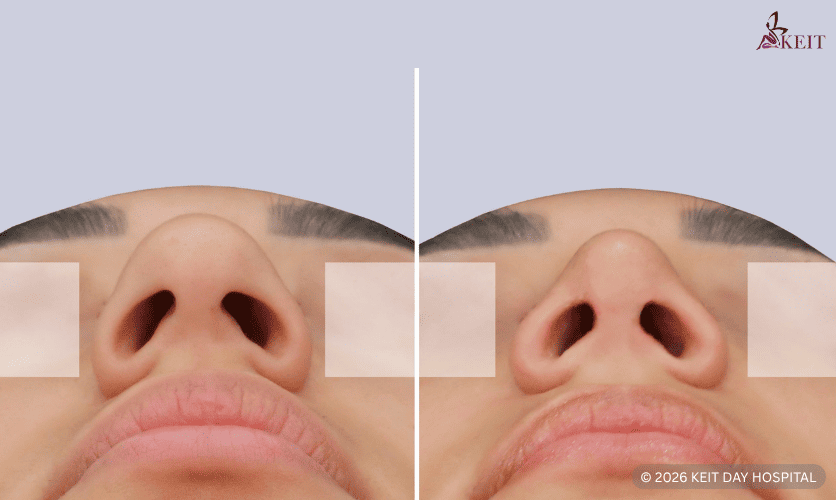
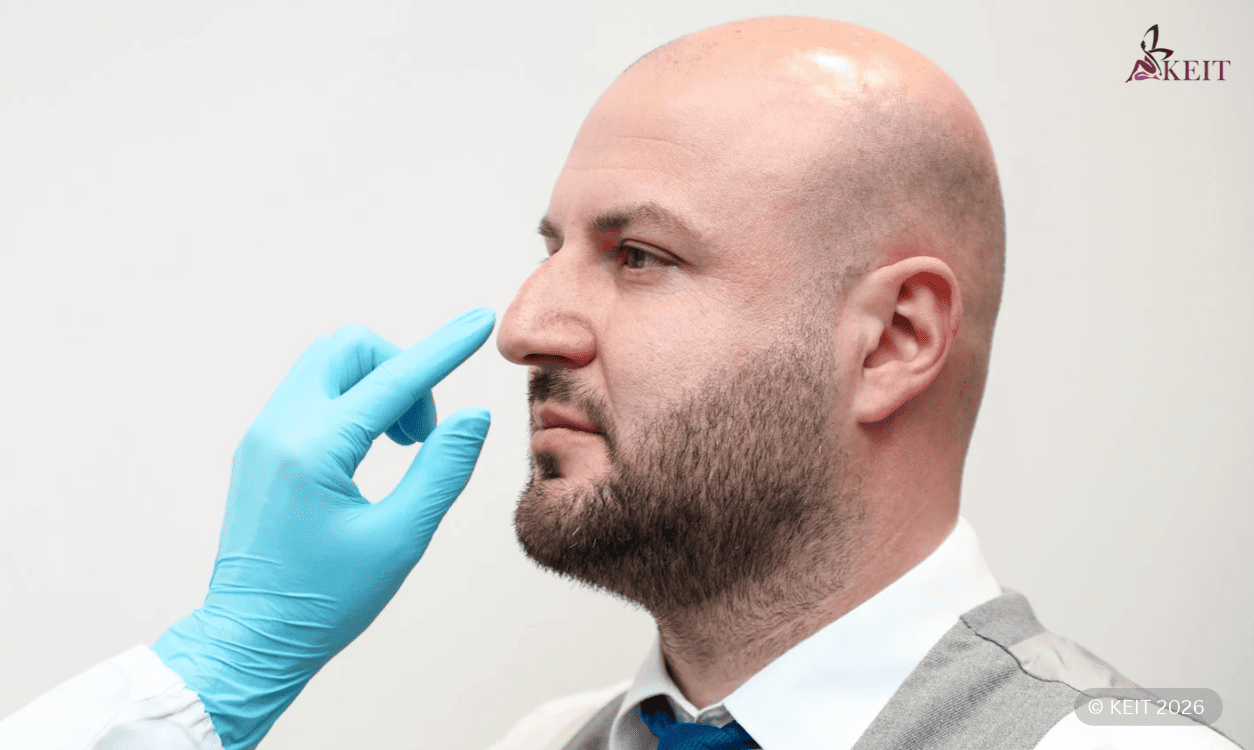
An upturned nose is a nasal shape where the tip is rotated upward, creating a shorter nasal appearance and greater nostril visibility from the side or front view. The degree of tip rotation can be subtle and balanced, or more pronounced when the nose appears overly short or elevated. It can affect the side profile by:
- Nasal appearance: The nose can look shorter because the upward tip reduces the visible length between the bridge and the tip.
- Nostril visibility: A stronger upward rotation can make the nostrils more visible from the front or side.
- Tip projection: The nasal tip may appear lifted or slightly projected, depending on the shape and support of the tip cartilages.
- Facial balance: A subtle upturn can look soft and proportionate, while excessive rotation may make the nose appear too short for the face.
Upturned nose vs button nose: Are they the same?
An upturned nose and a button nose can appear similar, but they describe different nasal characteristics.
A button nose typically has a small, rounded, softly contoured tip with delicate overall proportions. The focus is mainly on the shape and softness of the nasal tip.
An upturned nose, in contrast, is defined by the position of the tip. The nasal tip is rotated upward, which can make the nose appear shorter and increase nostril visibility from the side or front view.
What causes an upturned nose shape?
An upturned nose may be present naturally or develop from changes in the structural support of the nasal tip. Common causes include:
- Genetics: The most common cause is inherited nasal anatomy. Some people naturally have a shorter nose, increased tip rotation, or cartilage structure that positions the tip upward.
- Nasal trauma: Injury to the nasal bones or tip support structures can change the position of the nasal tip and alter the side profile.
- Previous rhinoplasty: Over-rotation of the tip or excessive cartilage removal during rhinoplasty can create an overly upturned or shortened nose.
- Muscle activity: The depressor septi nasi muscle, which connects the upper lip to the nasal tip, can influence tip movement and make the nose appear more elevated during facial expression.
Is an upturned nose considered attractive?
An upturned nose is often considered attractive when the tip rotation is subtle and balanced with the rest of the face. It can create a softer, more delicate side profile and is commonly associated with a youthful nasal shape. However, this perception depends on facial proportions. If the tip is overly rotated, the nose may appear too short or the nostrils may look too visible. In aesthetic assessment, the goal is facial balance, not one standard nose shape.

Can an upturned nose be refined? Surgical and non-surgical options
An upturned nose can be refined when tip rotation, nostril visibility, or nasal length affects the balance of the side profile.
- Non-surgical refinement: Dermal fillers, often called liquid rhinoplasty, may be used in selected mild cases to smooth small contour irregularities and improve the bridge-to-tip transition. It cannot lower an over-rotated tip, lengthen the nose, or correct significant nostril visibility.
- Surgical refinement: Rhinoplasty is the main option when an upturned nose requires structural correction. It can adjust tip rotation, improve nasal length, reduce excessive nostril visibility, and strengthen nasal support for a more balanced profile.
Rhinoplasty for an upturned nose: Recovery timeline and results
Rhinoplasty for an upturned nose focuses on improving excessive tip rotation while preserving a natural nasal profile. Following the procedure, recovery progresses gradually as swelling subsides and the new nasal structure refines:
- First week: A nasal splint is usually worn while early swelling, bruising, and pressure around the nose and eyes begin to settle.
- Weeks 2–3: Most bruising fades, nasal breathing gradually improves, and patients usually feel comfortable returning to social activities.
- Months 1–3: The bridge and upper nose become more defined, while the tip may still feel firm or swollen.
- Months 6–12: Tip refinement continues slowly, and the final nasal shape becomes clearer as deeper swelling resolves.
Results show a less over-rotated nasal tip, reduced nostril show, a more proportionate nasal length, and a smoother bridge-to-tip transition.
Possible risks and complications of rhinoplasty for an upturned nose
Rhinoplasty is generally safe when performed by experienced surgeons, but as with any surgical procedure, it carries potential risks, including:
- Breathing difficulties: Nasal airflow may be affected if the internal nasal valves, septum, or tip support are compromised.
- Overcorrection or undercorrection: The nasal tip may heal more or less rotated than intended.
- Asymmetry: Differences in cartilage healing, swelling, or scar tissue may affect the final nasal shape.
- Visible or irregular contour: Small irregularities may appear along the bridge, tip, or nostril margins.
- Scar tissue formation: Internal scarring can influence nasal definition, stiffness, or healing.
- Need for revision surgery: Further correction may be needed if functional or aesthetic concerns remain after healing.
Rhinoplasty in Albania: Why choose KEIT Day Hospital?
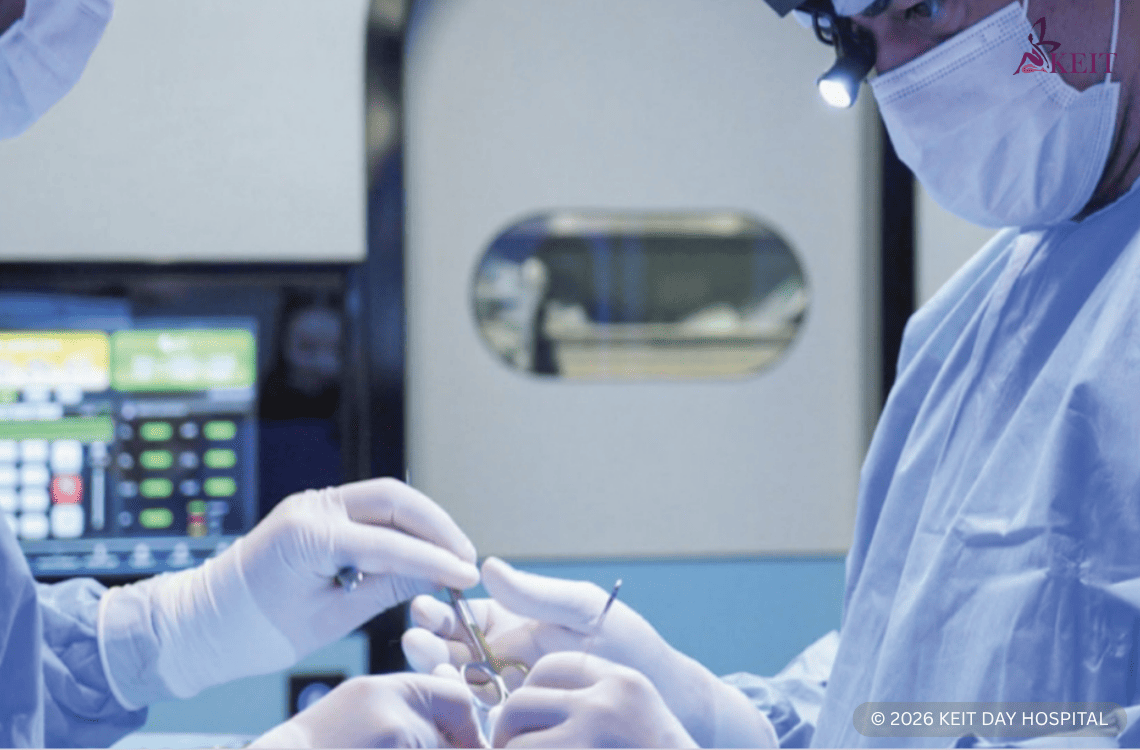
Rhinoplasty in Albania has become a preferred option for patients seeking specialist surgical care at more accessible pricing. At KEIT Day Hospital, rhinoplasty starts from 1,600 euro and is offered within an all-inclusive package with flexible installment payment options. The procedure is performed by specialized Italian surgeons and supported by more than 23,000 successful procedures and over 11,000 positive patient reviews.
The package includes the KEIT Guarantee Certificate, multilingual patient assistance, airport transfers, accommodation at KEIT Hotel, and both in-hospital and online follow-ups. This structured approach gives patients clear support throughout the treatment journey, from arrival to recovery.