Published on:
 Modified on:

 Reading Time: 5 min
 Rhinoplasty
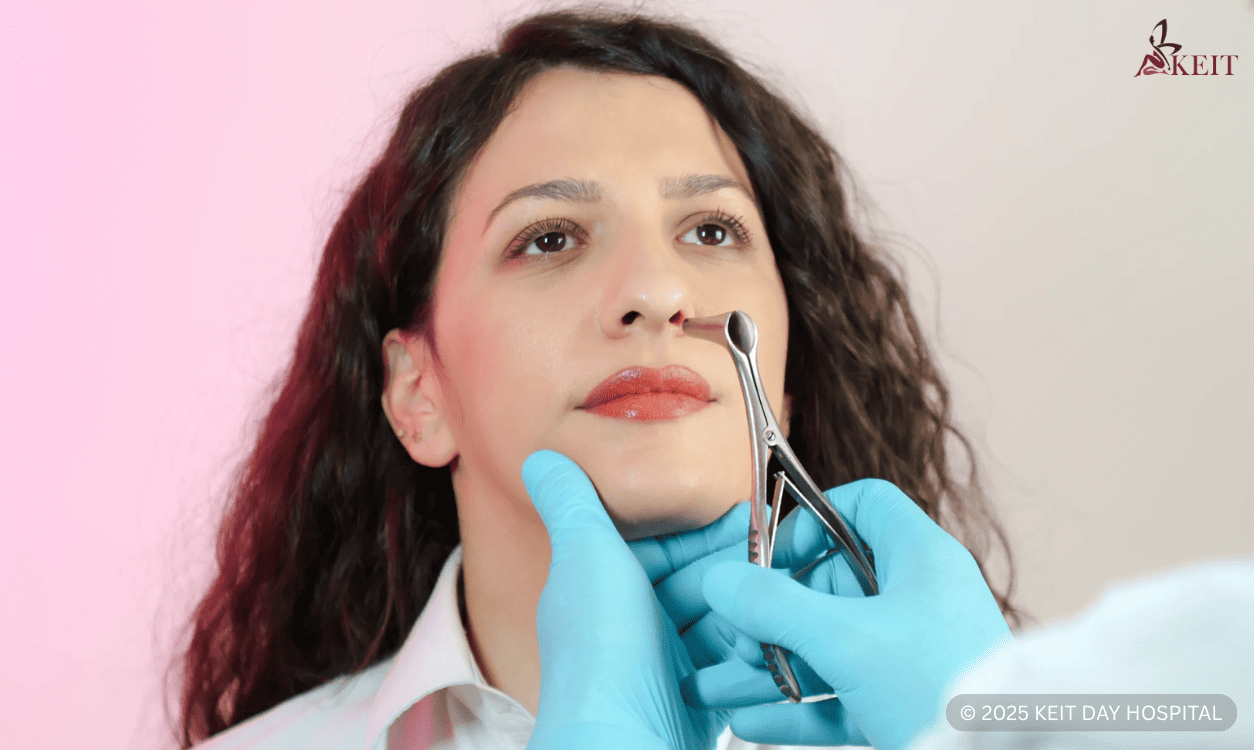
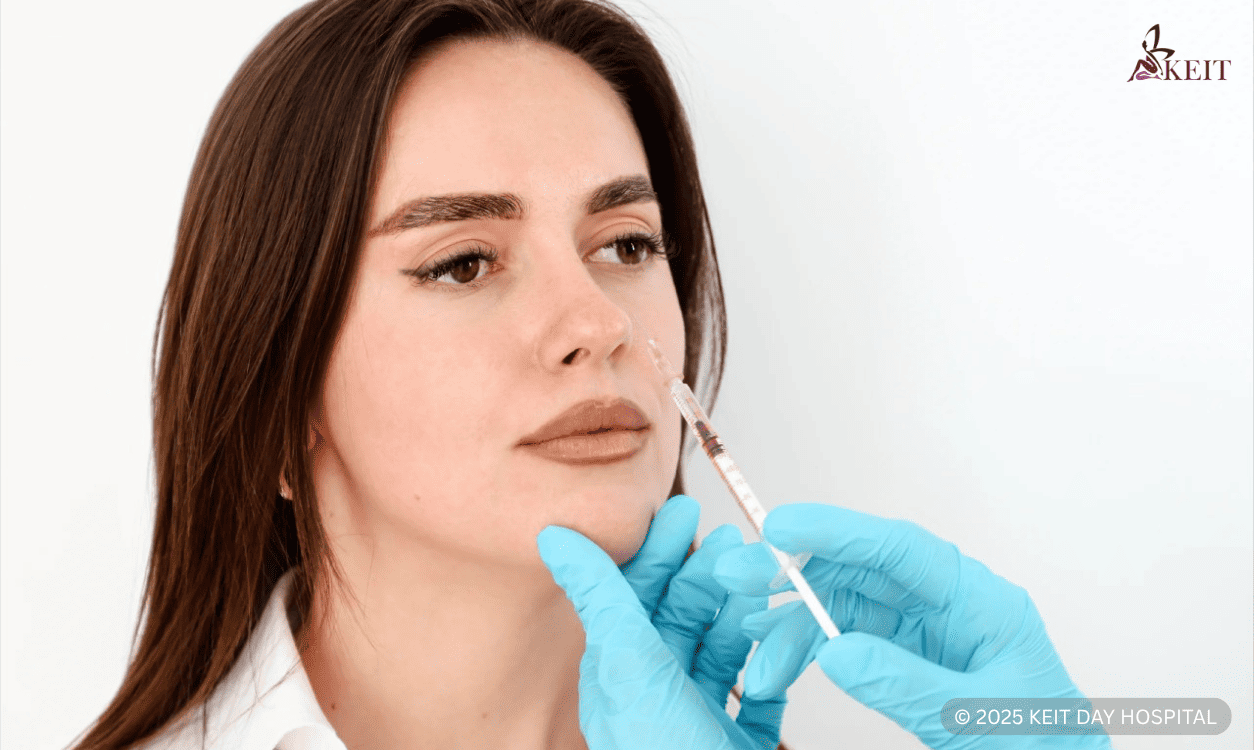
Non-surgical rhinoplasty is a modern aesthetic technique that reshapes the nose without surgery using nose filler. Also known as liquid rhinoplasty or a non-surgical nose job, this minimally invasive procedure balances facial proportions by refining the nasal bridge, lifting the tip, or correcting small asymmetries: all in less than 30 minutes. The treatment offers immediate, natural results with no downtime, anesthesia, or incisions, making it one of the most requested non-invasive nose surgery options today.
 Table of Contents:
-
1
 Non-surgical rhinoplasty: What it is and how nose filler works
-
2
Liquid rhinoplasty: The journey to your non-surgical nose job
-
3
Ideal candidates for non-surgical rhinoplasty: Key factors to consider
-
4
How long does non-surgical rhinoplasty last?
-
5
Non-surgical rhinoplasty before and after: What to expect during recovery
-
6
Non-surgical rhinoplasty side effects: What to expect and how to avoid them?
-
7
Non-surgical rhinoplasty aftercare: Essential tips for lasting results
-
8
Non-surgical rhinoplasty vs surgical rhinoplasty: Which one is right for you?
In this article, you’ll discover everything about non surgical rhinoplasty: how it works, how long results last, what risks and side effects to be aware of and how to care for your nose afterward. You’ll also learn how this method compares to traditional rhinoplasty and why choosing an experienced medical professional is essential for ensuring safety, precision and long-lasting results. We will help you determine if you are a suitable candidate and provide you with the necessary information prior to your injectable rhinoplasty journey.
Non-surgical rhinoplasty: What it is and how nose filler works
A non-surgical rhinoplasty, also known as a liquid nose job, works by injecting hyaluronic acid filler at precise points to reshape the nose and enhance symmetry. Advanced fillers such as Restylane or Juvederm, often mixed with lidocaine for comfort, are used to smooth and define the nasal profile. The treatment takes around 20 – 30 minutes and provides immediate results. Before the injections, the doctor maps precise points and applies nose filler with a fine needle or cannula. As the nose has delicate blood vessels, choosing an experienced injector is essential for safety and to prevent rare issues like vascular occlusion.
Liquid rhinoplasty: The journey to your non-surgical nose job
From your first consultation to the treatment itself, here’s what to expect at each step of your liquid rhinoplasty journey:
- Consultation and facial assessment: The practitioner reviews facial anatomy, discusses goals and confirms suitability for non-surgical rhinoplasty, explaining risks and aftercare.
- Planning and preparation: The right nose filler type is selected and precise injection points are mapped for symmetry and natural results.
- Day of treatment: After applying numbing cream, small filler amounts are injected to reshape and refine the nose with real-time adjustments for definition.
Ideal candidates for non-surgical rhinoplasty: Key factors to consider
A non-surgical nose job is ideal for patients seeking cosmetic improvement without surgery. It suits those with mild dorsal humps, drooping tips, or uneven bridges who want a quick, reversible enhancement. The best candidates for liquid rhinoplasty have good skin quality, realistic expectations and want to preview potential results before undergoing surgical rhinoplasty, experiencing minimal discomfort and no downtime.

How long does non-surgical rhinoplasty last?
Results from a non-surgical rhinoplasty or liquid rhinoplasty last between 8 and 12 months. The nose filler gradually dissolves and is absorbed by the body.
Longevity depends on the filler type, injection depth and metabolism. Smoking, sun exposure and active lifestyles may shorten duration, while good skincare extends it. Most patients refresh their nose filler once or twice a year. Knowing how long non-surgical rhinoplasty lasts helps plan maintenance visits for consistent, symmetrical results.
Non-surgical rhinoplasty before and after: What to expect during recovery
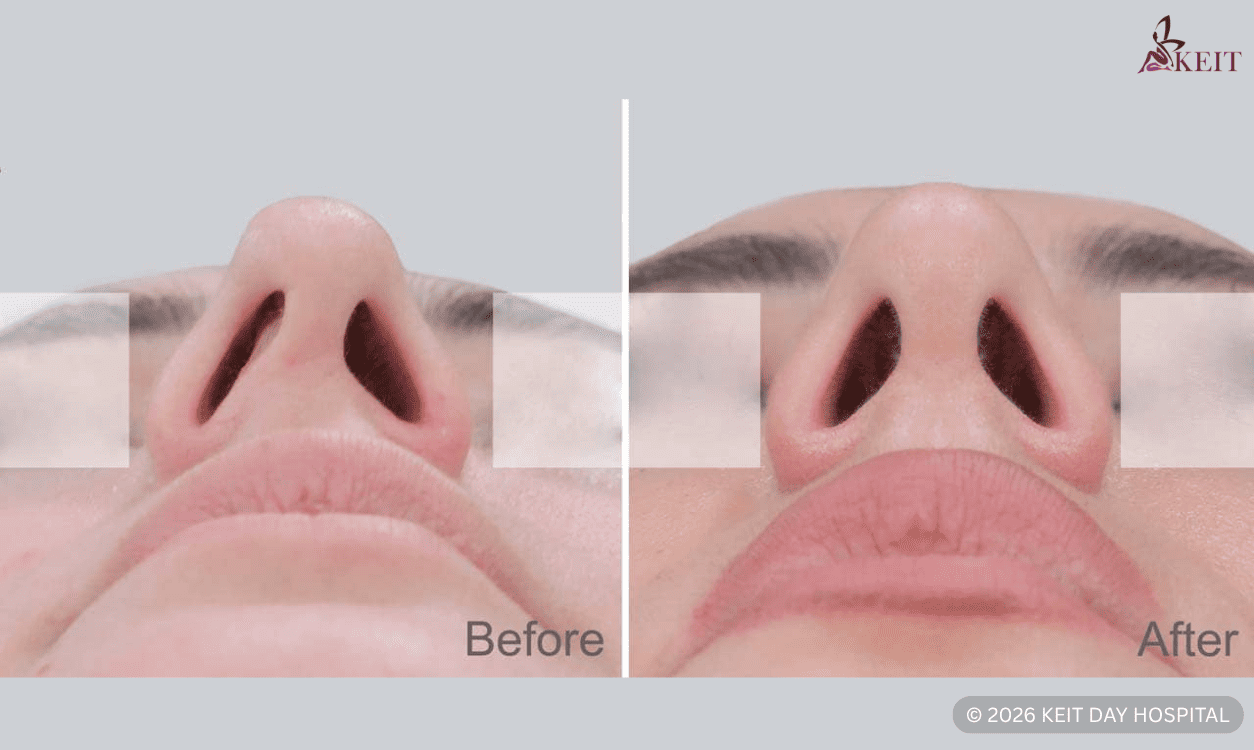
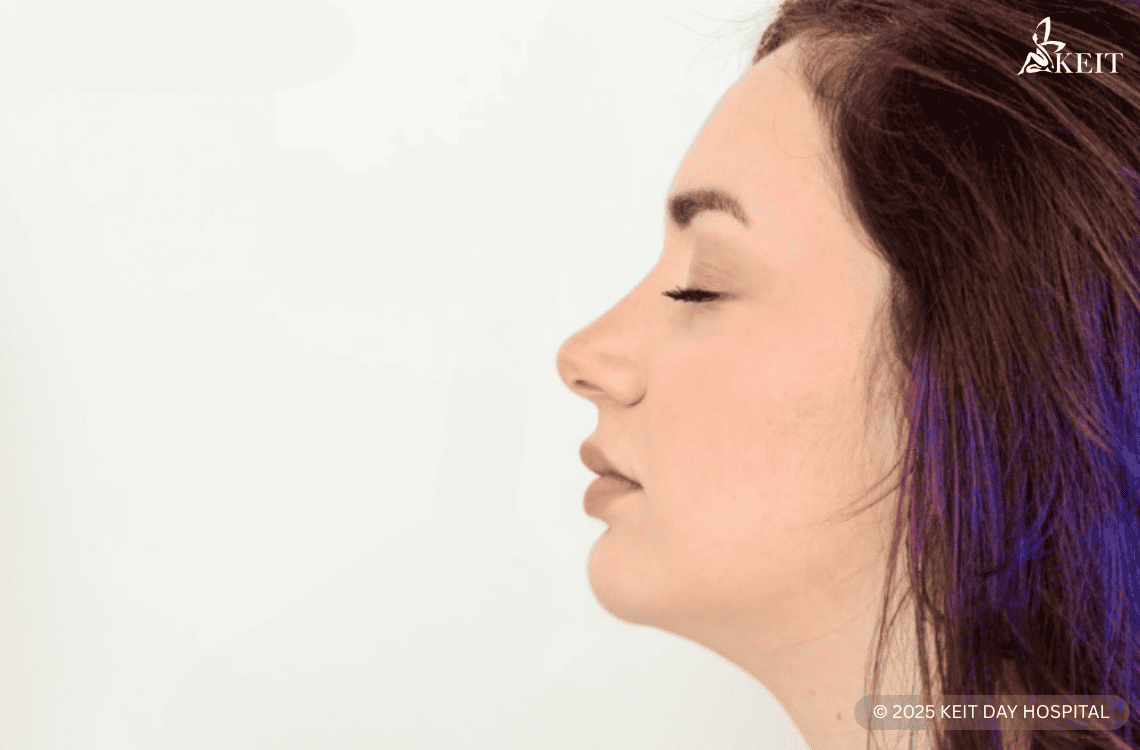
Non-surgical rhinoplasty before and after photos show how subtle filler adjustments create major visual improvement. The treatment enhances symmetry and profile alignment while maintaining a natural look.
- Immediately after treatment: Mild redness, swelling, or tenderness may appear at the injection sites, but most patients can resume normal activities immediately.
- The next 24 – 48 hours: Swelling and redness gradually subside as the nose begins to settle into its final shape.
- Duration of results: Natural-looking refinements lasting 8 – 12 months depending on nose filler type.
Non-surgical rhinoplasty side effects: What to expect and how to avoid them?
The most common non-surgical rhinoplasty side effects include mild redness, swelling, or bruising, which resolve within days. The injectable rhinoplasty is typically safe, but still rare complications like vascular blockage or vision changes can occur. The careful use of hyaluronidase helps manage risks effectively. Authoritative bodies like the American Society of Plastic Surgeons provide an in-depth examination of the procedure for patients.
The table below summarizes the main non-surgical rhinoplasty side effects, their frequency and typical resolution times.
| Frequency | Reaction | Typical Resolution |
|---|---|---|
| Common | Redness, swelling, bruising | 2 – 3 days |
| Occasional | Small nodules, tenderness | Within 1 week |
| Rare | Infection, allergic reaction | Requires medical attention |
| Very Rare | Necrosis, visual disturbance | Requires immediate emergency care |
Non-surgical rhinoplasty aftercare: Essential tips for lasting results
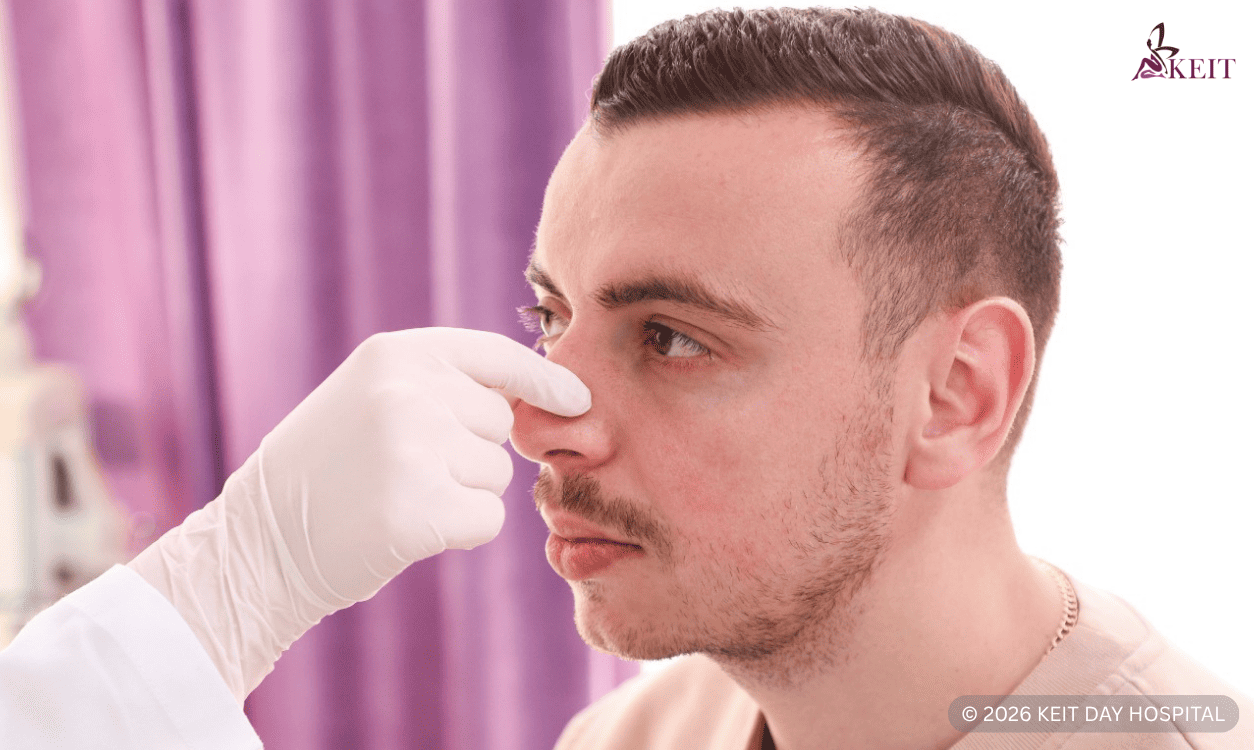
After non-invasive nose surgery, proper aftercare is crucial to keep the filler in place and promote smooth healing. Patients should avoid touching the nose, strenuous exercise and heat exposure for 48 hours, as mild swelling or redness usually fades quickly.
It’s recommended to skip makeup for 24 hours, sleep with the head elevated and apply a cold compress to ease discomfort and reduce nose filler swelling. Avoid glasses resting on the nasal bridge and stay well-hydrated. Regular follow-up appointments with your injector support proper healing and help maintain natural, long-lasting results.
Non-surgical rhinoplasty vs surgical rhinoplasty: Which one is right for you?
The key difference between non-surgical rhinoplasty and traditional rhinoplasty lies in the approach: one reshapes the nose temporarily with filler, while the other permanently alters its structure through surgery. A liquid nose job offers quick, reversible improvements with minimal downtime, typically lasting up to 12 months, where surgical rhinoplasty delivers lasting structural refinement and functional correction. A consultation with a specialist surgeon helps determine the safest and most effective option for each individual.
The table below provides a clear comparison of non-surgical rhinoplasty and traditional rhinoplasty to help you choose the most suitable option.
| Aspect | Non-Surgical Rhinoplasty | Surgical Rhinoplasty |
|---|---|---|
| Technique | Hyaluronic acid filler injections | Bone and cartilage reshaping |
| Duration | 8 - 12 months | Permanent |
| Downtime | Minimal | 1 – 2 weeks |
| Ideal for | Small aesthetic corrections | Structural or functional improvements |
| Reversibility | Yes (fillers can be dissolved) | No |
| Cost | 400€ - 900€ per session | 6,000€ - 12,000€ |
Want to learn how surgical rhinoplasty permanently reshapes the nose compared to filler-based treatments? Discover more in our article on what rhinoplasty is.