Published on:
 Modified on:

 Reading Time: 6 min
 Rhinoplasty
A deviated septum is a condition where the septum, the thin wall of cartilage and bone inside your nose, is off-centre instead of straight. This means the cartilage wall inside your nose is crooked, causing a persistent respiratory obstruction. The definitive and permanent solution to correct this structural issue and restore clear breathing is a surgical procedure known as septoplasty.
 Table of Contents:
-
1
 What is a deviated septum?
-
2
Main causes of a deviated septum
-
3
Deviated septum symptoms & how to tell if you have one
-
4
Related conditions: Understanding perforation, vestibulitis and other blockages
-
5
How to fix a deviated septum: Explore the possible options
-
6
Deviated septum surgery: From procedure day to final results
-
7
Crooked nose and deviated septum: Combining aesthetics & function
-
8
Deviated septum before and after: Setting real expectations
-
9
Deviated septum surgery: Cost in the UK and NHS eligibility
This article covers everything about deviated septum surgery, from what a deviated septum is, its causes, symptoms and treatments. You’ll learn about the full septoplasty procedure, recovery and results, see real septoplasty before and after images and get details on the deviated septum surgery cost in the UK and NHS eligibility.
What is a deviated septum?
A deviated septum is a structural condition where the internal wall that divides the two nasal passages, the nasal septum (or septum nasi in anatomical terms) is off-centre or crooked. This thin wall of cartilage and bone should ideally be straight, allowing for equal airflow. When a deviated nasal septum is present, it can significantly obstruct one or both airways, a condition often searched for as deviated nasal septum (DNS). The surgery to correct it is called septoplasty.
Main causes of a deviated septum
The causes of a deviated septum typically fall into two main categories: it can be a condition you are born with, or it can be the result of an injury.
- Congenital deviation: Develops naturally during fetal growth or childhood when nasal cartilage and bone grow unevenly, causing the septum to bend to one side.
- Acquired deviation: Caused by trauma or injury, such as a broken nose from an accident or contact sport; even minor nasal injuries in childhood can lead to greater deviation in adulthood.
Deviated septum symptoms & how to tell if you have one
If you’re wondering, “how can you tell if you have a deviated septum?”, the first step is to recognise the signals from your body. The main symptoms of a deviated nasal septum manifest as a persistent and troublesome respiratory obstruction.
The main symptoms of a deviated nasal septum
The most common symptoms of a deviated septum is constant nasal blockage, often with one nostril always congested. This can cause difficulty breathing, especially at night, leading to snoring or sleep apnea and resulting in poor sleep and fatigue. Other symptoms include recurring sinus infections, nosebleeds and facial pain or headaches.
The deviated septum self-test: Checking at home
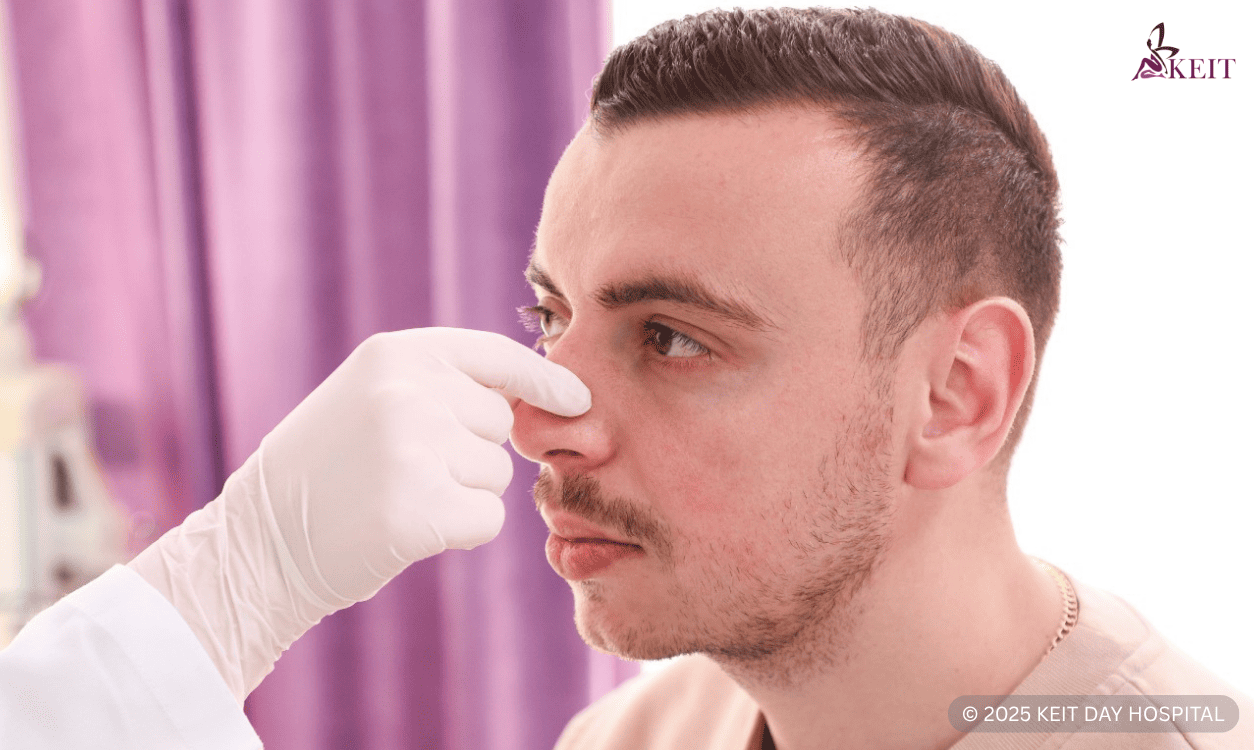
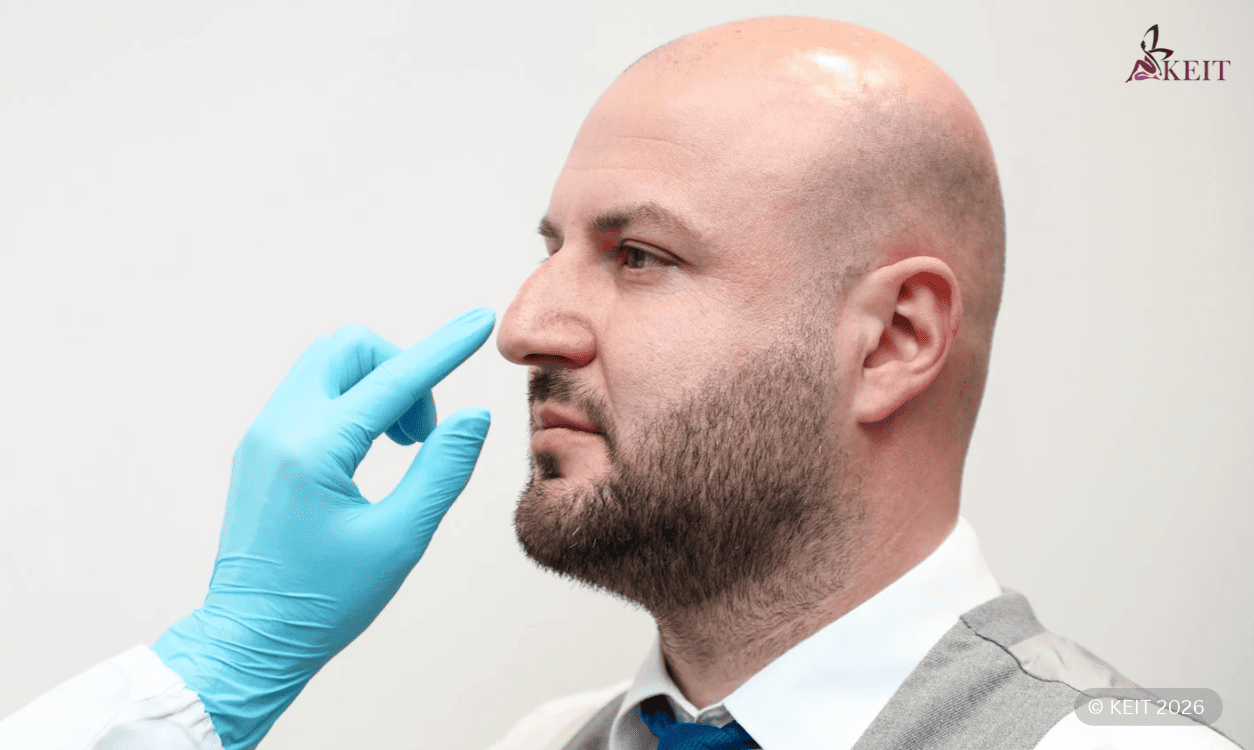
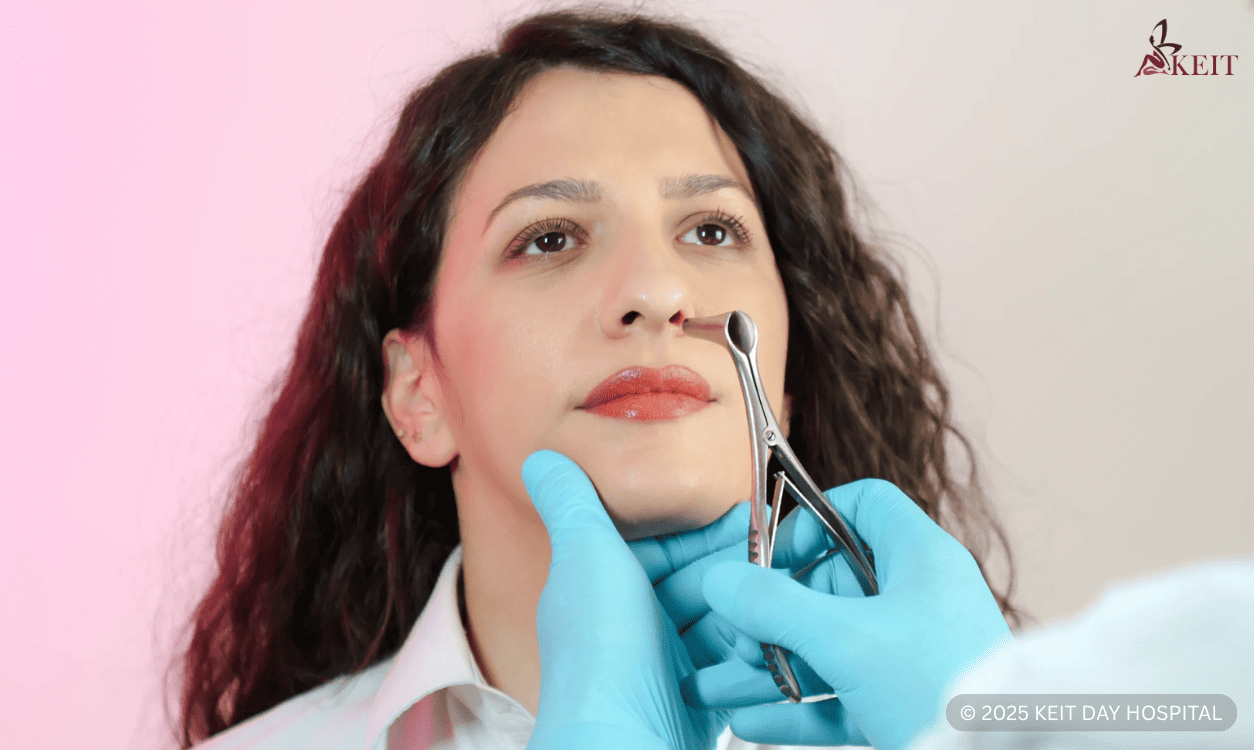
Many people search online for a deviated septum self-check to perform at home. A simple way to know if you have a deviated septum is to perform a basic breathing test: using your finger, gently press one nostril closed and breathe in through the other, noting the ease of airflow. Repeat on the opposite side. If one nostril feels consistently more blocked, it may indicate a deviated septum. While not a medical diagnosis, it’s a strong sign that a specialist consultation is recommended.
Related conditions: Understanding perforation, vestibulitis and other blockages
It’s important to distinguish a deviated septum from other nasal issues. Nasal vestibulitis is a bacterial infection at the nostril entrance causing swollen nostrils, redness, sharp pain and a bothersome crust. A more serious condition, a perforated septum, creates a hole in the cartilage leading to whistling during breathing, bleeding and crust formation. If you have one side of your nose blocked and a deviation is ruled out, a specialist diagnosis is needed to check for turbinate hypertrophy or nasal polyps, often searched as images of nose polyps.
The following table breaks down the key differences between a deviated septum and other conditions that can cause a blocked nose.
| Condition | Description | Key Symptoms |
|---|---|---|
| Deviated septum | Crooked inner nasal wall (septum). | One-sided blockage, difficulty breathing. |
| Nasal vestibulitis | Bacterial infection of the nostril. | Pain, redness, swelling, crusting. |
| Perforated septum | Hole in the septum cartilage. | Whistling sound, bleeding, crusting. |
| Nasal polyps | Benign growths or swollen tissues. | Chronic nasal blockage sensation. |
How to fix a deviated septum: Explore the possible options
For those looking for how to fix a deviated septum, there are both non-surgical and surgical pathways. The right deviated septum treatment depends on the severity of your symptoms and the impact on your quality of life.
How to fix a deviated septum without surgery
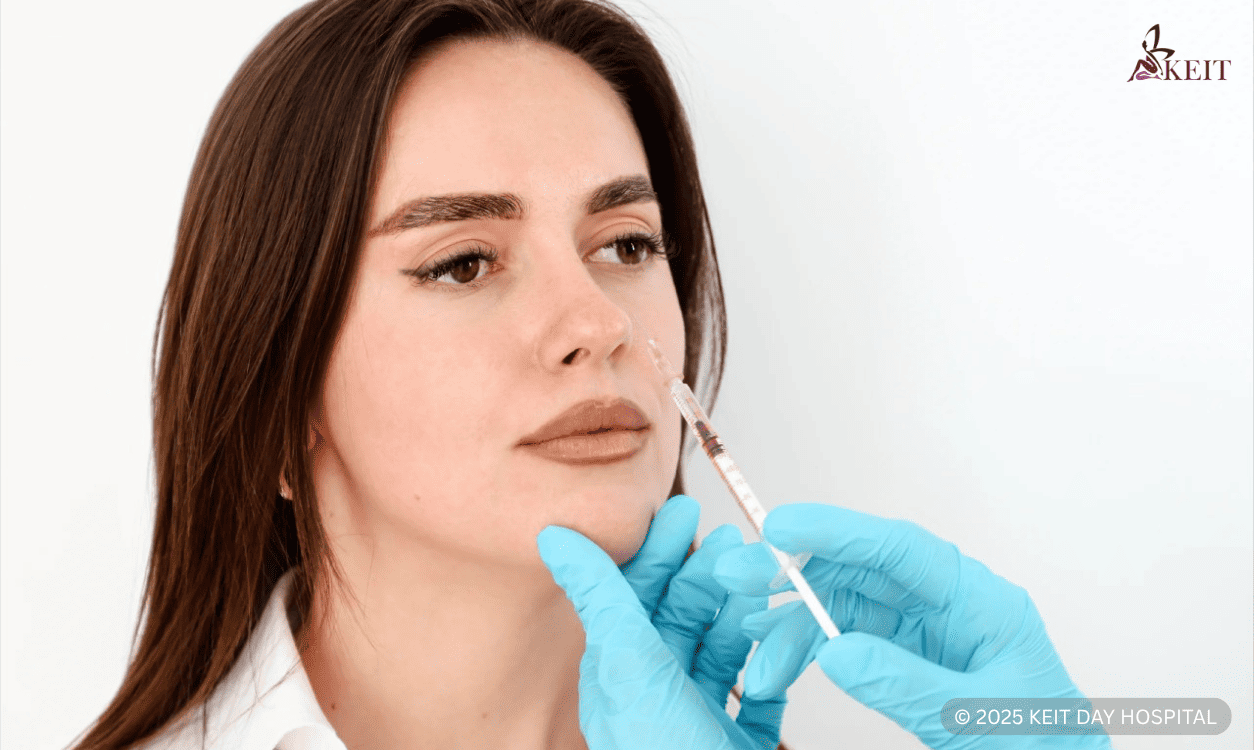
External devices like nasal strips or a nasal dilator can offer temporary relief by mechanically widening the nostrils to improve airflow, especially during sleep. Decongestant or steroid nasal sprays may also be prescribed to reduce tissue swelling. It is crucial to be clear: these remedies for a deviated nasal septum only manage the symptoms and cannot provide a permanent cure for a deviated septum by correcting the underlying structural deviation of the cartilage and bone.
When is deviated septum surgery necessary?
The decision on when to have a deviated septum operation is made when symptoms become clinically significant and negatively impact your daily life. The surgical procedure, septoplasty, is the recommended solution when medical therapies fail to provide relief, in cases of diagnosed sleep apnoea directly related to the obstruction, or when the deviation contributes to chronic infections like sinusitis that recur multiple times a year.
Deviated septum surgery: From procedure day to final results
Deviated septum surgery, known in medical terms as septoplasty, is the definitive surgical procedure to correct the deviation and restore proper respiratory function. During the deviated septum operation, the surgeon skillfully reshapes, repositions and sometimes trims parts of the septum to place it in the centre of the nose.
The septoplasty procedure: Step-by-step
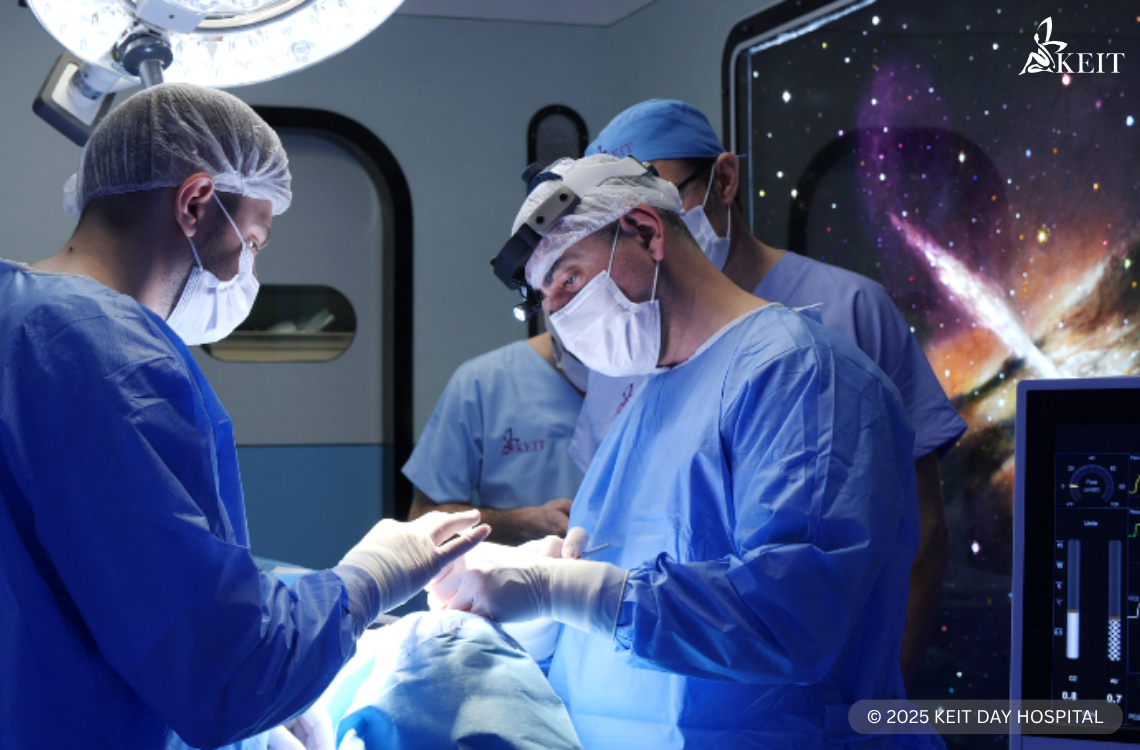
Deviated septum surgery is done entirely through the nostrils, leaving no visible scars. The surgeon reshapes and repositions the septum by lifting the inner lining, correcting the deviated cartilage and bone and aligning them centrally.
- Anaesthesia: Performed under local anaesthesia with sedation or general anaesthesia for full comfort.
- Incision and access: A small internal cut allows access to the septum.
- Correction and remodelling: The deviated sections are precisely trimmed, reshaped and repositioned.
- Suturing and dressing: Fine stitches and soft silicone splints or light packing are used to support healing and maintain the new shape.
Septoplasty recovery: The post-operative timeline
The recovery after a septoplasty is usually quick. Nasal packs or splints are removed after 1 – 2 days and most people return to normal activities within 7 – 14 days. Sports and strenuous activity should be avoided for about a month. Regular saline rinses help clear crusts, keep the nose hydrated and speed up healing.
Crooked nose and deviated septum: Combining aesthetics & function
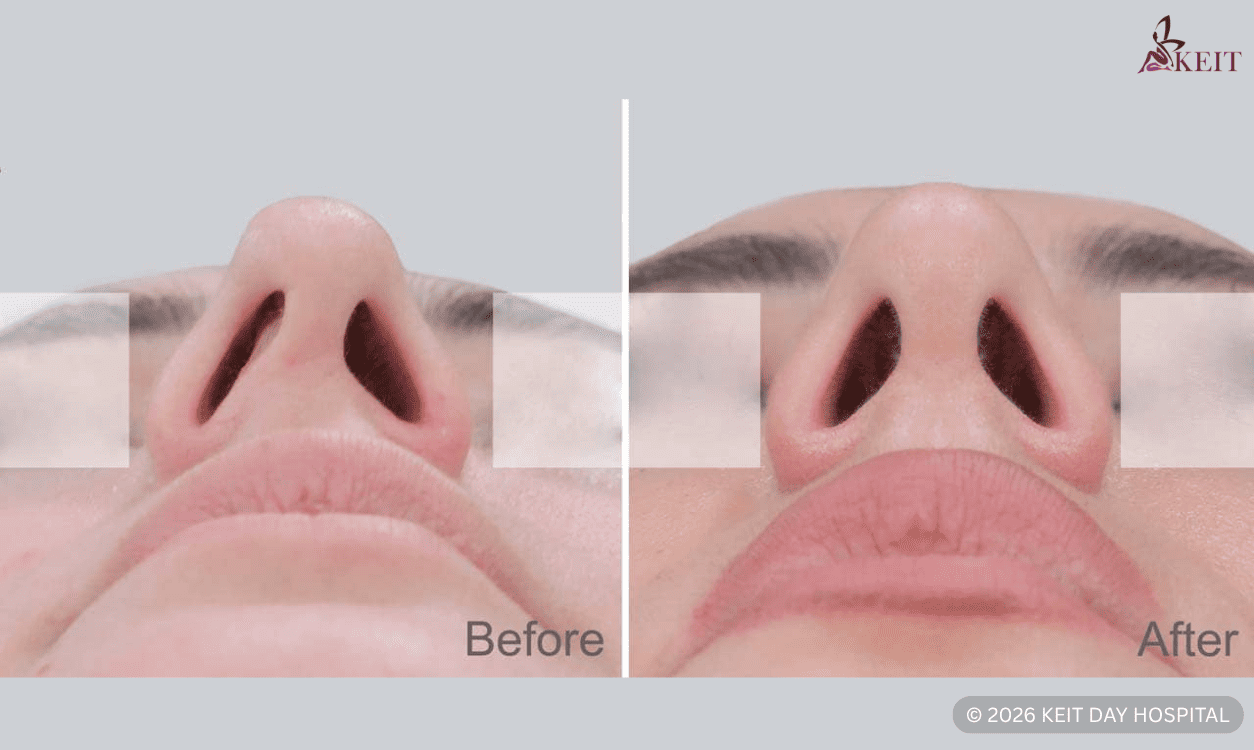
An externally crooked nose often coincides with an internal deviated septum, causing both breathing issues and cosmetic concerns like a hooked nose or high bridge. These can be corrected together in one procedure called rhinoseptoplasty, which combines septum repair with aesthetic reshaping. The main benefit is dual improvement, better breathing and enhanced facial balance with one surgery and recovery. Deviated septum before and after images clearly show these combined results.
Discover how rhinoplasty refines both nasal shape and function in our article on what rhinoplasty is.
Book your FREE
Online Consultation Now

Deviated septum before and after: Setting real expectations
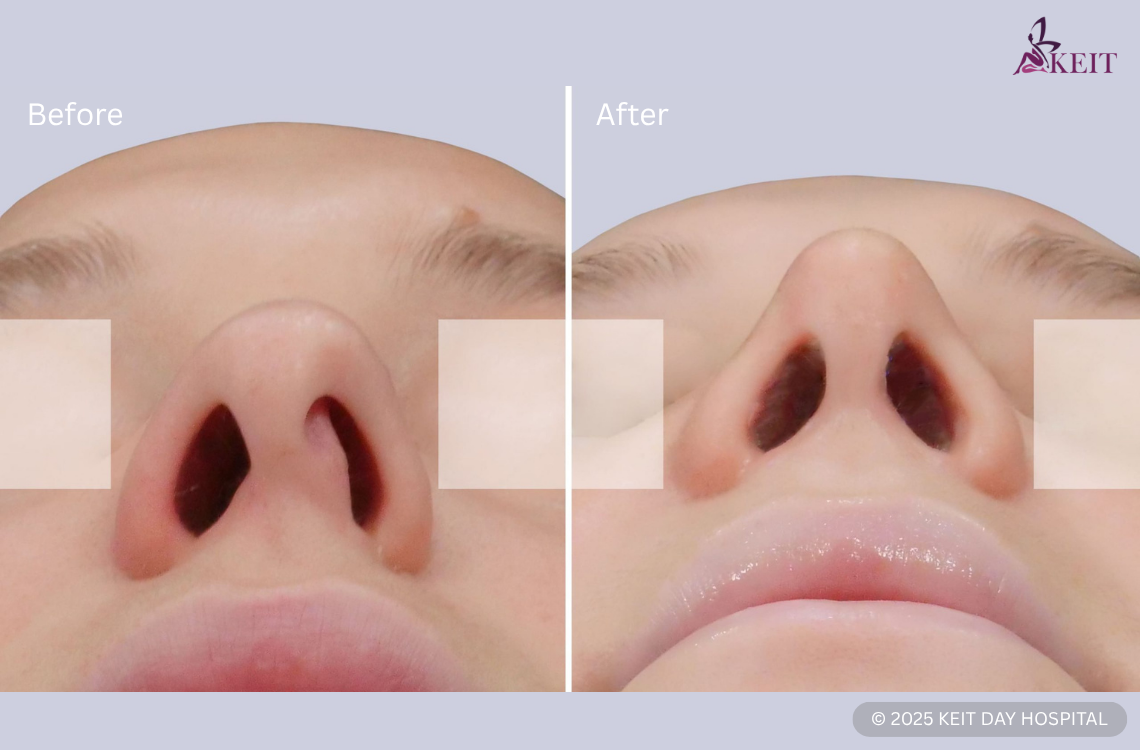
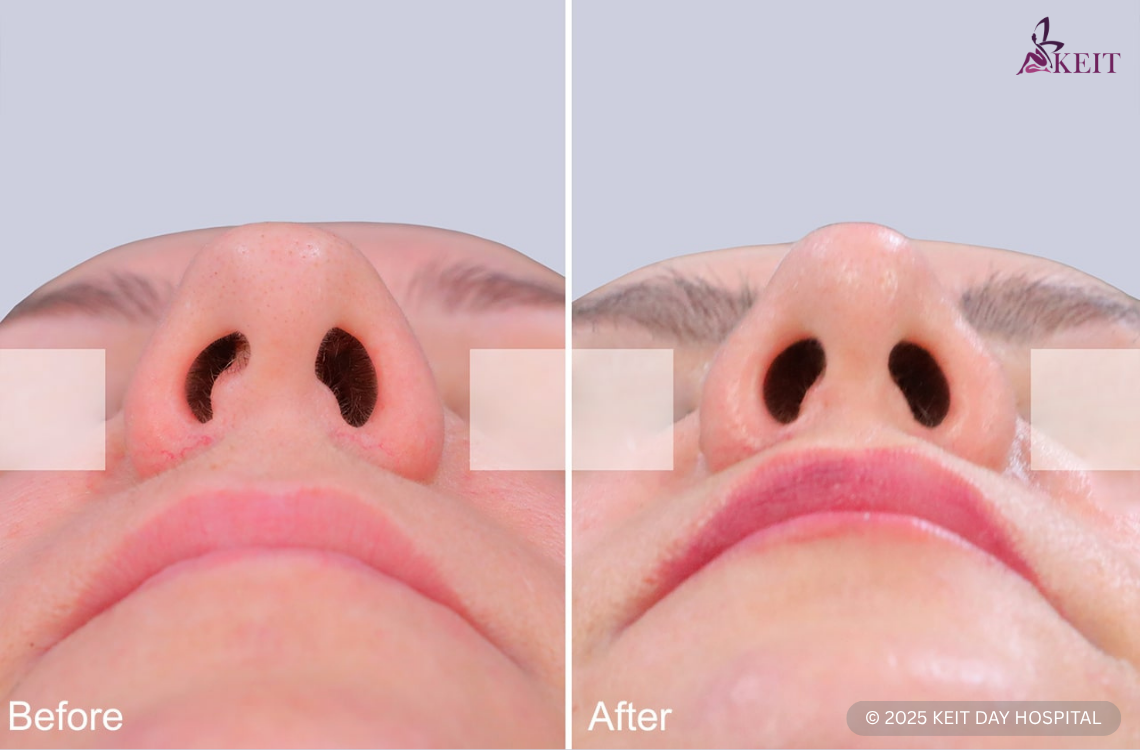
Viewing the results of other patients is a crucial step in understanding what a septoplasty surgery can achieve. The primary goal is functional: to open the airways for clear, unobstructed breathing. The deviated septum before and after images below are a testament to the life-changing functional improvement this procedure provides, finally allowing patients to breathe freely and sleep better.
Deviated septum surgery: Cost in the UK and NHS eligibility
The deviated septum surgery cost in the UK varies depending on the case complexity and surgeon’s expertise. A functional septoplasty typically costs between 3,000 and 5,500 euro, while combining it with cosmetic correction (rhinoseptoplasty) can raise the price to 5,500 – 8,500 euro or more. It is possible to have deviated septum surgery on the NHS, but only for functional correction in severe, medically certified breathing obstruction cases. The aesthetic part is excluded and the process requires NHS waiting times often long and variable.