Published on:
 Modified on:

 Reading Time: 5 min
 Rhinoplasty
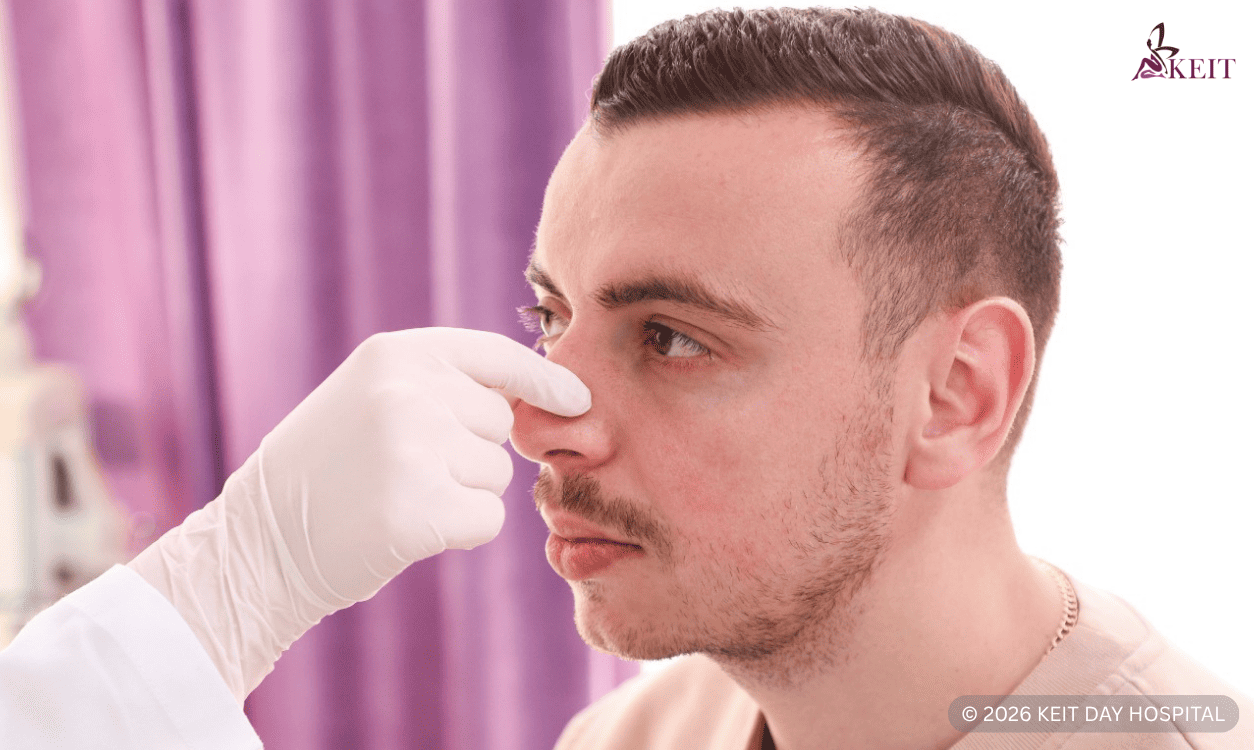
A Nubian nose is characterized by a smooth bridge, wider nasal base and a rounded, softly defined tip. It stands out most in the lower third of the face, where the nostrils and base give it distinct shape and presence. The Nubian nose develops naturally through genetic inheritance, bone projection and soft-tissue thickness. Rhinoplasty for a Nubian nose focuses on refining proportions and nasal definition while preserving its natural structure and cultural identity.
 Table of Contents:
-
1
 What is a Nubian nose and the main features to look for
-
2
Nubian nose side profile vs front view: How it typically looks
-
3
Nubian nose ethnicity and origin: Is it limited to one population?
-
4
Is Nubian nose attractive? What influences perceived attractiveness
-
5
Nubian nose vs Aquiline (Roman) nose: Key distinctions in bridge and tip
-
6
Nubian nose vs Greek nose: How they compare in profile and proportions
-
7
Nubian nose female: Typical proportions and harmony
-
8
Nubian nose male: Stronger structure and balance
-
9
Nubian nose: How rhinoplasty can refine its shape while keeping its identity
-
10
Nubian nose reshaping at KEIT Day Hospital: Structured surgical care
In this article, you’ll learn what a Nubian nose is and how to recognize its defining features, how it typically appears in the front view vs the side profile and what the term means regarding ethnicity and origin. We’ll also break down what influences perceived attractiveness, clarify the key distinctions between a Nubian nose and an Aquiline (Roman) nose and compare Nubian vs Greek noses in profile and proportions. Finally, we’ll explain how rhinoplasty can refine a Nubian nose while keeping its identity and what makes KEIT Day Hospital in Albania your reliable choice.
What is a Nubian nose and the main features to look for
A Nubian nose type is recognized by a combination of structural and soft-tissue features that define its natural fullness and expressiveness.
- Wider nasal base: Often the most visible characteristic, noticeable both front and side view.
- Broader nostrils with mild flare: Nostrils may appear more open or laterally spread.
- Rounded or softly defined tip: Creates a natural contour instead of a pointed one.
- Thicker skin and subcutaneous tissue: Adds softness and reduces sharp definition.
- Smooth bridge: Less sharply defined compared to other types.
Nubian nose side profile vs front view: How it typically looks
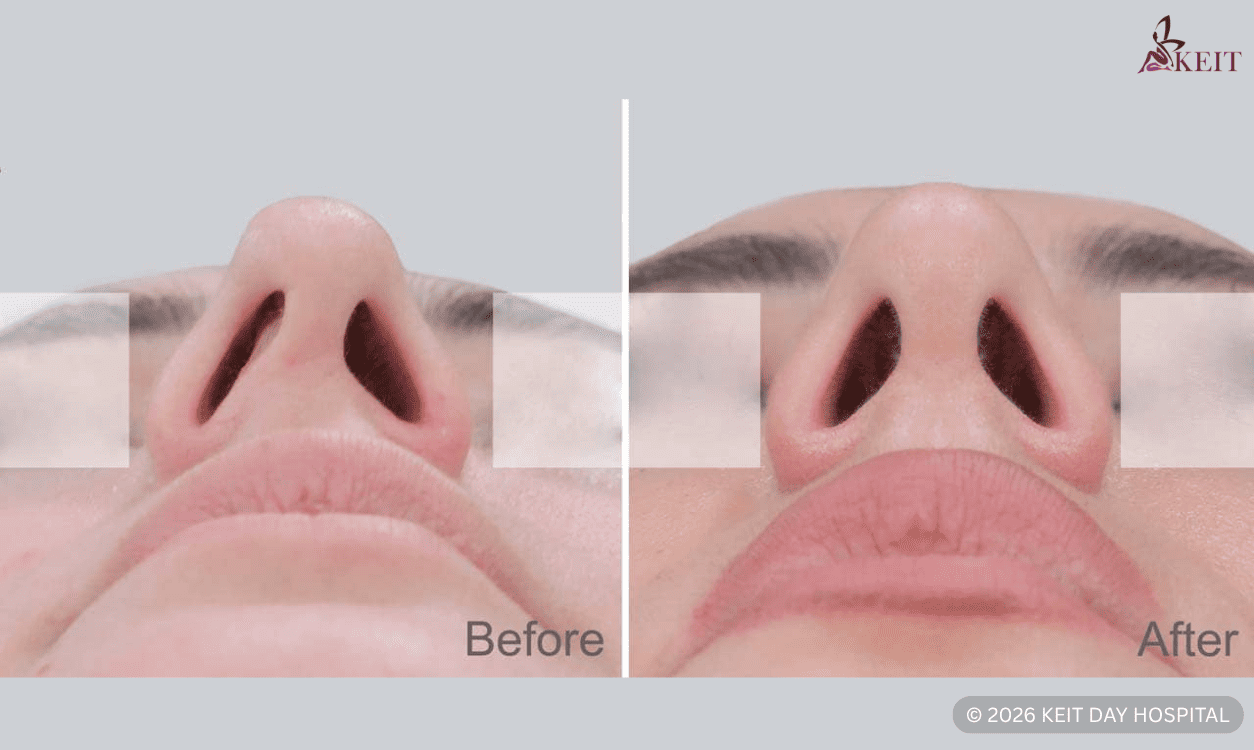
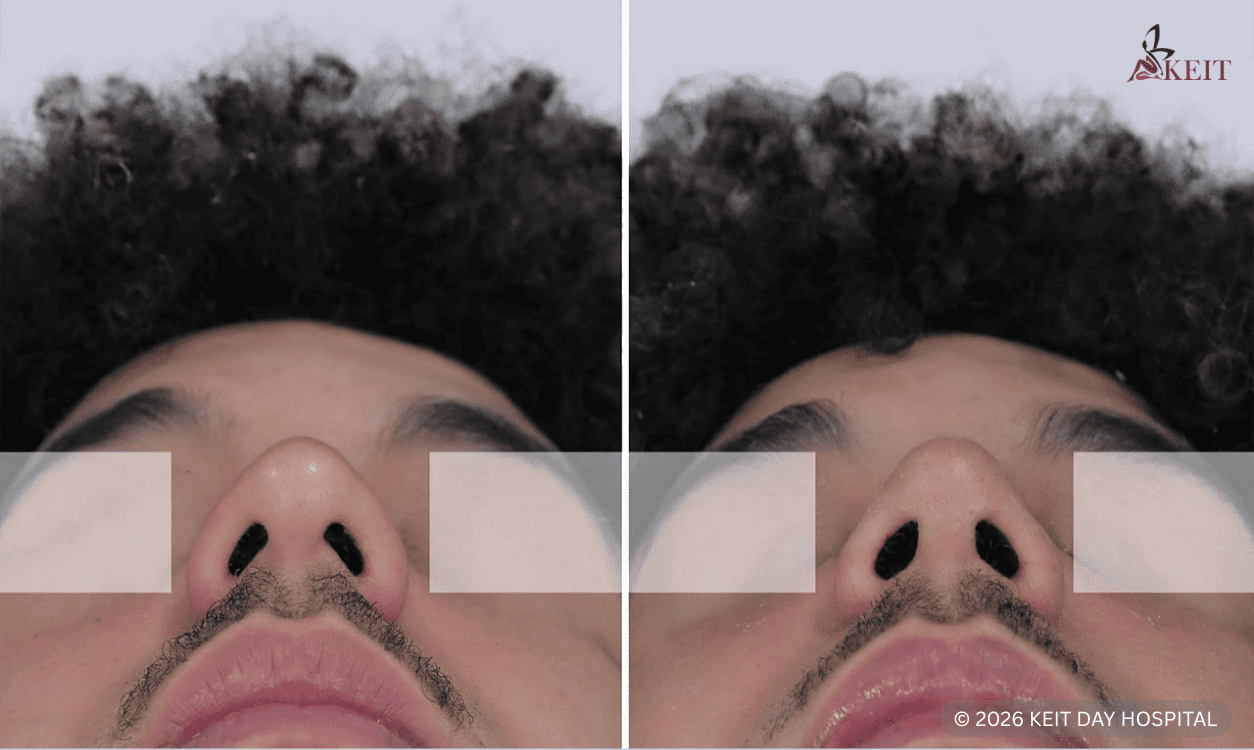
The front view of a Nubian nose is where its character shows most clearly. The nasal base tends to be wider, nostrils more visible and the tip rounder or fuller. This gives the face a balanced but expressive lower-third identity.
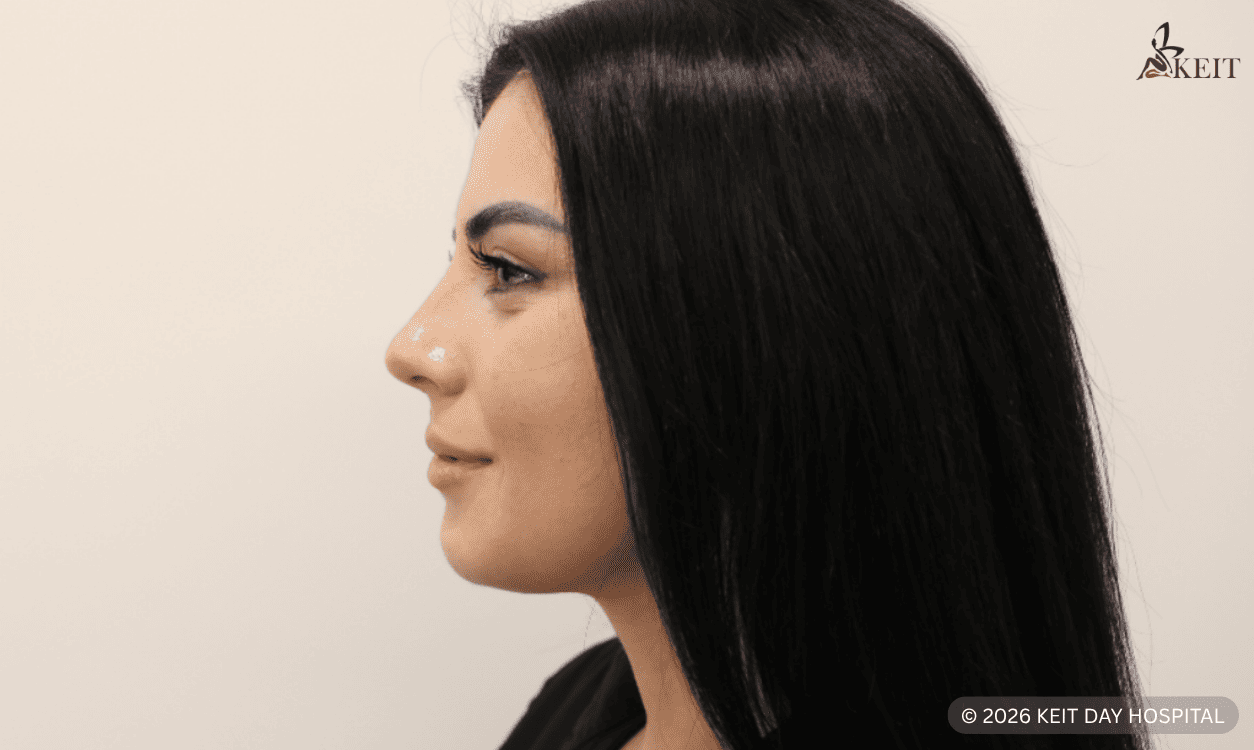
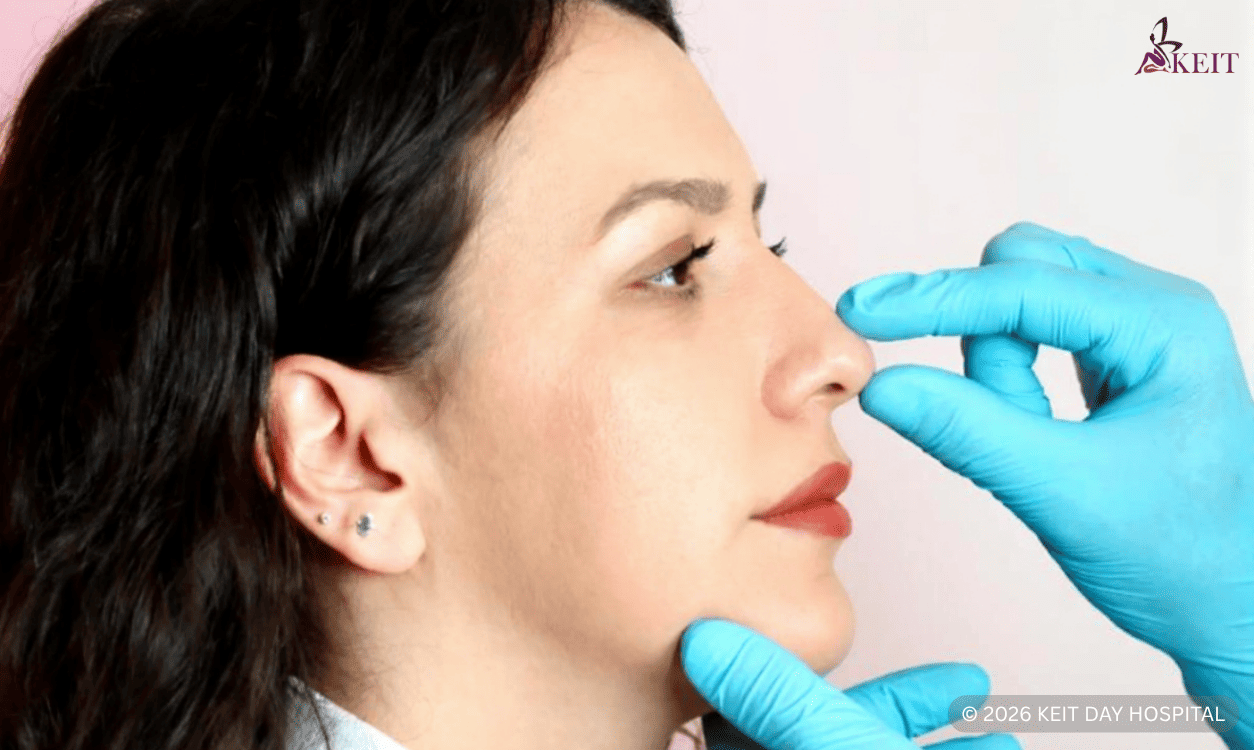
From the side profile, the bridge usually appears smooth, not dominant. The tip may project slightly forward but keeps a soft outline rather than a sharp contour. The transition from bridge to tip is fluid, creating a harmonious curve rather than an angular slope.
Below you can find a comparison table that clarifies main differences between the side profile and front view of a Nubian nose:
| Aspect | Front view | Side profile |
|---|---|---|
| Where it stands out most | Base + nostrils + tip | Tip + overall softness |
| Base width | Often wider, more visible | Less noticeable than front |
| Nostrils | May look broader / mild flare | Usually not the focus |
| Bridge (profile) | Less central to the profile | Often smooth, not hump-led |
| Tip | Fuller / rounded look | Soft contour, not sharp |
Nubian nose ethnicity and origin: Is it limited to one population?
Despite its name, the Nubian nose is not confined to one single ethnicity. The term historically described nasal traits common in North and East African populations, particularly in regions of ancient Nubia (modern-day Sudan and southern Egypt).
Similar nasal structures can appear in multiple populations across Africa, the Middle East and even parts of Southern Europe and Latin America. The defining characteristics, such as base width, soft tissue volume and rounded tip are shaped by both genetics and local climatic adaptation.
Is Nubian nose attractive? What influences perceived attractiveness
A Nubian nose is often described as expressive, balanced and naturally proportioned, especially when it complements broader facial symmetry. Studies in aesthetic medicine show that perceived attractiveness depends less on one “ideal” shape and more on harmony with surrounding features. Fuller nasal bases and softer tips often convey warmth and approachability. In beauty standards worldwide, this type of structure is increasingly appreciated for its individuality and authenticity.
Nubian nose vs Aquiline (Roman) nose: Key distinctions in bridge and tip
These two nose types can both look bold, but they stand out in totally different areas:
- Main defining area: Nubian: lower third (base + nostrils + tip). Aquiline/Roman: bridge (often a visible hump/convexity).
- Bridge (profile): Nubian: often smooth and not hump-dominant. Aquiline: more prominent arch or hump.
- Tip: Nubian: rounded or softly defined tip is common. Aquiline: tip can look more projected and structured.
- Front view: Nubian: broader nasal base with visible nostril width. Aquiline: usually narrower base, profile-led presence.
- Overall impression: Nubian: expressive, soft-structured, front-view identity. Aquiline: strong profile identity, bridge-driven presence.

Nubian nose vs Greek nose: How they compare in profile and proportions
The Greek and Nubian nose differ not in strength but in where their structure draws attention.
- Bridge (profile): Greek: straight, continuous dorsum with minimal interruption. Nubian: smooth bridge, but less central to overall appearance.
- Front view (base width): Greek: narrower, linear base. Nubian: wider base, fuller lower third.
- Tip style: Greek: more defined, sculpted transition. Nubian: softer, rounded tip.
- Overall focus: Greek: profile-driven, linear identity. Nubian: front-view-driven, base and tip harmony.
Nubian nose female: Typical proportions and harmony
In women, the Nubian nose shape typically features a smooth bridge, moderately wide base and softly contoured tip. The nostrils are visible from the front but balanced with cheek and lip proportions. This gives a naturally harmonious lower-third, maintaining femininity without sharp angles. Subtle refinement through aesthetic treatment or rhinoplasty may aim to slightly narrow the base or define the tip, but the goal remains proportion, not transformation.
Nubian nose male: Stronger structure and balance
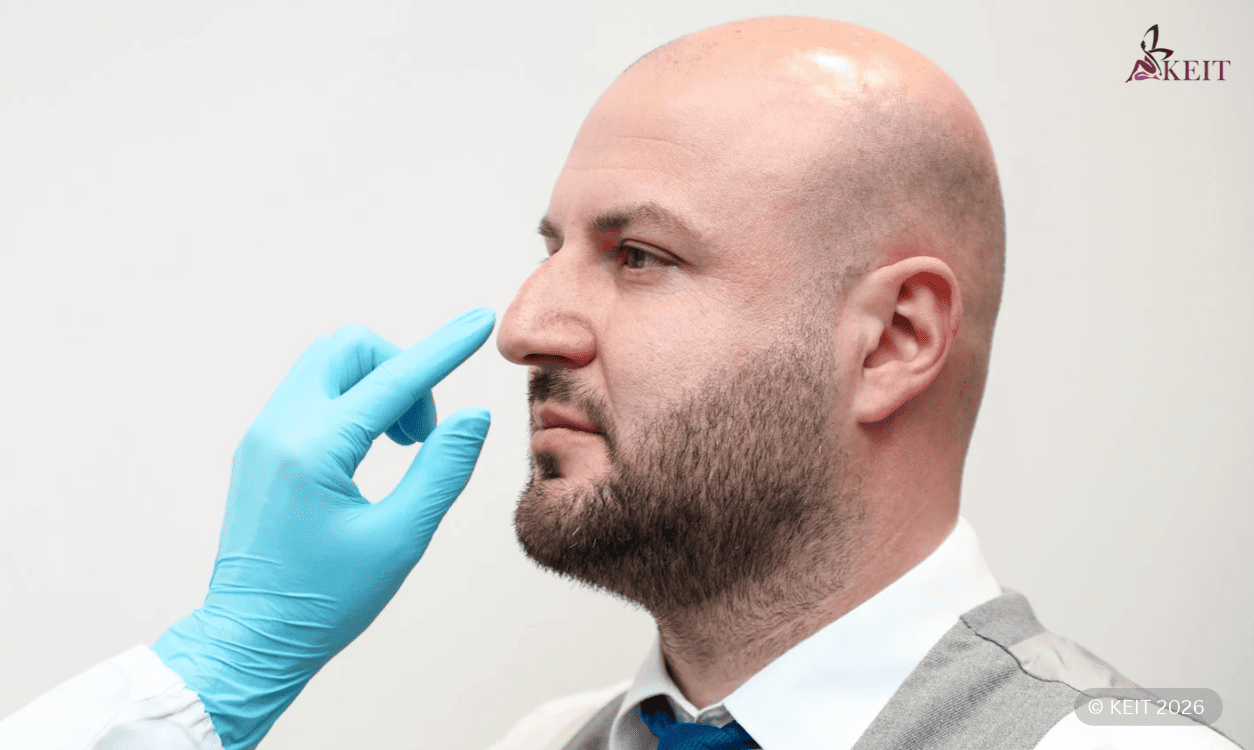
In men, the Nubian nose presents a stronger nasal base and slightly higher bridge projection. The nostrils can be broader, but this aligns naturally with masculine facial traits such as a wider jawline or brow. Aesthetic correction, when performed, usually targets definition by clarifying tip contour or refining base width, while maintaining the structured, balanced form that gives the Nubian male profile its strength.
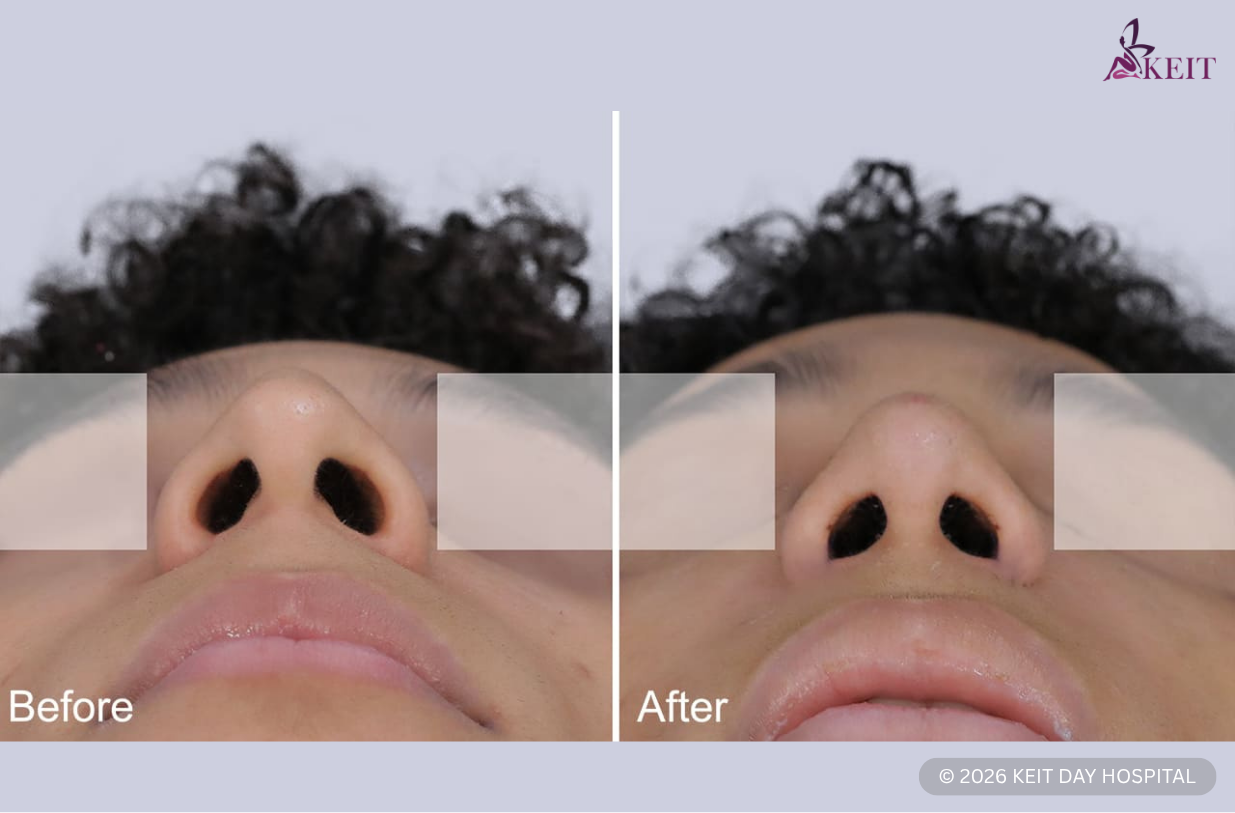
Nubian nose: How rhinoplasty can refine its shape while keeping its identity
Rhinoplasty for a Nubian nose focuses on definition and proportion, not reduction. Procedures may include:
- Narrowing or contouring the nasal base.
- Softly defining the nasal tip while maintaining natural volume.
- Adjusting projection for profile harmony.
- Improving nasal airflow if structural deviation exists.
Modern rhinoplasty techniques emphasize preservation of ethnic and anatomical identity. To fully understand how surgeons refine a Nubian nose while preserving its identity, it is helpful to first explore what rhinoplasty is and how it works in our article.
Nubian nose reshaping at KEIT Day Hospital: Structured surgical care
For those seeking a nose job surgery abroad, KEIT Day Hospital in Albania offers all-inclusive rhinoplasty packages starting from 1,600 euro. Procedures are performed by Italian surgeons using the closed technique, ensuring no visible scars and lasting 40 – 90 minutes. KEIT’s team has completed over 23,000 procedures and earned more than 11,000 positive patient reviews. Specializing in ultrasonic and preservation rhinoplasty, KEIT delivers natural, precise results at a highly competitive nose job cost. Patients benefit from nausea-free anesthesia, advanced silicone splints, hotel accommodation, airport transfers, trilingual staff and follow-ups available both online and directly at the hospital, ensuring safety and peace of mind.