Published on:

 Reading Time: 4 min
 Otoplasty
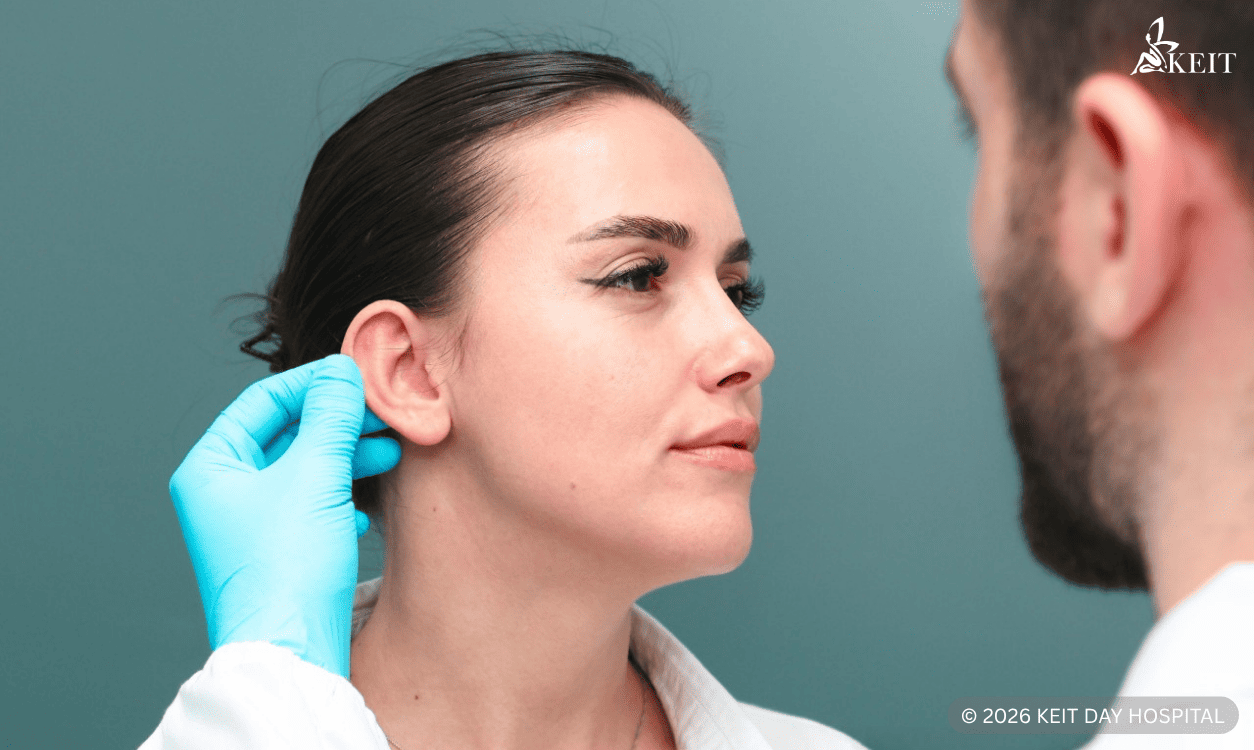
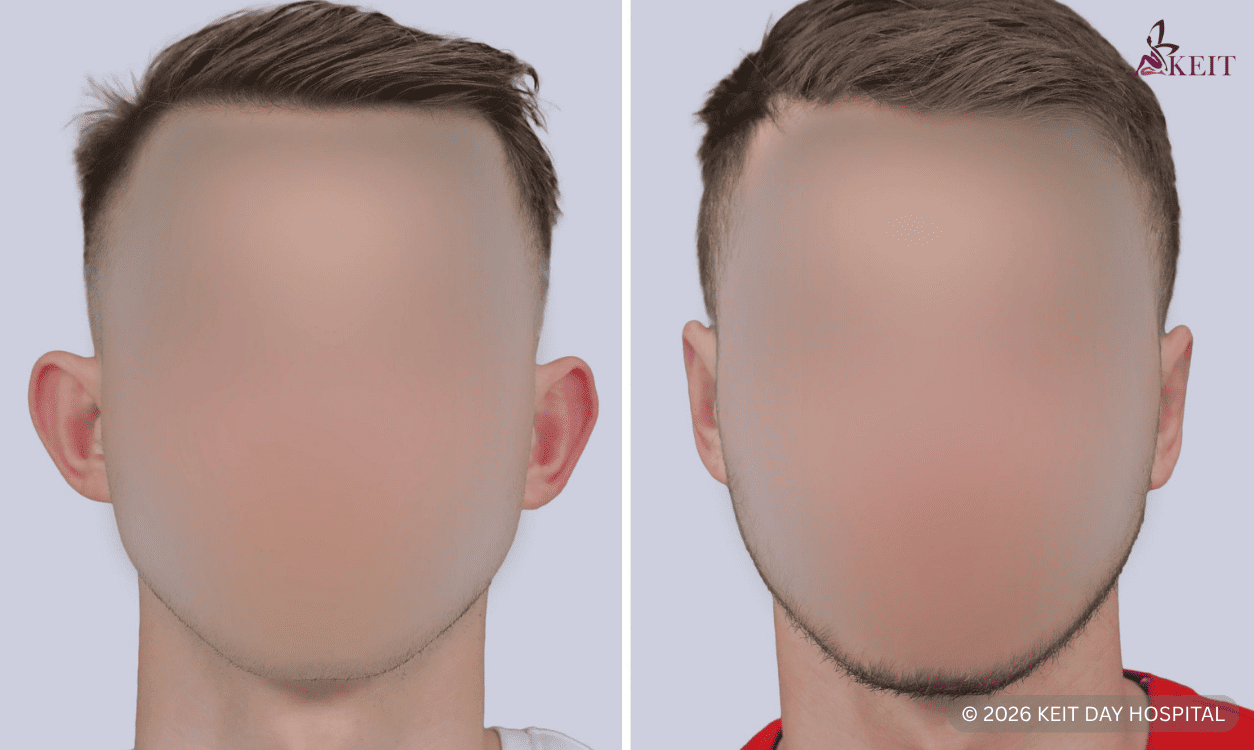
Protruding ears, also called prominent ears, are ears that extend further away from the sides of the head due to differences in ear cartilage development and structure. This common anatomical variation can be corrected with ear moulding in newborns or otoplasty surgery in older children and adults, which reshapes and repositions the ears closer to the head.
 Table of Contents:
-
1
 What are protruding ears?
-
2
Why do ears stick out? Causes of protruding ears
-
3
Are protruding ears normal?
-
4
When should protruding ears be corrected?
-
5
What are the correction options for protruding ears?
-
6
How is otoplasty performed for protruding ears?
-
7
Protruding ears surgery: recovery and expected results
-
8
Risks and complications of otoplasty
In this article, we explain what protruding ears are, why they develop, and whether they are considered a normal anatomical variation. We discuss when correction may be considered, the available treatment options, how otoplasty is performed, and what patients can expect during recovery, results, and potential risks.
What are protruding ears?
Protruding ears are an anatomical variation where the external ear extends further away from the side of the head due to differences in cartilage shape and development. This condition affects the position and contour of the auricle (the visible external part of the ear). The appearance is mainly determined by the development of the ear cartilage, which provides the structure and natural folds that keep the ear positioned closer to the head.
Why do ears stick out? Causes of protruding ears
Ears stick out due to differences in ear cartilage development that affect the way the ear folds and its position relative to the head. The main contributing factors include:
- Underdeveloped antihelical fold: The natural fold of the ear cartilage may not develop fully, causing the ear to sit further away from the head.
- Prominent conchal cartilage: Excessive projection of the conchal cartilage can push the ear outward.
- Genetic factors: Ear shape and cartilage development are influenced by inherited characteristics.
- Early ear development: The shape and position of the ears are established during childhood growth and usually remain stable over time.
The degree of ear projection varies depending on the combination of these anatomical factors.
Are protruding ears normal?
Protruding ears are a normal anatomical variation and are not considered a medical abnormality. They result from natural differences in the shape, development, and position of the ear cartilage. Protruding ears do not affect hearing, ear function, or overall health, and they are simply a variation in external ear appearance.
When should protruding ears be corrected?
Protruding ears can be corrected when their appearance causes personal concern, reduced confidence, or emotional discomfort related to ear shape. The timing depends on age and ear development:
- Children: Otoplasty is usually considered from around 5–6 years of age, when the ear cartilage has developed sufficiently and is close to adult size. Early correction may be considered before starting school to reduce the impact of unwanted attention related to ear appearance.
- Adults: Otoplasty can be performed at any age when the patient is in good health and has realistic expectations about the results.
What are the correction options for protruding ears?
The main correction options for protruding ears depend on the patient’s age and the development of the ear cartilage.
- Ear moulding: Used in newborns when the ear cartilage is still soft and can be reshaped. Is most effective during the early weeks of life.
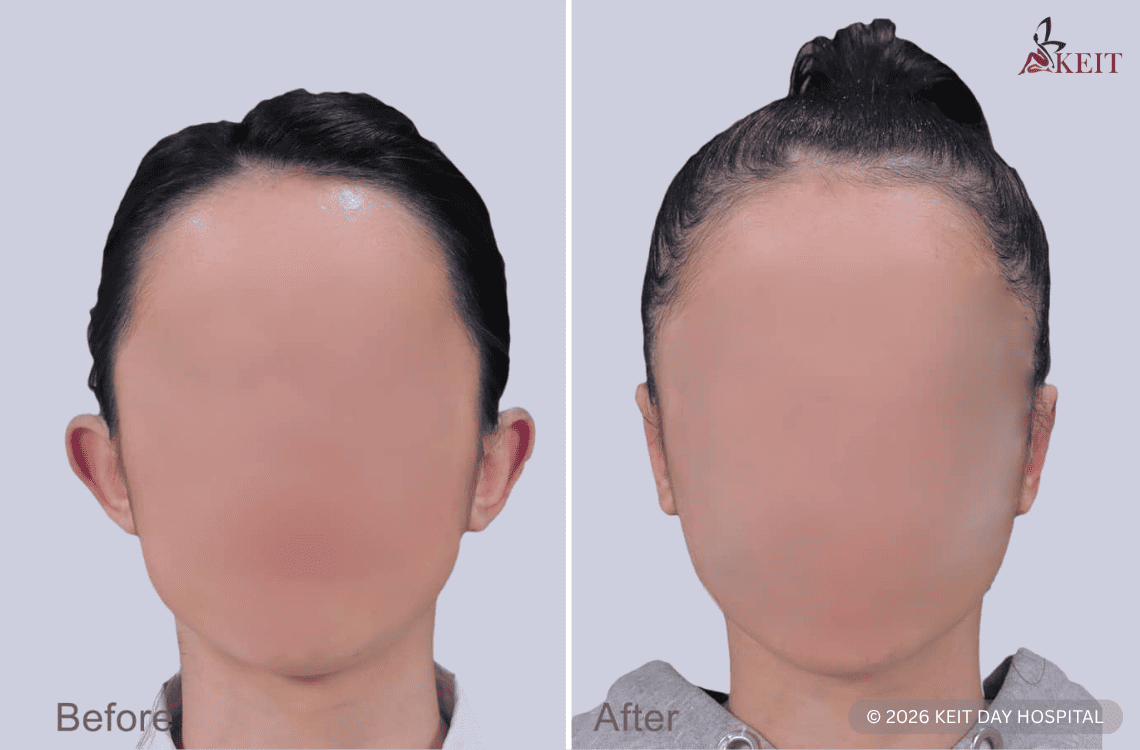
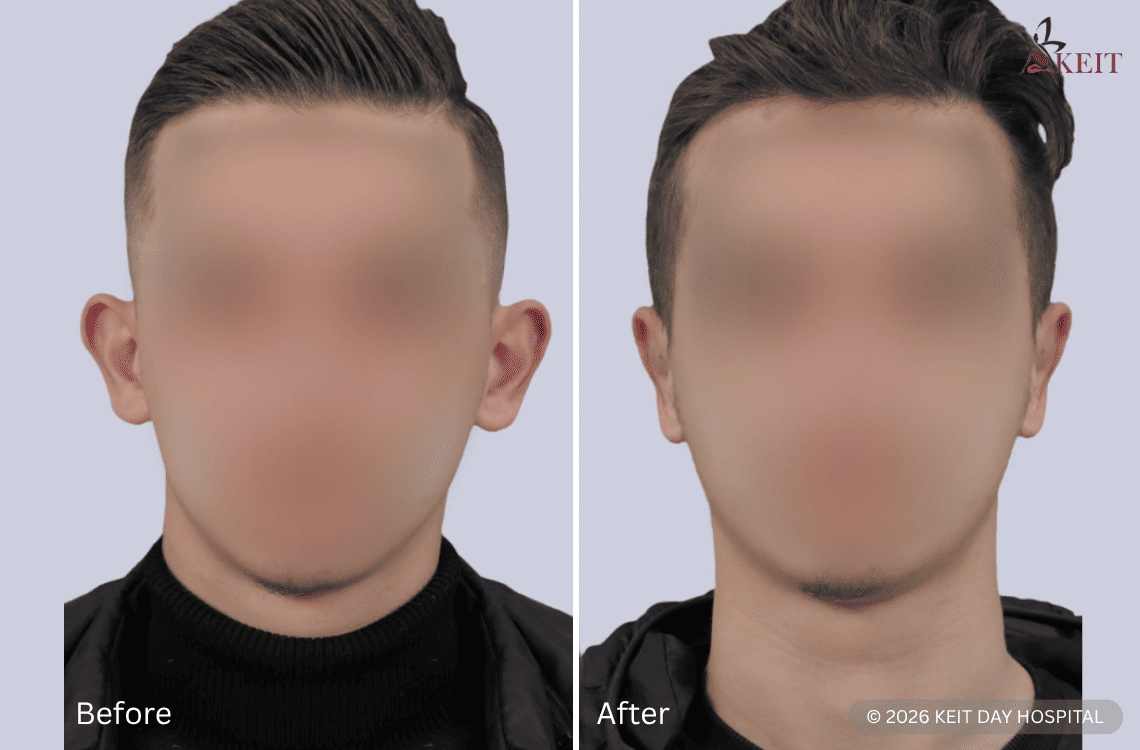
- Otoplasty: The standard surgical treatment for older children and adults, reshaping and repositioning the ear cartilage to reduce ear prominence.
How is otoplasty performed for protruding ears?
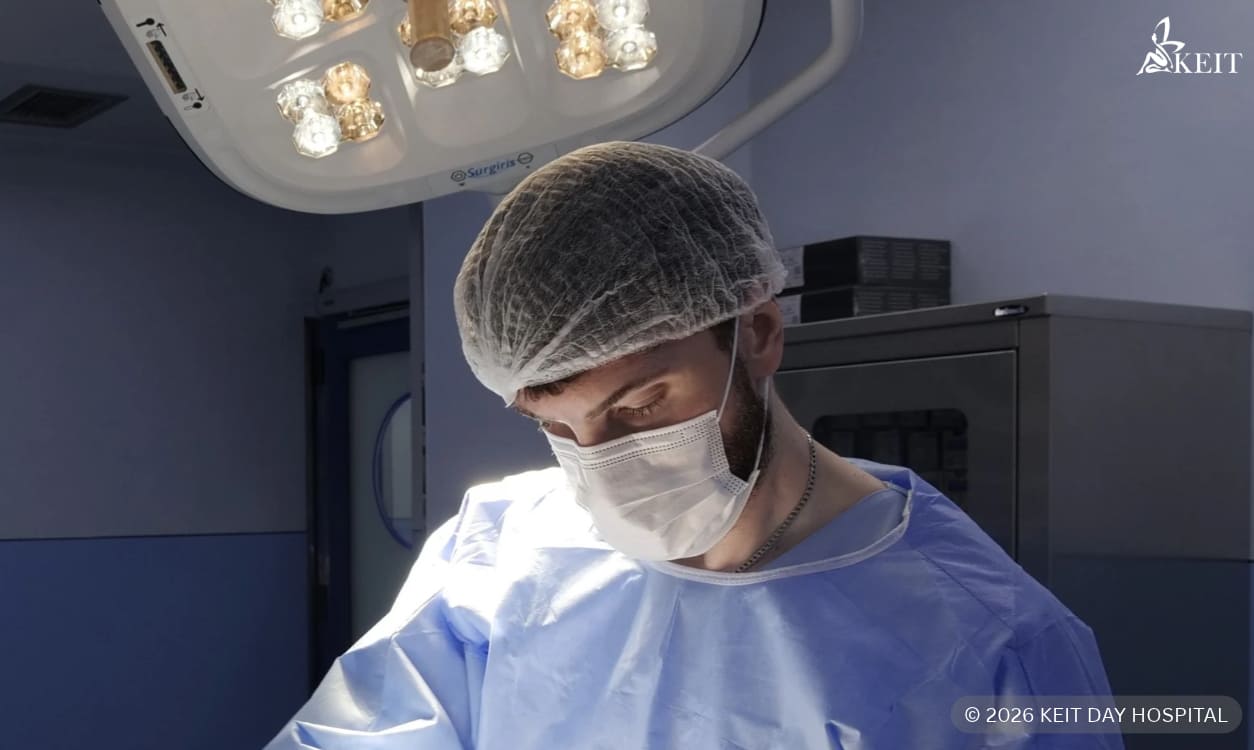
Otoplasty is performed under local anaesthesia with sedation or general anaesthesia, depending on the complexity of the case, usually takes around 1–2 hours. During the procedure, the surgeon makes a small incision behind the ear to access and reshape the cartilage. The ear framework is carefully modified by recreating or strengthening the natural antihelical fold and adjusting the conchal cartilage when it contributes to excessive ear projection. The ear is then positioned closer to the head and secured with sutures to maintain the new shape and symmetry.

Protruding ears surgery: recovery and expected results
Recovery after otoplasty takes about 6 weeks for initial healing, while the final ear shape continues to refine over 3–6 months.
- First week: Swelling, bruising, tenderness, and tightness are common. A protective headband is worn to support the ears during healing.
- Weeks 2–3: Most patients return to daily activities. Swelling gradually decreases, but pressure or trauma to the ears should still be avoided.
- Weeks 4–6: The ears continue to settle, and patients can usually resume unrestricted activities once healing is adequate.
- Months 3–6: Residual swelling resolves, the cartilage stabilises, and the final ear contour becomes more defined.
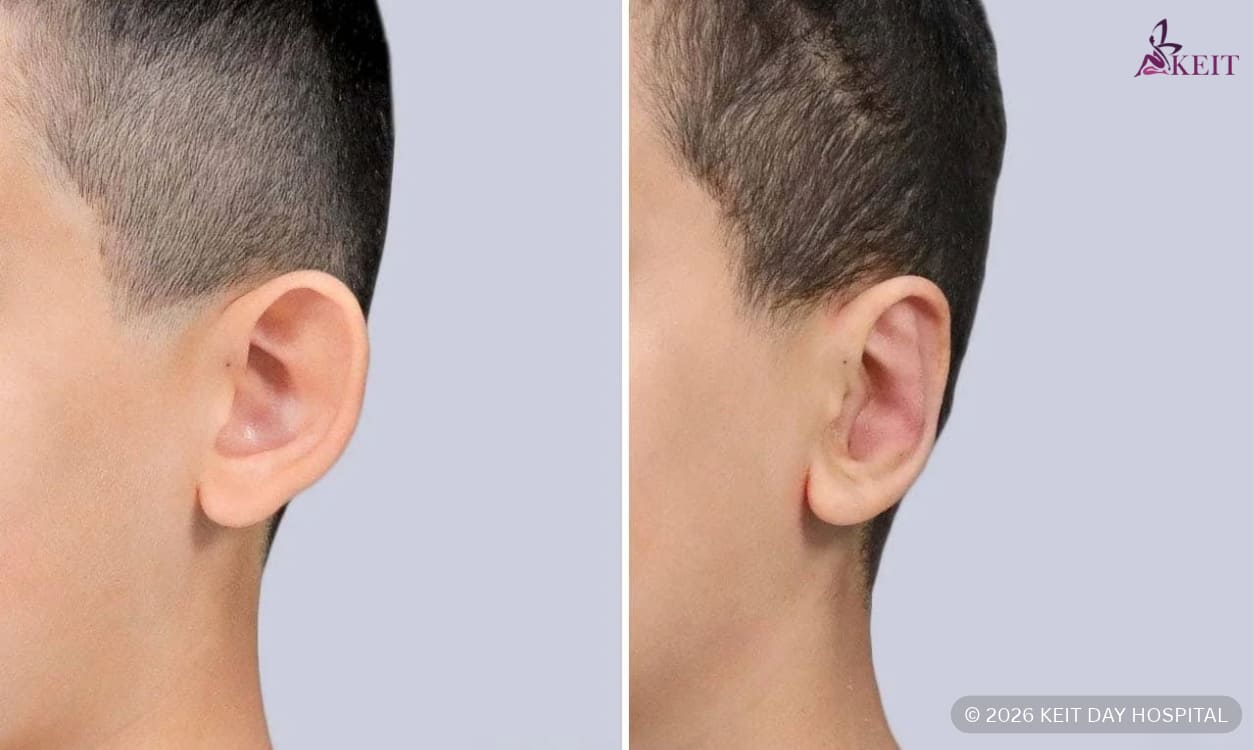
As the swelling decreases and the ears heal, patients can expect the ears to sit closer to the head with improved symmetry and a more balanced appearance. The results are designed to look natural, maintaining the normal contours and proportions of the ears.
Risks and complications of otoplasty
Otoplasty is generally a safe procedure, but like any surgery, it carries potential risks that should be discussed during consultation. Possible complications include:
- Infection: A rare complication that may require medical treatment.
- Bleeding or haematoma: A collection of blood under the skin that may require drainage.
- Asymmetry: Differences between the ears may persist or develop after surgery.
- Cartilage irregularities: Uneven contours or changes in ear shape may occur during healing.
- Recurrence: In some cases, the ears may gradually become more prominent again.
- Scarring: The incision behind the ear may leave a scar, which usually becomes less visible over time.
Careful surgical planning and appropriate post-operative care help reduce the risk of complications and support stable, natural-looking results.