Published on:
 Modified on:

 Reading Time: 4 min
 Otoplasty
, commonly known as ear pinning surgery, can change how the ears sit in relation to the head and how they contribute to the overall balance of the face. When the ears appear too prominent, uneven, or out of proportion, they can draw attention from other facial features and may affect how comfortable and confident a person feels with their overall appearance.
 Table of Contents:
-
1
 Ear pinning before and after: Visible changes in the ears
-
2
How otoplasty improves facial balance
-
3
Realistic expectations after otoplasty
-
4
Otoplasty recovery timeline: When results become clear
-
5
What to avoid during otoplasty recovery
-
6
Scarring after otoplasty
-
7
When to contact your surgeon or seek urgent medical help
-
8
Otoplasty at KEIT Day Hospital
In this article, we will explore what can change in otoplasty before and after results, how the procedure may improve facial balance, what expectations are realistic, when results become clearer during healing, and which risks, scars, or warning signs patients should be aware of after surgery.
Ear pinning before and after: Visible changes in the ears
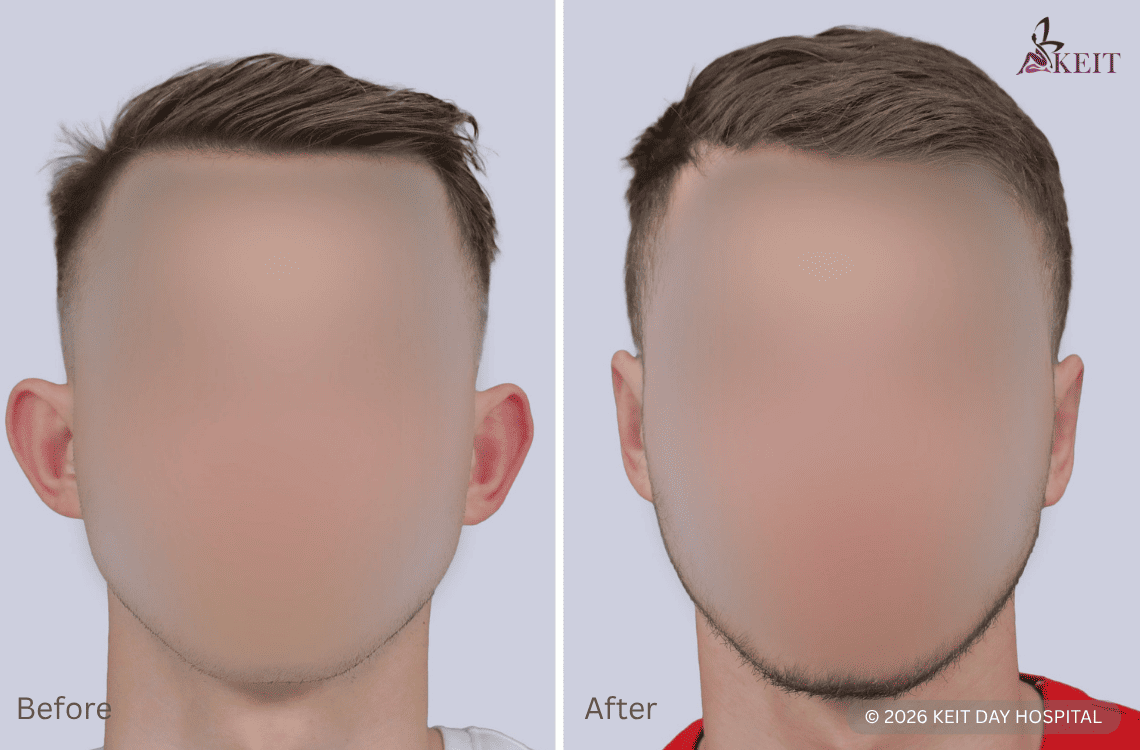
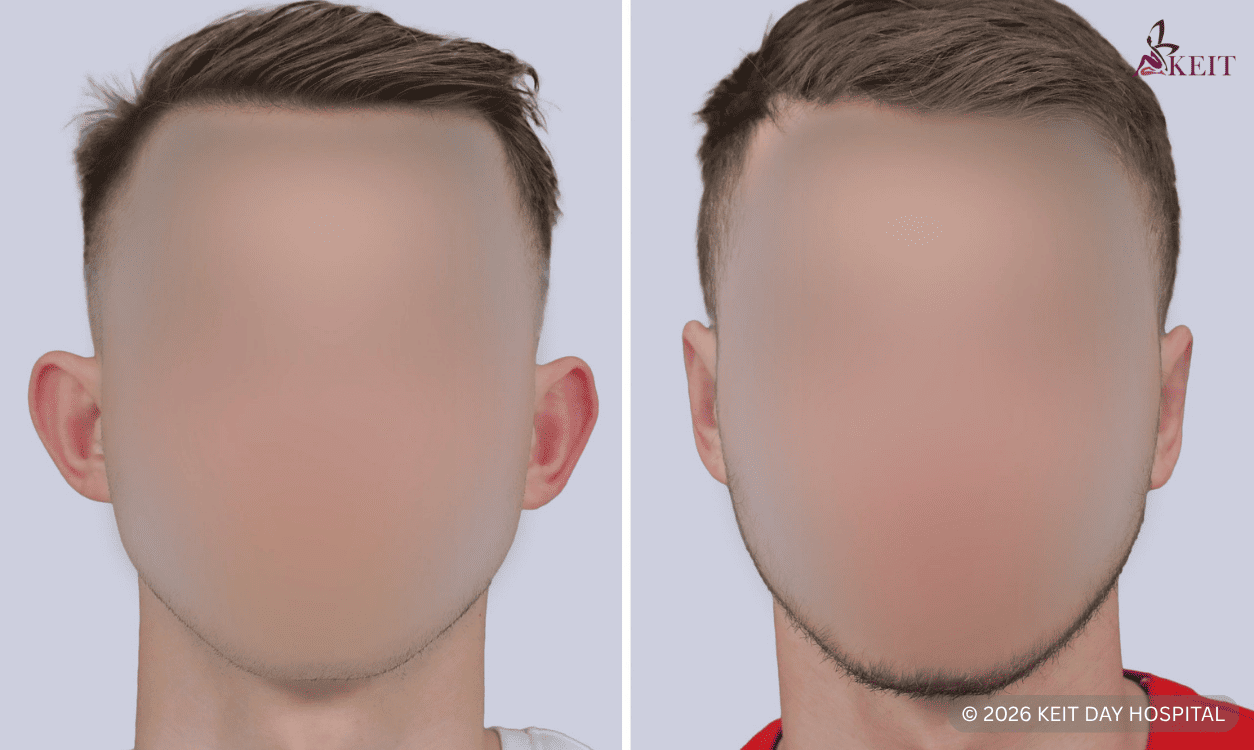
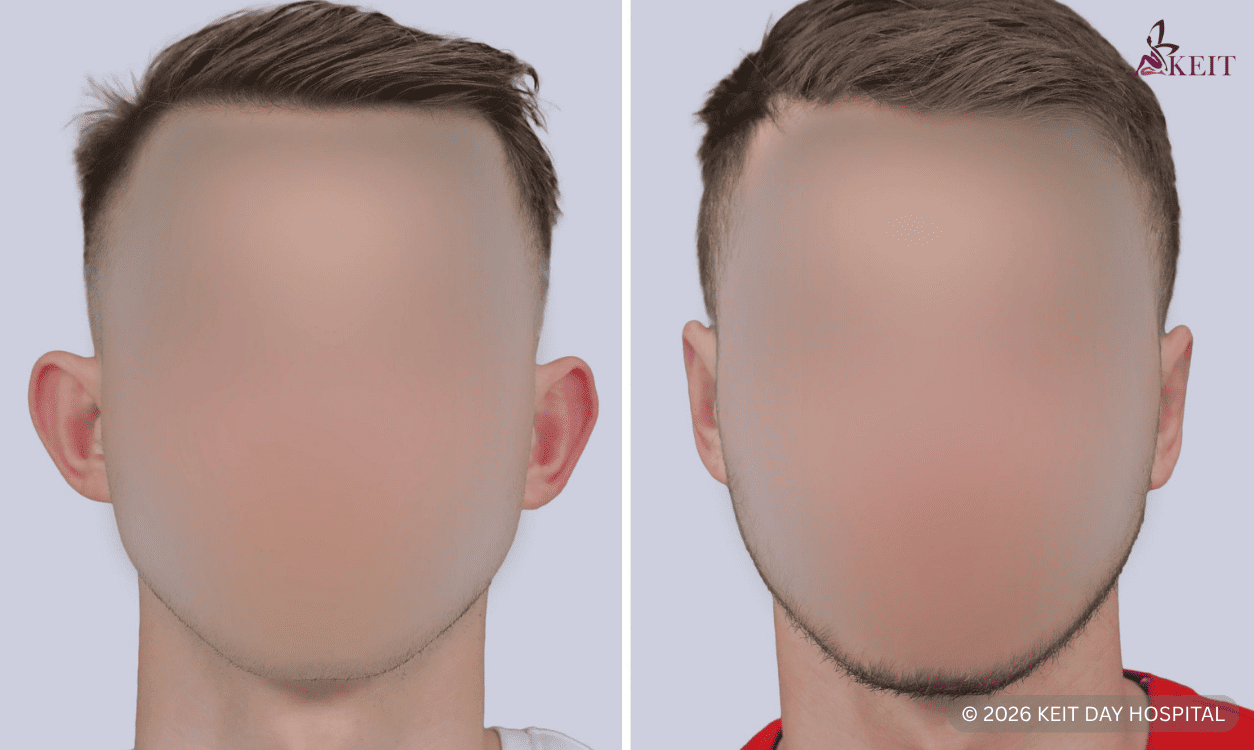
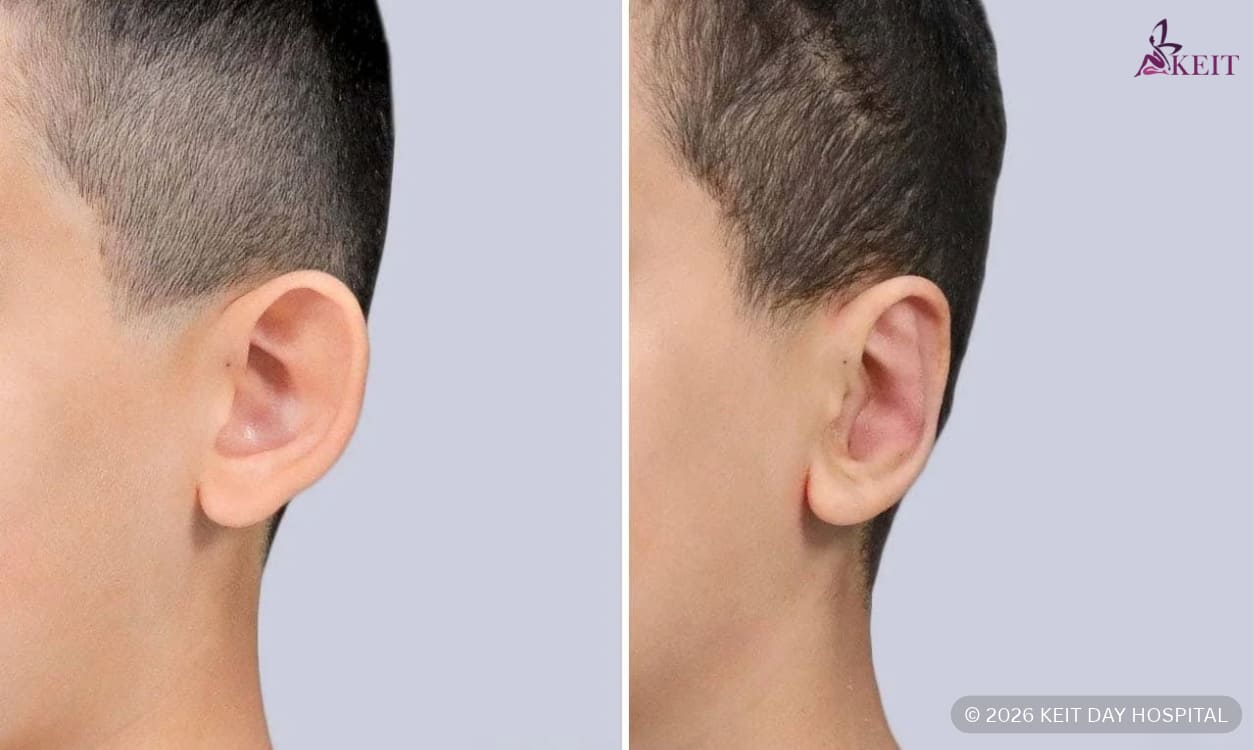
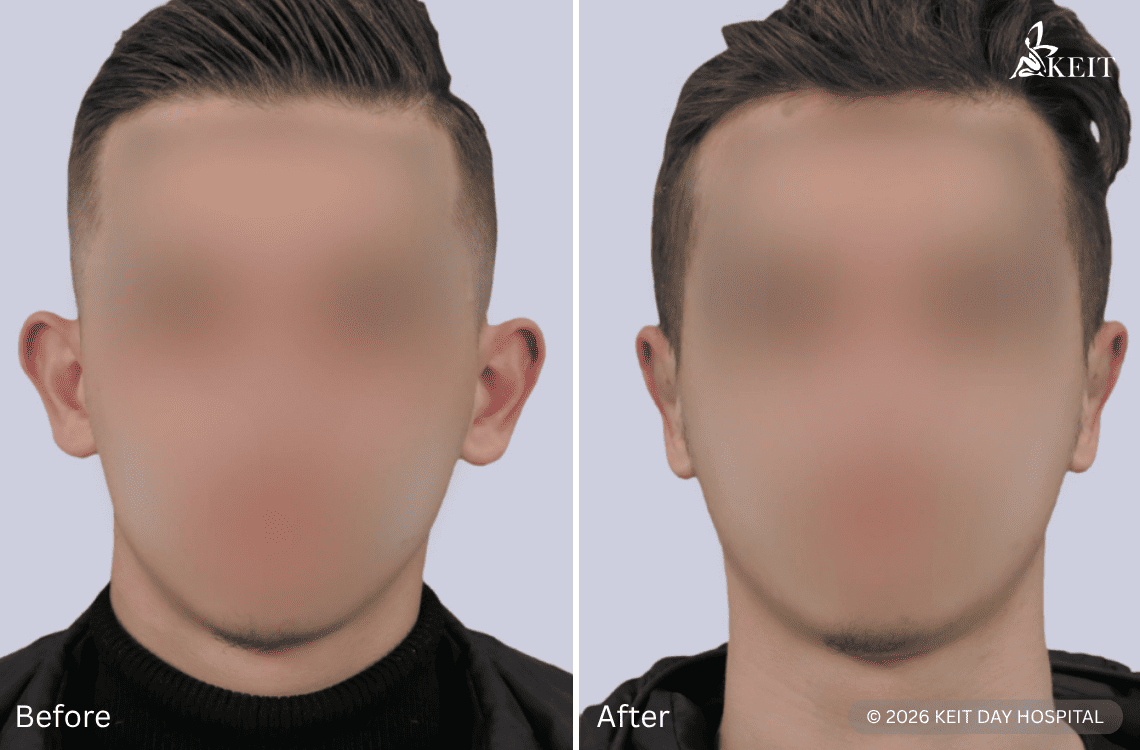
Otoplasty before and after results typically show improved ear projection, symmetry, and profile balance. Before surgery, the ears may appear prominent because they sit too far from the head, are positioned asymmetrically, or have underdefined folds that make them project outward.
After surgery, the ears are repositioned closer to the skull while preserving a natural contour. The aim is not necessarily to reduce ear size, but to create a more proportionate relationship between the ears, face, and head.
The most noticeable changes often include:
| Before |
After |
|---|---|
| Prominent ear projection | Ears positioned closer to the head |
| Asymmetry between ears | Improved bilateral balance |
| Underdefined or protruding folds | More refined ear contour |
| Ears dominate the profile |
More balanced facial proportions |
How otoplasty improves facial balance
Ear position has a direct effect on how the face is framed. When the ears project outward or sit unevenly, they can visually widen the facial outline and shift attention away from the central features.
Otoplasty refines this relationship by adjusting the ears into a more harmonious position with the head. The facial features themselves are not changed, but the overall proportions appear more balanced because the ears no longer interrupt the natural facial contour.
This improvement is often most visible in the front view and side profile, where the face can appear cleaner, more symmetrical, and better defined, as you can see in the image below.
Realistic expectations after otoplasty
Otoplasty can deliver a clear improvement in ear position and contour, but the goal is refinement, not a “perfect” or identical result. A successful outcome should look natural, balanced, and proportionate to the patient’s facial structure.
What otoplasty can achieve:
- A more natural ear position by reducing excessive projection from the head
- Improved profile balance from the front, side, and back views
- More refined ear contour by reshaping or supporting the cartilage when needed
- Long-lasting correction once the cartilage has healed in its new position
What otoplasty cannot guarantee:
- Perfect symmetry, as natural differences between the two ears are normal.
- An instant final result, since swelling can temporarily affect the shape and definition.
- The same outcome as another patient, because cartilage structure, anatomy, and healing vary from person to person.
Otoplasty recovery timeline: When results become clear
Otoplasty results are visible early, but the final shape develops gradually as swelling settles and the cartilage heals.
| Healing stage | What patients may notice |
|---|---|
| Days 1-7 | Compression bandage, |
| Weeks 1-2 | Bandage removed, |
| Weeks 2-3 | Swelling drops, ears |
| Weeks 4-6 | Shape appears moresettled and balanced |
| Months 3-6 | Cartilage healing stabilises |
The final result depends not only on the surgery itself, but also on proper healing. Following aftercare guidance and attending follow-up appointments help support a stable, long-lasting outcome.
What to avoid during otoplasty recovery
During otoplasty recovery, protecting the ears from pressure, friction, and unnecessary movement helps support proper cartilage healing and a stable result.
Patients are usually advised to avoid:
- Sleeping directly on the ears too early.
- Touching, pulling, or bending the ears.
- Wearing tight hats, headbands, or accessories.
- Heavy exercise, sweating, or activities that increase swelling.
- Contact sports or any activity that may cause impact.
- Removing dressings or changing aftercare steps without the surgeon’s guidance.
Scarring after otoplasty
Many patients wonder how visible scars will be after otoplasty. In most cases, incisions are placed behind the ears or within natural folds, helping scars stay discreet once healed.
In the first weeks after otoplasty, scars may look slightly more visible while the skin is healing. As recovery progresses, they usually fade and become less noticeable, especially when the incision area is properly cared for and the surgeon’s aftercare instructions are followed.

When to contact your surgeon or seek urgent medical help
Some swelling, bruising, tightness, and mild discomfort can be normal after otoplasty. However, symptoms that worsen instead of improving should always be checked.
Patients should contact their surgeon if they notice:
- Increasing pain or swelling
- Persistent bleeding
- Redness that spreads
- Unusual warmth around the ears
- Discharge from the incision
- Fever or signs of infection
- A sudden change in ear position or shape
- Problems with the dressing, headband, or stitches
Urgent medical help may be needed if symptoms are severe, appear suddenly, or involve heavy bleeding. When in doubt, it is always safer to contact the medical team and follow their instructions.
Otoplasty at KEIT Day Hospital
KEIT is a reference point for otoplasty in Albania, combining modern clinic standards with experienced Italian surgeons specialized in ear reshaping. With over 23,000 successful surgeries, KEIT has built a strong reputation among local and international patients.
For patients travelling from abroad, KEIT offers international packages that can include transfers, nearby hotel accommodation, trilingual assistance, and flexible payment options. Otoplasty pricing is transparent and certificate-backed, starting from 1,600 euro for bilateral otoplasty, giving patients clear cost expectations before treatment.
In the image below, you can see a real before and after result of a KEIT patient’s otoplasty surgery.