Published on:
 Modified on:

 Reading Time: 5 min
 Rhinoplasty
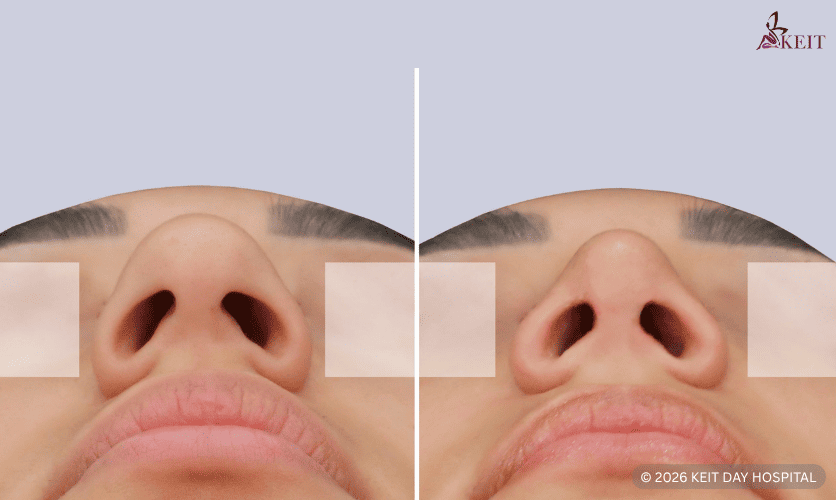
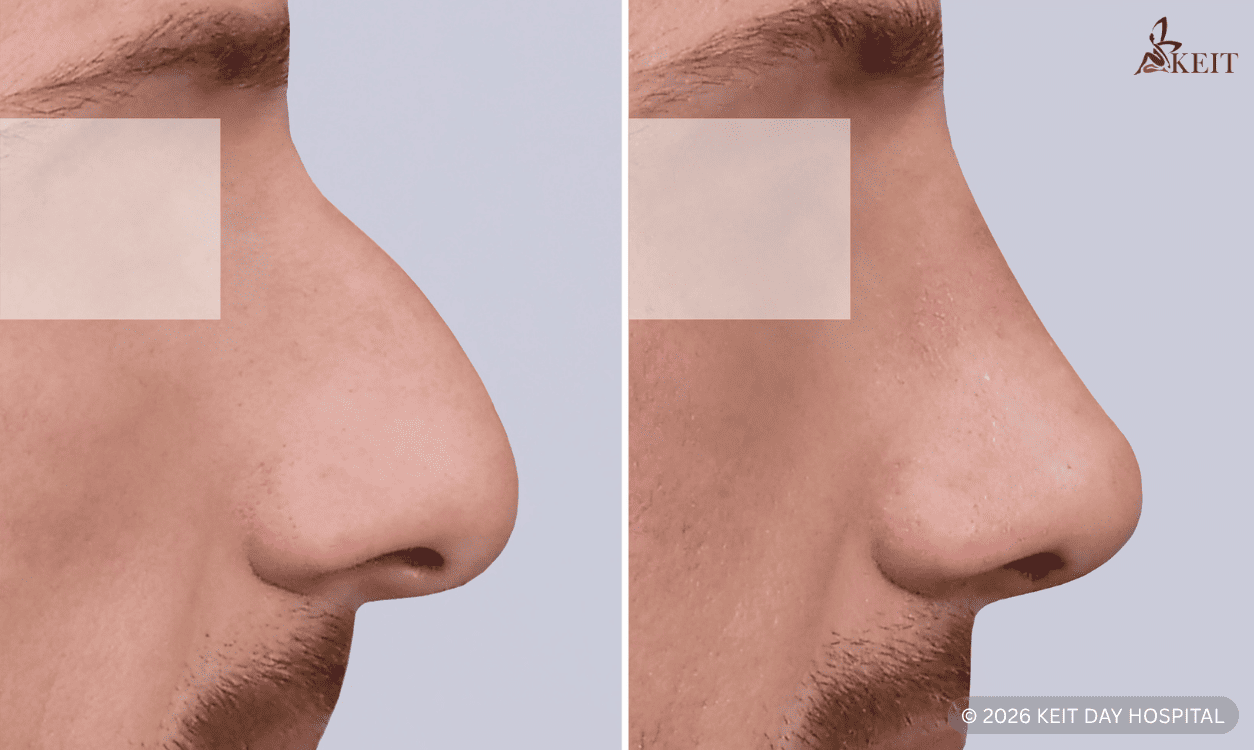
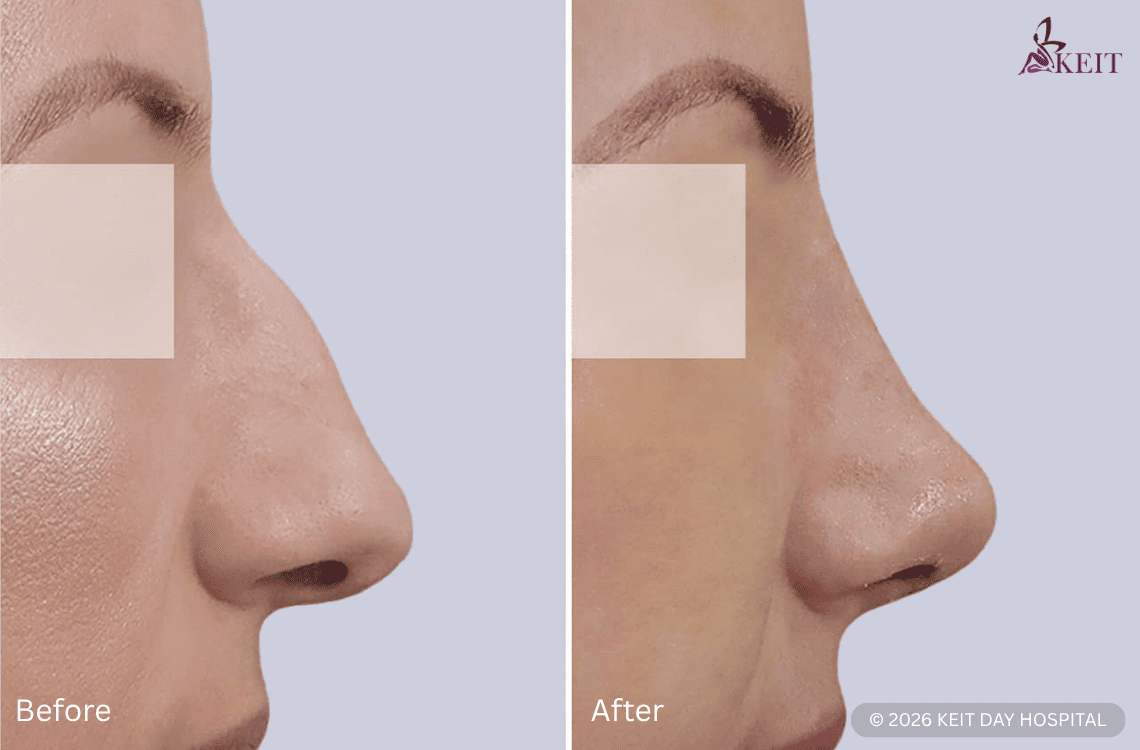
 before and after results show how nose surgery can improve nasal shape, proportion, symmetry, and facial balance. Results develop gradually as swelling settles, with most visible changes appearing over several months and the final outcome usually assessed after 12–18 months.
 Table of Contents:
-
1
 Rhinoplasty before and after: what results can you realistically expect?
-
2
Rhinoplasty before and after timeline: how the nose changes over time
-
3
Rhinoplasty before and after: why early swelling does not show the final result
-
4
Tip rhinoplasty before and after: refining the nasal tip
-
5
Nose reduction before and after: reducing size, width or projection
-
6
Male and female rhinoplasty before and after: how goals differ
-
7
Natural rhinoplasty results: what makes a good outcome?
-
8
Rhinoplasty before and after photos: how to assess results correctly
-
9
When should you contact your surgeon after rhinoplasty?
In this guide, we explain what rhinoplasty before and after results can realistically show, how the nose changes during recovery, and why early swelling does not reflect the final outcome. We also cover tip refinement, nose reduction, male and female rhinoplasty differences, photo assessment, natural results, and when to contact your surgeon.
Rhinoplasty before and after: what results can you realistically expect?
Rhinoplasty before and after results can improve nasal proportion, profile, tip shape, bridge contour, nostril balance, and overall facial harmony. The most common visible changes include:
- Bridge contour: Reducing a dorsal hump, straightening the profile, or improving bridge height.
- Nasal tip shape: Refining a bulbous, drooping, wide, or poorly defined tip to create better definition and proportion.
- Nose size and projection: Reducing excessive width, length, or projection to achieve better facial harmony.
- Nasal symmetry: Improving mild asymmetry or deviation, while recognising that perfect symmetry is rarely achievable.
- Facial balance: Creating a nose that complements the patient’s facial features rather than drawing attention to itself.
Rhinoplasty before and after timeline: how the nose changes over time
Rhinoplasty results develop gradually as swelling reduces and the nasal tissues settle.
- Week 1: The nose is swollen, bruised, and supported with a splint. The appearance does not represent the final result.
- Weeks 2–4: Bruising and visible swelling usually improve, and the nose begins to look more refined.
- Months 2–3: The bridge and upper nose become clearer, but the tip may still look swollen or firm.
- Months 3–6: Nasal definition continues to improve, especially in the bridge and side profile.
- Months 6–12: Most visible swelling settles, although subtle refinement continues.
- Months 12–18: Final results are usually clearer, particularly in tip rhinoplasty or in patients with thicker skin.
Rhinoplasty before and after: why early swelling does not show the final result
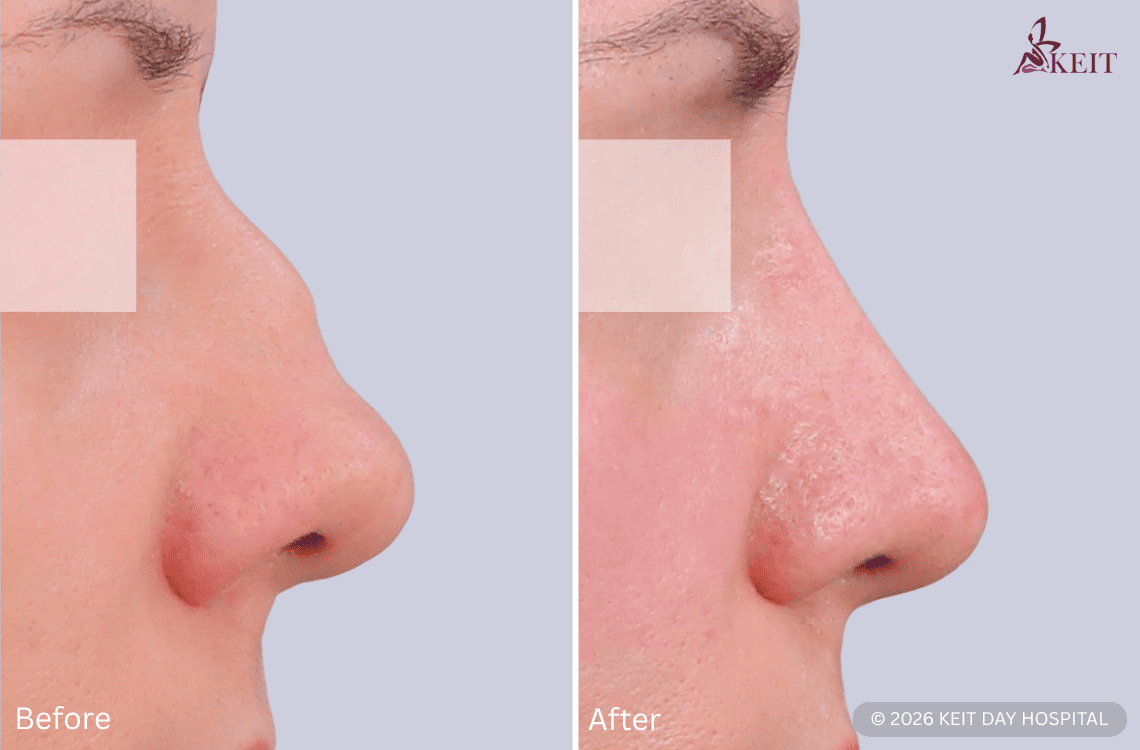
Early swelling does not show the final rhinoplasty result because surgery causes temporary inflammation and fluid build-up in the nasal tissues. This can make the nose look wider, rounder, or less defined than planned. The bridge often settles earlier, while the nasal tip takes longer because it has thicker skin and more soft tissue. As swelling reduces, the skin adapts to the reshaped bone and cartilage, and the final result becomes clearer over 12–18 months.
Book your FREE
Online Consultation Now

Tip rhinoplasty before and after: refining the nasal tip
Tip rhinoplasty focuses on the lower third of the nose, where the nasal tip shape, projection, rotation, and symmetry are refined. It can correct a bulbous, wide, drooping, over-projected, under-projected, or asymmetric tip.
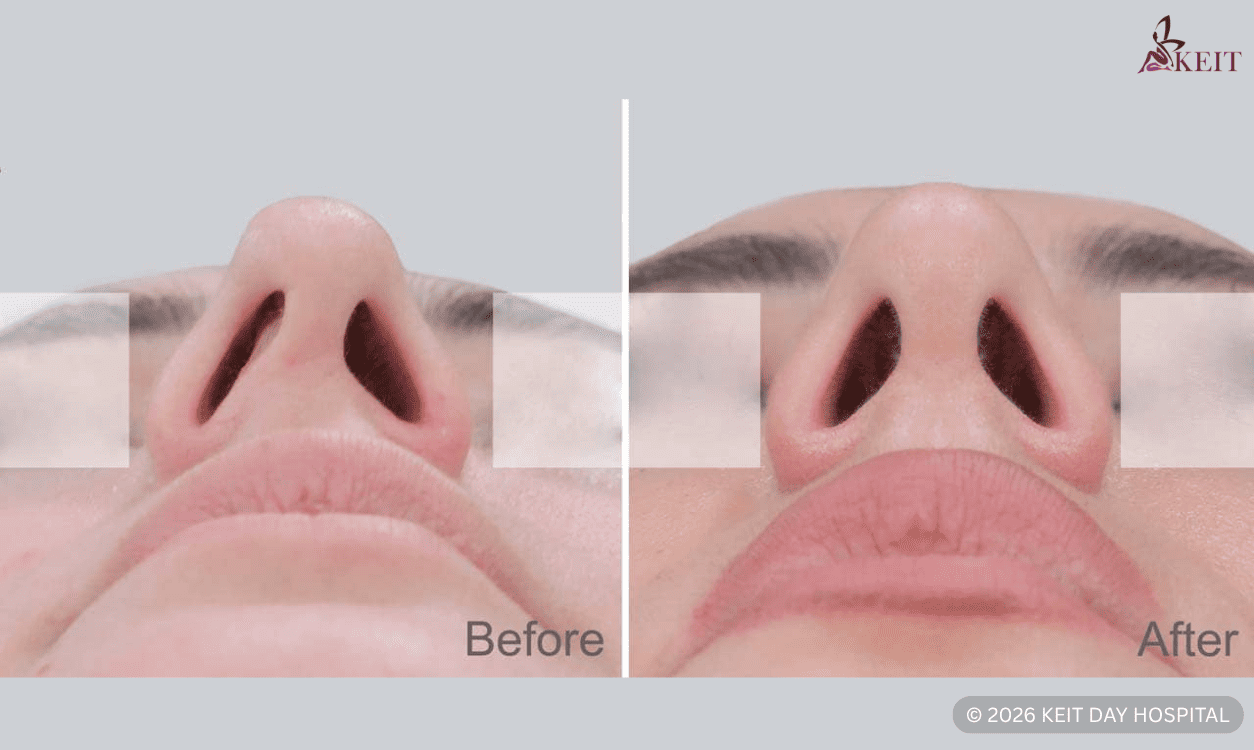
In before and after results, the main changes are usually seen in tip definition and position, nostril balance, and the transition between the bridge and tip. The result should look refined but not pinched, overly rotated, or disconnected from the rest of the nose.
Nose reduction before and after: reducing size, width or projection
Nose reduction before and after results show a smaller, narrower, or more proportionate nose, depending on what is being corrected. Nose reduction can involve reducing a dorsal hump, narrowing the nasal bones, refining the tip, reducing excessive projection, or improving nostril balance. The plan should be based on facial proportions, not simply making the nose as small as possible. Over-reduction can affect both appearance and breathing, so structural support is important.
Male and female rhinoplasty before and after: how goals differ
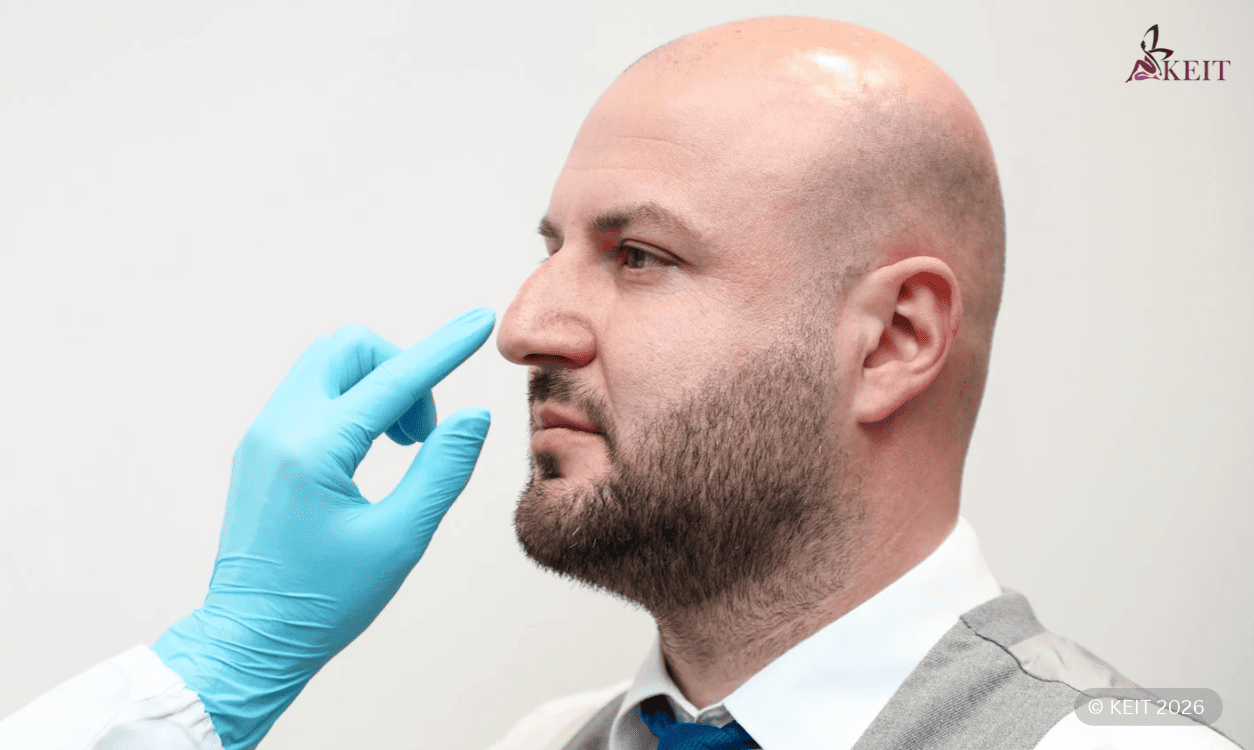
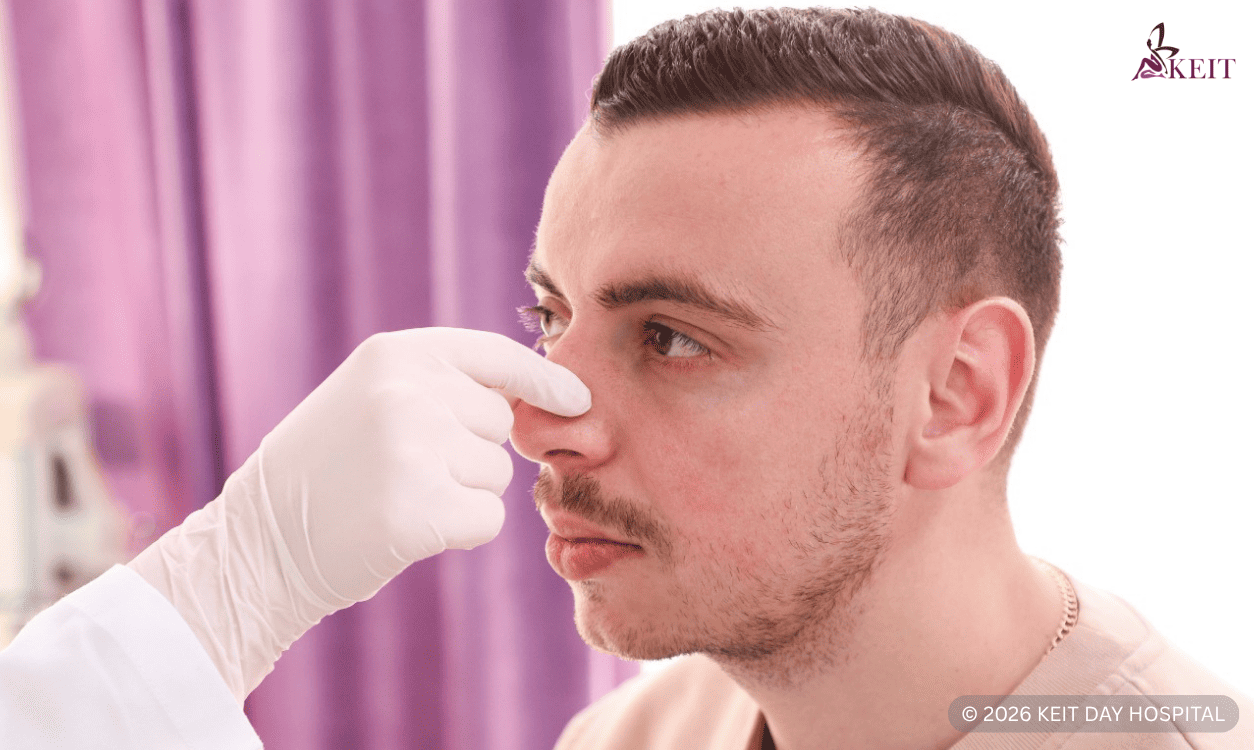
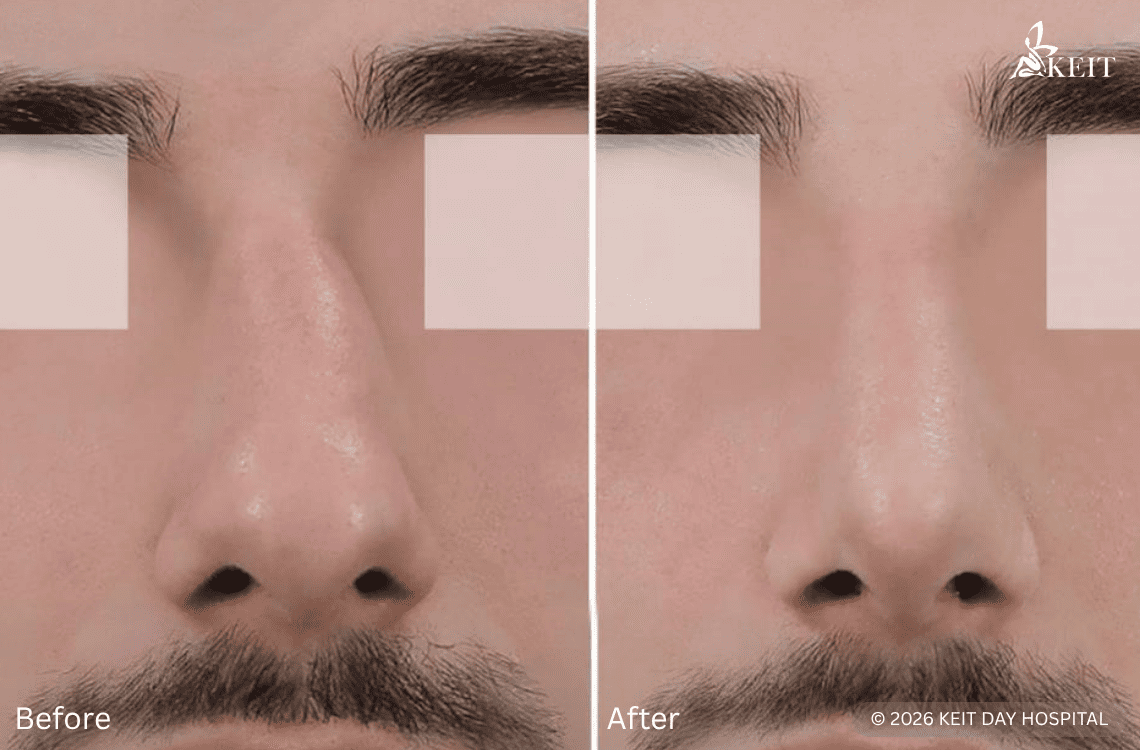
Male and female rhinoplasty goals may differ because nasal proportions, facial structure, and aesthetic preferences vary between patients. Male rhinoplasty usually aims to preserve stronger nasal lines, avoid excessive tip rotation, and maintain facial balance. Female rhinoplasty may involve more refinement of the bridge, tip, or profile, depending on the patient’s goals. The most important factor is not gender alone, but creating a nose that fits the individual face.
Natural rhinoplasty results: what makes a good outcome?
Natural rhinoplasty results improve nasal shape and proportion while preserving facial harmony and nasal function. A good rhinoplasty outcome usually includes:
- Balanced bridge contour: The bridge is smooth and proportionate, not overly reduced.
- Refined nasal tip: The tip has better definition without looking pinched, sharp, or over-rotated.
- Nostril balance: The nostrils look proportionate from the front and base views.
- Facial harmony: The nose fits the chin, lips, forehead, and overall facial structure.
- Stable support: The nasal framework remains strong enough to maintain shape and support breathing.
Rhinoplasty before and after photos: how to assess results correctly
Rhinoplasty before and after photos should be assessed with consistent angles, lighting, facial expression, and healing stage. When reviewing rhinoplasty pictures, check:
- Timing after surgery: Final results should not be judged too early, as swelling can change the bridge, tip, and nostril shape.
- Standard views: Front, side, three-quarter, and base views help show nasal symmetry, projection, tip position, and nostril balance.
- Consistent photography: Lighting, camera distance, head position, and facial expression should be similar in both photos.
- Facial balance: The result should suit the chin, lips, cheeks, forehead, and overall facial proportions.
- Natural contour: The nose should look refined but not pinched, over-reduced, or disconnected from the rest of the face.
When should you contact your surgeon after rhinoplasty?
Patients should contact their surgeon if healing symptoms worsen, appear unusual, or do not follow the expected recovery pattern. Seek medical advice if you notice:
- increasing pain rather than gradual improvement;
- heavy or persistent bleeding;
- spreading redness, warmth, or discharge;
- fever or feeling unwell;
- sudden or worsening swelling;
- new or worsening breathing difficulty;
- injury or trauma to the nose during recovery;
- concerns about delayed healing, marked asymmetry, or unexpected changes.