Published on:
 Modified on:

 Reading Time: 5 min
 Rhinoplasty
Septoplasty is a surgical procedure used to correct a deviated nasal septum, the internal wall between the two nasal passages. It is recommended when persistent nasal obstruction does not improve with non-surgical treatment and may be combined with turbinate reduction in selected cases.
 Table of Contents:
-
1
 Septoplasty: What it is and how it improves nasal breathing
-
2
Deviated septum surgery: When is septoplasty needed and what symptoms to look for
-
3
Septoplasty: What are the septum deviation causes?
-
4
How the condition is diagnosed before septoplasty surgery
-
5
Surgery inside nose: How is septoplasty performed?
-
6
Septoplasty and turbinoplasty: When are they performed together?
-
7
Septoplasty recovery: Timeline, healing process, and when breathing improves
-
8
Septoplasty before and after: Does septoplasty change nose shape?
-
9
Septoplasty risks and side effects
-
10
Septoplasty cost and NHS access: What to expect
In this guide, we explain what septoplasty is, when it is needed, how it is diagnosed and performed, and when it may be combined with turbinoplasty. We also cover recovery, before and after results, possible risks, and what to expect in terms of cost and NHS access.
Septoplasty: What it is and how it improves nasal breathing
Septoplasty is a surgical procedure used to correct a deviated nasal septum and restore normal airflow through the nose. This surgery on a deviated septum focuses on improving breathing by straightening the internal structure that separates the nasal passages.
The improvement in breathing is achieved by:
- Correcting septal deviation that narrows the nasal airway.
- Reducing structural obstruction inside the nose.
- Relieving nasal blockage on one or both sides.
- Supporting smoother, more balanced nasal airflow.
Septoplasty is performed to restore nasal function by improving airflow through the nasal passages, rather than to change the appearance of the nose.
Deviated septum surgery: When is septoplasty needed and what symptoms to look for
Deviated septum surgery is recommended when septal deviation leads to persistent symptoms that interfere with normal nasal breathing and overall quality of life.
Symptoms of deviated septum include:
- Persistent nasal obstruction affecting one or both sides.
- Difficulty breathing through the nose, often resulting in mouth breathing, especially during sleep.
- Snoring or sleep disturbance related to airflow limitation.
- Recurrent nasal congestion or sinus pressure.
These symptoms can vary in severity, and specialist evaluation is needed to confirm whether septal deviation is the underlying cause and whether septoplasty may be appropriate.
Septoplasty: What are the septum deviation causes?
Septal deviation can arise from developmental changes, congenital asymmetry, or trauma affecting the structure of the nose.
Common causes of septal deviation include:
- Development during growth, when the septum gradually shifts out of the midline.
- Congenital asymmetry, meaning the septum is misaligned from birth.
- Nasal trauma or injury, which can displace the septum and lead to structural narrowing inside the nose.

How the condition is diagnosed before septoplasty surgery
Diagnosis before septoplasty surgery requires specialist assessment to confirm septal deviation and evaluate its effect on nasal airflow.
- ENT specialist consultation: Assessment of symptoms, nasal breathing, and relevant medical history.
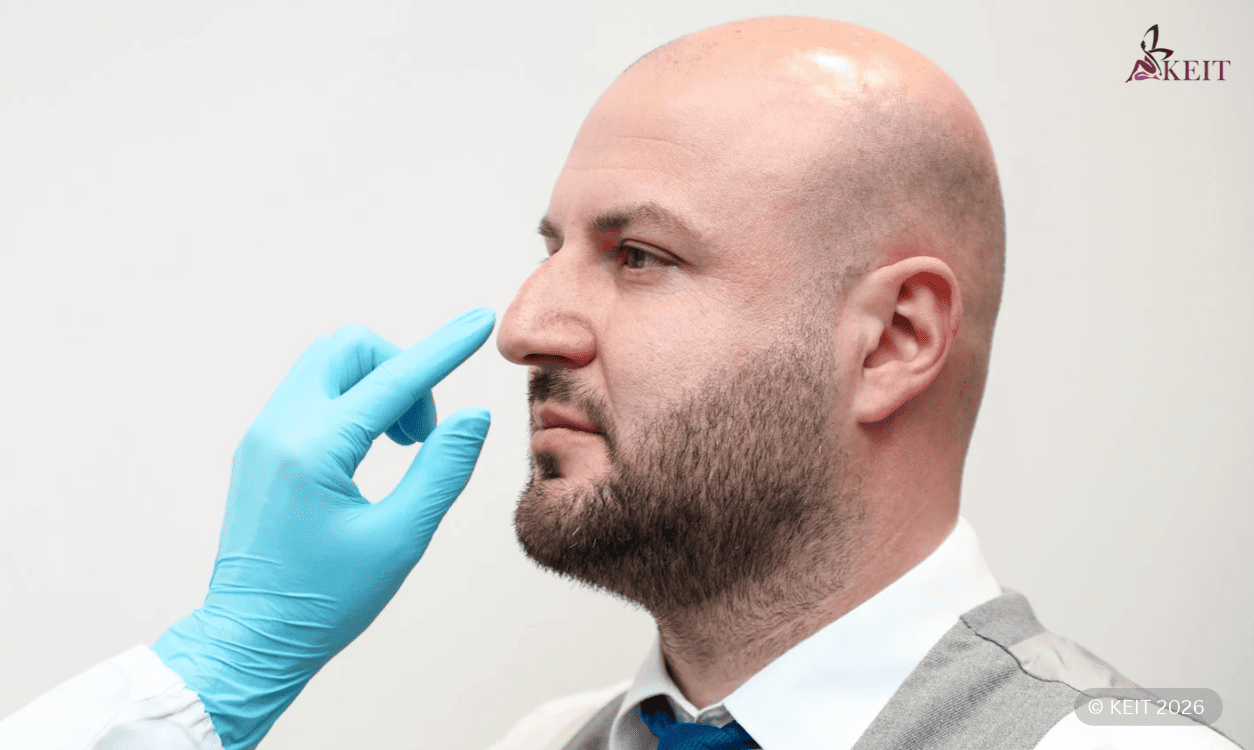
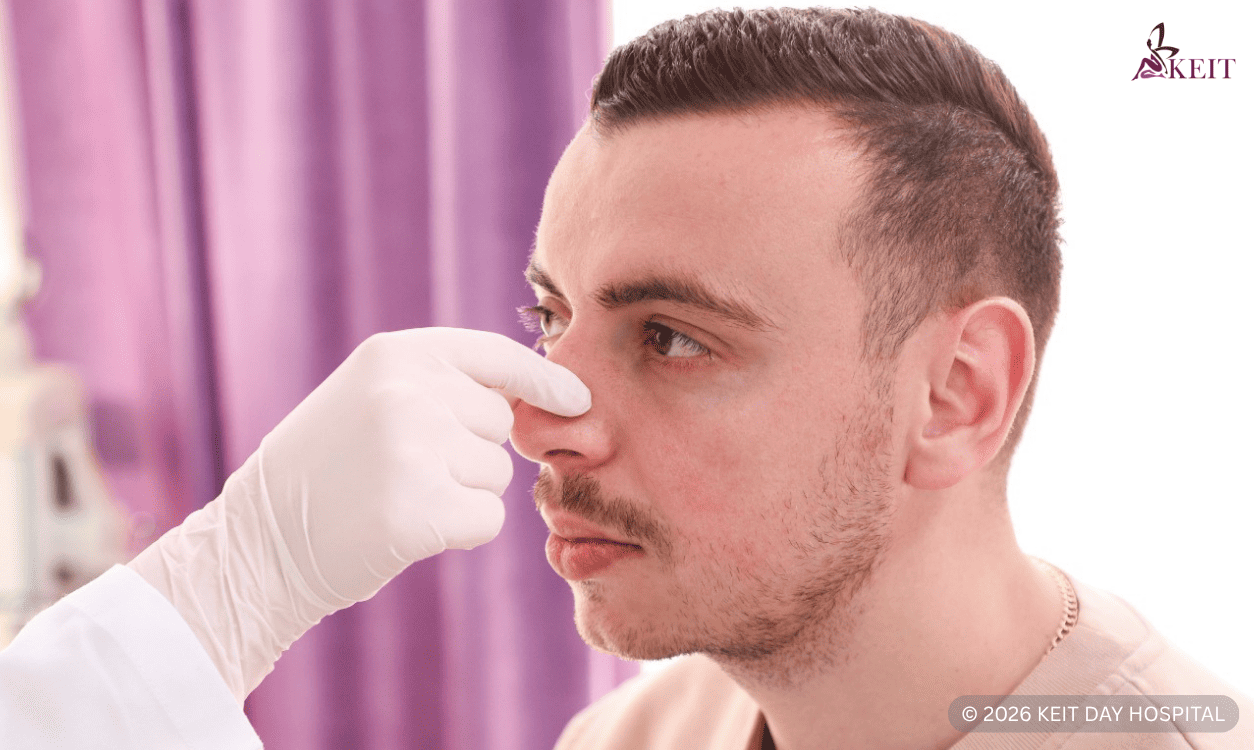
- Clinical nasal examination: Evaluation of septal alignment and the extent of deviation inside the nose.
- Nasal endoscopy: Detailed visualisation of the nasal passages to identify obstruction and associated findings.
Surgery inside nose: How is septoplasty performed?
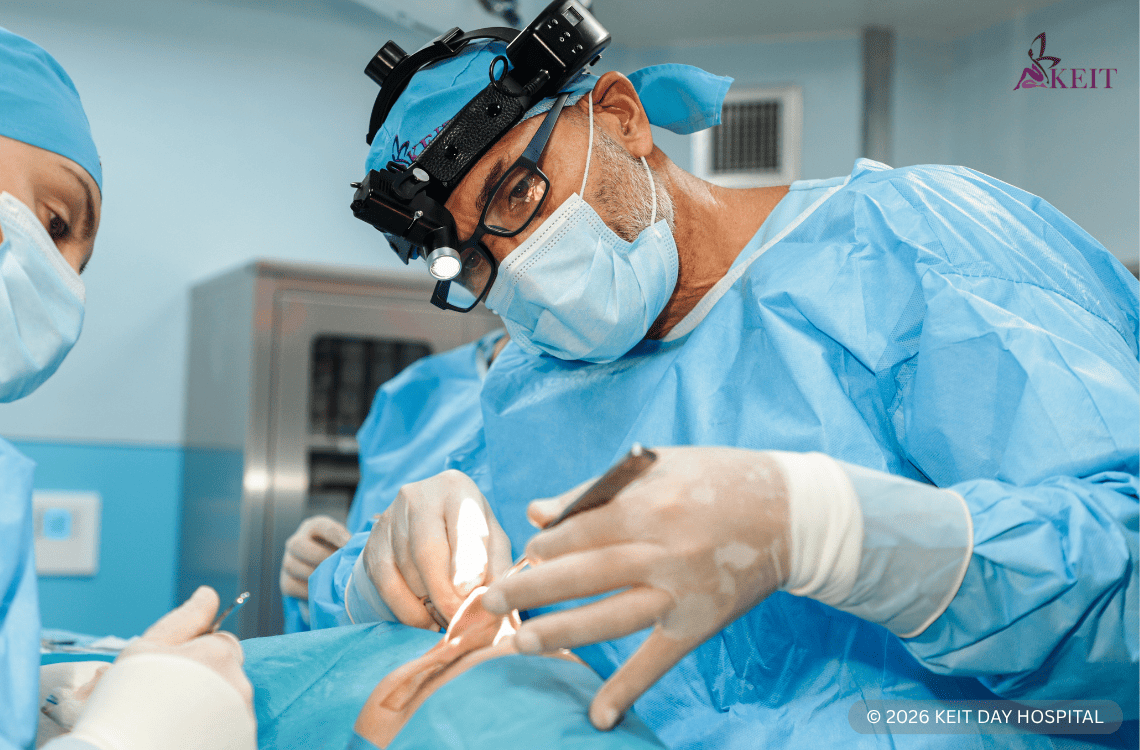
Septoplasty is performed through the nostrils, without external incisions, under local or general anaesthesia depending on the surgical plan and the patient’s case. During the septoplasty surgical procedure, the surgeon lifts the septal lining and reshapes or repositions the deviated cartilage and bone to improve the nasal airway. The procedure usually takes 30–60 minutes, after which internal splints may be placed temporarily to support healing and maintain septal alignment.
Septoplasty and turbinoplasty: When are they performed together?
Septoplasty and turbinate reduction may be combined when nasal obstruction is caused not only by septal deviation, but also by enlargement of the inferior turbinates. In these cases, correcting the septum alone may not fully restore airflow, so turbinoplasty is performed at the same time to widen the nasal airway and improve breathing more completely.
Septoplasty recovery: Timeline, healing process, and when breathing improves
Recovery after a septoplasty occurs in stages and varies slightly between individuals.
- Days 1–3: Nasal blockage, swelling, and mild bleeding are expected, with breathing usually limited during this phase.
- Days 4–7: Swelling begins to reduce, and breathing may improve slightly, although some obstruction can persist.
- Weeks 2–4: Nasal airflow becomes clearer as healing progresses and internal swelling continues to decrease.
- Months 1–3: The nasal airway stabilises, and the final breathing improvement becomes more noticeable.
Septoplasty before and after: Does septoplasty change nose shape?
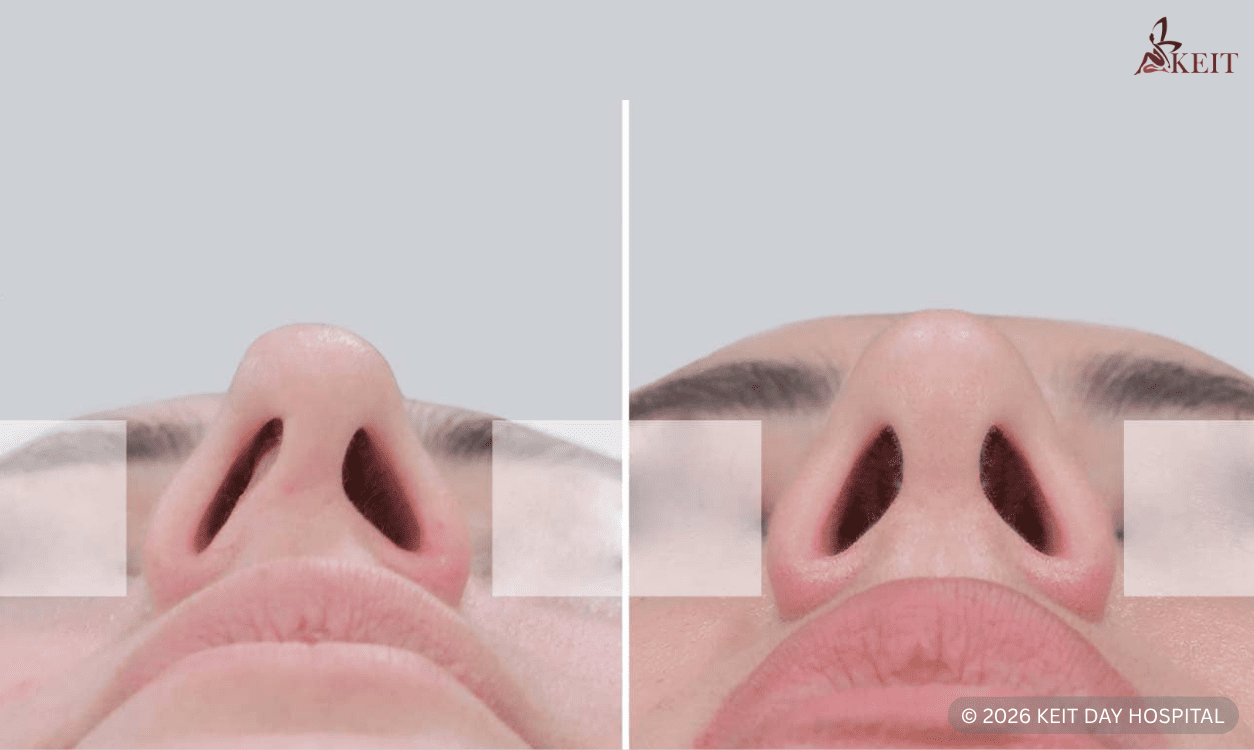
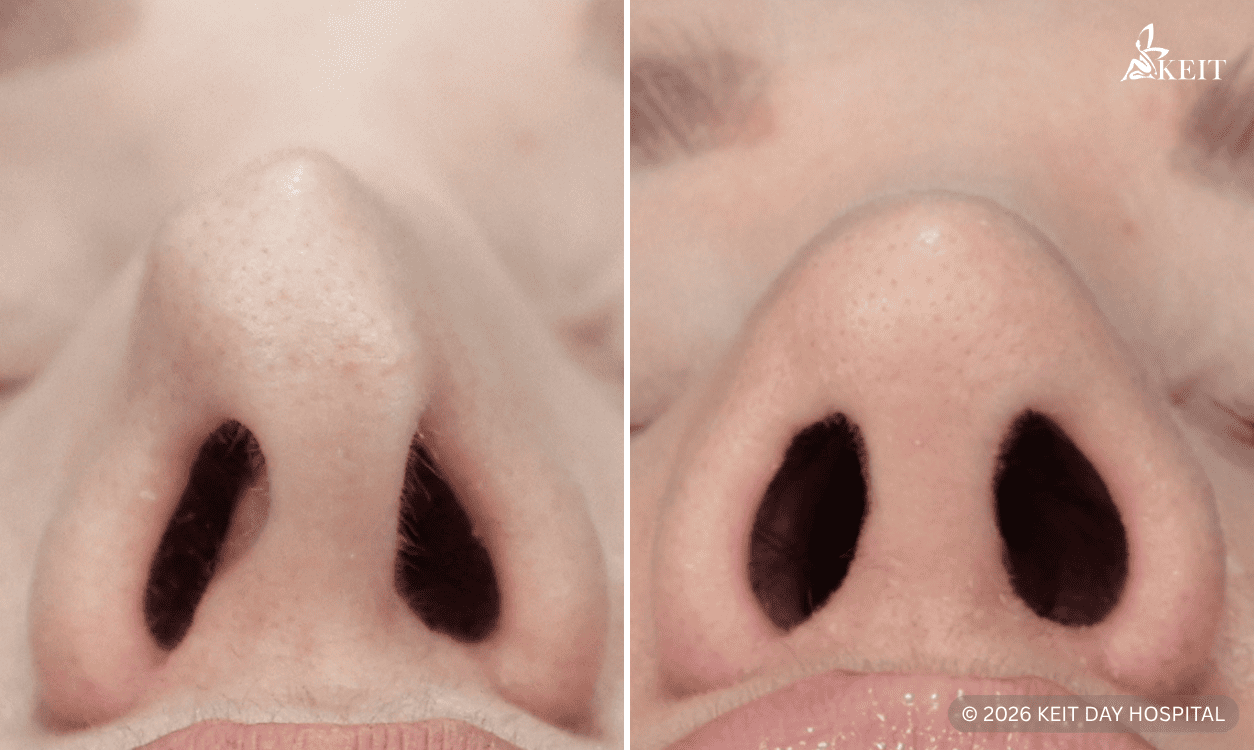
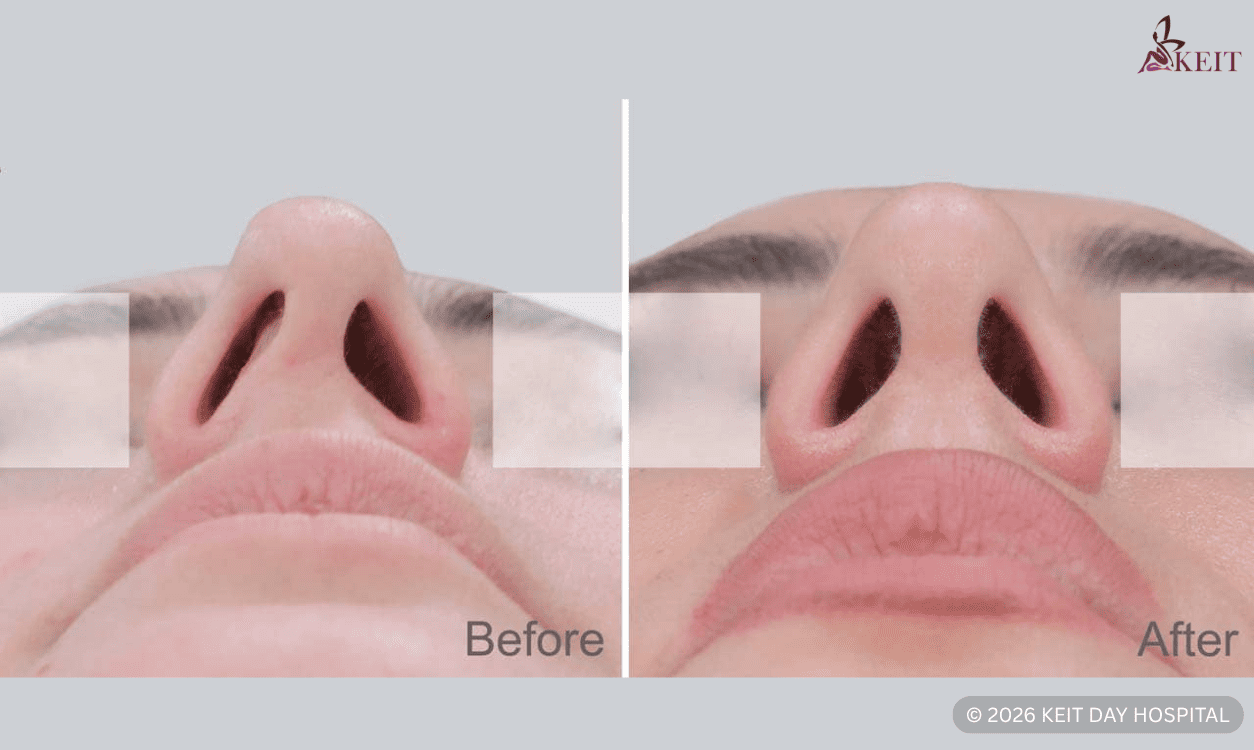
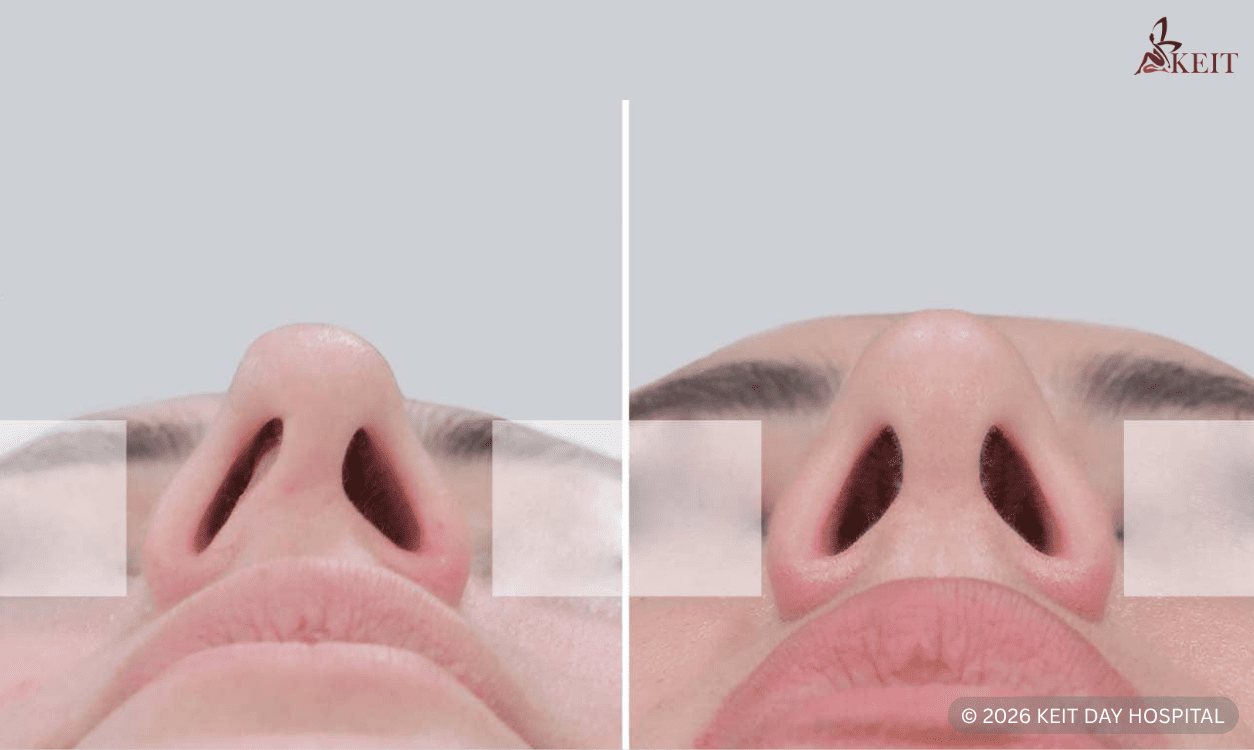
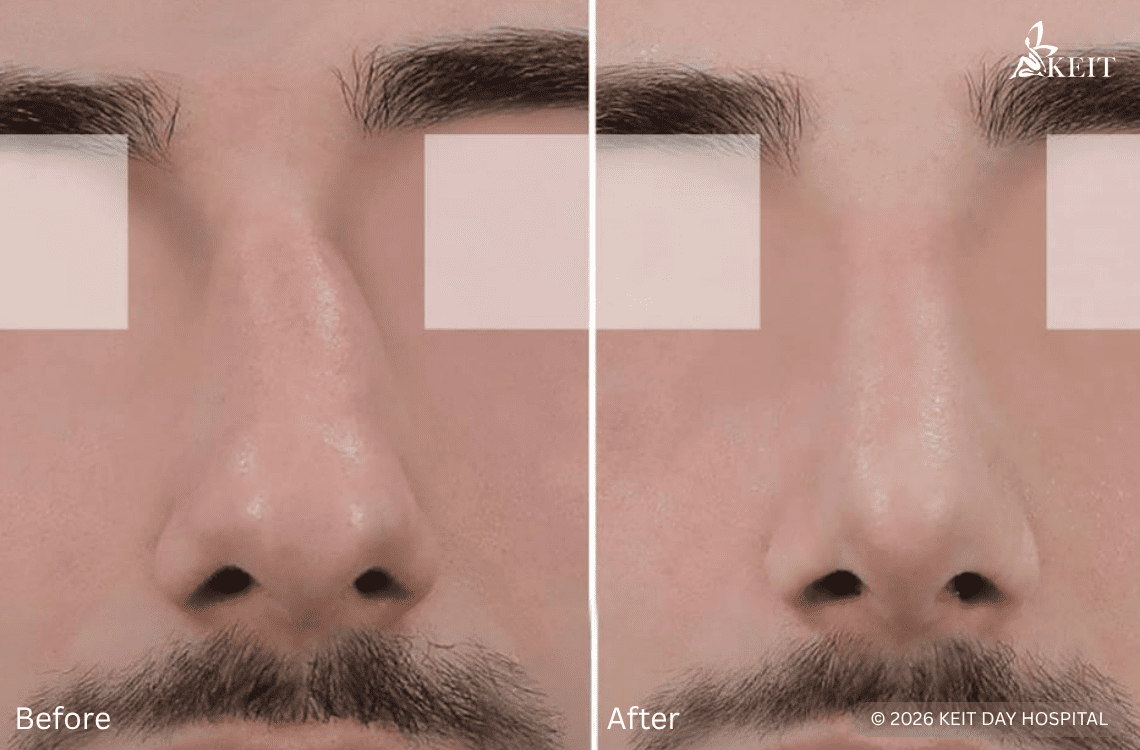
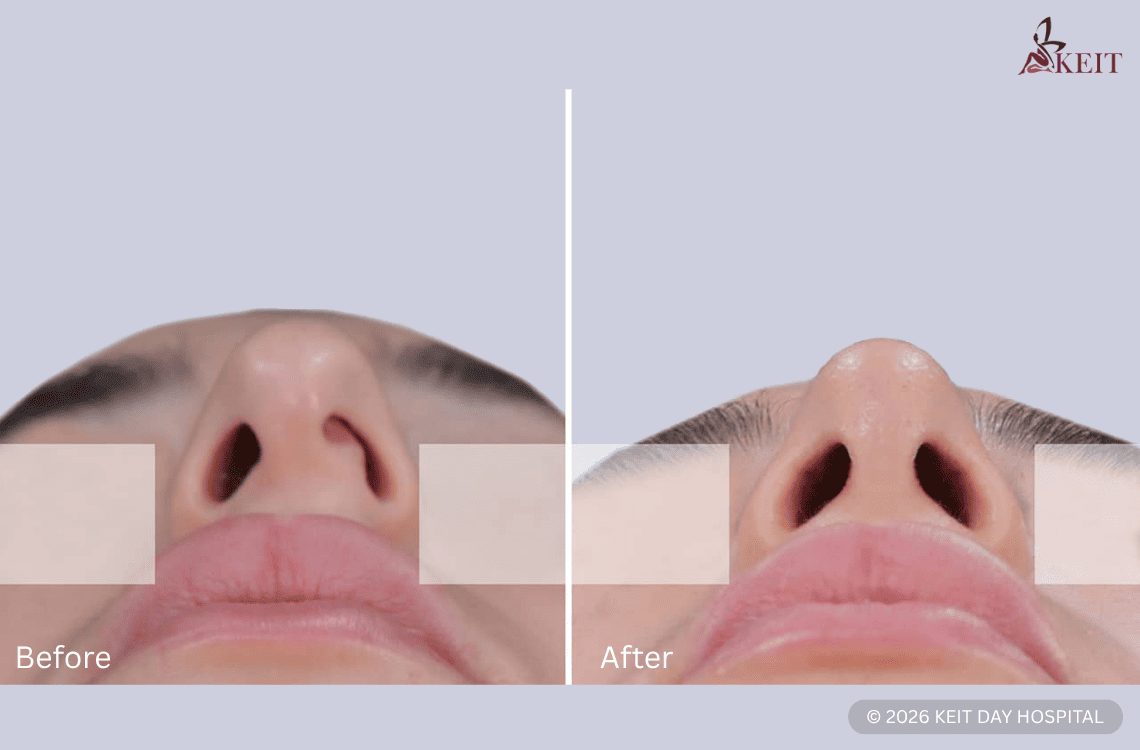
Septoplasty before and after results reflect improved nasal airflow, reduced obstruction, and better overall breathing through the nose. The outcome is therefore functional rather than cosmetic, as septoplasty is performed to correct the internal septum while preserving the external nasal structure. If a change in nose shape is also required, this involves a separate cosmetic procedure or a combined approach such as rhinoplasty.
Septoplasty risks and side effects
Septoplasty is generally a safe procedure, but like any surgery, it carries potential risks:
- Bleeding: Mild bleeding can occur after surgery, but heavier bleeding may require medical review.
- Infection: Infection is uncommon, but it is a recognised risk after any surgical procedure.
- Septal perforation: A small hole can develop in the septum, which may affect airflow or cause crusting.
- Need for revision surgery: A second procedure may be needed if the functional result is incomplete.
Common septoplasty side effects include nasal blockage, mild bleeding, swelling, crusting, and discomfort, which are part of the normal healing process.
Septoplasty cost and NHS access: What to expect
Cost for septoplasty surgery is usually quoted between 2,600 and 4,150 euro, depending on surgical complexity, surgeon expertise, anaesthesia, and whether additional procedures are required. It is also important to confirm what is included in the quoted price, as consultation, investigations, and follow-up care may be charged separately.
Septoplasty NHS: Eligibility, access, and waiting times
NHS septoplasty is available when there is a clear clinical need, such as persistent nasal obstruction due to septal deviation. Patients require GP referral and specialist assessment, and waiting times may vary, as treatment is prioritised based on medical necessity rather than elective choice.