Published on:
 Modified on:

 Reading Time: 5 min
 Breast augmentation
Tubular breasts, also known as tuberous breasts, are a congenital breast condition that affects breast shape, symmetry and development. The condition occurs when the breast tissue does not expand normally during puberty, often leading to a narrow breast base, reduced lower pole fullness and herniation of tissue through the areola. While tubular breasts are not dangerous, they can strongly affect confidence, clothing fit and body image. With modern planning and specialised surgical techniques, tubular breast correction can achieve natural, proportional results.
 Table of Contents:
-
1
 What are tubular breasts?
-
2
What causes tubular breasts: Reasons why this condition occurs
-
3
Common signs and characteristics of tubular breasts
-
4
Grades of tubular breasts explained: (Type I, II, III)
-
5
Tubular breast deformity: How is it diagnosed?
-
6
Tubular breast correction: Available treatment options
-
7
Tubular breast surgery: How the procedure works
-
8
Tubular breasts before and after: What results are realistic
-
9
Tubular breast correction surgery: The recovery timeline
-
10
Tubular breast: NHS eligibility and criteria
In this comprehensive guide, we will explore what tubular breasts are, why they develop and how severity is graded. We will then explain how the condition is diagnosed and which treatment options, including tubular breast surgery, may be considered. Finally, we will outline realistic results, the typical recovery timeline and what tubular breast NHS eligibility may involve in the UK.
What are tubular breasts?
Tubular breasts are a developmental breast anomaly where the breast does not form a round, evenly expanded shape. Instead, the breast base remains constricted, and growth tends to project forward. This structural pattern can affect one breast more than the other and may be mild, moderate or severe. The condition involves more than volume alone: it can include differences in the skin envelope, glandular tissue distribution and areolar support.
What causes tubular breasts: Reasons why this condition occurs
Tubular breasts usually form when breast growth during puberty is shaped by a structural restriction at the breast base, which changes how the tissue expands. Key contributing factors include:
- Constricted breast base (fibrous ring): A tight band of tissue limits outward expansion, so the breast projects forward instead of widening.
- Underdeveloped lower skin envelope: The lower pole skin doesn’t stretch enough, reducing fullness in the bottom of the breast.
- Uneven gland distribution: Less tissue sits in the lower quadrants, with more central projection.
- Areolar weakness / herniation: Low support around the areola can lead to a puffy, enlarged appearance.
- Pubertal growth pattern: Growth occurs during puberty, but the restricted base shapes the breast differently.
- Possible genetic influence: Family history is sometimes reported, although inheritance isn’t consistent.
Common signs and characteristics of tubular breasts
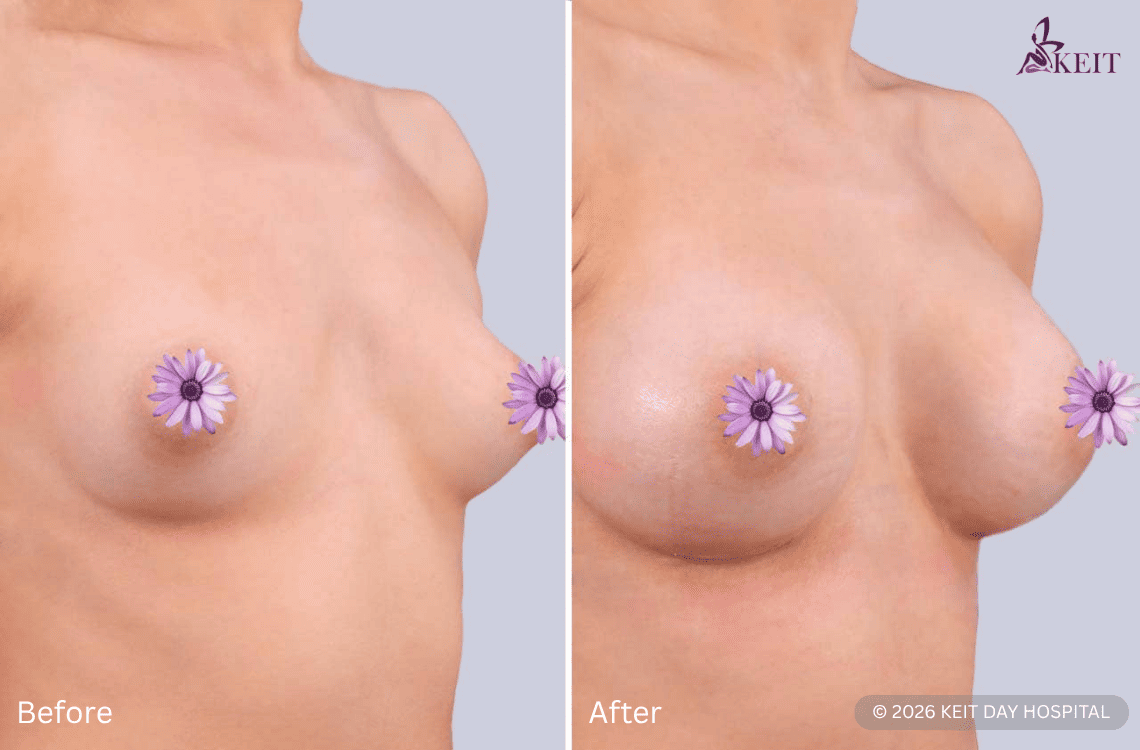
Tubular breasts may present with a combination of features, and not all patients show the same pattern. Common characteristics include:
- A narrow breast base with limited width.
- Breast shape that appears elongated or “tube-like”.
- Reduced lower pole fullness (breasts can look high-set).
- Enlarged or puffy areola due to tissue herniation.
- Asymmetry in size, shape, or areolar position.
These features often become more noticeable once breast development is complete.
Grades of tubular breasts explained: (Type I, II, III)
Tubular breasts are often classified into three types based on how much the breast base is constricted and which quadrants are affected:
- Type I: Mild constriction, mainly affecting the lower inner quadrant. Shape changes may be subtle and often show as mild asymmetry or reduced lower inner fullness.
- Type II: Moderate constriction affecting both lower quadrants, with clearer breast shape distortion and more visible areolar herniation.
- Type III: Severe constriction with a very narrow base, significant lack of lower pole development, pronounced areolar herniation and more obvious asymmetry.
Tubular breast deformity: How is it diagnosed?
Diagnosis is primarily clinical. A specialist surgeon evaluates breast base width, tissue distribution, lower pole development, areolar size and degree of herniation. Measurements and photos are often used to plan correction precisely and to map symmetry goals. Imaging is not usually required for diagnosis, but may be used when clinically appropriate to assess general breast health.

Tubular breast correction: Available treatment options
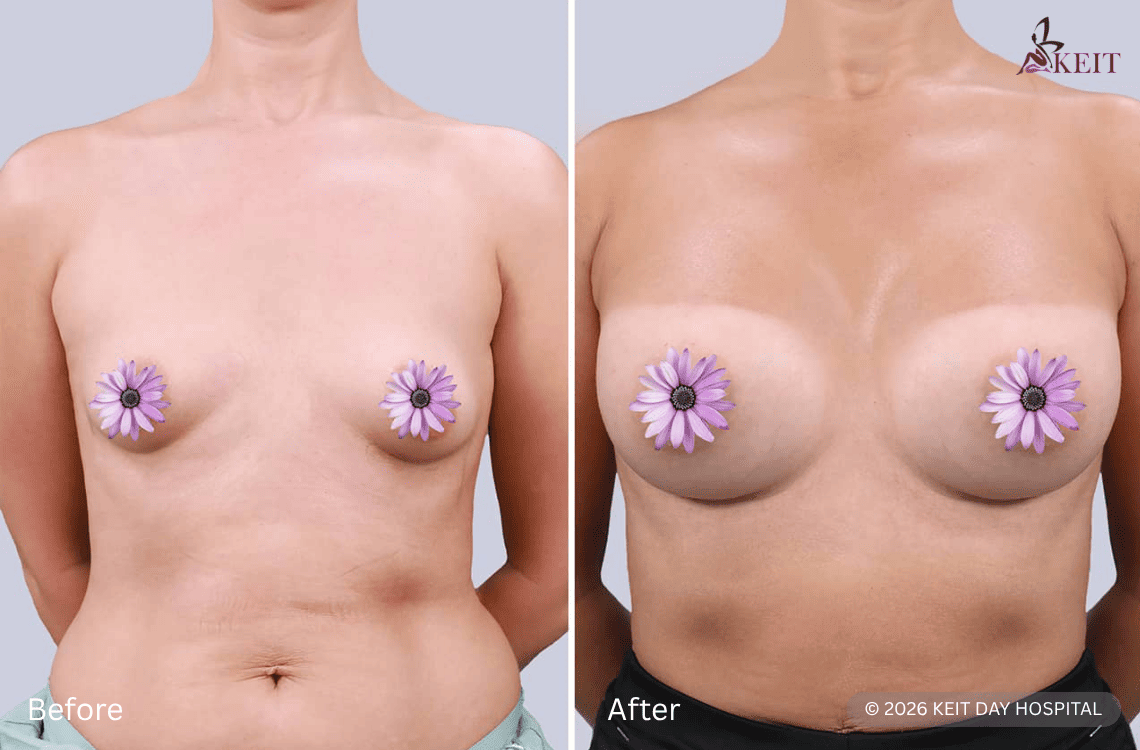
Tubular breast correction is surgical and customised to the anatomy and severity. Options may include:
- Tissue release and reshaping: Releasing the constricted base and redistributing glandular tissue to create a wider, rounder breast shape.
- Areolar correction (when needed): Reducing areolar size and addressing herniation for better proportion.
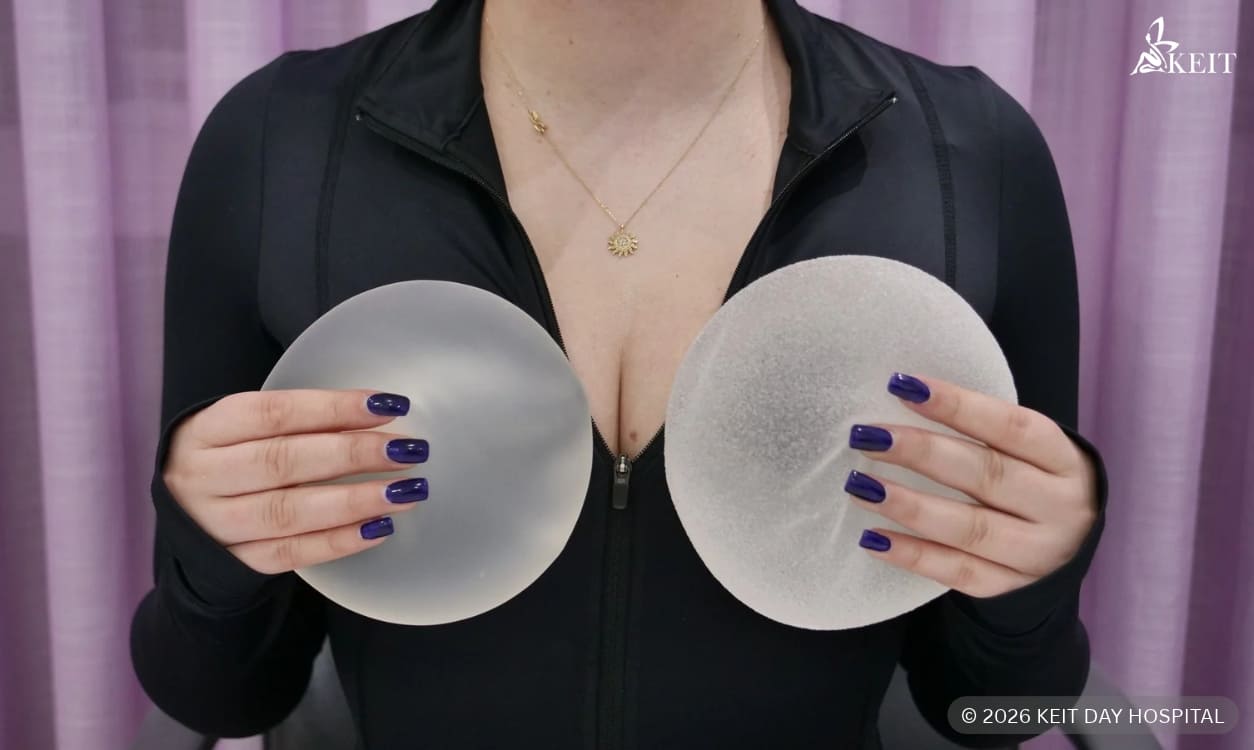
- Implants (when volume is needed): Used to restore volume, improve shape and support lower pole development.
- Fat grafting (selected cases): Adds softness and contour refinement, especially for subtle asymmetry or edge blending.
Most patients benefit from a combined approach rather than a single technique.
Tubular breast surgery: How the procedure works
Tubular breast surgery is a specialised reconstructive procedure that corrects the underlying structural restriction of the breast, aiming to restore natural shape, proportion and symmetry rather than simply increase size.
- Performed under general anaesthesia, with careful pre-operative planning focused on symmetry and stable proportions.
- Releases the constricted breast base to allow natural expansion of the breast.
- Reshapes and redistributes glandular tissue to rebuild the lower pole and correct the tubular shape.
- Reconstructs the breast envelope so the breast sits and projects naturally.
- Adds volume with an implant when needed, if shape correction alone is not sufficient.
- Corrects areola size or herniation when necessary to restore balance.
Tubular breasts before and after: What results are realistic
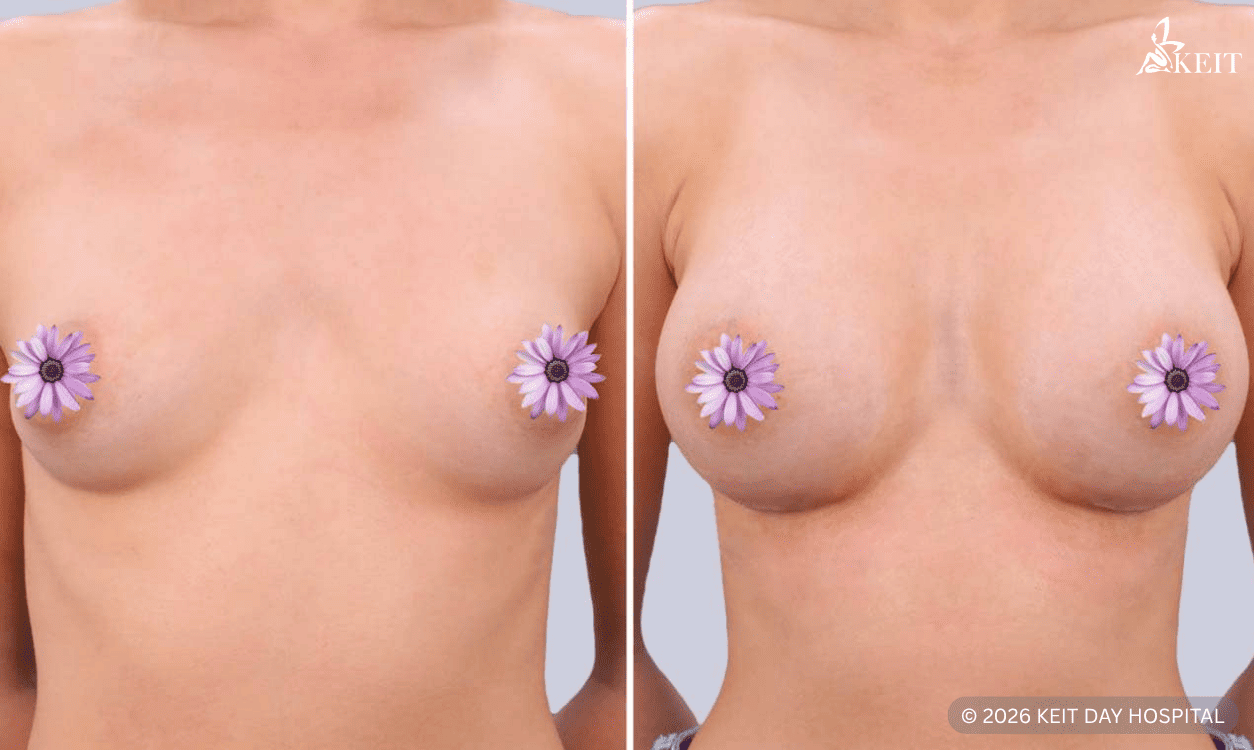
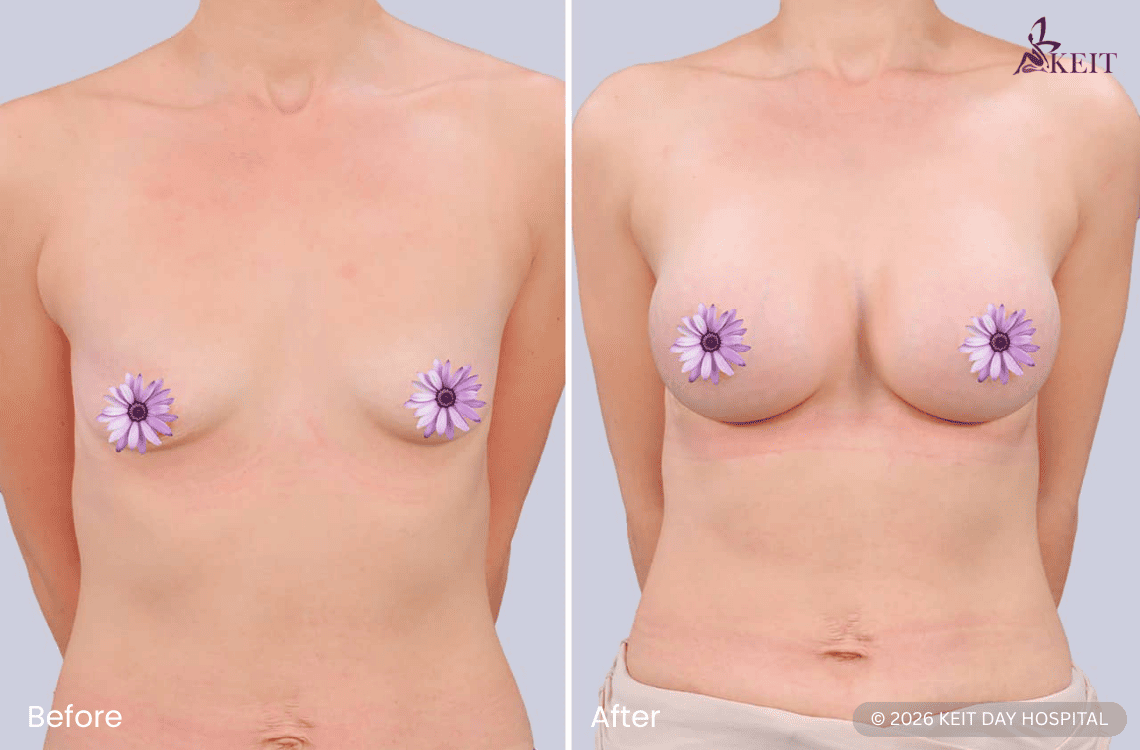
Tubular breasts before and after results often show a meaningful improvement in breast shape, lower pole fullness and overall symmetry. Realistic outcomes include:
- A wider breast base and more natural contour.
- Improved lower pole development and a smoother breast slope.
- Reduction of areolar puffiness when herniation is corrected.
- Better proportional balance between the breasts.
The goal is natural harmony rather than “perfect” symmetry, since all breasts have some degree of natural asymmetry.
Tubular breast correction surgery: The recovery timeline
Recovery depends on the techniques used (reshaping alone vs implant + areola correction), but commonly follows this pattern:
- First week: Swelling, tightness and tenderness are expected; supportive garments are usually required.
- Weeks 2–4: Swelling reduces gradually; breasts start to settle and feel softer.
- Weeks 6–8: Most patients return to normal routines; exercise is reintroduced progressively as advised.
- After 3 months: Shape appears more stable, though subtle settling can continue.
Scar maturation typically continues for several months and may take up to a year.
Tubular breast: NHS eligibility and criteria
In the UK, tubular breast correction may be considered for NHS funding in selected, limited circumstances, but approval is not guaranteed and criteria can vary between local NHS commissioning policies. In most cases, the NHS only supports treatment when the deformity is clearly significant and the impact is well documented. The pathway usually begins with a GP consultation and may require specialist assessment and evidence of functional or psychological harm.