Published on:
 Modified on:

 Reading Time: 7 min
 Hair transplant
Androgenetic alopecia is the most common form of progressive hair loss in both men and women. It is a chronic, genetically determined condition in which susceptible hair follicles gradually miniaturize under the influence of androgens, leading to visible thinning over time. Unlike temporary shedding disorders, androgenetic alopecia follows a predictable pattern and continues to progress without appropriate management. Early recognition, accurate diagnosis and evidence-based treatment are essential to slow progression and preserve existing hair density.
 Table of Contents:
-
1
 What is androgenetic alopecia?
-
2
What causes androgenetic alopecia?
-
3
At what age does androgenetic alopecia start?
-
4
Male pattern hair loss: Symptoms and stages
-
5
Female pattern hair loss: Symptoms, patterns and stages
-
6
Telogen effluvium vs androgenetic alopecia: How to tell the difference
-
7
How is androgenetic alopecia diagnosed?
-
8
Androgenetic alopecia treatments: What really works
-
9
Hair transplant for androgenetic alopecia: When is it indicated?
In this comprehensive guide, we will explore what androgenetic alopecia is and why it happens, the most common ages it starts and how it shows up differently in men vs women (including staging scales). Later you will discover how to tell it apart from telogen effluvium, how doctors diagnose it, which treatments are actually evidence-based and when a hair transplant makes sense as part of a long-term plan.
What is androgenetic alopecia?
Androgenetic alopecia is a non-scarring form of hair loss caused by a genetic sensitivity of hair follicles to androgens, particularly dihydrotestosterone (DHT). The scalp skin remains healthy, but affected follicles gradually shrink, producing progressively thinner and shorter hairs. The condition affects:
- Men, typically with frontal hairline recession and crown thinning.
- Women, usually with diffuse thinning over the central scalp and widening of the part line.
What causes androgenetic alopecia?
Androgenetic alopecia results from the interaction between genetic predisposition and hormonal signaling at the follicular level. Importantly, it is not caused by excess testosterone, but by how follicles respond to normal androgen levels.
Genetic and hormonal mechanism explained
In genetically predisposed individuals, certain scalp follicles contain androgen receptors that are highly sensitive to DHT. When DHT binds to these receptors, it alters follicular activity, shortening the anagen (growth) phase and reducing hair shaft thickness with each cycle. This inherited sensitivity explains why androgenetic alopecia often runs in families and why its pattern is consistent across generations.
Why follicles miniaturize over time
Repeated exposure to DHT causes affected follicles to undergo progressive miniaturization. With each hair cycle, the anagen (growth) phase becomes shorter, the hair produced becomes thinner, less pigmented and the follicle itself shrinks. Over time, terminal hairs are replaced by fine, vellus-like hairs, leading to visible thinning.
At what age does androgenetic alopecia start?
The onset of androgenetic alopecia varies widely. In men, it may begin shortly after puberty, while in women it often becomes noticeable later in adulthood. Typical onset patterns include:
- Late teens to early twenties in men with strong genetic predisposition.
- Women in their thirties to forties.
- Acceleration during hormonal changes such as post-partum periods or menopause.
Earlier onset is often associated with faster progression if untreated.
Male pattern hair loss: Symptoms and stages
Androgenetic alopecia male pattern follows a characteristic and predictable distribution pattern, affecting specific scalp regions that are genetically sensitive to DHT.
Androgenetic alopecia male pattern: Early symptoms and typical progression
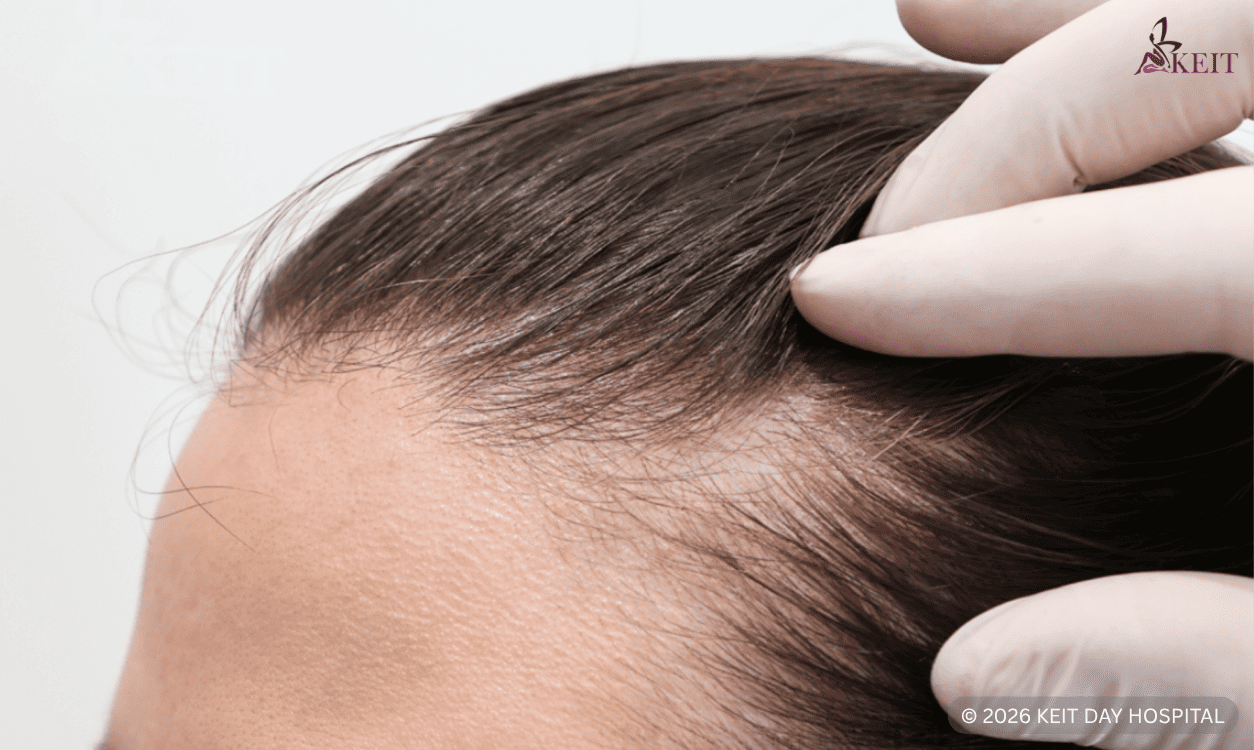
Early symptoms usually include gradual temple recession, a maturing hairline, and reduced density at the crown (vertex). Many men also notice finer, weaker hairs and a more visible scalp under bright light or when hair is wet. Over time, thinning typically spreads from the temples and frontal hairline toward the crown and these areas may expand and merge, while the sides and back of the scalp often remain dense because they’re more resistant to DHT.
Book your FREE
Online Consultation Now

Stages of male androgenetic alopecia (Norwood scale)
The Norwood scale classifies male pattern hair loss into stages based on severity and distribution:
- Stage I–II: Mild temporal recession or subtle hairline changes.
- Stage III: Clear recession at the temples or early crown thinning.
- Stage IV–V: Pronounced frontal recession and visible vertex thinning.
- Stage VI–VII: Extensive loss with only a horseshoe-shaped rim of hair remaining.
Understanding the stage helps guide treatment planning and long-term expectations.
Female pattern hair loss: Symptoms, patterns and stages
Androgenetic alopecia women is characterized by progressive thinning over the central scalp, with preservation of the frontal hairline in most cases. Total baldness is rare, but density loss can be cosmetically distressing.
Early androgenetic alopecia in females: Signs to watch
Early signs are often subtle and include:
- Widening of the central part line.
- Reduced ponytail thickness.
- Increased scalp visibility under bright light.
Shedding may be mild or absent, which is why many women delay evaluation.
Female androgenetic alopecia patterns and stages
Severity is commonly described using the Ludwig or Sinclair scales:
- Mild stages: Minimal widening of the part line.
- Moderate stages: Noticeable diffuse thinning across the crown.
- Advanced stages: Significant density loss with clear scalp visibility.
Staging helps determine treatment intensity and prognosis.
Telogen effluvium vs androgenetic alopecia: How to tell the difference
Distinguishing androgenetic alopecia from telogen effluvium is essential, as management differs significantly.
Key differences in shedding, pattern and progression
- Telogen effluvium (TE) typically causes diffuse shedding across the whole scalp and often starts suddenly after a trigger (stress, illness, surgery, postpartum, medication changes). The hairline usually stays intact, and the scalp doesn’t show a classic pattern.
- Androgenetic alopecia (AGA) is usually slow and progressive, with a pattern (crown/part line in women, hairline/crown in men) and signs of miniaturization.
Can both conditions exist together?
Yes and this is where many people get confused. Telogen effluvium can happen on top of androgenetic alopecia and make thinning look suddenly worse. In this overlap scenario, shedding improves once the trigger resolves, but the underlying miniaturization pattern may remain.
How is androgenetic alopecia diagnosed?
Diagnosis is primarily clinical and focuses on identifying characteristic patterns and excluding other causes of hair loss.
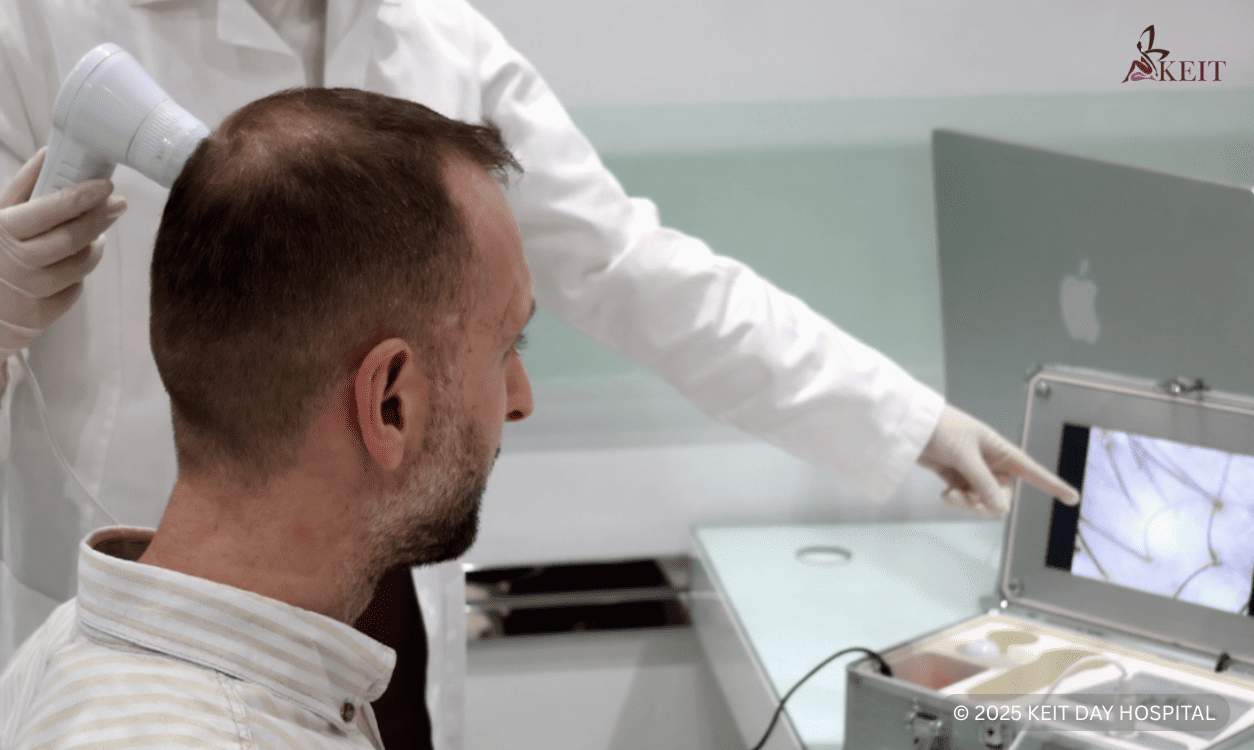
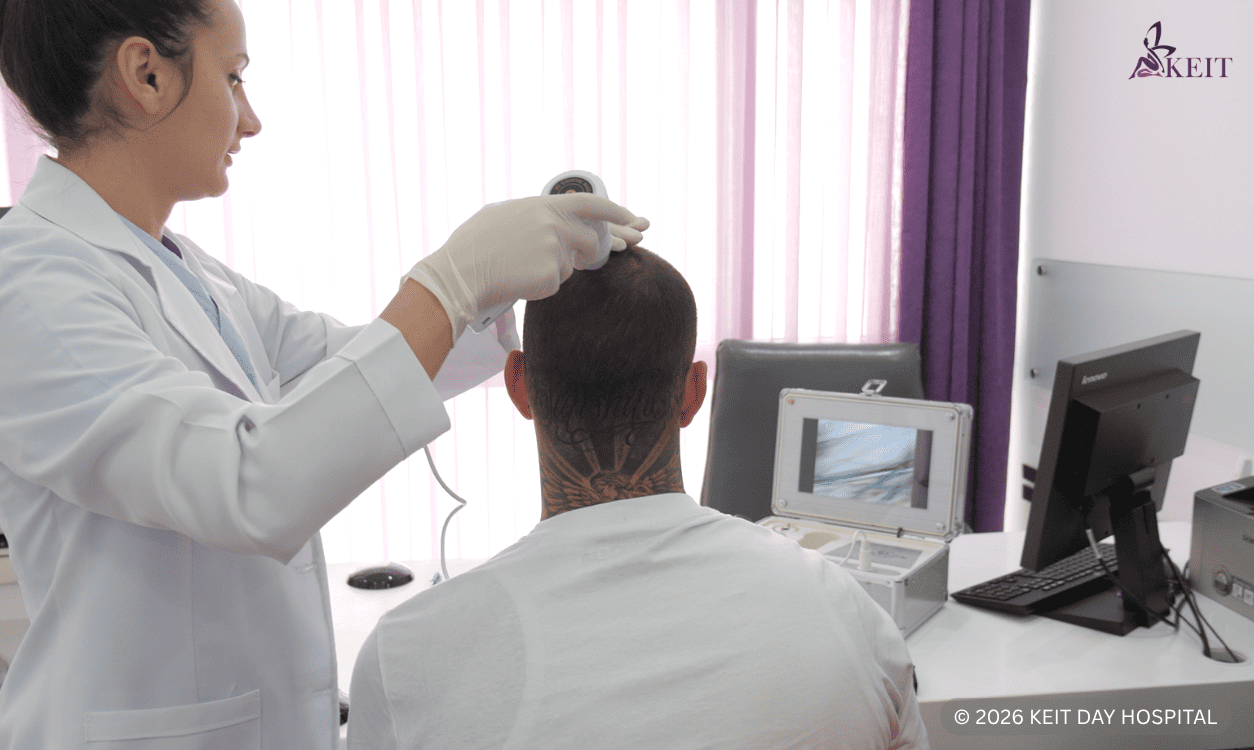
Clinical examination and trichoscopy
Diagnosis starts with a pattern-based clinical exam and is strengthened by trichoscopy (scalp magnification). Trichoscopy helps identify classic androgenetic findings such as miniaturized hairs, variation in hair shaft diameter and changes in density distribution. A clinician typically checks:
- Distribution of thinning (pattern vs diffuse).
- Evidence of miniaturization.
- Scalp health (inflammation, scaling, dermatitis).
- Signs suggesting alternative diagnoses (scarring patterns, patchy loss).
Blood tests: When are they needed?
Blood tests don’t “confirm” androgenetic alopecia, but they’re often used to rule out contributors that worsen shedding or mimic thinning, especially in women. Testing is more likely when thinning is rapid, diffuse, or accompanied by systemic symptoms (fatigue, cycle changes, acne, hirsutism, weight change). Common categories include iron status, thyroid screening and other deficiency/hormonal checks depending on history.
Androgenetic alopecia treatments: What really works
Androgenetic alopecia requires long-term management rather than short-term fixes. Treatment effectiveness depends on consistency and early intervention.
Medical treatments (evidence-based)
Evidence-based therapies aim to slow progression and strengthen existing follicles:
- Minoxidil: Prolongs the growth phase and improves hair thickness.
- Finasteride (men) and spironolactone (women): Reduce androgen effects at the follicular level.
These treatments do not cure androgenetic alopecia but can significantly alter its course.
PRP and regenerative treatments
PRP may support follicular activity and improve hair caliber, particularly in early to moderate stages. It is most effective when used alongside medical therapy rather than as a standalone solution.
Low-Level Laser Light Therapy (LLLT): Does it work?
Low-Level Laser Light Therapy (LLLT) uses red-light–emitting devices that may help stimulate follicles, improve hair thickness and slow thinning, especially in early to moderate androgenetic alopecia.
Hair transplant for androgenetic alopecia: When is it indicated?
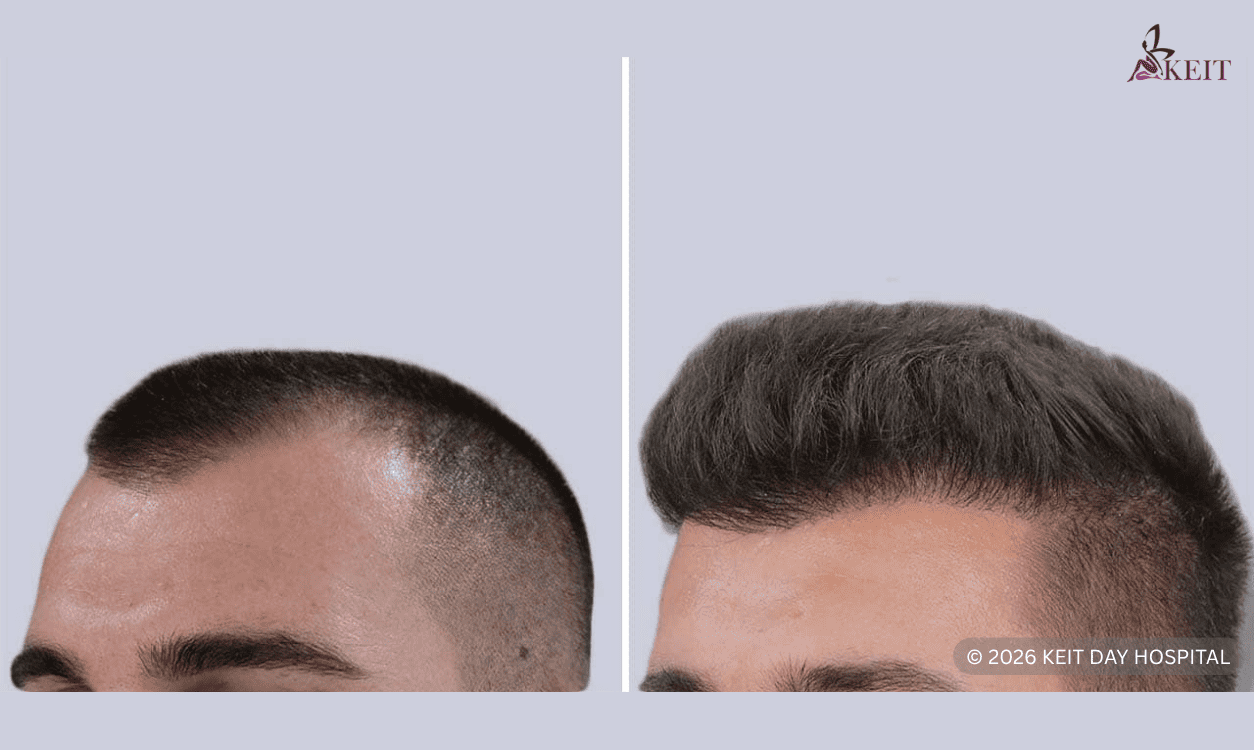
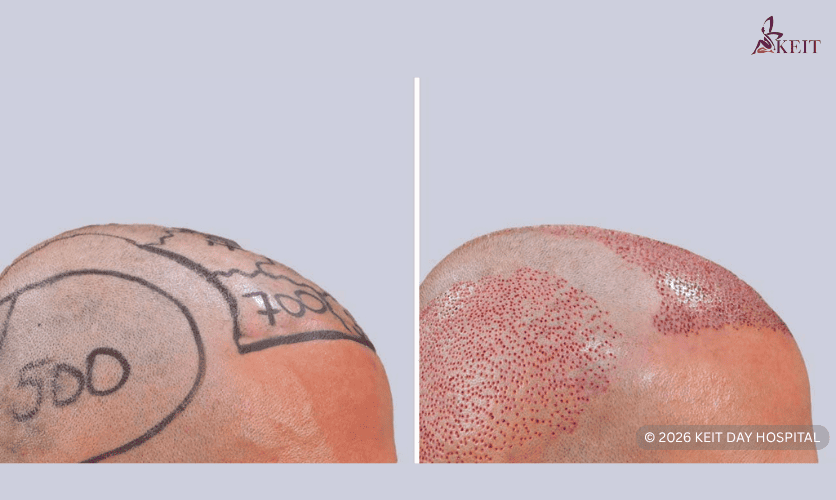
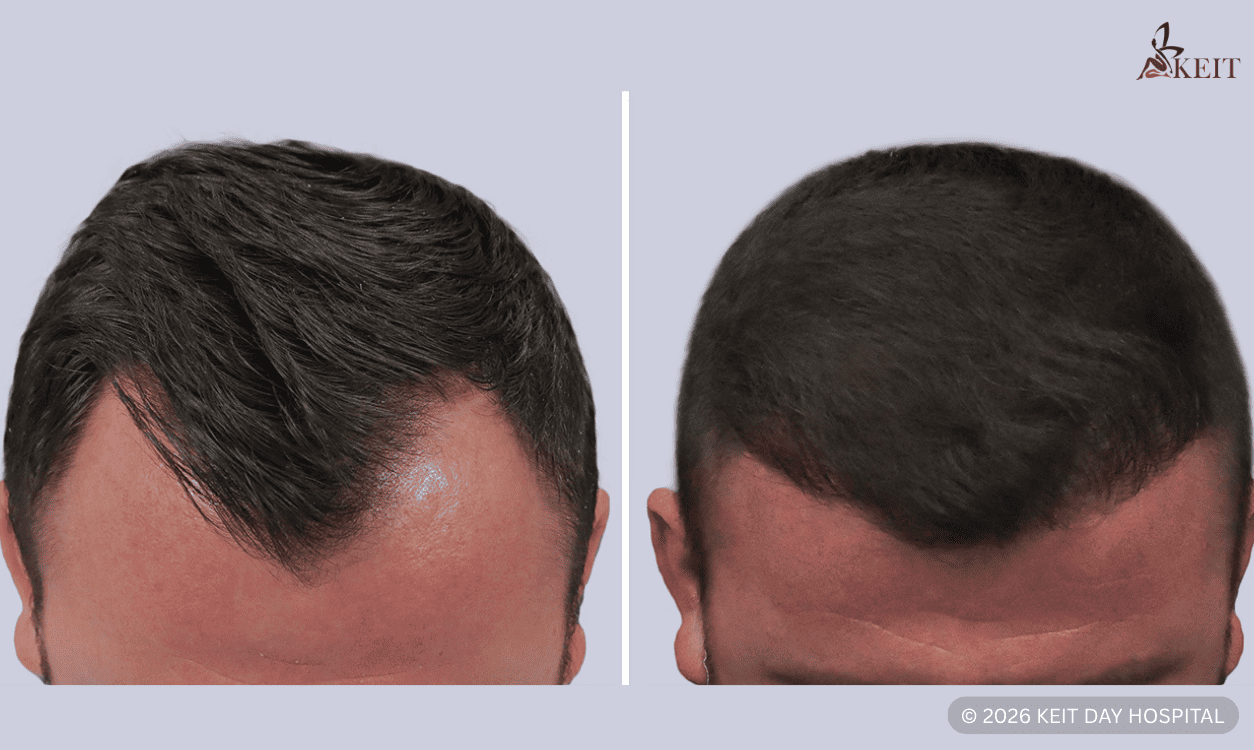
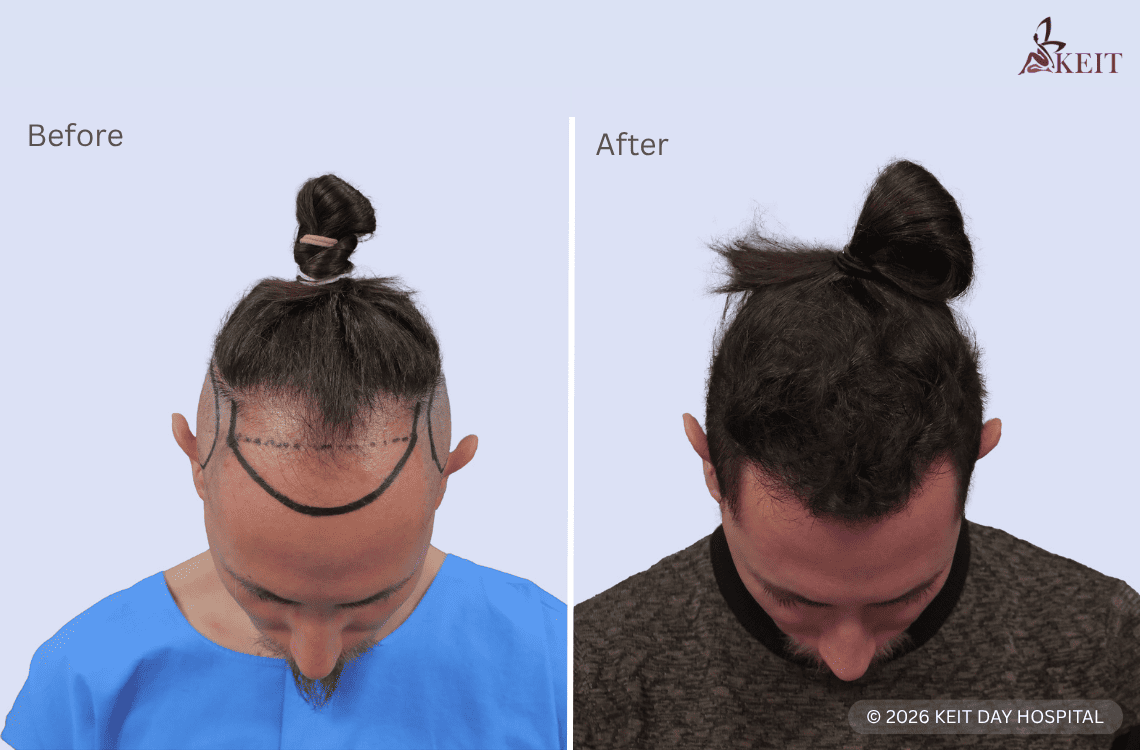
Hair transplantation redistributes DHT-resistant follicles from the donor area (back/sides) into thinning zones. It can improve density and shape, but it doesn’t stop androgenetic alopecia, so it works best when the pattern is clear, donor supply is strong and expectations are realistic.
Hair transplant in men with androgenetic alopecia
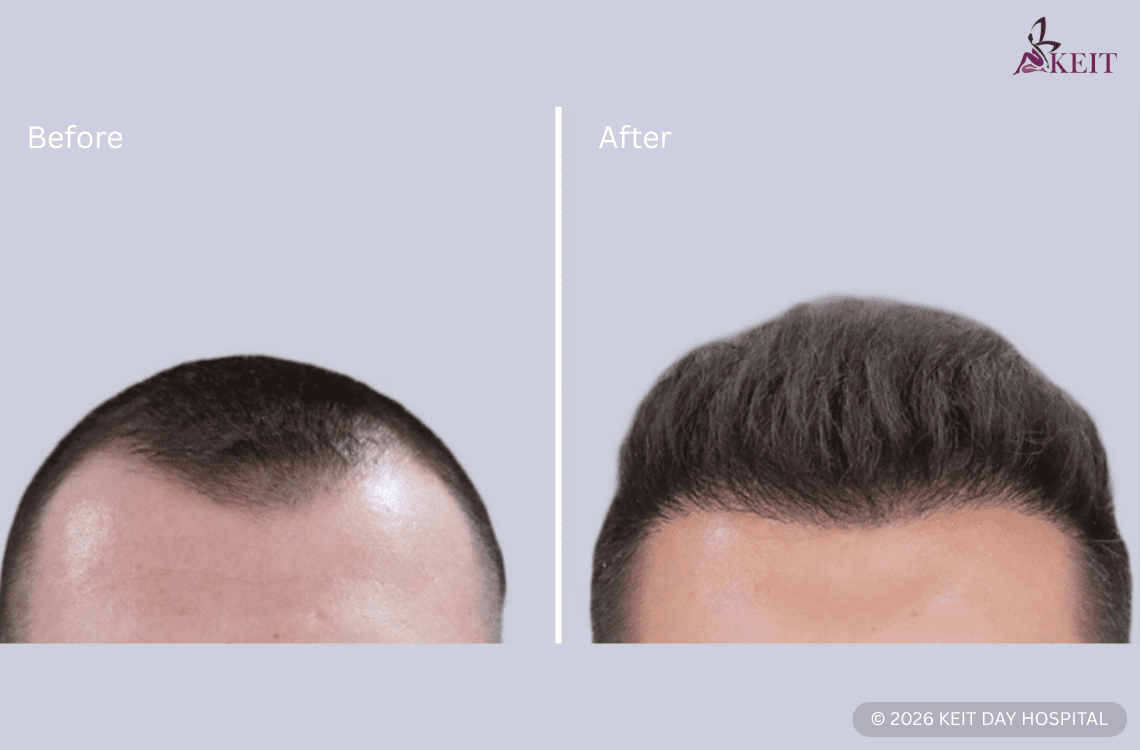
In men, a hair transplant is most appropriate when hair loss is patterned and relatively stable, and donor density is adequate. The plan is built around hairline design + density where it matters most, while preserving donor hair for the future. Since native hair can keep miniaturizing, many men benefit from combining surgery with ongoing medical management to help protect non-transplanted hair and reduce the risk of a “transplanted island” look later.
If you’re at an early stage of research, explore our ultimate guide to understand what a hair transplant is, how follicles are harvested and why donor dominance drives long-term results.
Hair transplant for female androgenetic alopecia
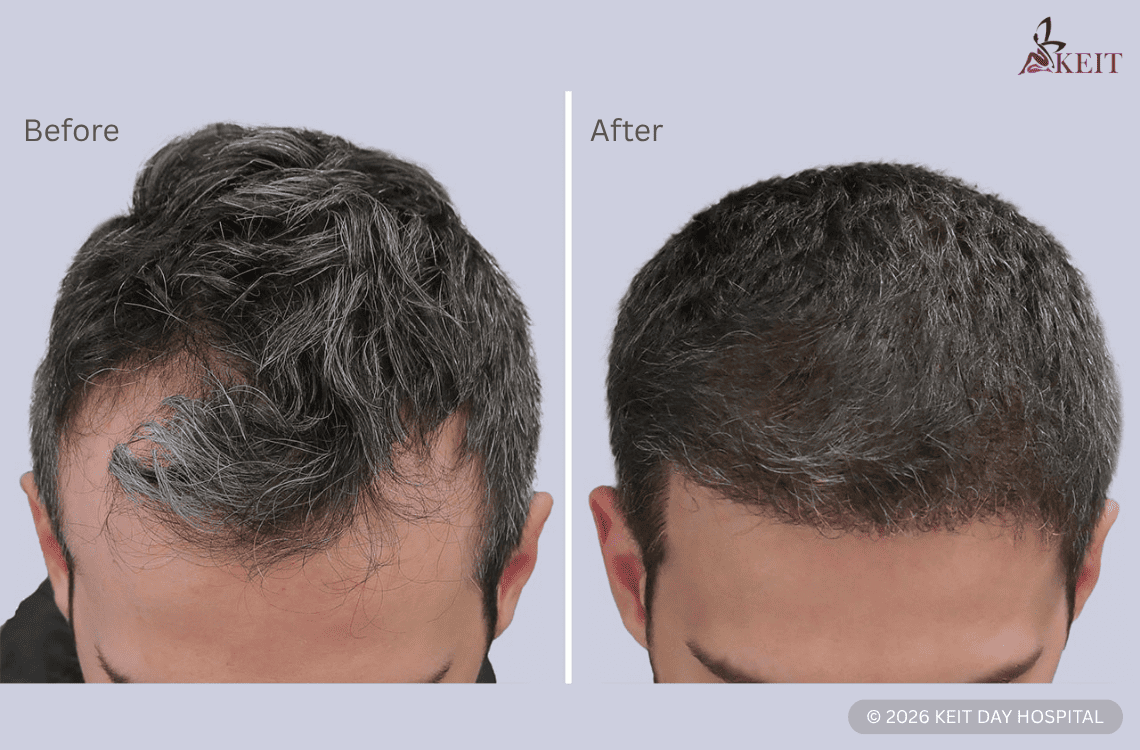
In women, candidate selection is stricter because thinning can be more diffuse and the donor area may be less consistently “safe.” Best outcomes are usually seen in women with stable, patterned thinning (often central/part widening) and a donor zone confirmed as strong on exam/trichoscopy. If shedding is active (or telogen effluvium is suspected), it’s often better to stabilize first, then consider transplant once the pattern and donor stability are clear.