Published on:
 Modified on:

 Reading Time: 6 min
 Hair transplant
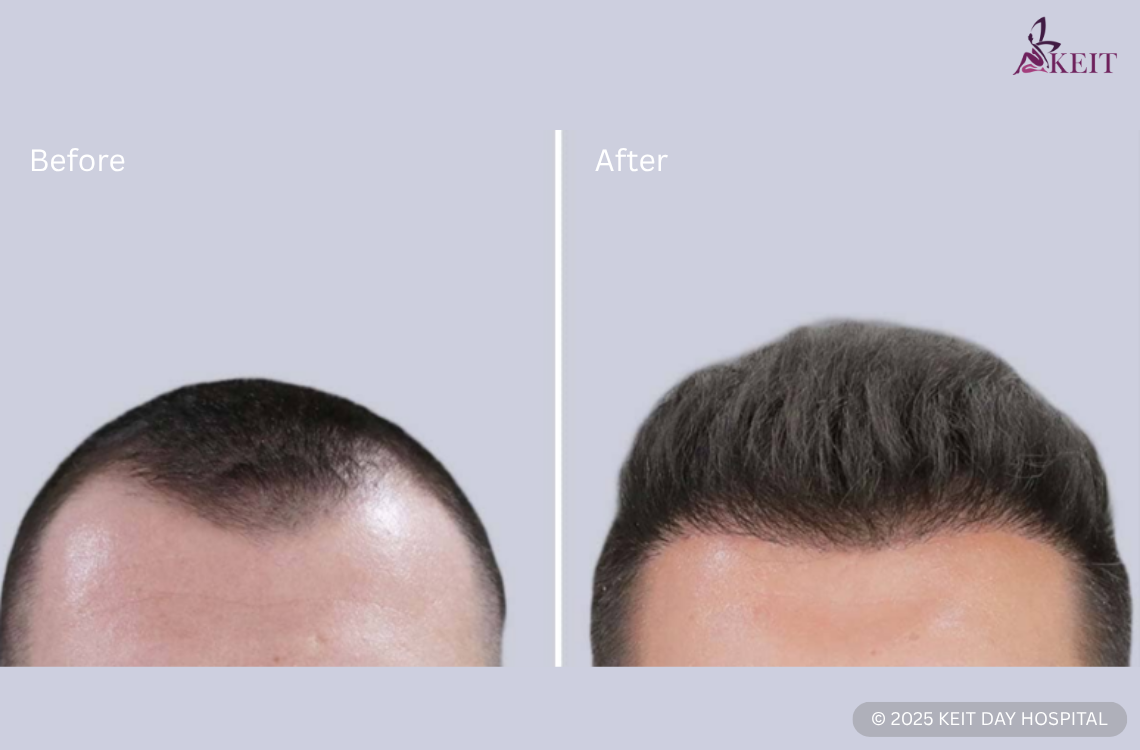
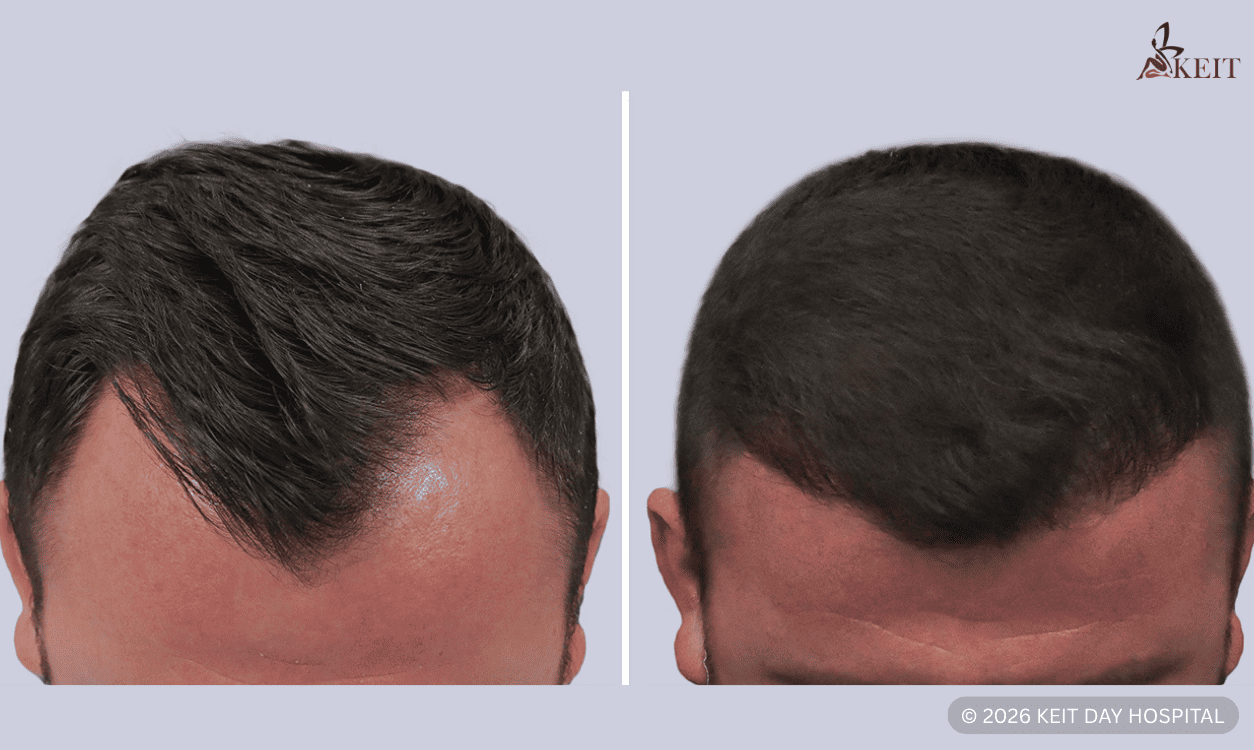
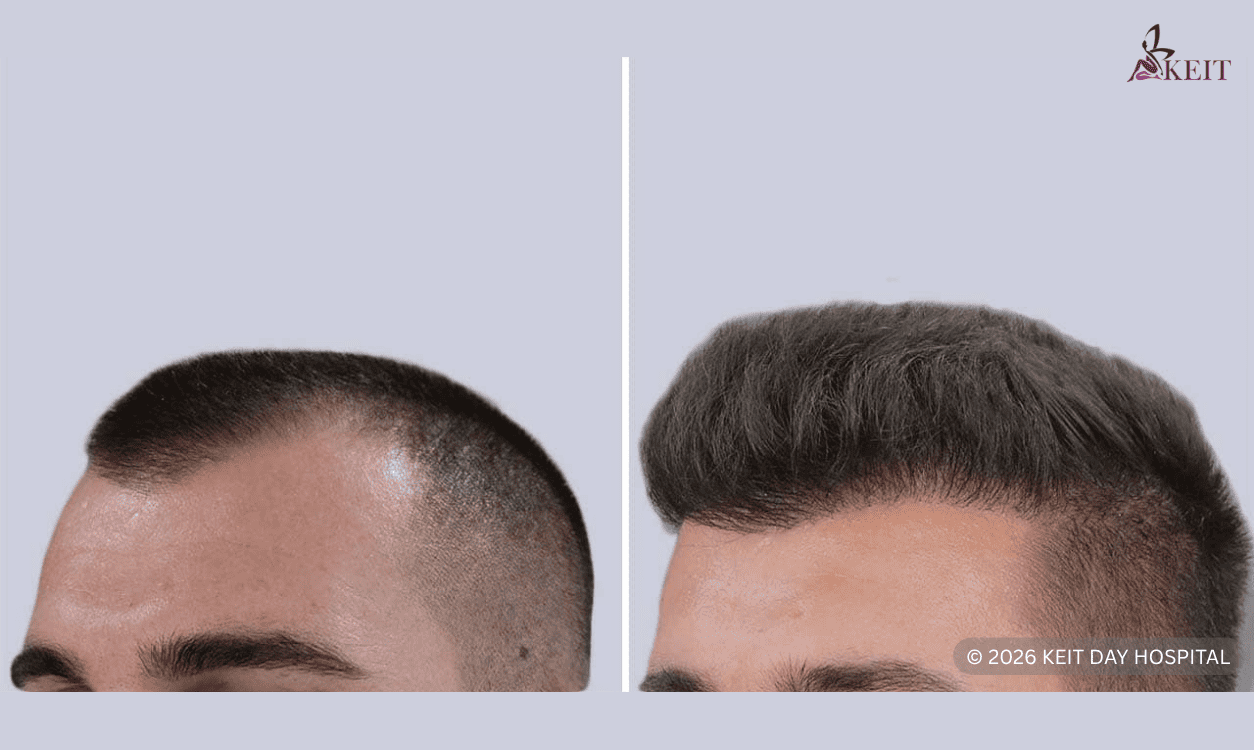
FUE and DHI are two of the most advanced hair transplant techniques used today, both capable of delivering natural, long-lasting results when performed by experienced surgeons. They rely on the same method of extracting individual follicles from the donor area, but the way the grafts are implanted, the level of precision achievable and the situations in which each technique is most effective can differ greatly.
 Table of Contents:
-
1
 What Is FUE hair transplant and how it works
-
2
What Is DHI hair transplant and how it is performed
-
3
DHI vs FUE: An overview of key differences
-
4
DHI hair transplant vs FUE: Advantages and disadvantages explained
-
5
DHI vs FUE hair transplant: Healing, downtime and risks compared
-
6
FUE vs DHI: Graft survival comparison
-
7
FUE vs DHI cost: How prices differ by technique
-
8
Deciding between FUE and DHI: Key factors to consider
In this comprehensive guide, you’ll learn how FUE and DHI differ in technique, precision, graft survival and suitability for various hair loss patterns. We break down the extraction and implantation methods step-by-step, compare their strengths and limitations, outline how healing and risks differ between the two and help you understand which technique may be better suited to your goals. By the end, you’ll find a clear cost comparison and a breakdown of the main factors that help determine which technique is most suitable for your goals.
If you’re at an early stage of research, explore our ultimate guide to understand what a hair transplant is, how follicles are harvested and why donor dominance drives long-term results.
What Is FUE hair transplant and how it works
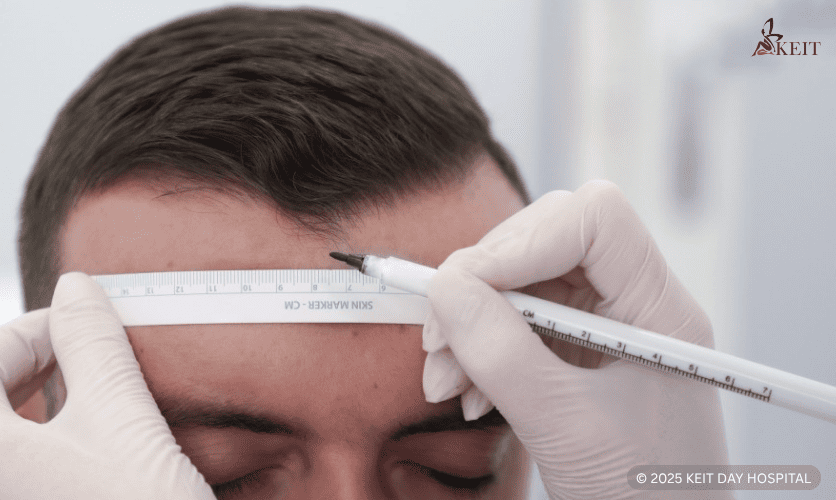
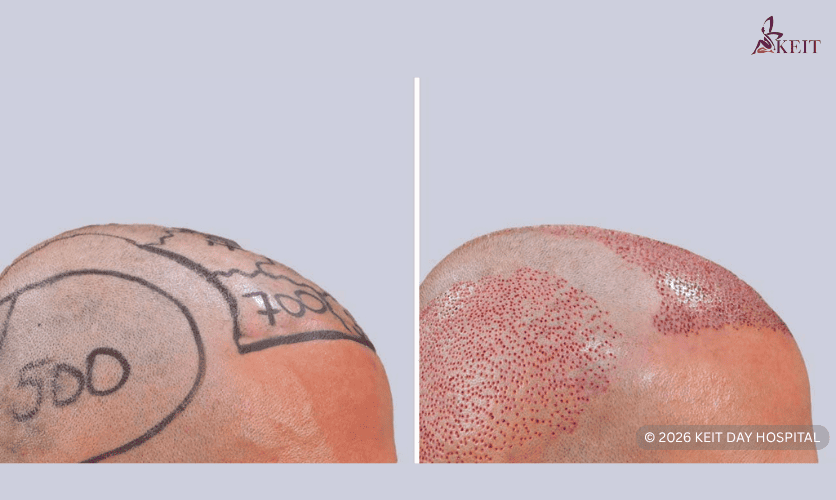
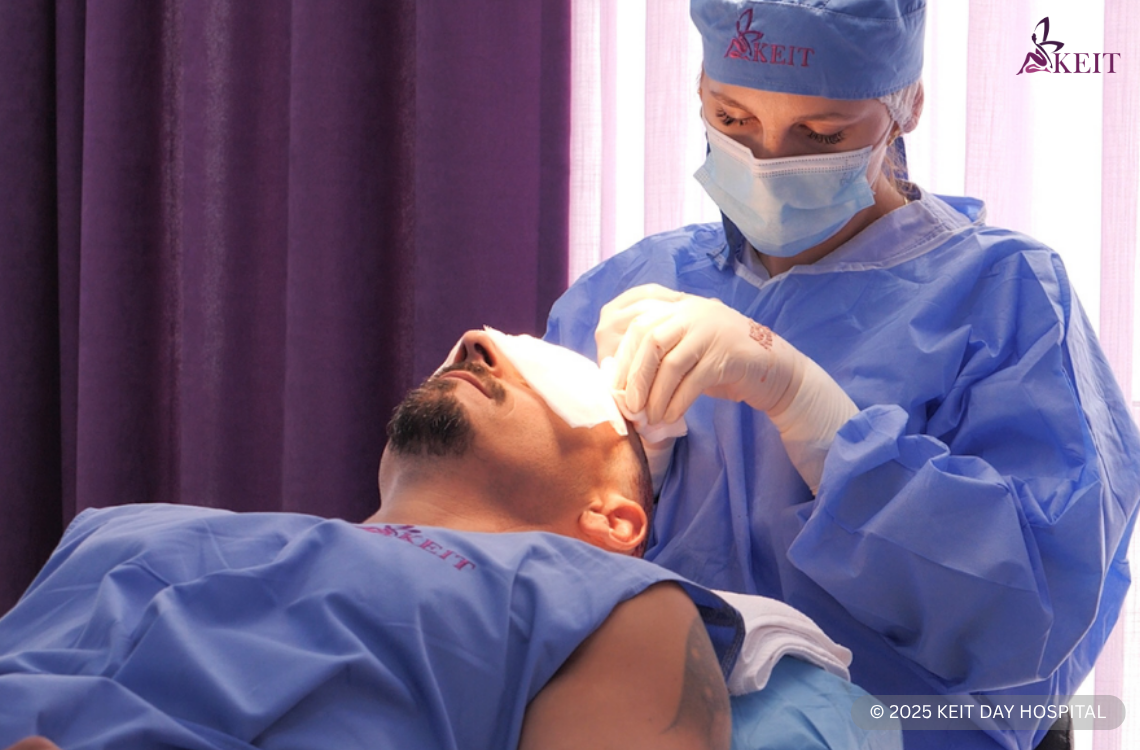
FUE (Follicular Unit Extraction) involves removing individual follicles from the donor zone using a micro-punch tool under local anaesthesia. Each graft is collected and placed in a preservation solution to maintain vitality. Once harvesting is complete, the surgeon creates micro-incisions in the recipient area at angles that mimic natural growth patterns, then manually places the grafts into these sites. A typical FUE procedure lasts 4–6 hours, depending on graft count and coverage needs.
What Is DHI hair transplant and how it is performed
DHI (Direct Hair Implantation) uses the same follicle extraction method as FUE but differs during implantation. Instead of creating channels beforehand, each graft is loaded into an implanter pen that places the follicle directly into the scalp in one motion. This allows very precise, controlled placement of each graft. DHI sessions usually take 5–8 hours, as the implantation process is more meticulous.
DHI vs FUE: An overview of key differences
Both techniques rely on individual follicle harvesting, but they differ in how grafts are implanted and how much precision they allow. Key differences include:
- Implantation method: FUE uses pre-made channels. DHI places the graft directly via implanter pens.
- Placement precision: FUE provides structured, consistent placement. DHI allows micro-level control of angle, direction and depth.
- Density potential: FUE supports even, large-scale coverage, while DHI enables denser packing in compact or delicate areas.
- Cost differences: FUE is more cost-efficient for extensive sessions, while DHI is usually priced higher due to its precision-driven workflow.
DHI hair transplant vs FUE: Advantages and disadvantages explained
Each technique offers distinct benefits and limitations, making it important to understand where FUE and DHI perform best.
FUE hair transplant: Key advantages and limitations
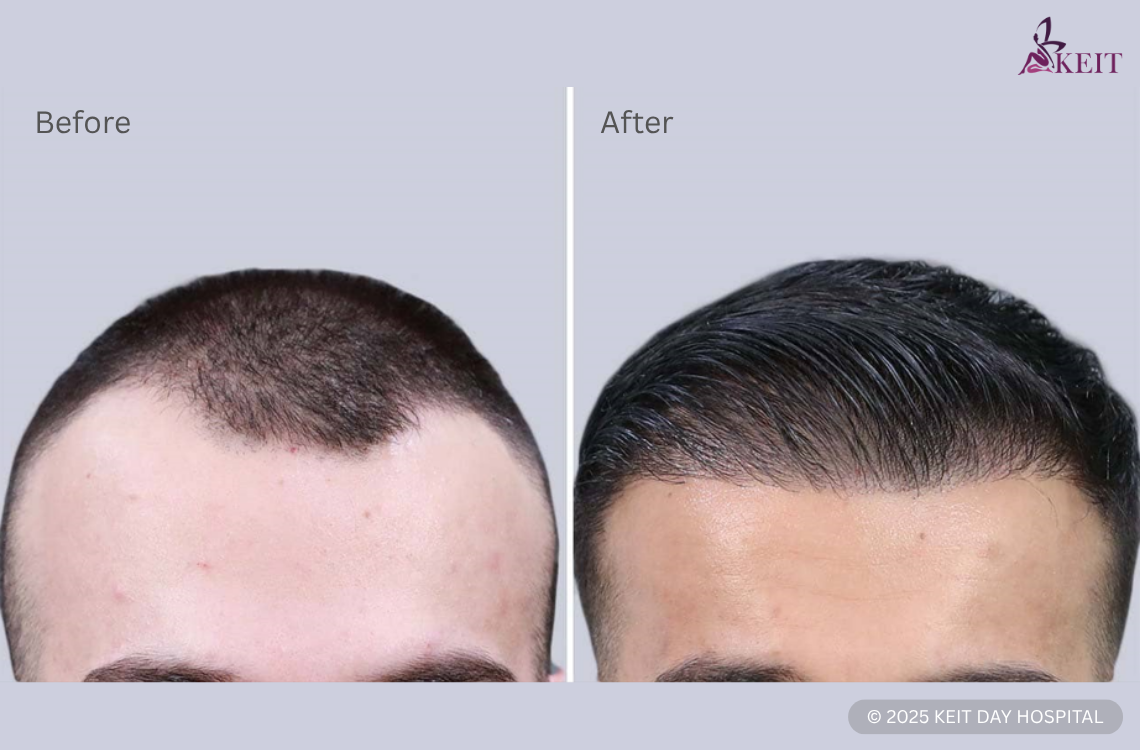
FUE is particularly effective for broad restoration where efficiency and coverage matter most. It offers high graft capacity in a single session and blends well in the donor area thanks to tiny dot-like extraction marks that heal discreetly, even with short haircuts. FUE hair transplant works best for androgenetic alopecia (genetic and hormonal causes). It’s important to know that FUE provides less micro-precision for highly refined hairlines and may produce more noticeable early crusting, requiring attentive aftercare to support smooth healing and alignment.
DHI hair transplant: Strength and disadvantages
DHI excels when aesthetic detail and placement accuracy are the priority. Its implanter pens allow precise control of depth and angle, making it ideal for shaping natural, refined hairlines and achieving high density in compact zones. The gentle, controlled placement also benefits delicate follicles. On the downside, DHI takes longer to perform and is less practical for very large sessions that require thousands of grafts in one day.
DHI vs FUE hair transplant: Healing, downtime and risks compared
FUE and DHI hair transplant heal along a similar timeline, but early recovery looks different because of how grafts are implanted.
- FUE recovery often includes more visible scabbing and mild redness because channels are created before implantation. Most patients resume routine activities within 5–7 days and final results appear after 12-18 months. The main risk involves subtle shifts in graft direction if the area is touched or disturbed during early healing.
- DHI recovery usually presents with finer crusting and less inflammation, as implanter pens create smaller entry points. Many return to daily routines within 3–5 days and final results are visible after 12-18 months. Its main risk is related to technical precision, since incorrect angle or depth during implantation may affect final appearance, making surgeon skill essential.
In both techniques, a temporary shock-loss phase typically appears around weeks 2–6, when transplanted or nearby hairs shed before regrowing, a completely normal part of the healing cycle.

FUE vs DHI: Graft survival comparison
Both FUE and DHI achieve high graft survival rates, typically 90–95% in experienced hands. The extraction method is identical, but implantation differences can influence survival in specific contexts:
- DHI may offer a slight advantage in small, high-precision zones, such as the hairline because grafts are implanted more quickly and at controlled depths and angles.
- FUE maintains excellent graft survival across larger areas where consistent placement and broad coverage are required.
FUE vs DHI cost: How prices differ by technique
Costs vary depending on the technique used, the surgeon’s experience and the total number of grafts required. In the UK, FUE hair transplants usually range between 4,000 and 12,000 euro, depending on graft count and clinic location. DHI procedures tend to sit at the higher end, commonly falling between 7,000 and 18,000 euro because the implantation process is more meticulous and time-intensive. Across Europe, prices can be lower, with Turkey typically ranging from 2,000–4,500 euro and Albania from 1,500–2,000 euro, often providing an all inclusive package that meets all European standards.
To better understand what a hair transplant involves and which factors actually influence the final price, explore our complete guide on hair transplant cost.
Deciding between FUE and DHI: Key factors to consider
Choosing between FUE and DHI requires evaluating your degree of hair loss, donor strength and the level of refinement needed in specific areas.
You may be better suited for FUE if you:
- need extensive restoration across mid-scalp, crown, or widow’s peak.
- prefer a donor zone appearance compatible with short hairstyles.
- require a more cost-efficient solution for large sessions.
- have sufficient donor hair.
- have stable hair loss after the age of 25.
- feel comfortable shaving the entire head to ensure the best surgical access.
You may be better suited for DHI if you:
- want meticulous definition in the hairline or temples.
- need maximum density in compact, high-visibility zones.
- prefer an option that supports unshaven or partially shaven procedures.
- have naturally delicate hair or fine follicles that benefit from gentler handling.