Published on:
 Modified on:

 Reading Time: 5 min

 Rhinoplasty
An aquiline nose, also called a Roman nose, is a nasal shape with a high, curved bridge that gives the profile a strong and defined contour. It develops naturally due to genetic inheritance, bone structure, ethnic background, or past nasal trauma that affects the alignment of cartilage and bone. For those who find the curve too pronounced, the solution for an aquiline (Roman) nose is rhinoplasty, a surgical procedure that refines the bridge and reshapes the nasal framework to create a smoother profile.
 Table of Contents:
-
1
 What is aquiline nose and what aquiline features should you look for?
-
2
Causes of an aquiline nose: From inheritance to nasal trauma
-
3
Aquiline nose: How rhinoplasty refines your Roman nose shape
-
4
Ideal candidates for correction of an aquiline nose: Key factors to consider
-
5
Aquiline nose recovery timeline: Healing stages and final results
-
6
Roman nose in women: Soft refinements for natural elegance
-
7
Roman nose in men: Defining masculinity through balance and precision
-
8
Aquiline nose reshaping in Albania: Your smart choice
In this article, you’ll learn what an aquiline nose is and how to recognize one, the genetic and structural factors that cause it and how rhinoplasty can refine its distinctive curve with precision and natural results. We’ll also explore the differences between aquiline noses in men and women, the ideal candidates for correction, the recovery timeline and why many patients choose KEIT Clinic in Albania for expert reshaping performed by Italian surgeons specialized in nasal aesthetics.
What is aquiline nose and what aquiline features should you look for?
An aquiline nose, frequently searched for as a romanesque nose, is a nasal shape where the bridge forms a slight outward curve, creating an arched profile. This gentle convexity gives the nose a prominent yet refined appearance often associated with classical features.
The aquiline (Roman) nose stands out for its natural, continuous curve along the bridge, which gives it a distinctive side profile. Similar features can appear in gentler form, in shapes such as the hooked nose, arched nose and eagle nose. This unique contour makes the Roman nose shape easily recognizable compared to straight or upturned nose types.
Causes of an aquiline nose: From inheritance to nasal trauma
An aquiline nose can result from genetics, ethnic traits, or trauma affecting bone and cartilage alignment. Primary causes include:
- Genetics: The aquiline (Roman) nose commonly appears across generations within the same family.
- Ancestry: Mediterranean and middle eastern populations often display pronounced aquiline features due to their inherited bone structure.
- Bone structure: Longer nasal bones and elevated upper cartilage create the distinctive nose aquiline curvature.
- Ethnic variation: Differences in cartilage thickness and nasal bone height define the aquiline nose (Roman) shape.
- Trauma: Injuries or fractures can accentuate the bridge’s curve, creating an aquiline nose even without genetic factors.
Aquiline nose: How rhinoplasty refines your Roman nose shape
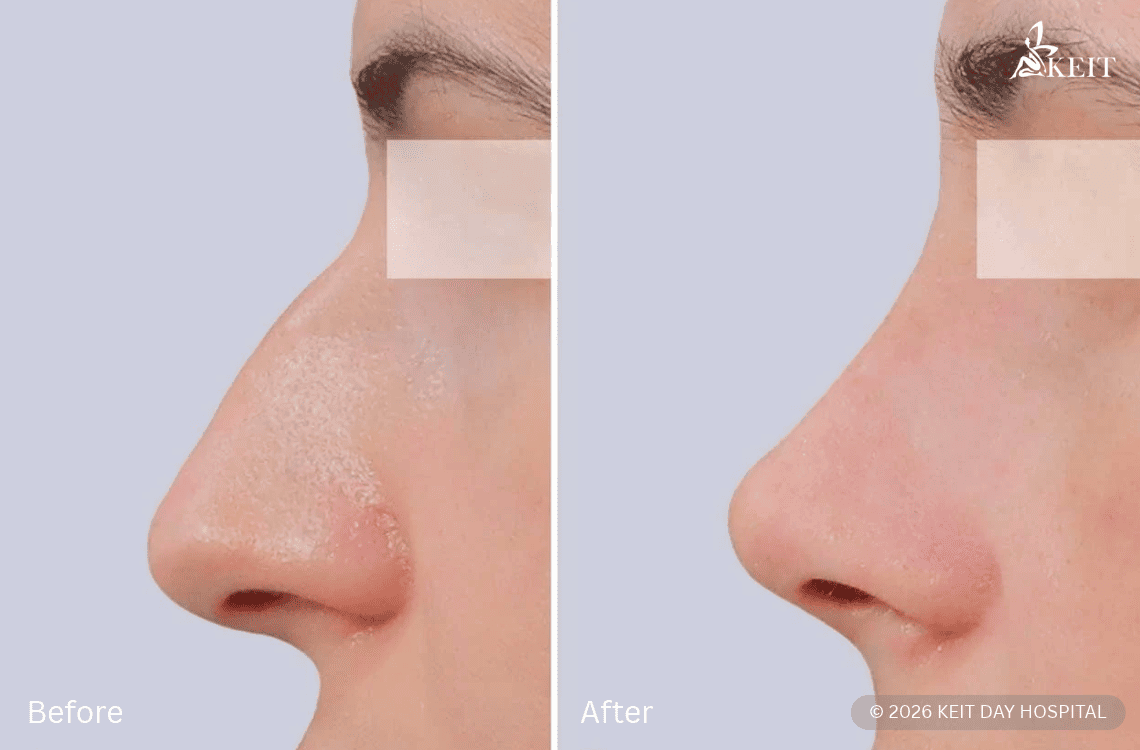
Rhinoplasty for an aquiline nose is a precise operation aimed at smoothing the nasal bridge, reducing the hump, and aligning the bone and cartilage to achieve a balanced and natural appearance. The objective is refinement, not transformation, maintaining the strength and identity of the original structure.
The procedure is carried out under general anesthesia. Small incisions are made either inside the nostrils (closed rhinoplasty) or on the columella (open rhinoplasty). The surgeon carefully files or reshapes the bony hump characteristic of the aquiline (Roman) nose and repositions the nasal bones to close any gaps. The underlying cartilage is sculpted to support the new, smoother bridge and the nasal tip is adjusted to align with the overall contour. Through this process, the Roman nose maintains its distinctive integrity while appearing more proportionate and refined.
Ideal candidates for correction of an aquiline nose: Key factors to consider
Correction of an aquiline nose is suited for individuals who want refinement and facial balance rather than complete change. Candidates often wish to soften the bridge, correct deviation, or lift a droopy Roman nose shape while preserving their natural structure. Most suitable candidates typically meet the following criteria:
- Have a visible hump on the aquiline (Roman) nose.
- Individuals experiencing asymmetry or downward projection.
- Patients seeking proportionate results without losing their nose aquiline character.
- People with post-traumatic irregularities on the nasal bridge.
- Individuals with realistic expectations and stable health for surgery.
Through rhinoplasty for a Roman nose, the surgeon designs a result that complements the patient’s facial lines, ensuring balance and authenticity.

Aquiline nose recovery timeline: Healing stages and final results
Recovery after surgery for an aquiline nose progresses gradually as swelling subsides and the new contour settles. Most patients return to daily activities within two weeks, but full refinement takes several months.
- Initial recovery (first 1–2 weeks): Swelling and bruising peak, then decrease by the end of the first week. The splint is removed, showing the early shape of the new nose and light daily tasks can usually be resumed after about a week.
- Returning to normal activities (weeks 3–4): Swelling continues to improve and the nose gains definition. Normal activities can resume, but direct pressure or impact on the nose should still be avoided.
- Long-term recovery (6–12 months): The final nose contour refines as the last swelling fades. By one year, the nose appears fully healed, smooth and naturally defined.
Roman nose in women: Soft refinements for natural elegance
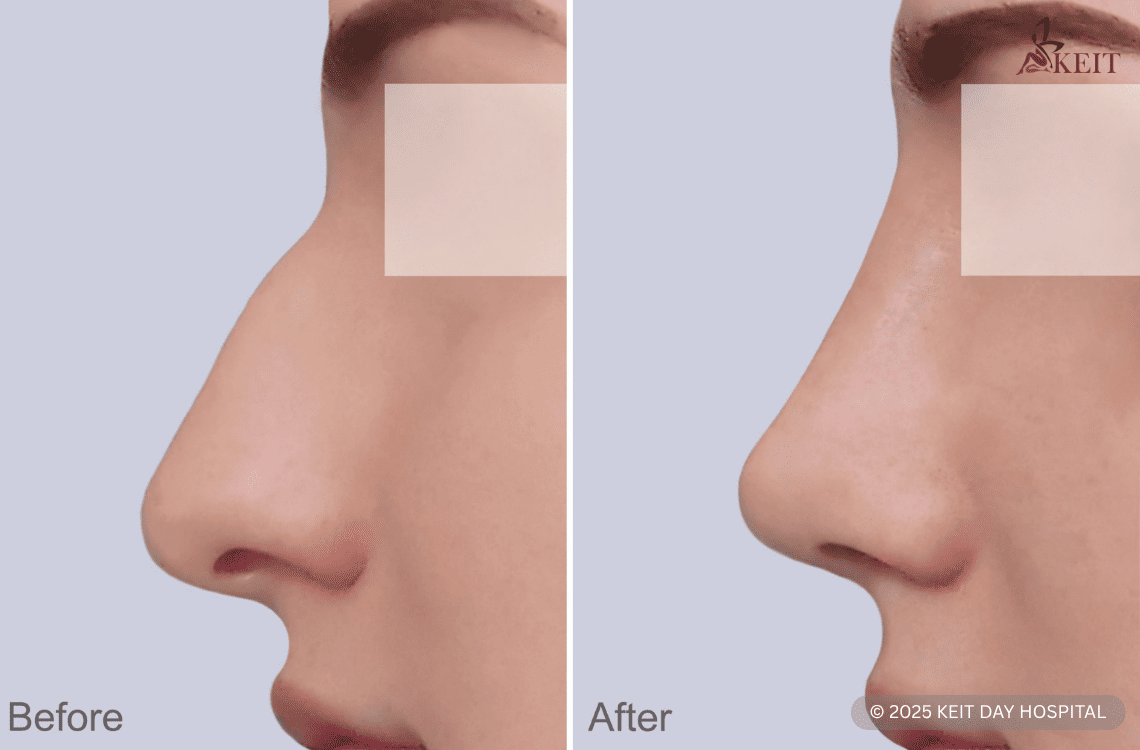
An aquiline nose in females can look elegant and confident, yet some women prefer a softer bridge to create a more delicate balance across the face. Rhinoplasty for this shape focuses on refinement through small, precise modifications that maintain the natural profile.
The nasal bones are adjusted to narrow the bridge slightly and the tip is refined to follow the new contour. The adjustments are measured and minimal, ensuring that the aquiline nose retains its character but aligns more fluidly with other facial features. The outcome enhances femininity and proportion without losing authenticity - a natural, graceful evolution rather than a complete alteration.
Roman nose in men: Defining masculinity through balance and precision
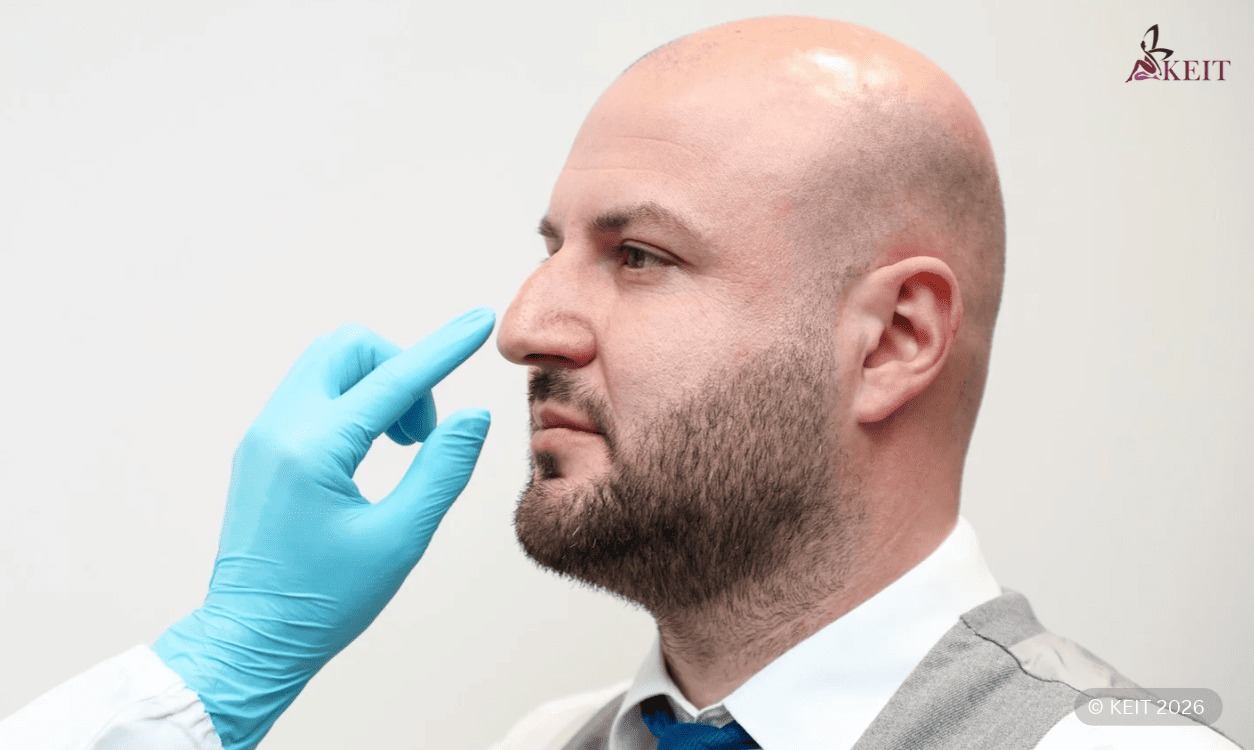
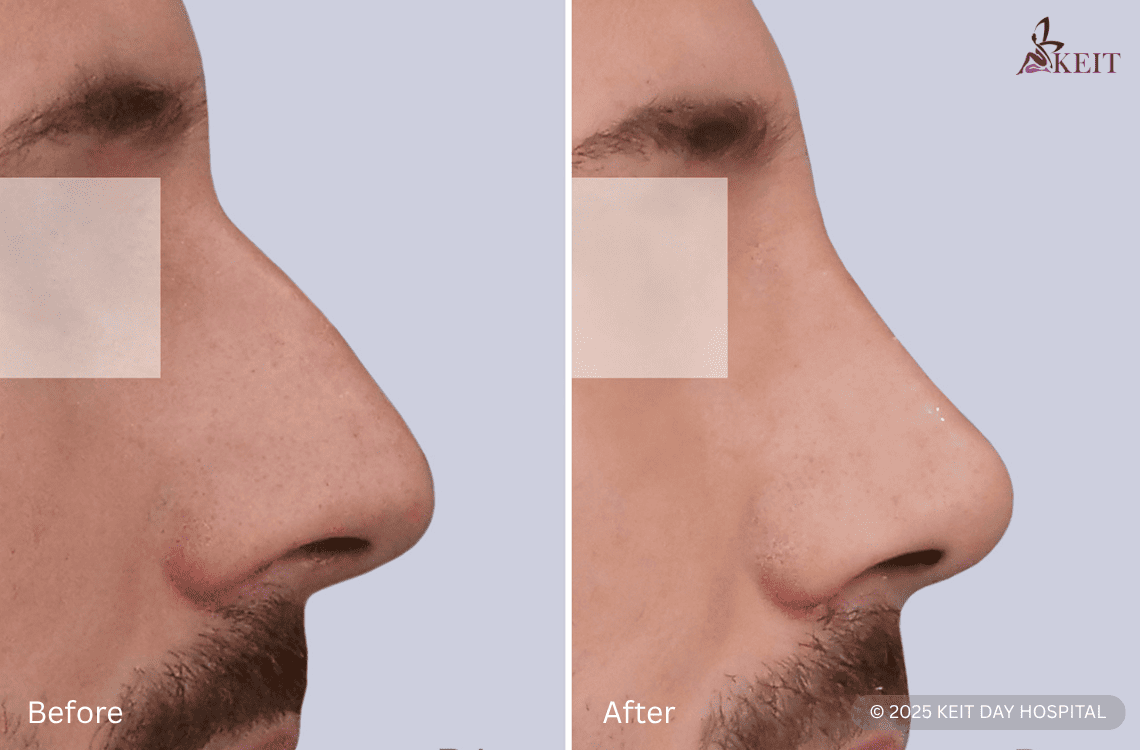
An aquiline nose in man is often associated with power, structure and confidence. For many men, rhinoplasty for a Roman nose shape is not about softening features but optimizing symmetry while keeping masculine definition intact. The surgeon’s goal is precision, enhancing balance without erasing the distinctive strength of the Roman nose.
The bridge remains slightly broader than in female procedures to preserve masculine lines and the nasal bones are repositioned for a straighter, more proportional appearance. If the tip droops, it is elevated subtly to restore harmony without over-rotation. The final result is a refined, structured nose that appears strong, symmetrical and naturally balanced.
Aquiline nose reshaping in Albania: Your smart choice
The rhinoplasty cost in Albania starts from around 1,600 euro, with many private clinics offering all-inclusive packages that cover surgery, anaesthesia, accommodation, airport transfers and post-operative care. These packages provide transparency and convenience, helping international patients plan their procedures confidently and without hidden fees.
Private clinics in Albania follow European medical and safety standards and often work with Italian-trained plastic surgeons, ensuring results comparable to leading European centres. Lower operational costs make Albania a safe, affordable and high-quality destination for nose job surgery abroad, delivering natural and long-lasting outcomes.