Published on:
 Modified on:

 Reading Time: 5 min
 Rhinoplasty
A button nose is a nasal shape characterized by a short length, a rounded nasal tip and soft, compact proportions. Often described as cute, youthful and approachable, this nose type features gentle contours rather than sharp definition and blends naturally with softer facial features. A button nose can be a natural anatomical trait or the result of carefully planned rhinoplasty focused on subtle refinement rather than structural dominance.
 Table of Contents:
-
1
 What is a button nose and what are the main features to look for?
-
2
Why is the button nose considered aesthetically appealing?
-
3
Button nose vs upturned nose: Are they the same?
-
4
Button nose side profile: What defines it from the profile view?
-
5
The button nose in women: Softness and youthfulness
-
6
Button nose in men: Natural definition and masculine balance
-
7
How to refine a button nose shape: Surgical and non-surgical options
-
8
Rhinoplasty for a button nose: Results and recovery timeline
-
9
Rhinoplasty for a button nose shape: Possible risks to be aware of
-
10
Button nose refinement with rhinoplasty at KEIT Day Hospital: Structured medical care
In this guide, we explain what defines a button nose, the anatomical features that create its soft appearance and why it is often considered attractive. You’ll learn the difference between a button nose and an upturned nose, how the button nose looks from the side profile and which surgical and non-surgical options can refine this shape. We also cover recovery expectations and what risks to consider before choosing rhinoplasty. Finally, you will discover what makes KEIT Day Hospital your reliable choice for button nose refinement.
What is a button nose and what are the main features to look for?
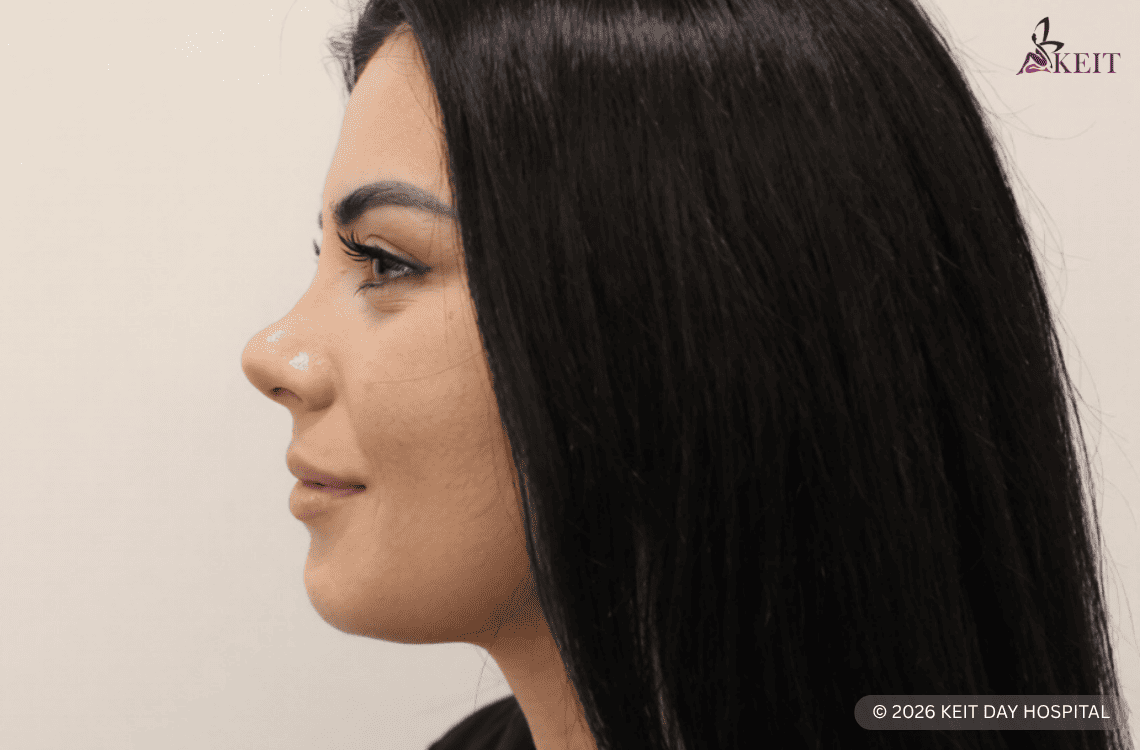
A button nose shape is defined by a combination of structural and proportional characteristics that create a compact, gentle appearance:
- Short nasal length: The nose appears small and proportionate, without excessive projection.
- Rounded nasal tip: The tip is soft and bulb-like rather than sharp or angular.
- Mild or low bridge: The dorsum is usually straight or slightly concave, without a hump.
- Soft transitions: The bridge, tip and columella blend smoothly with no harsh angles.
Why is the button nose considered aesthetically appealing?
The button nose is often considered appealing because it conveys youthfulness, softness and approachability. Its rounded tip and short length reduce facial harshness and allow other features, especially the eyes and smile to stand out.
In modern aesthetic medicine, the button nose aligns with the preference for natural, non-aggressive results. Rather than dramatic reshaping, it reflects subtle proportion and balance, which explains its long-standing popularity across cultures and age groups.
Button nose vs upturned nose: Are they the same?
These terms are often used interchangeably, but they are not identical.
- Button nose: Defined mainly by tip shape and overall size. The tip is rounded and compact.
- Upturned nose: Defined mainly by tip rotation. The tip rotates upward, exposing more nostril.
A button nose may be slightly upturned, but not all upturned noses are button noses. Excessive rotation without proper tip support can shift the look from soft to artificial.
For a broader comparison (button, upturned, straight, Roman, Greek and more), explore our guide to the different types of noses.
Button nose side profile: What defines it from the profile view?
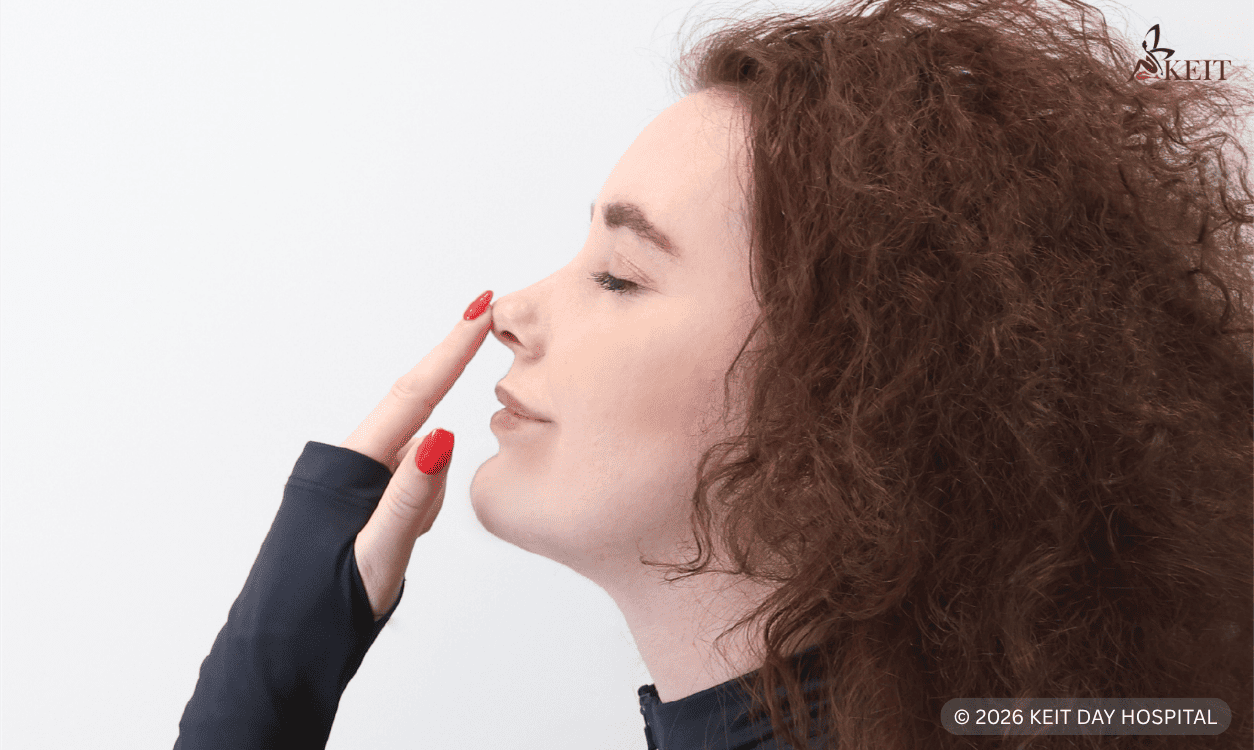
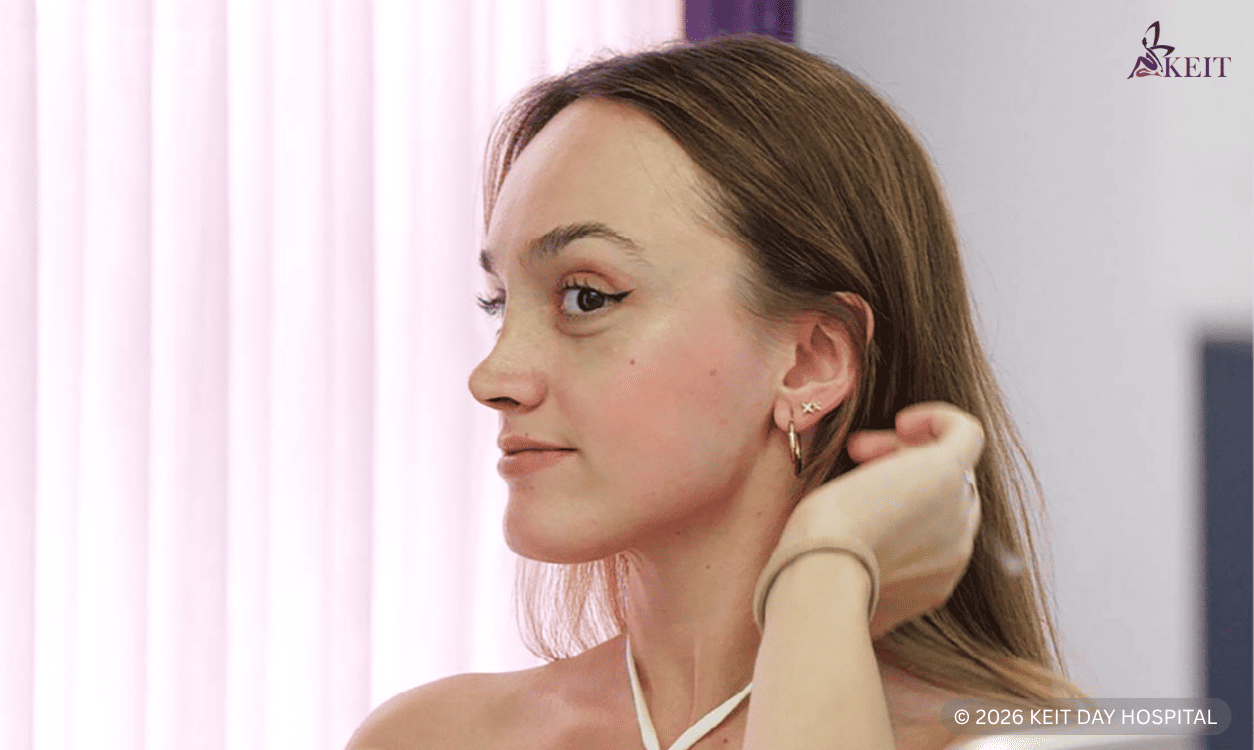
From the side profile, a button nose shape appears short and gently curved. The bridge is usually straight or mildly concave and the tip sits close to the face without excessive projection.
The key visual marker is balance: the tip does not droop, but it is also not aggressively rotated upward. When properly proportioned, the button nose side profile looks smooth, light and harmonious with the forehead, lips and chin.

The button nose in women: Softness and youthfulness
In women, the button nose is strongly associated with delicacy and femininity. The rounded tip and short length create a youthful appearance without appearing artificial. Modern rhinoplasty in women focuses on preserving softness while improving symmetry and proportion. The goal is subtle refinement, not making the nose “too small,” but making it fit naturally with the rest of the face.
Button nose in men: Natural definition and masculine balance
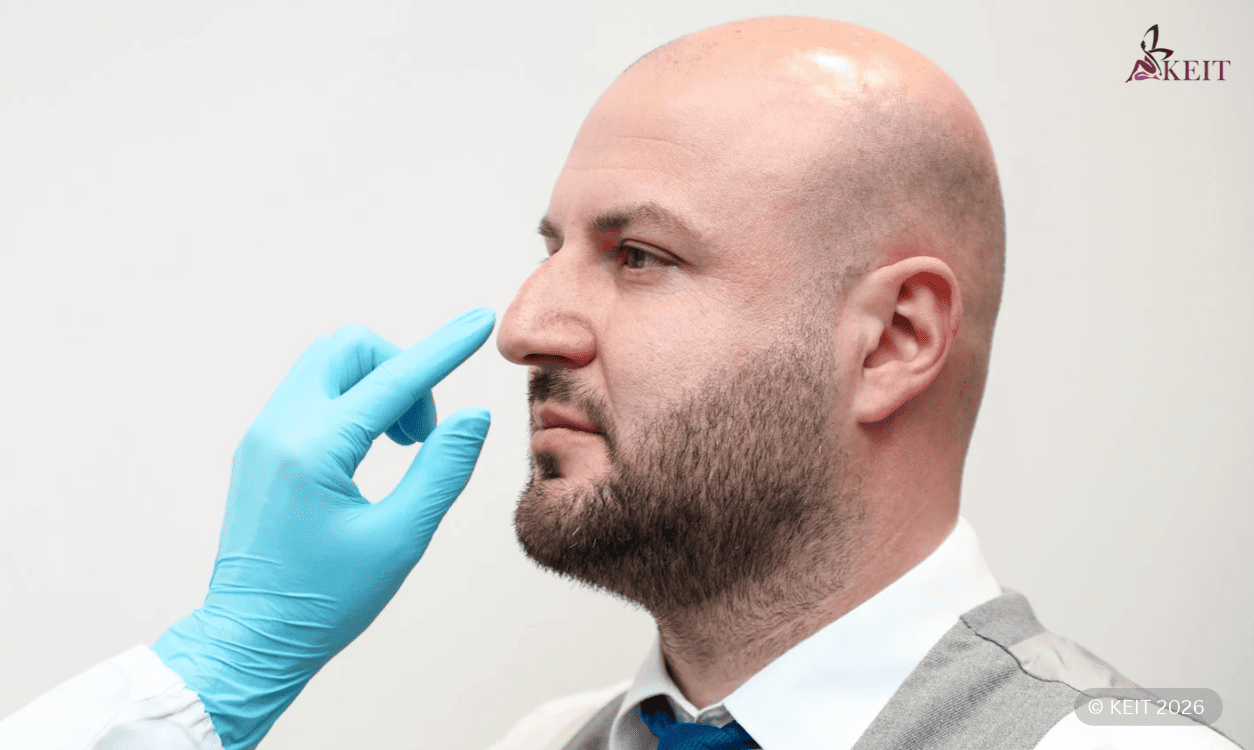
In men, a button nose works best when it’s achieved with restraint, because too much shortening or tip rotation can soften the profile and risk feminizing the face. The goal is a natural, masculine balance: a straight or neutral bridge with only mild tip rounding, so the nose looks cleaner and more harmonious without becoming “cute” or overly sculpted. In modern rhinoplasty, this result is typically built through controlled cartilage refinement and strong tip support, keeping projection stable over time and protecting breathing comfort.
How to refine a button nose shape: Surgical and non-surgical options
There are both temporary and permanent ways to enhance a button nose, depending on anatomy and goals.
- Non-surgical options: Rhinofiller with hyaluronic acid can smooth minor irregularities or subtly improve balance, but it cannot reduce size, shorten the nose, or reshape a rounded tip.
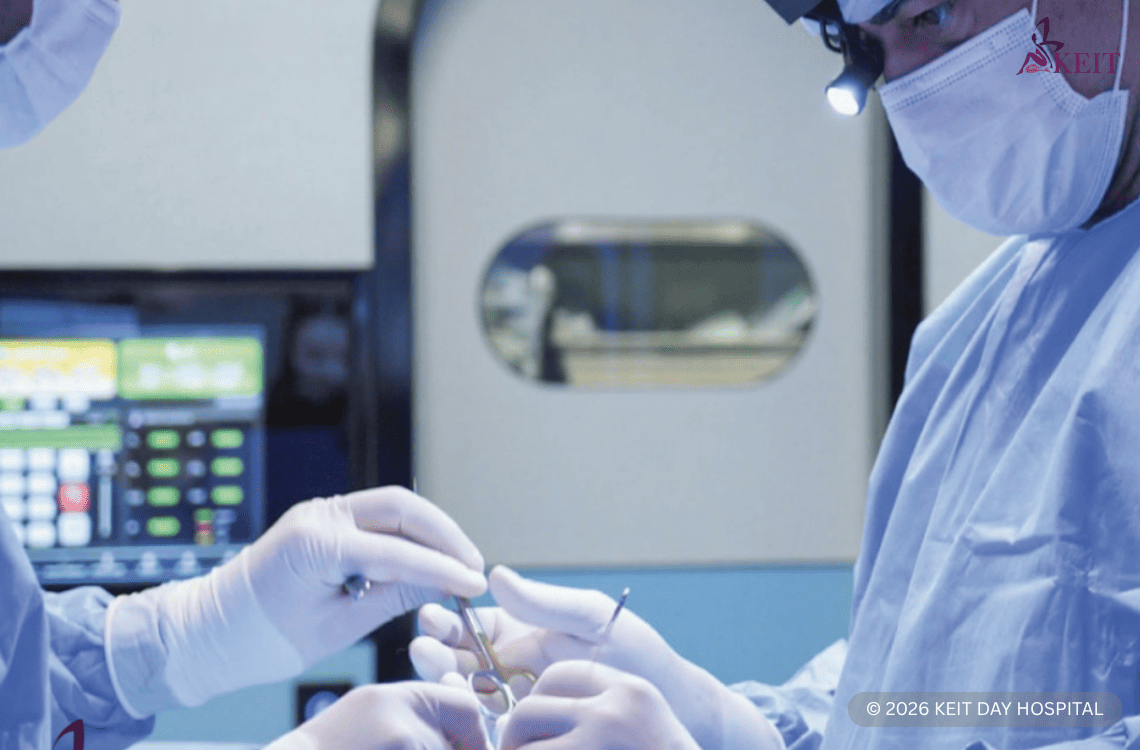
- Surgical options: Rhinoplasty is the only definitive way to reshape a button nose. Using preservation or ultrasonic techniques, surgeons can adjust tip cartilage, projection and proportions while maintaining natural support.
To fully understand how surgeons at KEIT Day Hospital achieve succesful rhinoplasty refinement, it helps to first explore what rhinoplasty is and how it works in our complete guide.
Rhinoplasty for a button nose: Results and recovery timeline
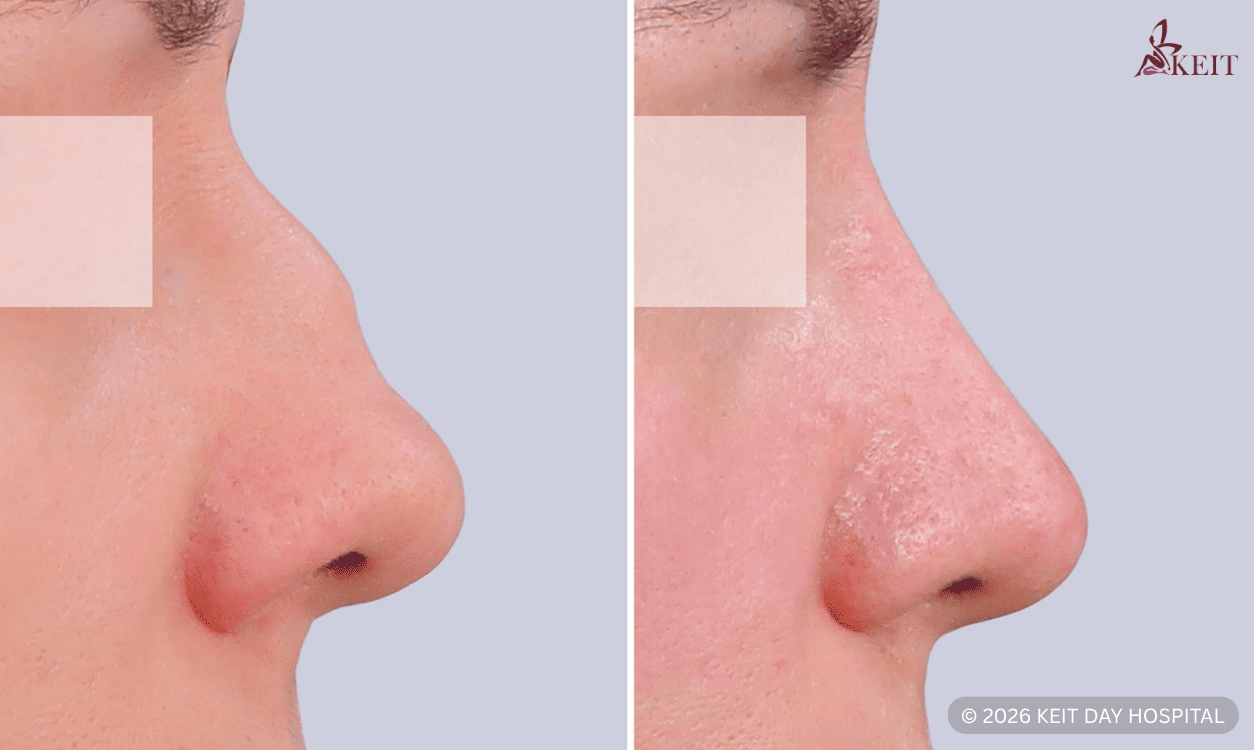
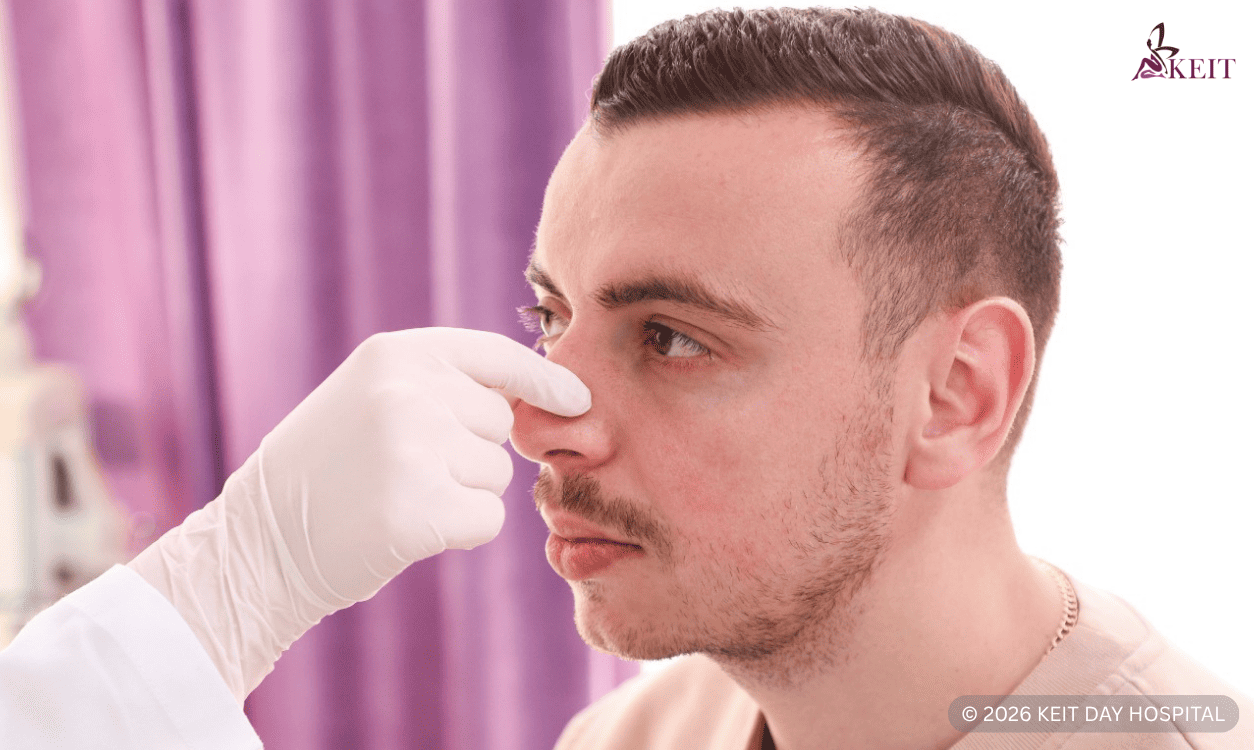
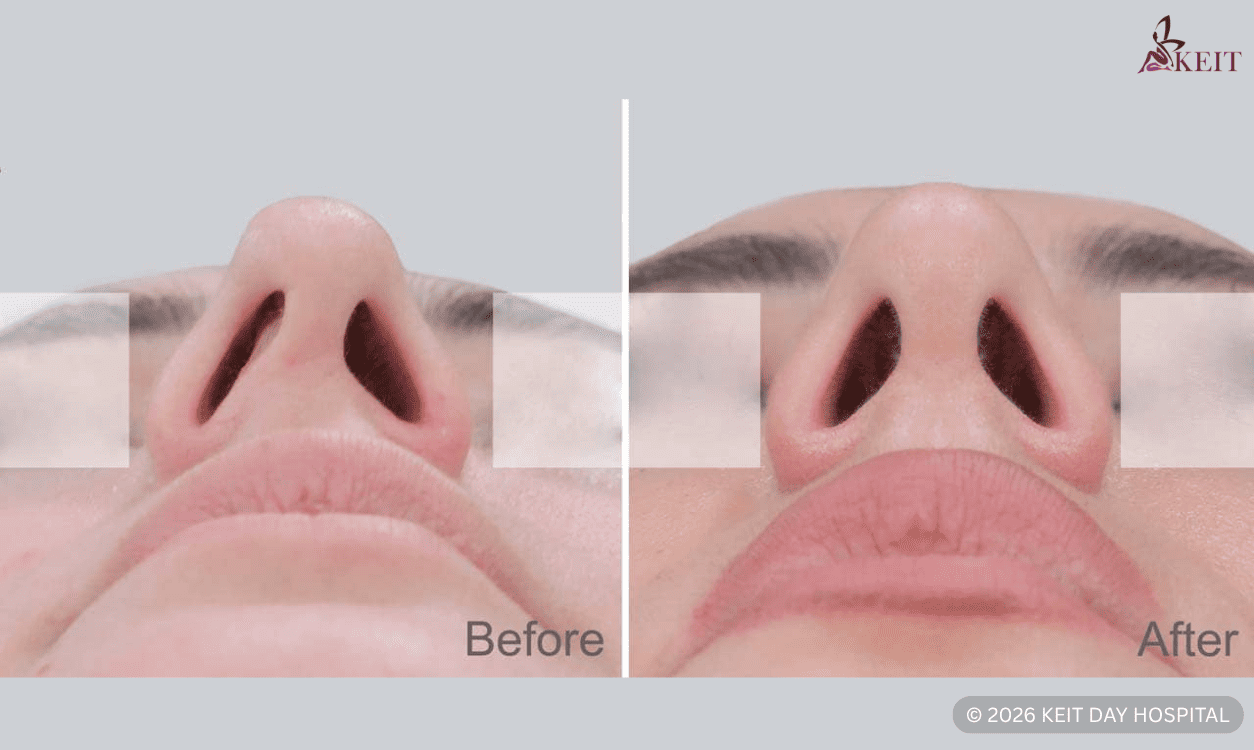
Before and after results typically show a softer, more balanced nose with improved facial harmony.
- Early recovery (Weeks 1–2): Swelling and bruising are most noticeable. The tip often feels firm.
- Settling phase (Weeks 3–6): The bridge looks closer to final shape and the tip swelling remains normal.
- Progressive refinement (Months 2–6): Tip definition improves gradually.
- Final outcome (Months 9–12): The nose stabilizes fully, with natural softness and proportion.
Rhinoplasty for a button nose shape: Possible risks to be aware of
When performed by qualified surgeons, button nose rhinoplasty is usually safe and low-risk.
- Common, temporary effects: Swelling and bruising (usually most noticeable in the first 1–2 weeks), a “stuffy nose” feeling from internal swelling, mild discomfort and temporary numbness.
- Shape-related risks: Over-rotated tip, nose that looks overly shortened, tip that appears too round or “pinched,” small contour irregularities as swelling drops and nostril asymmetry.
- Rare complications: Infection, fluid collection, prolonged swelling, internal scarring, bleeding, or changes in nasal breathing if structural support is not preserved.
Button nose refinement with rhinoplasty at KEIT Day Hospital: Structured medical care
For those seeking a nose job surgery abroad, KEIT Day Hospital in Albania offers all-inclusive rhinoplasty packages starting from 1,600 euro. Procedures are performed by Italian surgeons using the closed technique, ensuring no visible scars and lasting 40 – 90 minutes.
KEIT’s team has completed over 23,000 procedures and earned more than 11,000 positive patient reviews. Specializing in ultrasonic and preservation rhinoplasty, KEIT delivers natural, precise results at a highly competitive nose job cost. Patients benefit from nausea-free anesthesia, advanced silicone splints, hotel accommodation, airport transfers, trilingual staff and follow-ups available both online and directly at the hospital, ensuring safety and peace of mind.