Published on:
 Modified on:

 Reading Time: 5 min
 Rhinoplasty
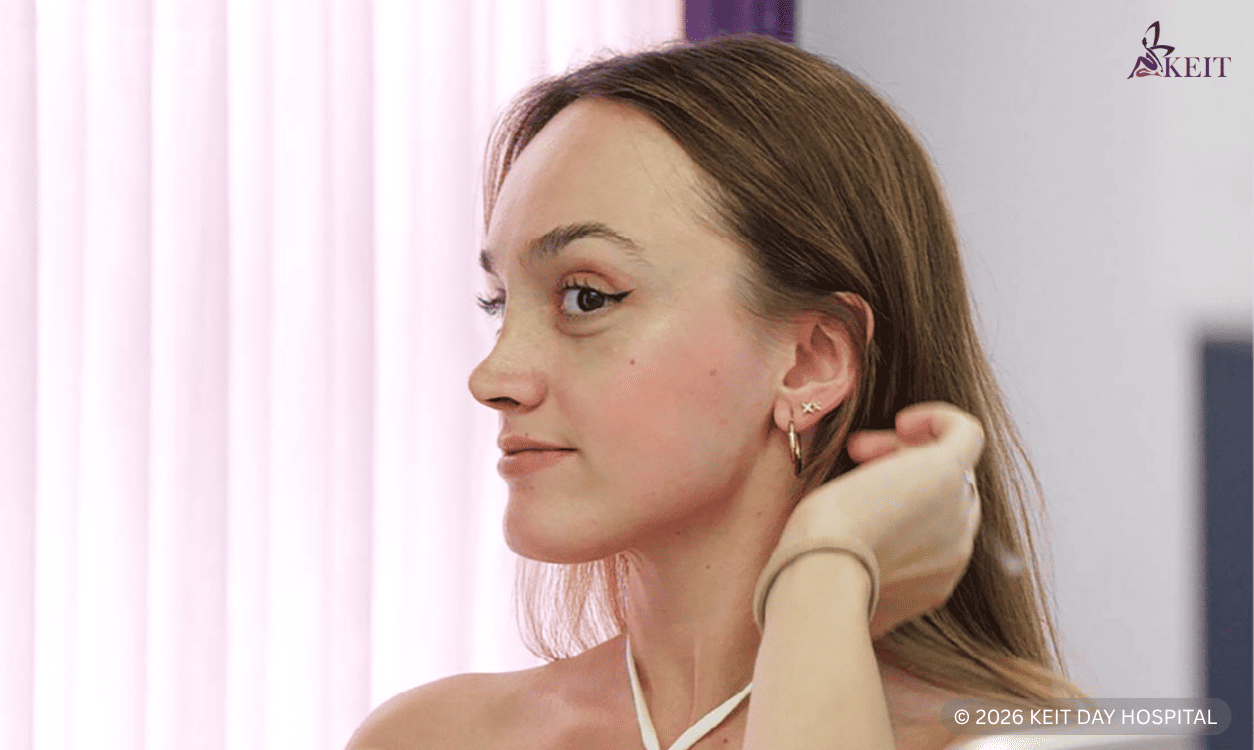
A saddle nose deformity is a structural condition in which the nasal bridge collapses, creating a visible depression along the middle portion of the nose. From the side, the profile may appear flattened or concave, resembling a saddle shape. Unlike purely aesthetic nose shapes, saddle nose reflects loss of internal support, often involving cartilage and, in advanced cases, bone. Depending on severity, it can affect appearance, nasal stability and breathing.
 Table of Contents:
-
1
 What is saddle nose deformity?
-
2
Anatomy explained: What happens to the nasal bridge?
-
3
Saddle nose deformity causes: Nose collapse explained
-
4
Early signs of saddle nose: Key symptoms to look for
-
5
Stages of saddle nose deformity explained
-
6
How is the saddling nose diagnosed?
-
7
Nasal saddle deformity: When should you see a specialist
-
8
Saddle nose deformity: How is it treated?
-
9
Reconstructive rhinoplasty for nose saddle: Before and after results
-
10
Rhinoplasty to correct a saddle nose at KEIT Day Hospital: Structured surgical care
In this comprehensive guide, you will learn what a saddle nose deformity is, how to recognize it from the profile, why the nasal bridge collapses and how it can progress over time. You’ll also discover how specialists diagnose a collapsed nasal bridge, when to seek medical evaluation, and which treatment options are available, including reconstructive rhinoplasty at KEIT Day Hospital to restore bridge height, stability and breathing comfort.
What is saddle nose deformity?
A saddle nose deformity is characterized by collapse of the nasal bridge, most commonly in the middle third of the nose. This collapse occurs when the cartilage framework that supports the bridge weakens or is lost. The result is a concave dorsal profile that may be mild and mainly aesthetic or more advanced and functionally significant. In moderate to severe cases, saddle nose can compromise airflow and long-term nasal stability.
For a broader knowledge (button, upturned, straight, Roman, Greek and more), explore our guide to the different types of noses.
Anatomy explained: What happens to the nasal bridge?
The nasal bridge is supported by bone in its upper portion and cartilage in the middle portion. Saddle nose deformity develops when the cartilaginous support of the bridge is damaged or removed, leaving the structure unable to maintain height. When this support weakens:
- The bridge sinks inward.
- The nose may appear flatter or shorter.
- Tip support can become unstable.
- Internal airflow may be affected.
This is why the saddle nose is considered a structural deformity, not a surface irregularity.
Saddle nose deformity causes: Nose collapse explained
Saddle nose deformity can develop for several reasons, all involving loss or weakening of nasal support:
- Surgical causes: Over-resection of cartilage during septoplasty or rhinoplasty, especially when structural support is not preserved.
- Trauma: Nasal fractures or repeated injury damaging cartilage and bone.
- Inflammatory or autoimmune conditions: Disorders that gradually destroy cartilage.
- Infections: Rare today, but historically associated with cartilage loss.
- Congenital factors: Inadequate cartilage development from birth.
The risk increases when cartilage damage is combined with poor healing or ongoing inflammation.
Early signs of saddle nose: Key symptoms to look for
Early saddle nose deformity can be subtle. Common early signs include:
- A slight dip or flattening along the nasal bridge.
- Mild swelling on the bridge of the nose.
- Tenderness or pain at the bridge of the nose.
- A small dimple forming in the mid-nose area.
- Changes in nose shape after septoplasty, rhinoplasty or trauma.
Recognizing these signs early is important, as timely assessment can prevent progression and reduce the need for complex reconstruction.

Stages of saddle nose deformity explained
Saddle deformity of nose is usually described by severity, based on how much the nasal bridge has collapsed and whether function is affected.
- Mild stage: A small depression or flattened bridge is visible, usually without breathing issues. Some patients notice a subtle dip, a dimple in the nose, or mild swelling.
- Moderate stage: The nasal bridge collapse is clearer from the side profile, and structural support feels weaker. Early functional symptoms may appear, such as mild airflow changes or discomfort.
- Severe stage: The collapse is pronounced, with visible saddling and possible tip instability. Breathing difficulty becomes more common due to reduced internal support.
How is the saddling nose diagnosed?
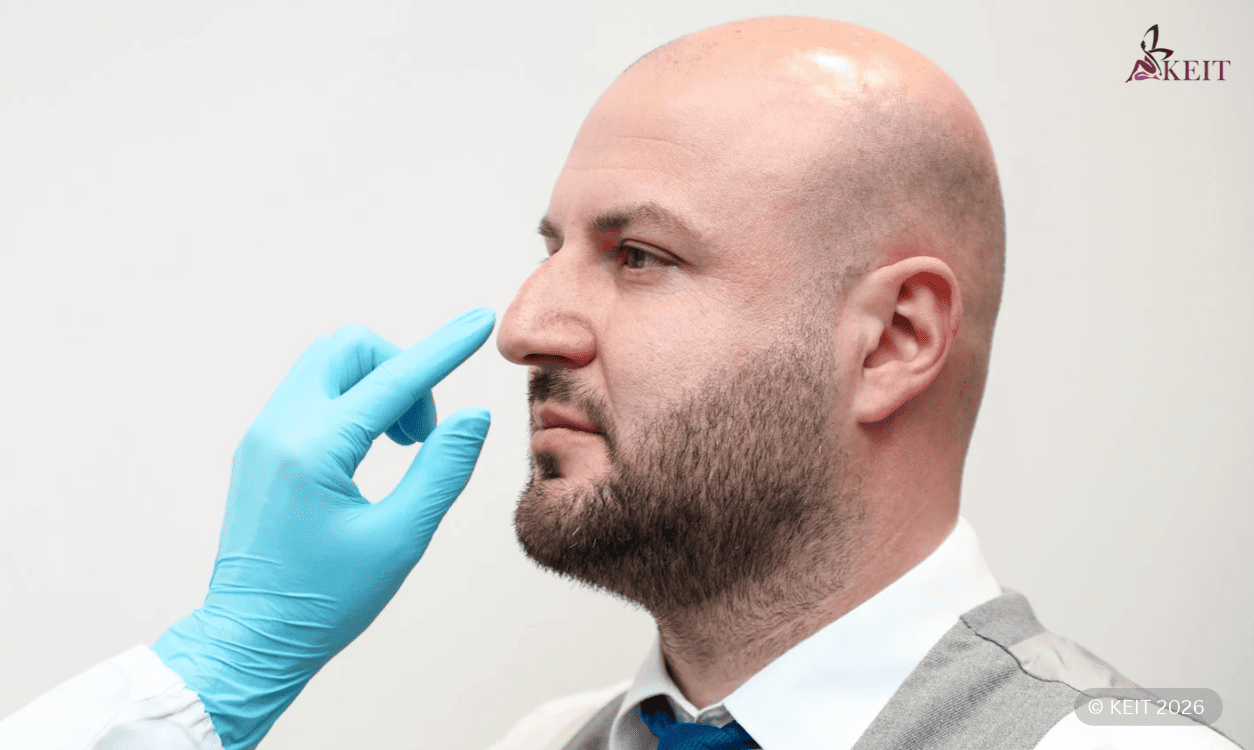
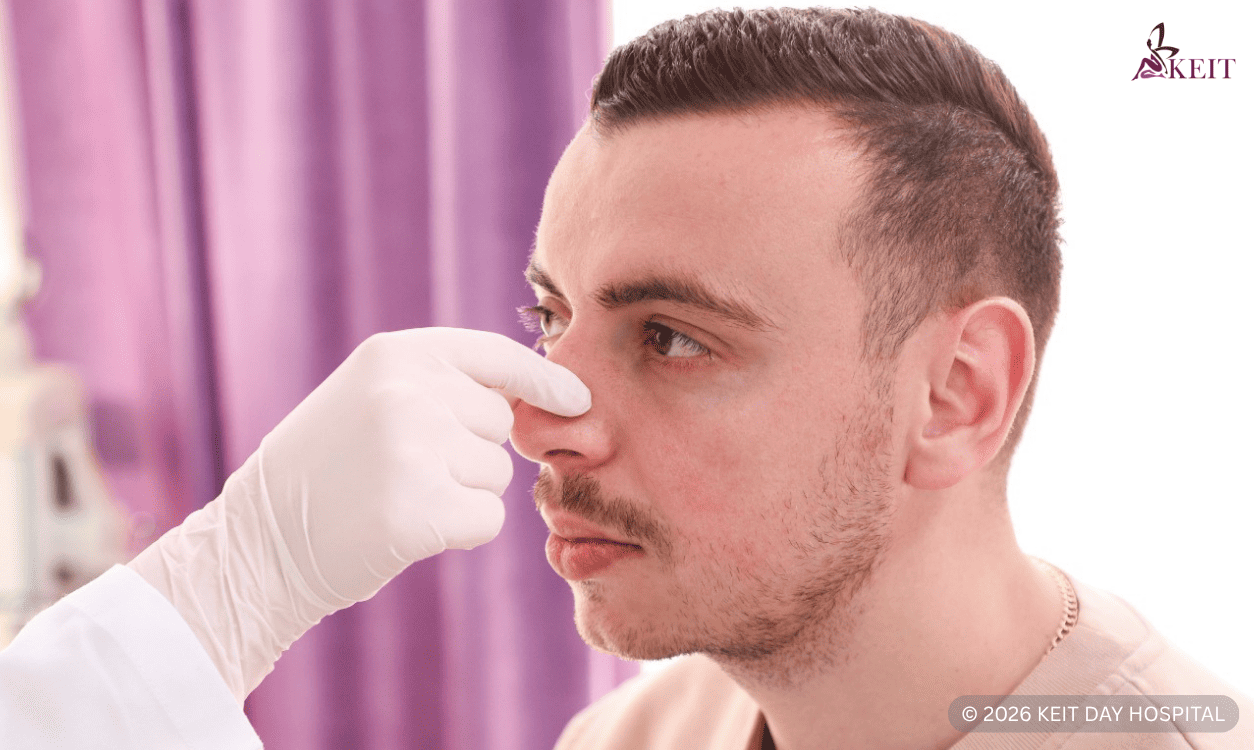
Diagnosis is primarily clinical, based on physical examination and profile assessment. The goal is to confirm a true collapsed nasal bridge, not a superficial contour issue. Evaluation focuses on:
- Dorsal contour and bridge height.
- Cartilage integrity and tip support.
- Septal stability.
- Nasal airflow and breathing quality.
In more complex cases, especially after previous surgery or trauma, imaging may be used to assess internal collapse and guide treatment planning.
Nasal saddle deformity: When should you see a specialist
You should seek specialist evaluation if you notice structural changes or persistent symptoms, particularly after nasal surgery or injury. A consultation is recommended if you experience:
- Progressive flattening of the nasal bridge.
- Shape changes after septoplasty or rhinoplasty.
- Persistent pain or swelling over the bridge.
- Breathing changes or a feeling of nasal weakness.
Early assessment often allows for more conservative correction and helps prevent advanced deformity.
Saddle nose deformity: How is it treated?
Treatment depends on severity and functional impact. The key principle is that camouflage is not the same as correction.
- Non-surgical options: Temporary fillers may camouflage a mild depression but do not restore structural support and are not suitable for true saddle nose deformity.
- Surgical treatment: Reconstructive rhinoplasty is the definitive solution. The aim is to rebuild the nasal framework using cartilage grafts, restoring bridge height, strength and airflow stability.
To fully understand how surgeons at KEIT Day Hospital achieve successful reconstructive rhinoplasty, it helps to first explore what rhinoplasty is and how it works in our complete guide.
Reconstructive rhinoplasty for nose saddle: Before and after results
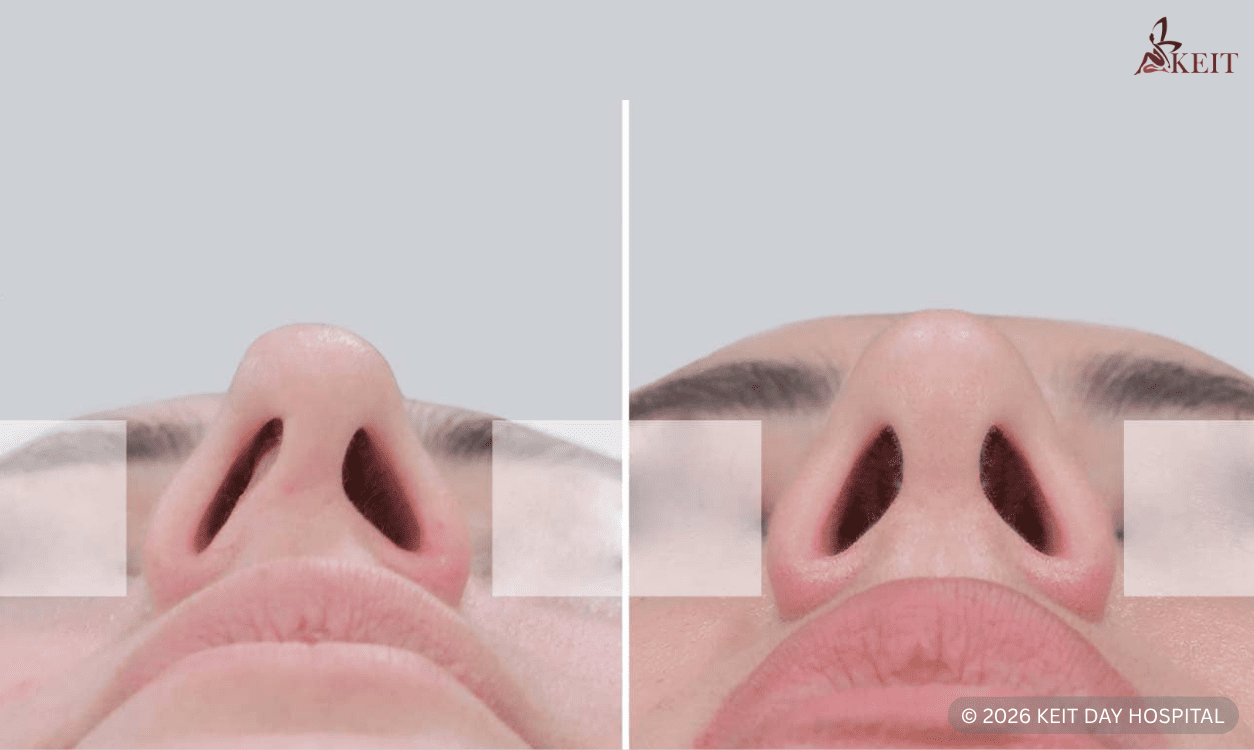
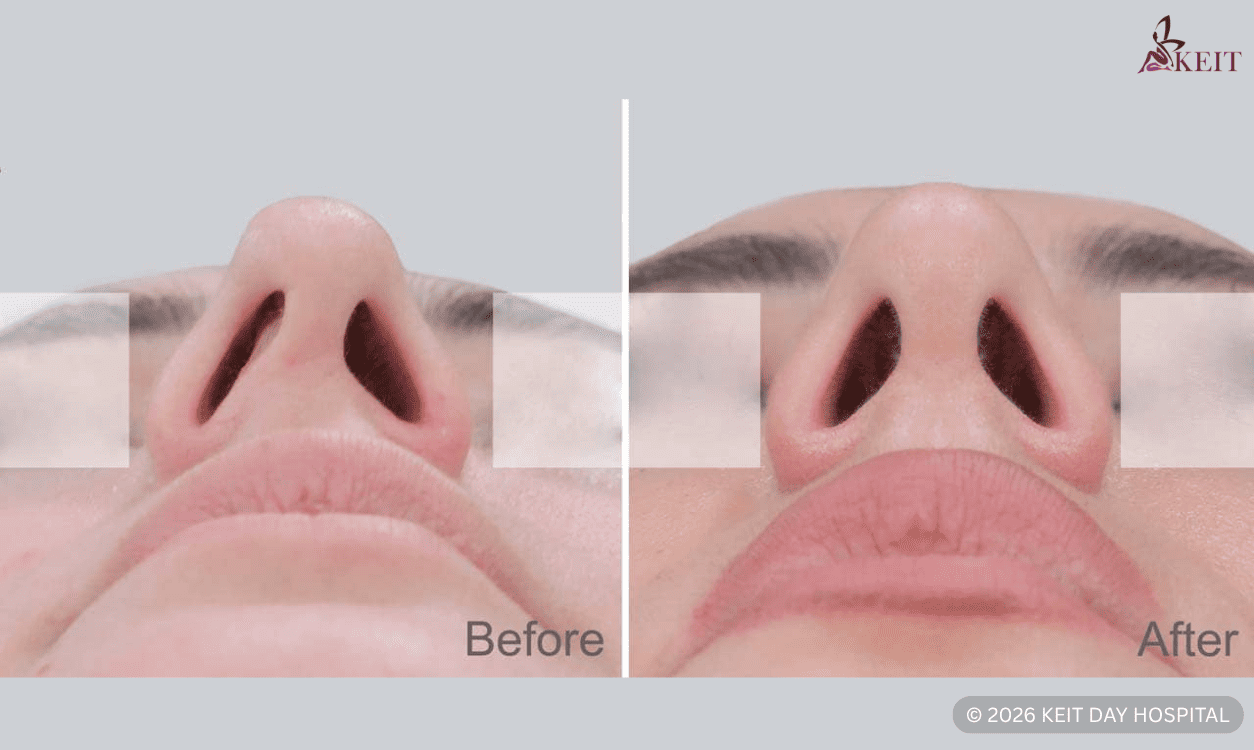
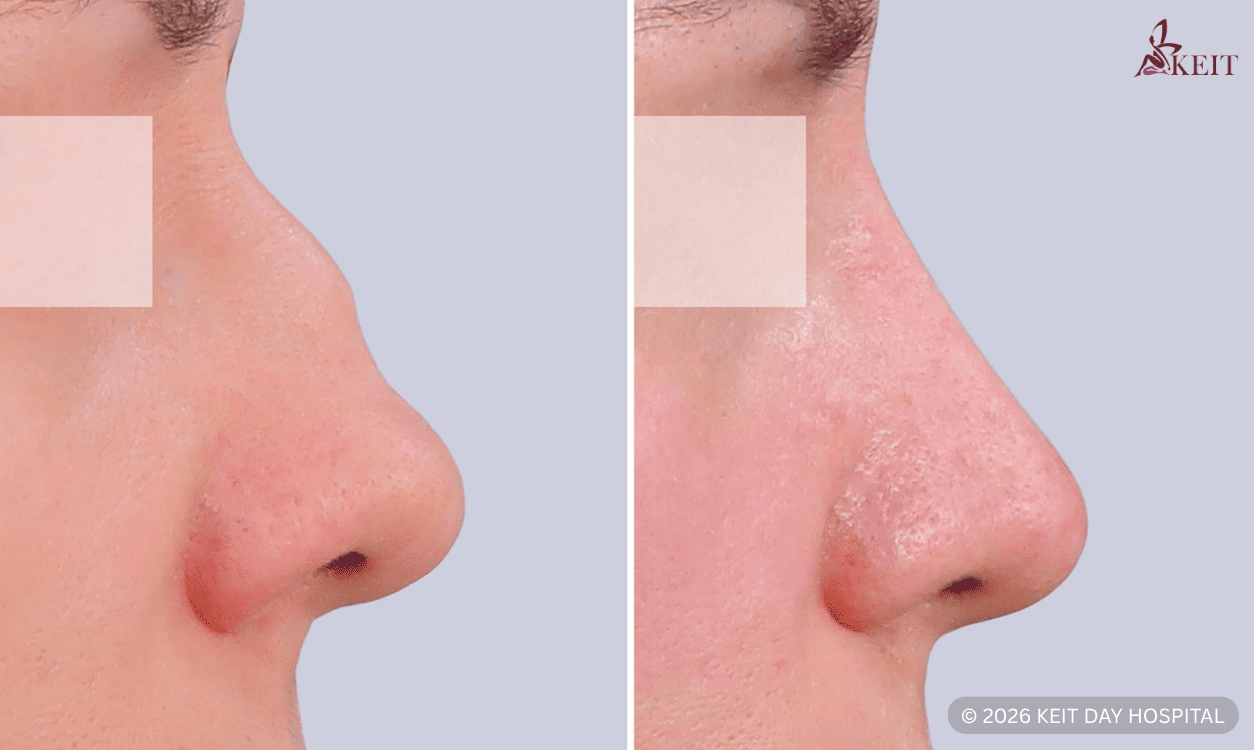
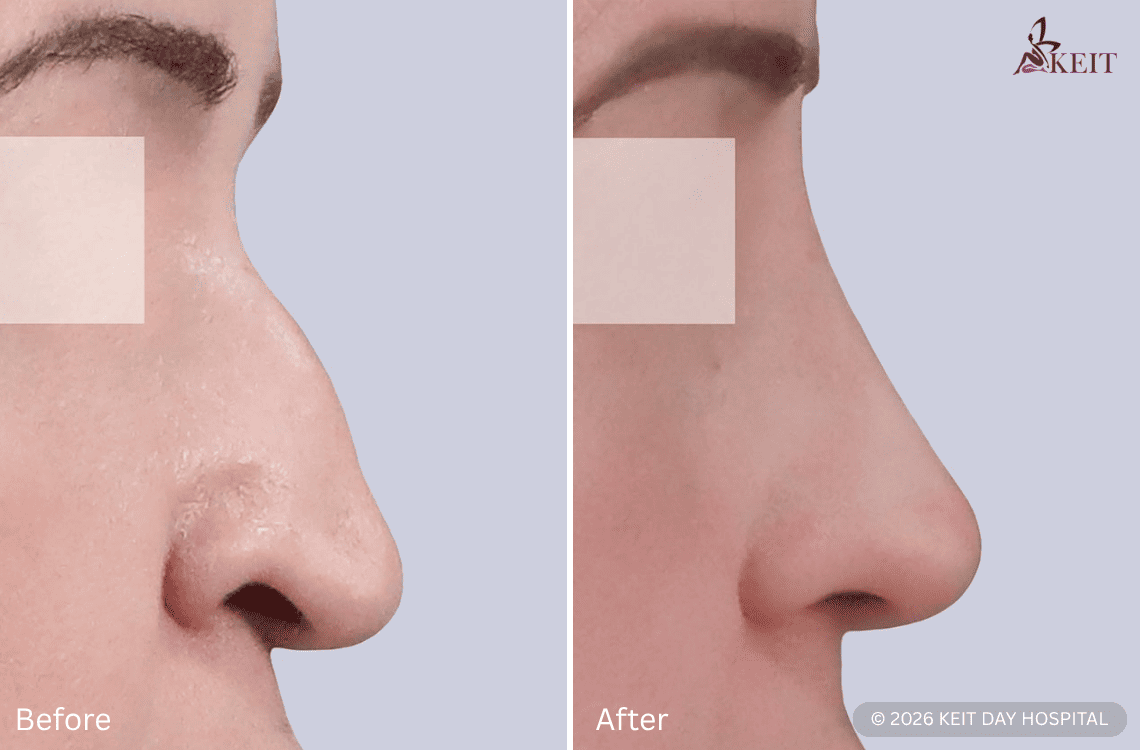
Saddle nose rhinoplasty focuses on structural reconstruction, not cosmetic refinement alone. Post-operative improvements after saddle nose rhinoplasty commonly include restored nasal bridge height, which creates a smoother dorsal line and a more balanced profile. As internal support is rebuilt, the nose typically gains greater structural stability, and in cases where airflow was affected, patients may also notice improved breathing as nasal mechanics recover. Swelling resolves gradually during healing: the bridge often stabilizes earlier, while final refinement continues over the following months as the tissues settle and grafts integrate.
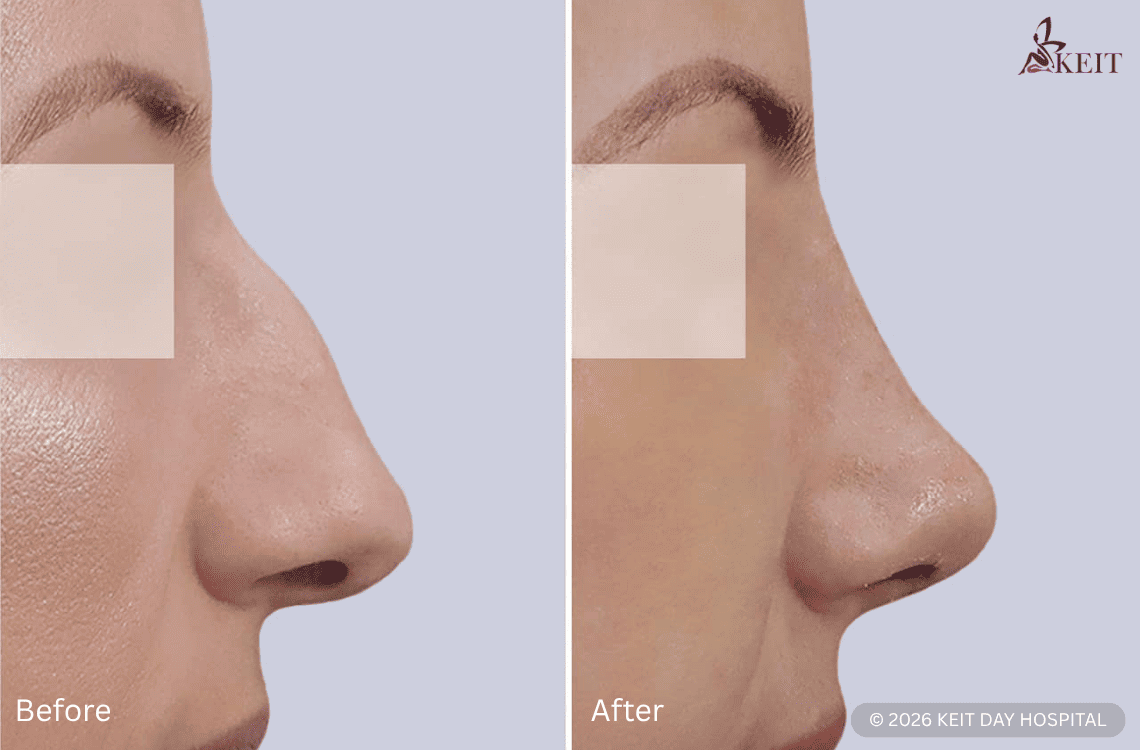
Rhinoplasty to correct a saddle nose at KEIT Day Hospital: Structured surgical care
For those seeking a nose job surgery abroad, KEIT Day Hospital in Albania offers all-inclusive rhinoplasty packages starting from 1,600 euro. Procedures are performed by Italian surgeons using the closed technique, ensuring no visible scars and lasting 40 – 90 minutes.
KEIT’s team has completed over 23,000 procedures and earned more than 11,000 positive patient reviews. Specializing in ultrasonic and preservation rhinoplasty, KEIT delivers natural, precise results at a highly competitive nose job cost. Patients benefit from nausea-free anesthesia, advanced silicone splints, hotel accommodation, airport transfers, trilingual staff and follow-ups available both online and directly at the hospital, ensuring safety and peace of mind.