Published on:
 Modified on:

 Reading Time: 6 min
 Rhinoplasty
A crooked nose is a condition in which the nasal bridge, tip or overall nasal structure deviates from the facial midline. It may be present from birth, develop after trauma or occur following previous nasal surgery. While often considered an aesthetic concern, a crooked nose can also be associated with functional symptoms in some patients. Treatment depends on the degree of deviation, underlying structural imbalance and individual symptoms.
 Table of Contents:
-
1
 What is a crooked nose and how is it defined medically?
-
2
What are the main causes of a crooked nose?
-
3
What are the symptoms of a crooked nose?
-
4
Medical classification of crooked nose types
-
5
How is a crooked nose diagnosed by a specialist?
-
6
How to fix a crooked nose: Main treatment options
-
7
Crooked nose before and after: What patients can expect
-
8
Risks, limitations and possible complications of crooked nose operation
-
9
Why choose KEIT Day Hospital for your crooked nose surgery?
-
10
How to fix crooked nose naturally: Setting realistic expectations
In this article, you will learn what a crooked nose is and how it is defined from a medical perspective, the main causes and symptoms associated with nasal deviation, and how crooked noses are clinically classified. The article explains how specialists diagnose a crooked nose, which treatment options are available, what results patients can realistically expect before and after correction and which risks and limitations should be considered. You will also discover when natural approaches may or may not help and why structured surgical care at KEIT Day Hospital is your smart choice for crooked nose operation.
What is a crooked nose and how is it defined medically?
A crooked nose is defined as an alteration in the alignment of the nasal framework relative to the facial midline. It may involve the nasal bones, cartilaginous structures, the nasal tip, or a combination of these components. The term includes both visible external asymmetry and underlying structural displacement, regardless of whether functional symptoms are present. Severity and presentation vary and assessment focuses on anatomical alignment rather than cosmetic appearance alone.
What are the main causes of a crooked nose?
A crooked nose develops due to a combination of structural and developmental factors rather than surface appearance alone:
- Congenital structural asymmetry: Uneven development of the nasal bones or cartilage during growth may cause gradual deviation as the face matures, even in the absence of trauma.
- Trauma or nasal injury: Sports injuries, accidents or falls can displace nasal structures, untreated fractures or improper healing often result in permanent deviation.
- Previous nose surgery: Scar tissue formation, cartilage weakening or incomplete correction after rhinoplasty may lead to progressive deviation during healing or over time.
What are the symptoms of a crooked nose?
Symptoms associated with a crooked nose vary depending on the degree of structural misalignment and individual anatomy.
- Visible nasal asymmetry: Deviation of the nasal bridge or tip affecting facial symmetry.
- Breathing difficulty: Reduced airflow through one or both nostrils.
- Chronic nasal congestion: Persistent sensation of nasal blockage.
- Recurrent sinus infections: Increased susceptibility due to impaired drainage.
- Mouth breathing or snoring: Especially noticeable during sleep.
- Headaches or facial pressure: Discomfort related to altered nasal airflow.
Clinical findings do not always reflect the degree of visible deviation. A crooked nose should not be considered synonymous with septal deviation, as the two conditions may occur independently.
Book your FREE
Online Consultation Now

Medical classification of crooked nose types
From a clinical perspective, crooked noses are classified based on the direction and complexity of the deviation:
- I-shaped crooked nose: The nose appears straight but is shifted laterally to one side, often involving mild skeletal displacement.
- C-shaped crooked nose: The nasal structure curves to one side, creating a concave and convex contour. This is one of the most common patterns.
- S-shaped crooked nose: A more complex deviation in which different nasal segments curve in opposite directions, usually involving both bone and cartilage.
- Crooked nose associated with septal deviation: External asymmetry combined with internal misalignment, potentially causing both aesthetic and functional symptoms.
How is a crooked nose diagnosed by a specialist?
Diagnosis of a crooked nose is based on a comprehensive clinical assessment and may include:
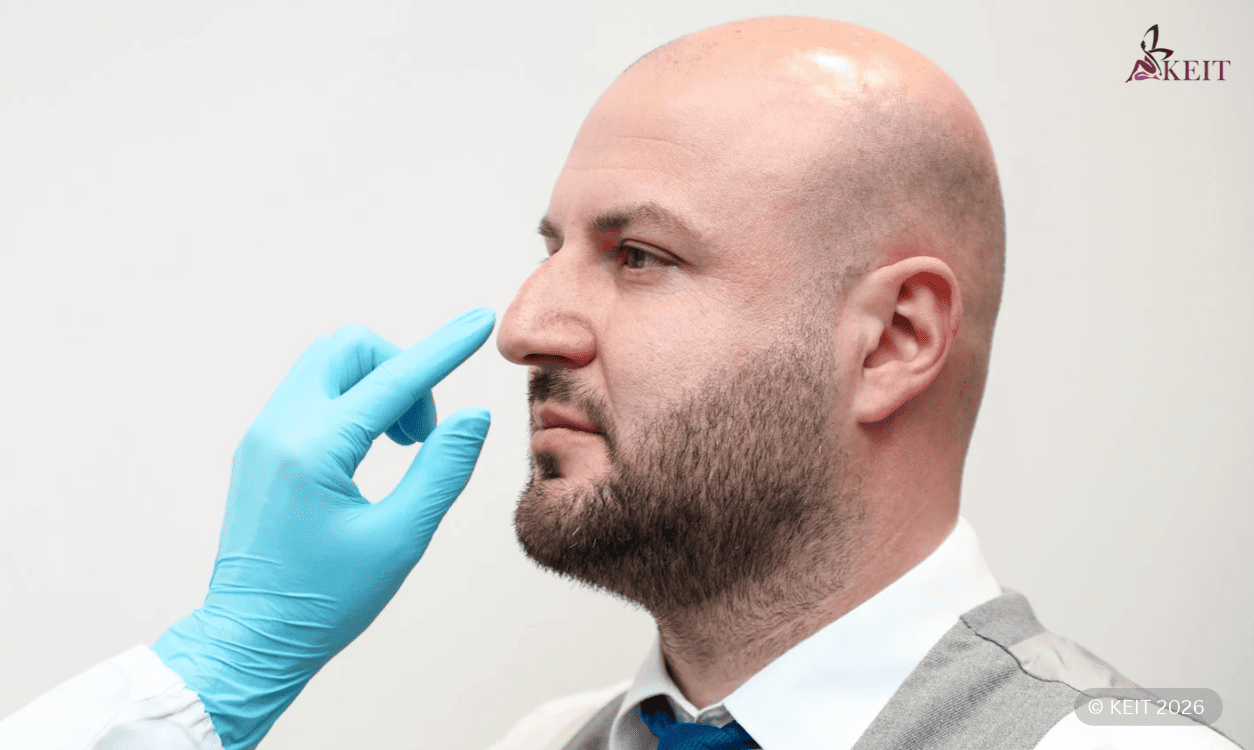
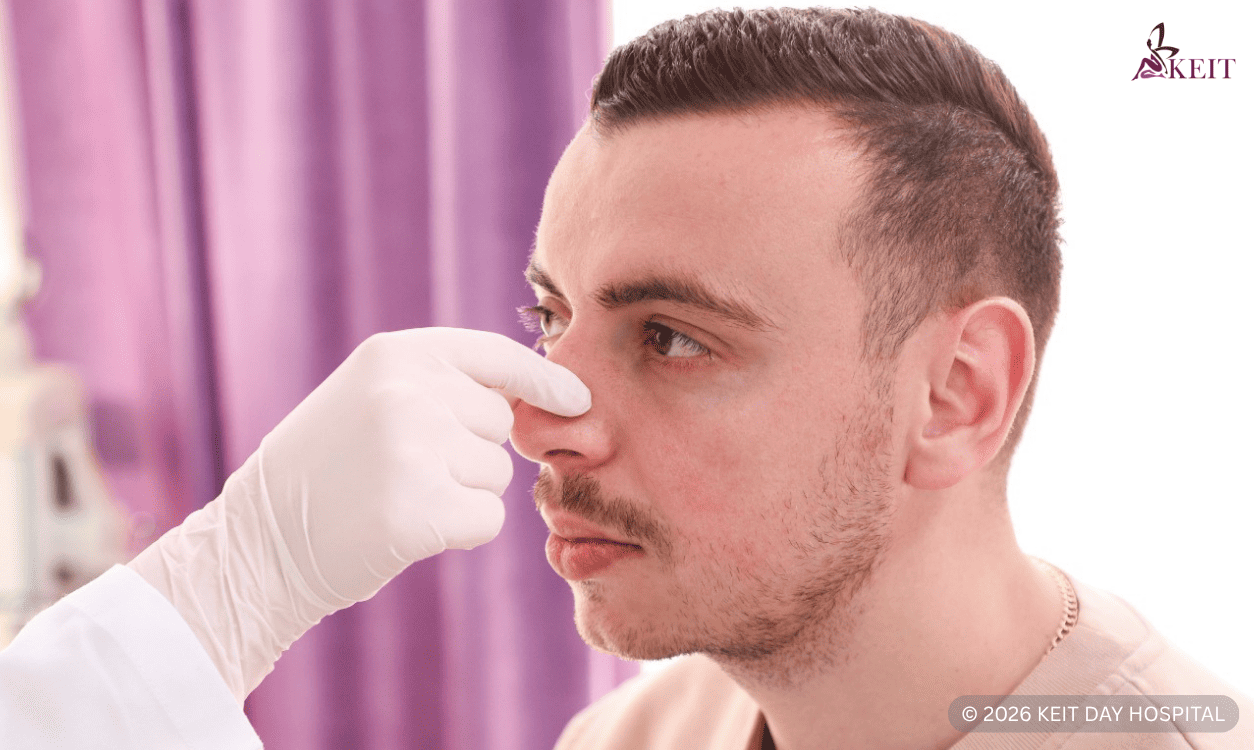
- Clinical examination: Evaluation of facial symmetry, nasal alignment and skin quality at rest and during facial expression.
- Palpation of nasal structures: Assessment of bone and cartilage stability and contour irregularities.
- Internal nasal evaluation: Identification of structural contributors that may influence treatment planning.
- Functional breathing assessment: Evaluation of airflow through each nostril under normal conditions.
- Imaging (when indicated): Used selectively in complex cases or revision surgery planning.
How to fix a crooked nose: Main treatment options
Treatment is tailored to the individual and depends on the severity of deviation, patient expectations and the presence of symptoms.
Non-surgical correction of a crooked nose using dermal fillers
Non-surgical options, such as dermal fillers, can be used to camouflage minor asymmetries by creating visual balance. This approach does not straighten the nose structurally and cannot correct functional issues. Results are temporary and suitable only for selected cases.
Surgical approaches for correcting a crooked nose
The surgical approach for a crooked nose depends on if the deviation is external, internal, or both and if breathing is affected.
- Septorhinoplasty is the primary and most frequently used surgery for a crooked nose when external deviation and internal structural imbalance coexist.
- Structural rhinoplasty alone may be sufficient if the crooked appearance is mainly external and breathing is not significantly affected.
- Septoplasty alone is reserved for cases where the deviation is internal only and there is no relevant external asymmetry.
If you want a clear overview of how nose reshaping works, read our guide on what is rhinoplasty.
Crooked nose before and after: What patients can expect
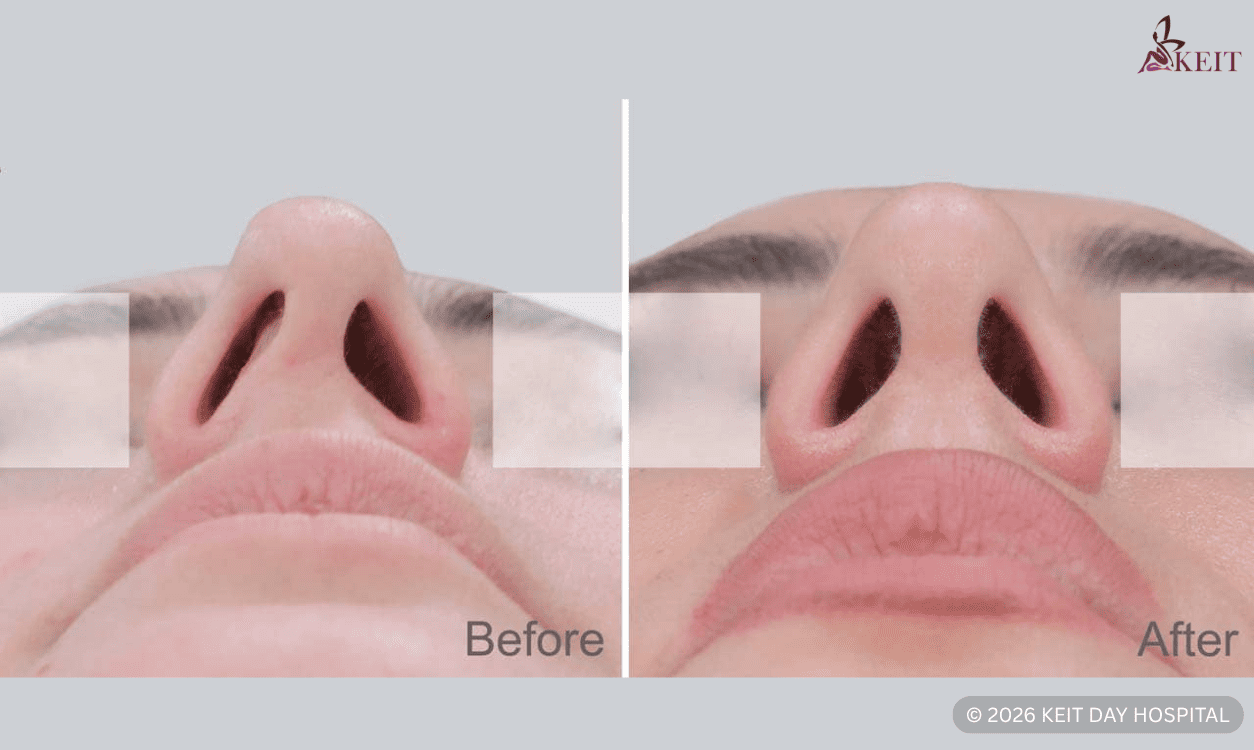
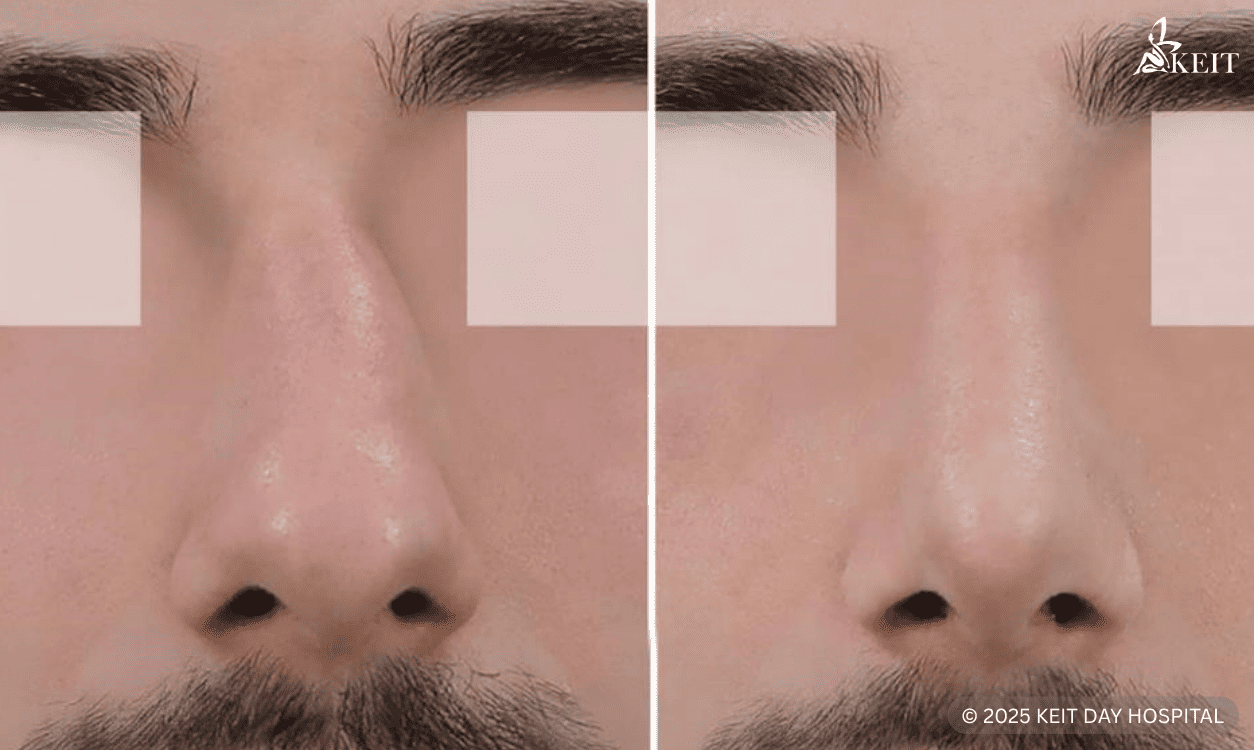
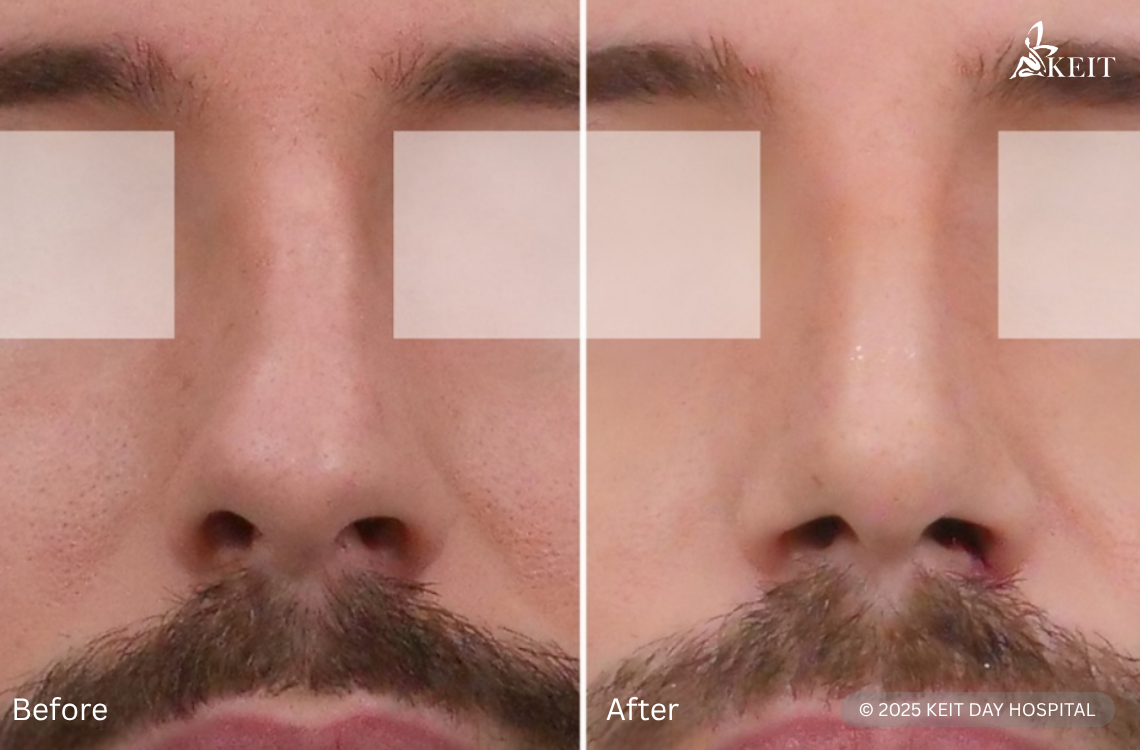
Before and after results vary depending on anatomy and surgical complexity. The goal of treatment is improvement and facial harmony rather than absolute symmetry. Most swelling subsides within the first 3–4 weeks, while residual swelling particularly at the nasal tip, can persist for several months as the nose continues to refine. Final results typically stabilize between six and twelve months.
Risks, limitations and possible complications of crooked nose operation
When performed by an experienced surgical team, crooked nose surgery is considered safe and predictable. Understanding potential risks helps ensure realistic expectations.
- Common effects: Temporary swelling, bruising, nasal stiffness and mild residual asymmetry during the healing phase.
- Specific risks: Prolonged swelling, minor contour irregularities or incomplete correction requiring further refinement.
- Rare risks: Infection, hematoma or the need for revision surgery due to unpredictable tissue healing.
Careful surgical planning, realistic expectations and adherence to post-operative guidelines significantly reduce the likelihood of complications and support optimal long-term results.
Why choose KEIT Day Hospital for your crooked nose surgery?
For those seeking a nose job surgery abroad, KEIT Day Hospital in Albania offers all-inclusive rhinoplasty packages starting from 1,600 euro. Procedures are performed by Italian surgeons using the closed technique, ensuring no visible scars and lasting 40 – 90 minutes.
KEIT’s team has completed over 23,000 procedures and earned more than 11,000 positive patient reviews. Specializing in ultrasonic and preservation rhinoplasty, KEIT delivers natural, precise results at a highly competitive nose job cost. Patients benefit from nausea-free anesthesia, advanced silicone splints, hotel accommodation, airport transfers, trilingual staff and follow-ups available both online and directly at the hospital, ensuring safety and peace of mind.
For a full breakdown of pricing by country and procedure type, see our guide on rhinoplasty cost in 2025.
How to fix crooked nose naturally: Setting realistic expectations
Many people search for information on how to fix a crooked nose naturally without surgery. Non-medical approaches such as massage, exercises or splints may help reduce temporary swelling or improve comfort, but they cannot change the position of nasal bones or cartilage once facial growth is complete. In mild cases related to soft-tissue swelling or recent trauma, time and observation may lead to partial improvement. When a crooked nose is caused by structural imbalance, surgical correction remains the only effective and permanent solution.