Published on:
 Modified on:

 Reading Time: 5 min

 Rhinoplasty
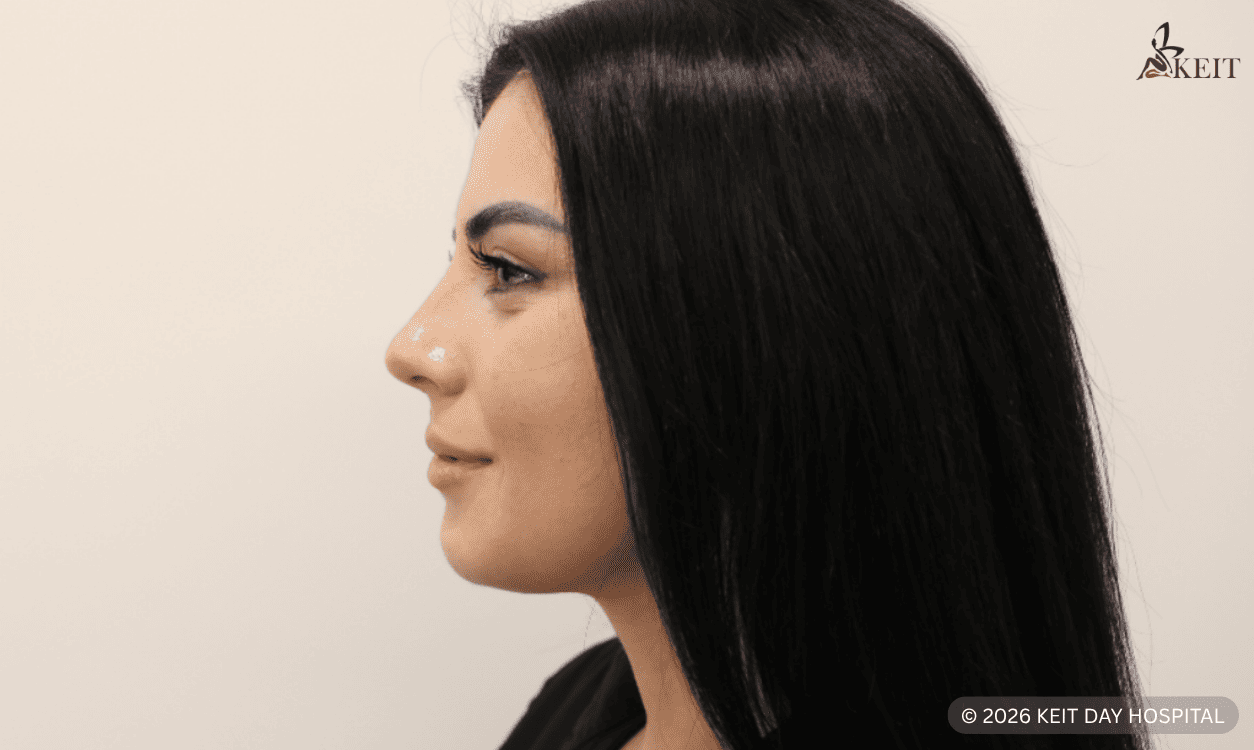
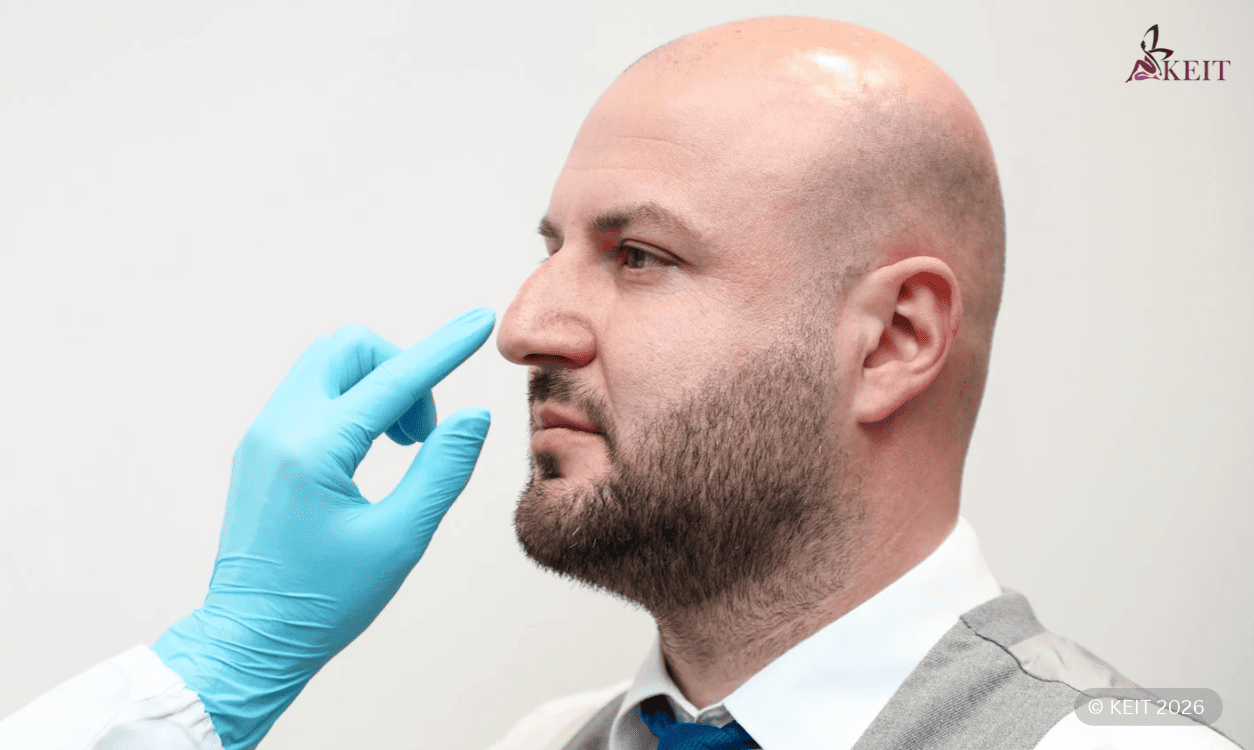
A Greek nose is a nasal shape defined by a straight, linear bridge that forms a continuous line from the forehead to the nasal tip, without humps, curves or interruptions. A Greek nose shape develops naturally through genetic inheritance, bone structure and cartilage alignment. For individuals who wish to enhance proportions or refine details without altering the defining straight bridge, rhinoplasty for a Greek nose focuses on subtle refinement while preserving its natural identity.
 Table of Contents:
-
1
 What is a Greek nose and what are the main features to look for
-
2
Causes of a Greek nose shape: From genetics to ethnic variation
-
3
Roman nose vs Greek nose: Key differences explained
-
4
Why is the Greek nose considered a symbol of beauty?
-
5
Greek nose in women (Greek nose female): Refined structure and facial harmony
-
6
Greek nose in men (Greek nose male): Strong alignment and balanced definition
-
7
Greek nose: How rhinoplasty can refine its shape while keeping its straight profile
-
8
Greek nose reshaping at KEIT Day Hospital: Structured surgical care
In this article, you’ll learn what a Greek nose is and how to recognize its defining features, the genetic and structural factors that shape it and the key differences between a Greek nose and a Roman nose. We also explain why this nose shape is considered a symbol of classical beauty, how it appears in women and men and how rhinoplasty can refine proportions while preserving the natural straight profile, including KEIT Day Hospital in Albania for those seeking high-quality care with transparent, accessible costs.
What is a Greek nose and what are the main features to look for
A Greek nose is defined by a combination of precise anatomical features that create a balanced, harmonious and instantly recognizable profile:
- Straight, continuous nasal bridge: The line from the forehead to the nasal tip is smooth and uninterrupted, without breaks or angles.
- Absence of humps or curves: The nasal bridge remains completely linear, with no dorsal convexity.
- Gently defined nasal tip: The tip is subtle and proportionate, neither overly prominent nor excessively rounded.
- Harmonious facial proportion: Even alignment of nasal bones and cartilage allows the nose to integrate seamlessly with other facial features, contributing to overall facial balance.
Causes of a Greek nose shape: From genetics to ethnic variation
A Greek nose develops naturally as a result of inherited skeletal and cartilaginous anatomy rather than external factors. Primary causes include:
- Genetics: Greek noses commonly appear across generations within the same family, reflecting inherited bone and cartilage patterns.
- Bone structure: Straight nasal bones with even projection form a flat, linear dorsum without humps or depressions.
- Cartilage alignment: Balanced upper and lower lateral cartilages support a smooth nasal bridge and stable tip position.
- Ethnic variation: Greek nose shapes are frequently observed in Mediterranean populations but can appear across diverse ethnic backgrounds.

Roman nose vs Greek nose: Key differences explained
The Greek nose and the Roman (aquiline) nose are often compared because both are associated with classical facial aesthetics, yet they differ significantly in anatomy and visual impact.
- Shape of the nasal bridge: A Greek nose has a straight, uninterrupted bridge, creating a smooth and harmonious profile. A Roman (aquiline) nose features a visible hump along the bridge, giving it a more prominent and arched appearance.
- Aesthetic impact: The Greek nose is associated with balance, proportion and classical beauty. The Roman nose conveys strength and character, often standing out as a dominant facial feature.
- Historical symbolism: The Greek nose symbolized perfection in ancient Greek art. The Roman nose was linked to power and leadership in classical Roman portraits.
Why is the Greek nose considered a symbol of beauty?
The Greek nose is universally recognized as a symbol of classical beauty and aesthetic harmony. Its straight, proportionate line represents the ideal Greek profile, a recurring element in ancient sculptures and paintings. In classical Greek culture, this nose shape embodied ideals of balance, proportion and grace. Modern studies confirm that a straight nasal bridge contributes to overall facial balance, creating a visually pleasing harmony. Often associated with health and vitality, the Greek nose remains a timeless aesthetic ideal rooted in art, culture and human perception.
Greek nose in women (Greek nose female): Refined structure and facial harmony
In women, a Greek nose is typically defined by a straight nasal bridge combined with softer, more delicate proportions. The nasal bones and cartilage are usually finer, creating a smooth and balanced profile that blends naturally with the rest of the face. The bridge aligns cleanly with the forehead, while overall projection remains moderate, giving the nose an elegant appearance without overpowering other features. This balance allows the Greek nose in females to enhance facial symmetry and convey a sense of harmony rather than dominance.
Greek nose in men (Greek nose male): Strong alignment and balanced definition
In men, the Greek nose maintains the same straight dorsal profile but with a more pronounced structural definition. The nasal bridge is often slightly wider and more projected, contributing to a stronger and more structured appearance. This linear alignment complements typically broader facial features such as the forehead and jawline, reinforcing balance and proportion. Despite its firmer structure, the Greek nose in males remains visually clean and harmonious, defined by straight lines rather than curvature or excess prominence.
Greek nose: How rhinoplasty can refine its shape while keeping its straight profile
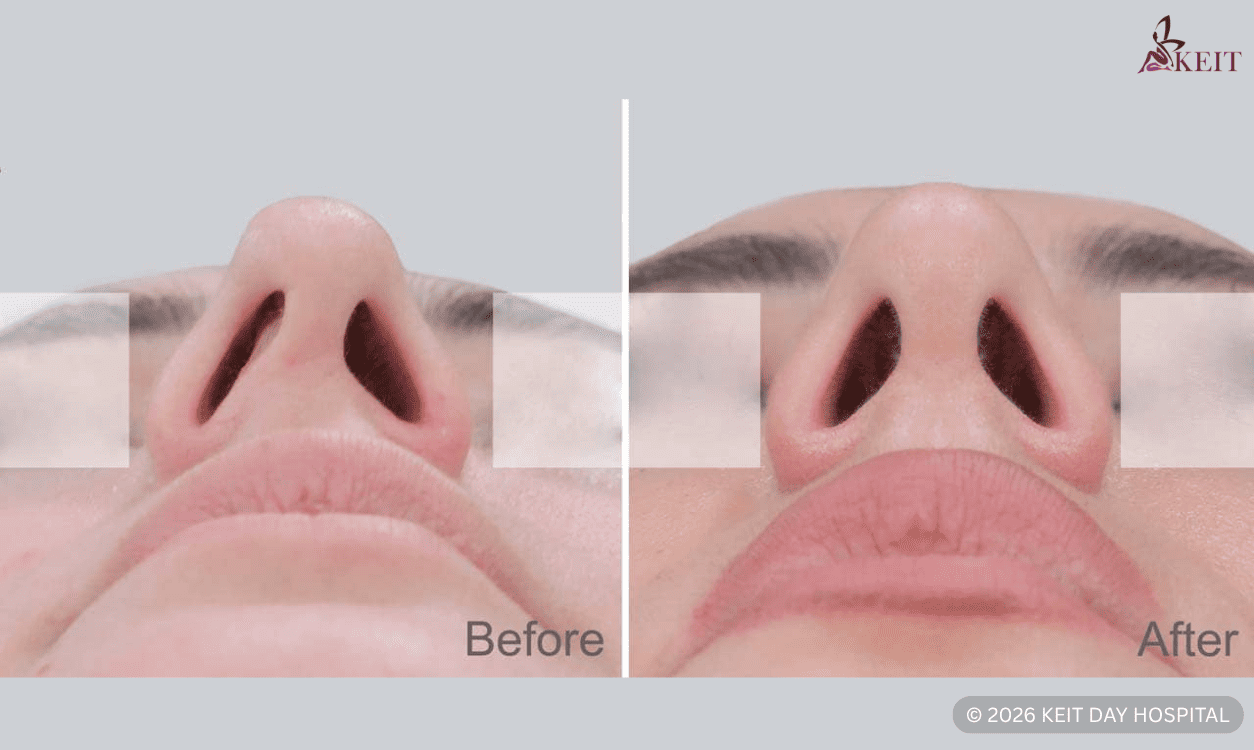
Since the bridge is already straight, the goal of rhinoplasty surgery is subtle refinement, preserving the defining linear profile while improving proportions, symmetry or tip definition. The procedure is performed under general anesthesia using either a closed or open approach, depending on the patient’s anatomy and surgical goals. The surgeon may refine the nasal tip, correct minor asymmetries or adjust cartilage support while maintaining the straight dorsum. In some cases, functional improvements to nasal airflow are addressed simultaneously.
To fully understand how surgeons refine a Greek nose while preserving its straight profile, it is helpful to first explore what rhinoplasty is and how it works in our article.
Greek nose reshaping at KEIT Day Hospital: Structured surgical care
For those seeking a nose job surgery abroad, KEIT Day Hospital in Albania offers all-inclusive rhinoplasty packages starting from 1,600 euro. Procedures are performed by Italian surgeons using the closed technique, ensuring no visible scars and lasting 40 – 90 minutes. KEIT’s team has completed over 23,000 procedures and earned more than 11,000 positive patient reviews. Specializing in ultrasonic and preservation rhinoplasty, KEIT delivers natural, precise results at a highly competitive nose job cost. Patients benefit from nausea-free anesthesia, advanced silicone splints, hotel accommodation, airport transfers, trilingual staff and follow-ups available both online and directly at the hospital, ensuring safety and peace of mind.